Tuesday, October 27, 2026

Massive Stellar Collisions Could Explain Early Supermassive Black Holes

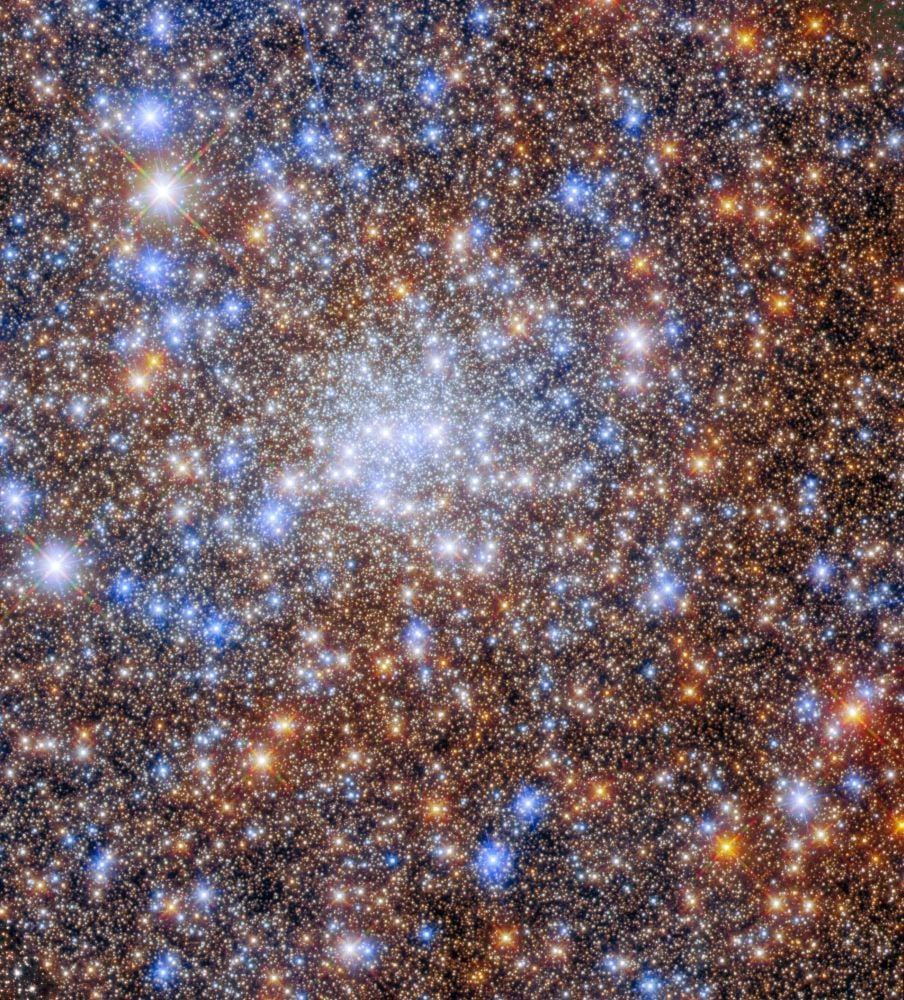
Dense stellar environments like this one were common in the early Universe. New research shows how stellar collisions were common, leading to Very Massive Stars that exploded as supernovae. These could've been the seeds for the early SMBH that the JWST spotted only a few hundred million years after the Big Bang. The same research shows a plausible connection between these environments, destructive stellar collisions, and Little Red Dots. Image Credit: ESA/Hubble & NASA, R. Cohen. (Terzan 4 globular cluster.)

Dense stellar environments were common in the early Universe. These environments fostered more numerous stellar collisions, and some of those would've been mergers that formed very massive stars. Those stars would've exploded as supernovae, becoming massive black holes, the potential seeds for today's supermassive black holes.


No comments:

Post a Comment