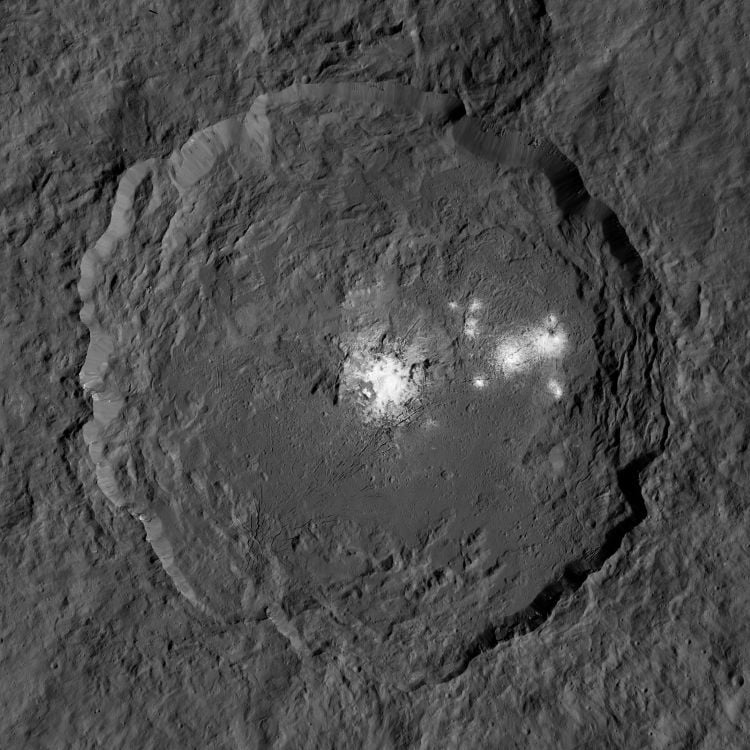
The dwarf planet Ceres is arguably one of the most overlooked and underappreciated planetary objects in the entire solar system. This could be because while Ceres has the same dwarf planet designation as Pluto, Ceres is largely considered an “asteroid” since it resides the in main asteroid belt. However, along with being the largest object in the main asteroid belt, Ceres’ mass comprises between 25 to 30 percent of all the mass of the entire main asteroid belt. Despite its lack of recognition, Ceres’ interior is layered like most rocky planets, including Pluto, and its surface displays evidence of past water ice activity (also called cryovolcanism) with several “bright spots”, which are highly reflective salt deposits. But what can these salt deposits teach scientists about Ceres’ formation and evolution?

No comments:
Post a Comment