Tuesday, July 21, 2026

NASA's Psyche Spacecraft Captured a Time-Lapse Video of its Mars Flyby

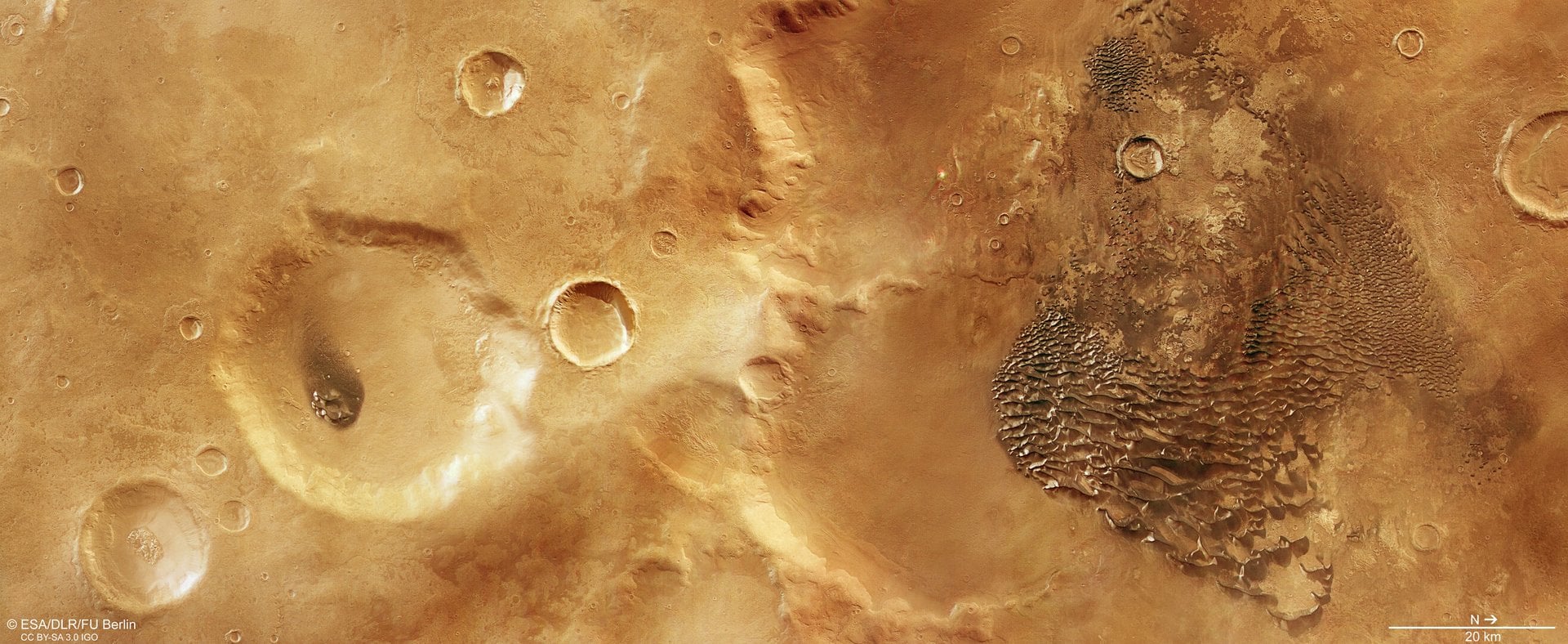
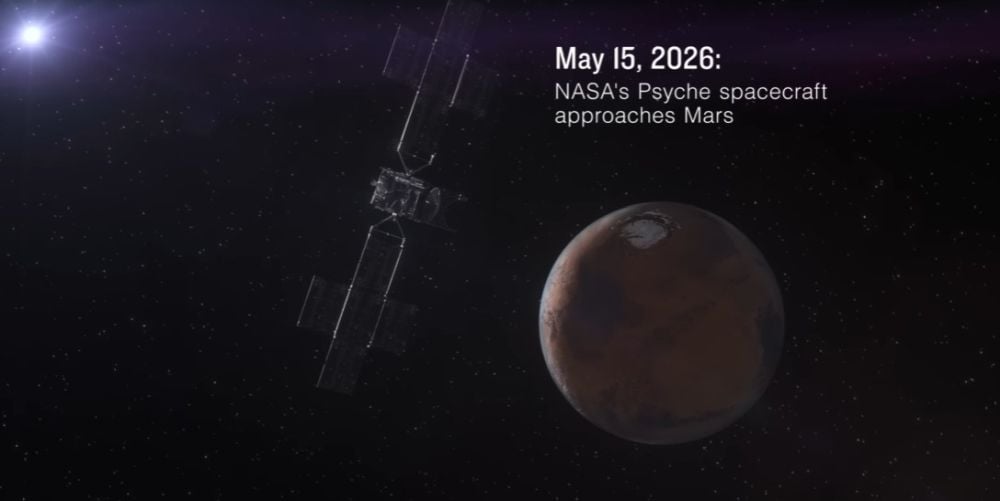
In May, NASA's Psyche spacecraft performed a gravity-assist maneuver that sent in on its way to its target, the metal-rich asteroid 16 Psyche. The flyby was also an opportunity to test the spacecraft's instruments, including its multispectral camera. NASA has released a time-lapse video of the encounter. Image Credit: NASA/JPL

NASA's Psyche mission used a gravity assist maneuver at Mars to gain velocity and adjust its trajectory to its eventual target. The asteroid 16 Psyche is a metal-rich asteroid that may be the remnant rocky core of a protoplanet. The flyby not only shepherded the spacecraft on to its target, it was also an opportunity to test Psyche's science instruments and cameras. NASA has released a timelapse of the flyby.


Astronomers Are Still Trying to Understand How a Galaxy's Spiral Arms Form

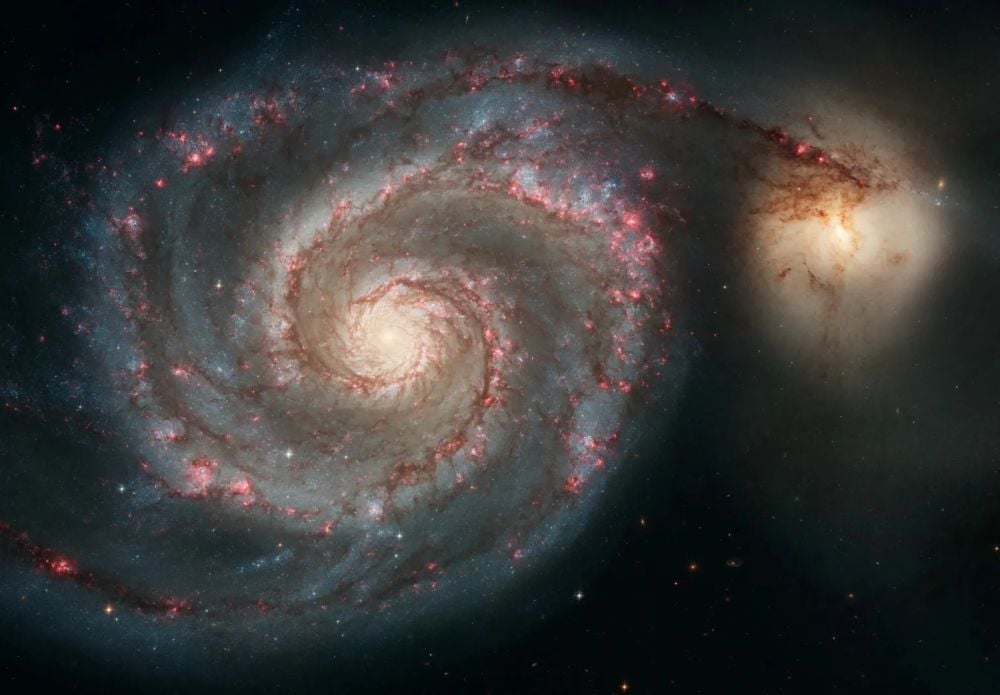
The Whirlpool Galaxy (M51) is the classic grand design spiral galaxy. It was the first object recognized as a spiral, though at the time astronomers thought they were nebulae. Astronomers have been pondering spiral galaxies for a long time, trying to understand how their spiral arms persist. New research has at least a partial answer. Image Credit: NASA, ESA, S. Beckwith (STScI) and the Hubble Heritage Team (STScI/AURA)

Spiral galaxies, including grand spirals like the Whirlpool galaxy, are plentiful. But it's still a mystery how their spiral arms form and persist for hundreds of millions of years, and why some galaxies have one, two, or three or more arms. New research based on Euclid data finds links between galaxy mass, star formation rate, and number of arms, and hints at their formation.


Astronomers Catch a "Dark Comet" Red-Handed

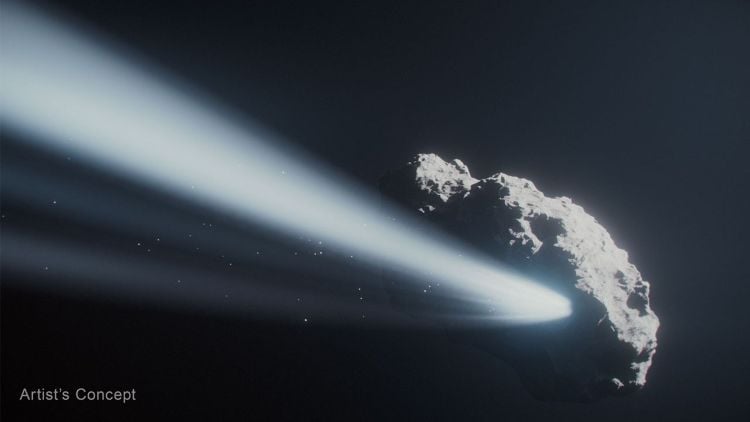
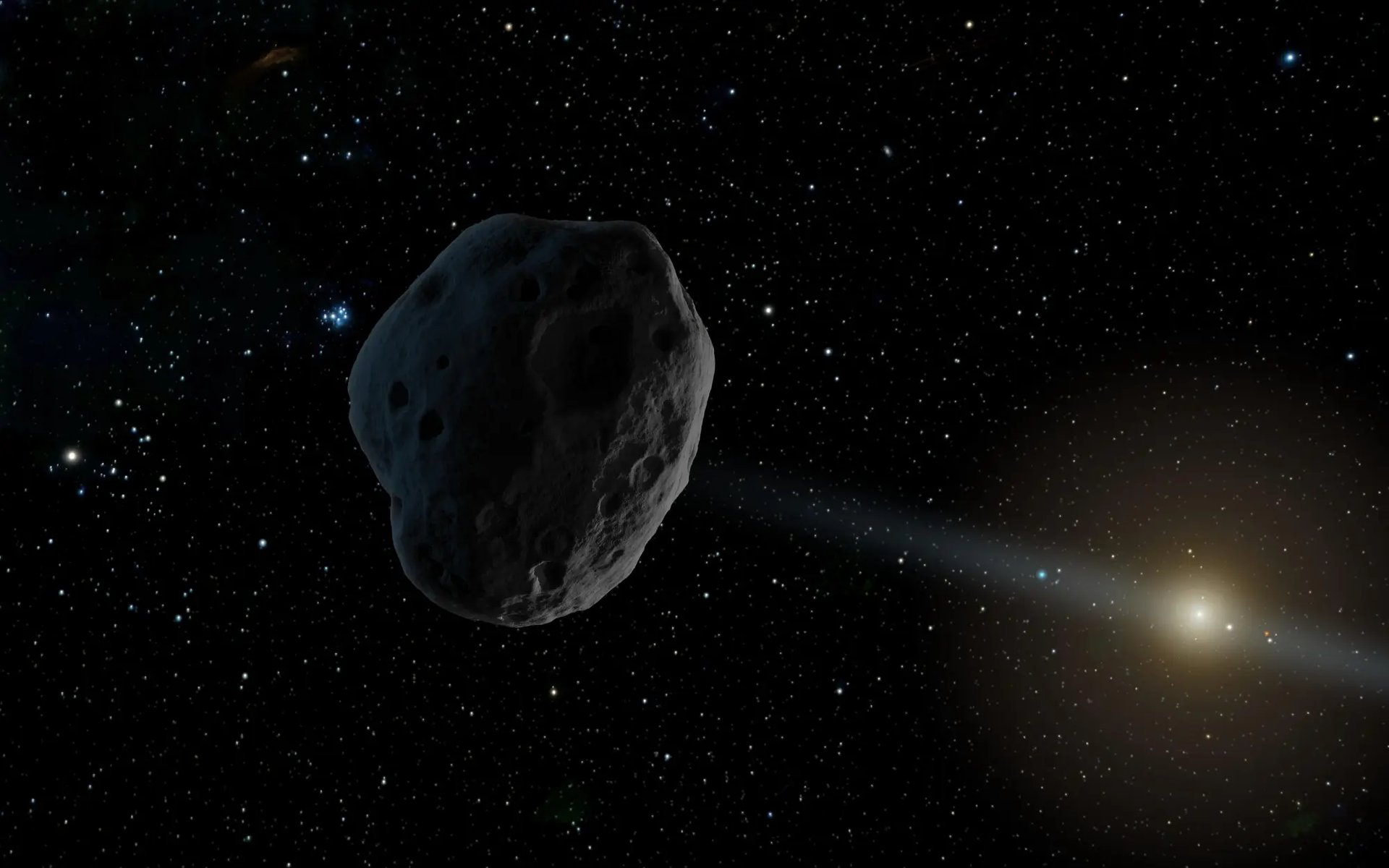
Artist's depiction of a near-Earth asteroid with an elongated orbit. Credit - NASA/JPL-Caltech

Our ability to track and visualize small rocks in space is still improving. And occasionally we’ll find a space rock that will remind us of that fact. One such rock is detailed in a new paper, led by Davide Farnocchia of NASA’s Jet Propulsion Laboratory, and recently published in Nature Astronomy, where the research team discovered what they thought was a normal, run of the mill asteroid, was actually a “dark comet”.


Monday, July 20, 2026

Astronomers Determine that Exoplanets Around Barnard's Star are Extremely Uninhabitable

Artist’s illustration of exoplanets orbiting Barnard’s Star. Credit: [International Gemini Observatory/NOIRLab/NSF/AURA/P. Marenfeld](https://www.gemini.edu/gallery/images/noirlab2510a/)

Scientists have painted the most detailed portrait yet of the planetary system orbiting Barnard’s Star. Unfortunately, the picture is not encouraging, as all four planets appear to be "extremely uninhabitable."


Meet Our Newest Stellar Neighbours That Hid in the Glare of Other Stars

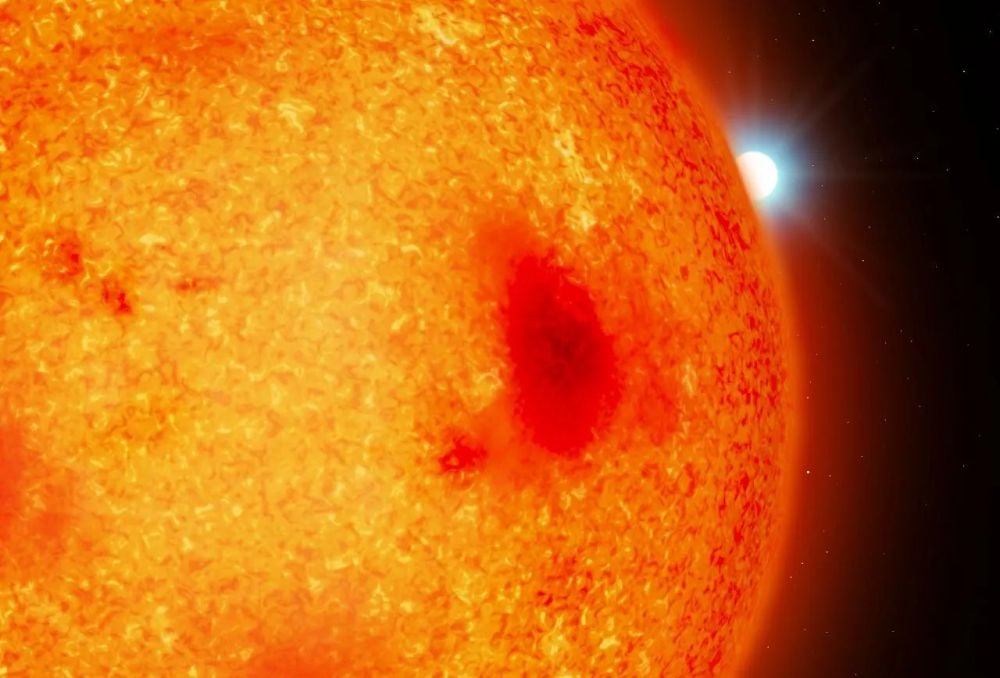
This artist's illustration shows a white dwarf and its much larger red dwarf binary companion. Astronomers have four more of these binary stars in the Sun's neighborhood. They're called post-common-envelope binaries, and they're hard to detect because the bright red dwarf hides the white dwarf from telescopes. Image Credit: Mark A. Garlick/University of Warwick

Astronomers have found four new white dwarfs within about 65 light years. Even though the sky has been studied thoroughly, these escaped detection. That's because they're tight binaries with red dwarf partners, and the much brighter red dwarfs hide the white dwarfs. The binaries used to share common envelopes.


A Star Orbiting Our Galaxy's Supermassive Black Hole Tests the Limits of Relativity

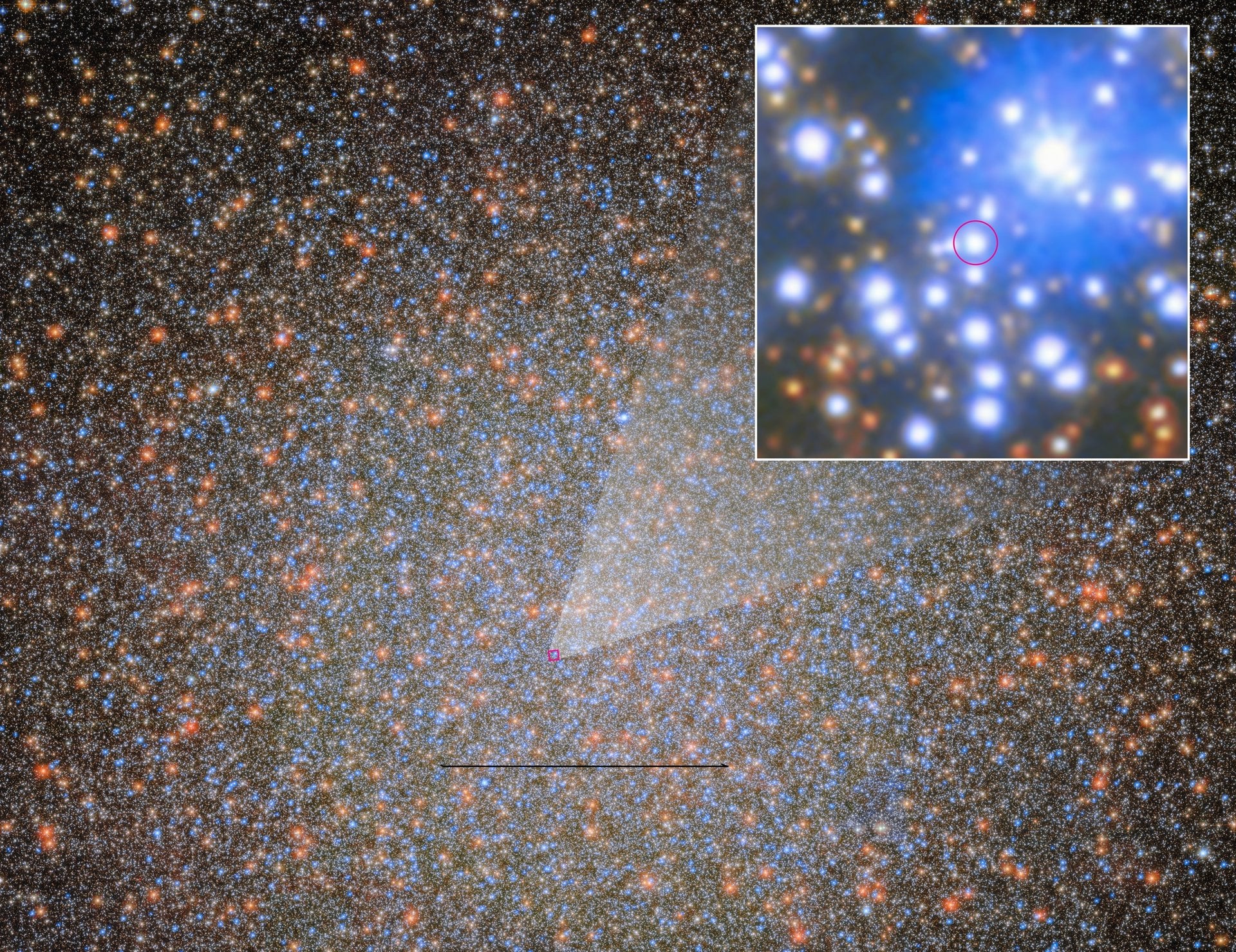
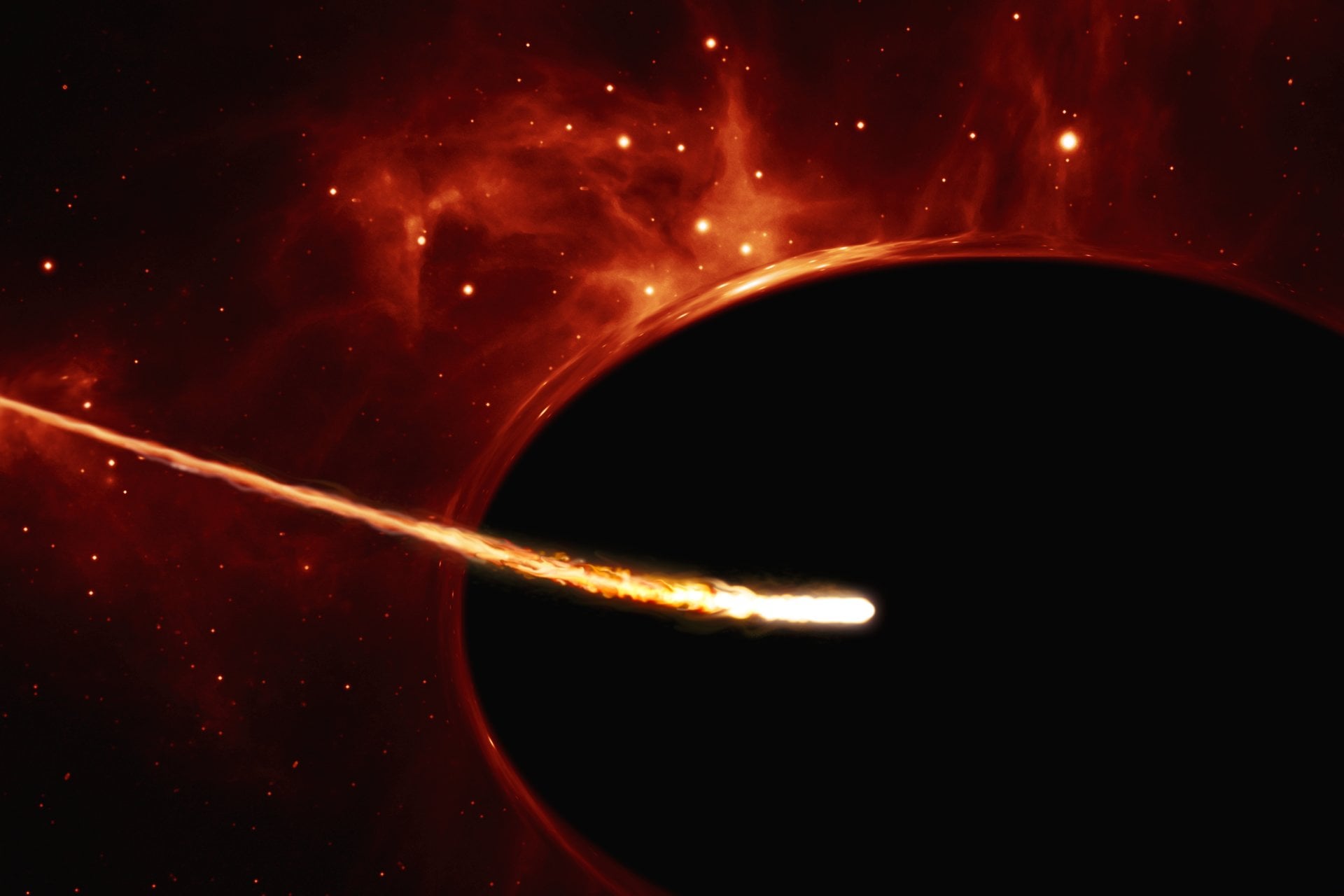
Illustration of a sunlike star passing very close to a supermassive black hole. Credit: ESO, ESA/Hubble, M. Kornmesser

A Sun-like star orbits the supermassive black hole in our Milky Way so closely that it comes within the distance of Neptune's orbit of the Sun. It has a top speed of more than 8% of light speed. With such extreme motion the star gives astronomers the opportunity to test the limits of general relativity.


Chandrasekhar and the Limits of Physics, Part 1: Triumph

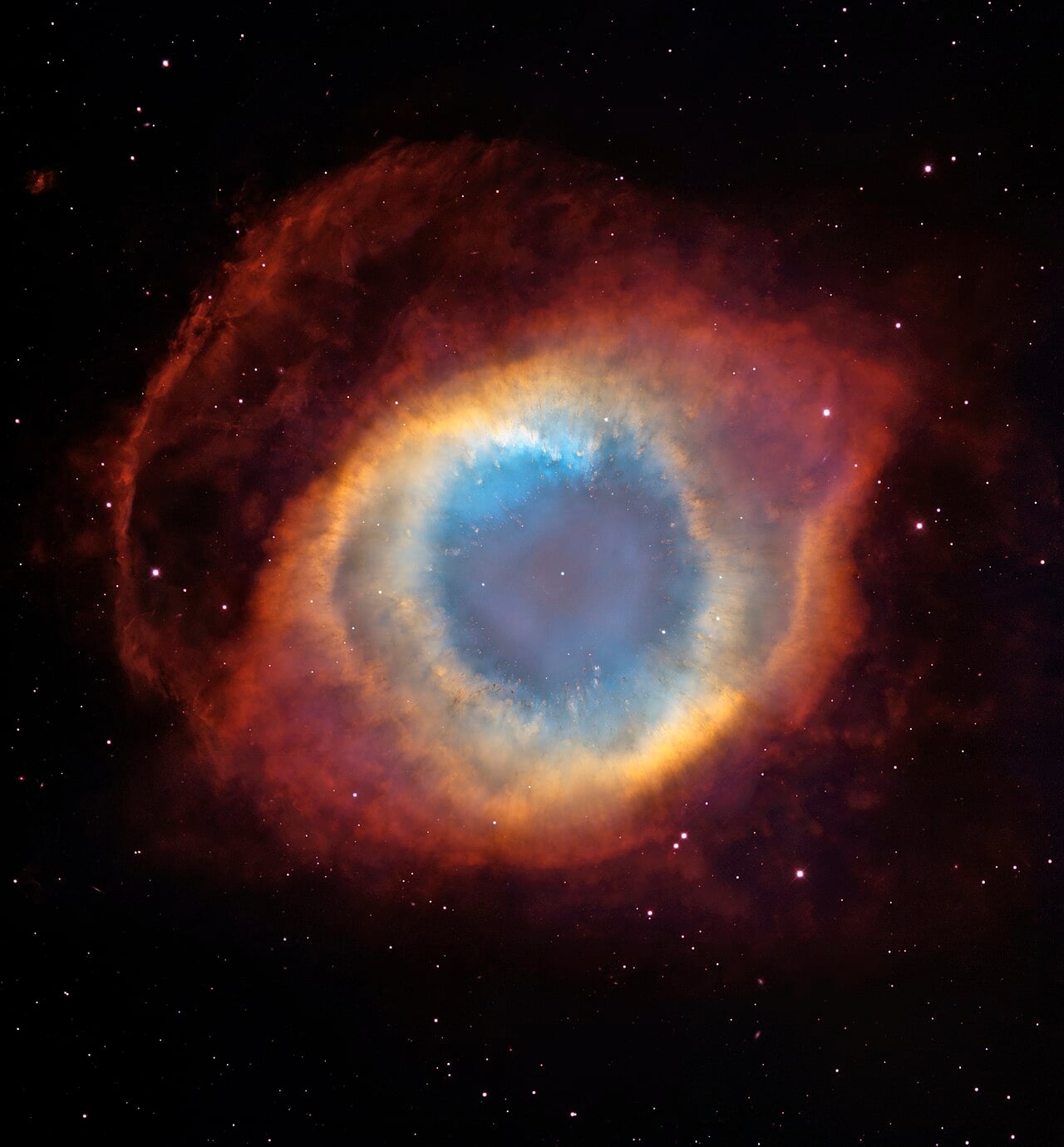
The Helix Nebula, the glowing shell thrown off by a dying star, with a hot white dwarf at its heart. White dwarfs, and the 1.4 solar mass limit that governs them, were Chandrasekhar's breakthrough. Credit: NASA/JPL-Caltech / Wikimedia Commons (public domain).

The story of Subrahmanyan Chandrasekhar, who as a teenager on an ocean voyage worked out that white dwarf stars have a maximum mass of 1.4 Suns. A tour of degeneracy pressure, the relativistic insight everyone else missed, and the number that would define his life.


Sunday, July 19, 2026

The First Breath of Another World

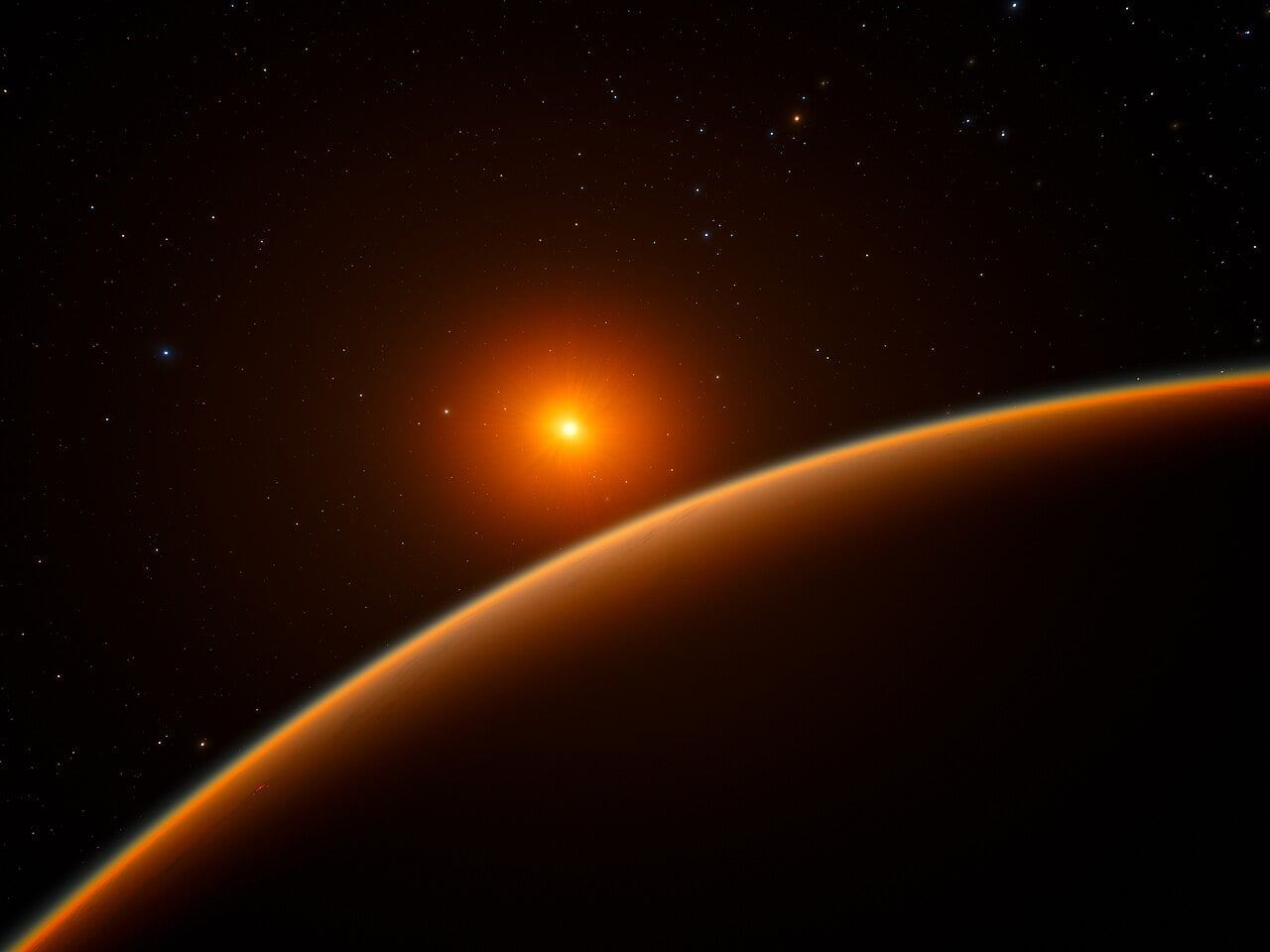
Artist's impression of the planet LHS 1140 b and its host star (Credit : ESO/spaceengine.org)

Astronomers have detected an atmosphere around a rocky planet in another star's habitable zone for the very first time. It’s a milestone that brings us a step closer to answering whether life could exist beyond our Solar System. Predicted by a mathematical model before it was ever observed, and confirmed using a rare planetary alignment 48 light years away, this discovery does more than identify one intriguing world, it provides us with a whole new way to search for others like it.


NASA's Perseverance Rover Uncovers Evidence of 4 Billion Year Old Impacts

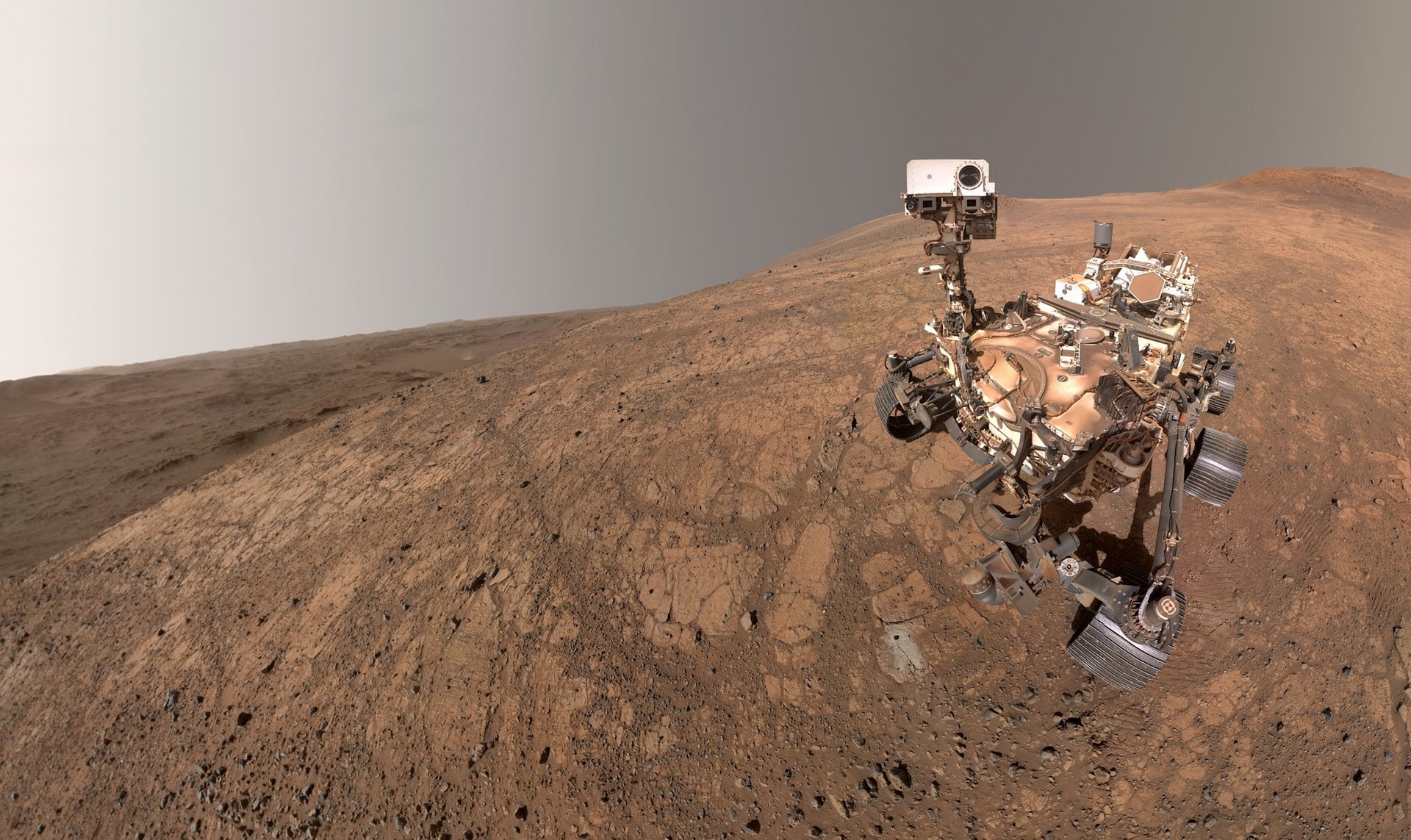
NASA’s Perseverance took this selfie at “Witch Hazel Hill” on Jezero Crater’s rim on May 10th, 2025. Credit: NASA/JPL-Caltech/MSSS

Old rocks exposed on the rim of Jezero Crater preserve a roughly 4-billion-year-old cosmic “weather report” from the solar system’s most dynamic era.


Saturday, July 18, 2026

NASA’s Artemis III Lander Test Will be a "Dress Rehearsal" for Returning to the Moon!

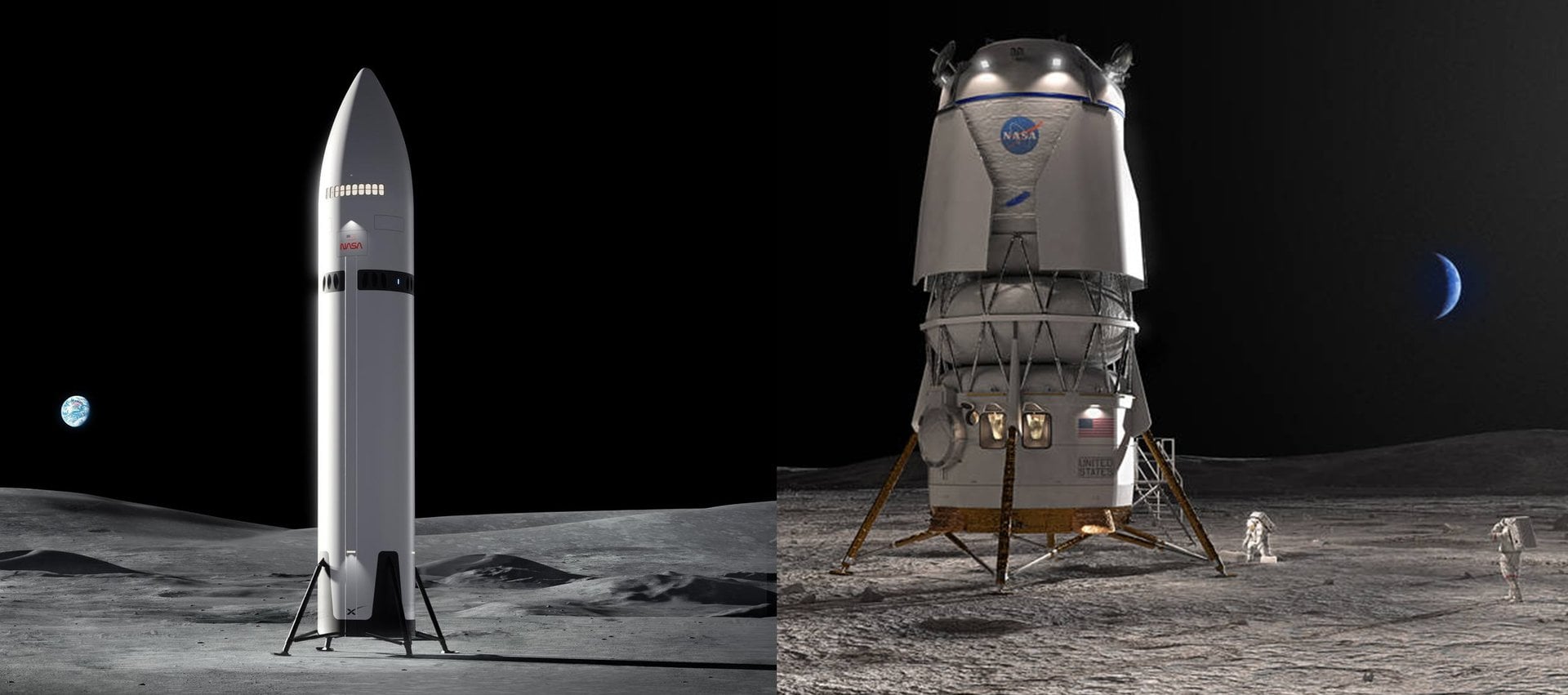
Artist's impression of the Starship and Blue Moon Human Landing System (HLS) concepts on the lunar surface. Credit: SpaceX/Blue Origin

Before Artemis astronauts land on the Moon’s surface in 2028, NASA will conduct the Artemis III demonstration mission in 2027, allowing teams on Earth and in orbit to practice rendezvous and docking operations between commercial human landing systems and the Orion spacecraft. Data from that mission, along with future uncrewed demonstration missions at the Moon,


Submillimeter Array Catches a Gamma-Ray Burst Thanks to new Fast-Response System

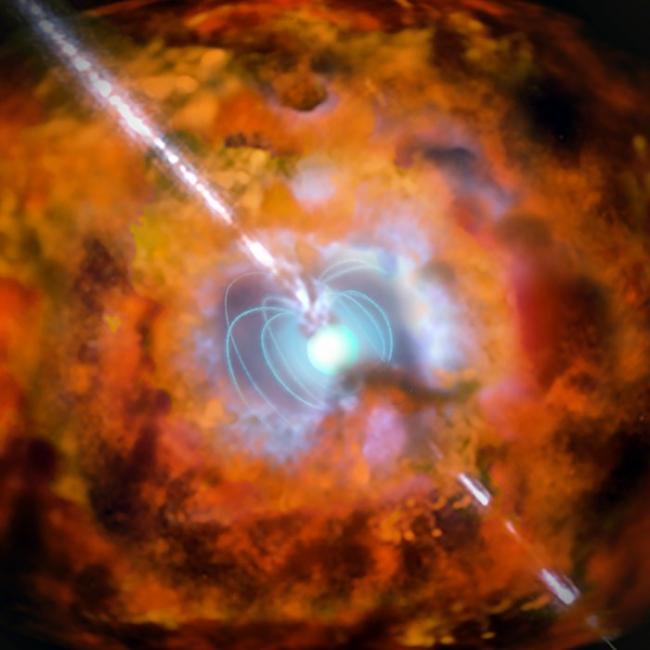
An artist's impression of a superluminous supernova and an associated gamma-ray burst being driven by a rapidly spinning neutron star. Credit: CfA

The Submillimeter Array's (SMA) new semi-automated alert system demonstrates how the radio interferometer quickly responds to discoveries from space-based telescopes.


On The Hunt For Earth’s First Complex Life

Bear Island in the Barents Sea which is a paleontological hotbead known for preserving ancient microfossils.  Credit:  Wikipedia

Finding microfossils of Earth’s oldest complex life is a bit like chasing an astrobiological rainbow. The eukaryotic pot of gold at rainbow’s end always seems just a bit out of reach.


Friday, July 17, 2026

The Dark Energy Camera's New Image is Reminiscent of van Gogh

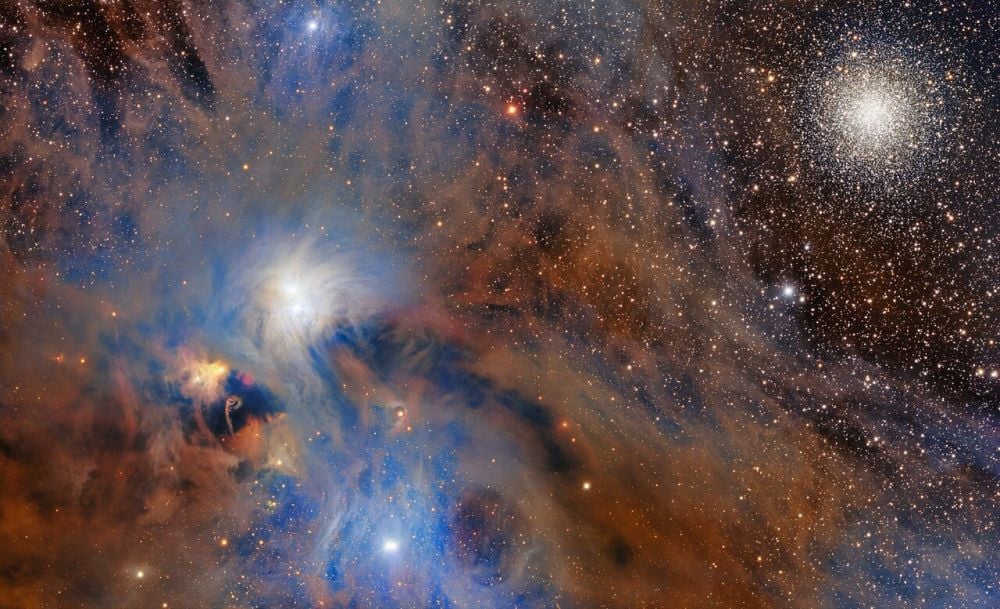
The 570 megapixel Dark Energy Camera captured this image of the Corona Australis Molecular Cloud. It's one of the nearest star forming regions to Earth. R Coronae Australis, a variable binary system, lights up the orange cloud on the left. Dust lanes, newborn stars, and nebulae fill the frame. The globular cluster NGC 6723 is prominent in the upper right, though it's much farther away than Corona Australis. Image Credit: Dark Energy Survey/DOE/FNAL/DECam/CTIO/NOIRLab/NSF/AURA.  Image processing: R. Colombari & M. Zamani (NSF NOIRLab)

The Dark Energy Camera (DECam) has a massive 570 megapixel camera, and its new image is of the Corona Australis Molecular Cloud. Corona Australis is one of the closest star-forming regions to Earth. It's not as well-studied as the Orion Molecular Cloud or Ophiuchus, but as DECam's new iage of Corona Australis shows, it's just as fascinating.


What's It Like to Travel Near the Speed of Light? Part 4: The Hot View

A Saturn V rocket accelerates off the pad. Sustained acceleration is exactly what conjures the faint quantum glow of Unruh radiation. Credit: NASA (public domain).

An accelerating observer finds their empty vacuum glowing with real particles, a bizarre effect called Unruh radiation. It's a cousin to Hawking radiation, but with no black hole required, just a rocket and its throttle.


X-Ray Eyes Reveal the Magnetic Secrets of the Lighthouse Pulsar's Cosmic Wake

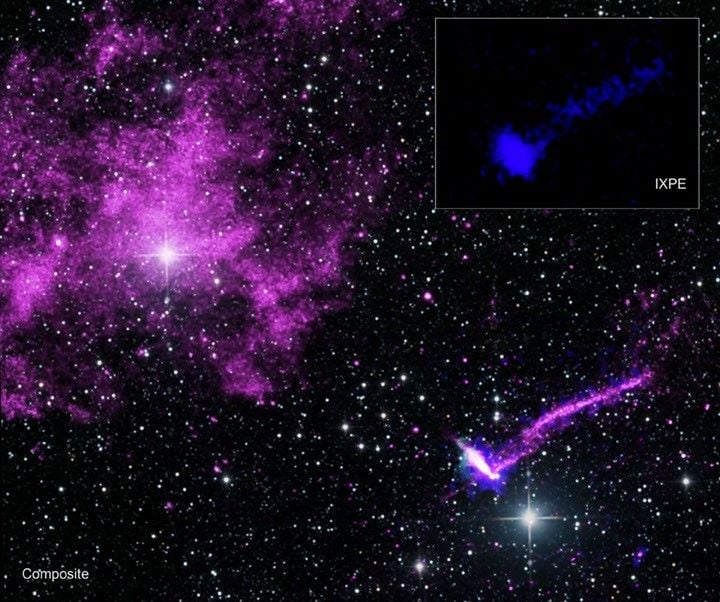
False color image of the Lighthouse Pulsar. Credit : X-ray: Chandra: NASA/CXC/Stanford Univ./J.T. Dinsmore et al.; IXPE: NASA/MSFC/J.T. Dinsmore et al., Radio: CSIRO/ATNF/ATCA; Optical: 2MASS/UMass/IPAC-Caltech/NASA/NSF; Image processing: NASA/CXC/SAO/L. Frattare

Space Telescope Maps Magnetic Fields of "Lighthouse" Pulsar kerryhensley45577 Mon, 07/13/2026 - 10:49 Space Telescope Maps Magnetic Fields of "Lighthouse" Pulsar https://science.nasa.gov/missions/ixpe/nasa-space-telescope-maps-magnetic-fields-of-lighthouse-pulsar/


FCC Approves First Launch for Space Reflector Constellation

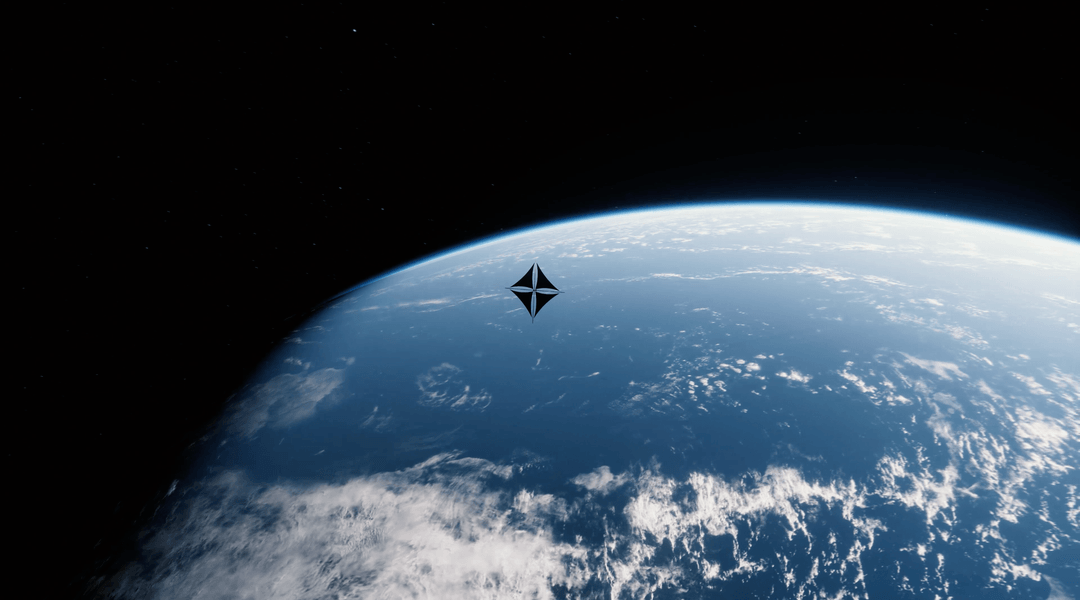
An artist's conception of Eärendil-1 in orbit. Credit: Reflect Orbital.

The United States Federal Communications Commission (FCC) recently approved the first test launch of Reflect Orbital’s Eärendil-1 satellite. Sporting an 18 by 18 meter-wide reflector once unfurled, the satellite will test the ability to reflect sunlight back to Earth, on demand. The company envisions more than 50,000 reflectors girding the Earth in low Earth orbit by 2035, while many in the astronomical community have raised concerns on the project's impact.


Thursday, July 16, 2026

Satellite Images of Pengiun Poo Reveal Climate Change's Impact on the Species

Nesting Adélie penguins on Antarctica's King George Island. Credit: Michael Polito, UC Santa Cruz

Researchers utilized 30 years of Landsat satellite imagery to analyze the color and spectral signatures of Adélie penguin guano across Antarctica, marking the first time space-based observations have captured food-web and population dynamics at a continental scale.


This Exoplanet Hid for 10 Years Before Astronomers Finally Found It

The ESO's Very Large Telescope captured this image of the Beta Pictoris system. The newly-imaged exoplanet, Beta Pictoris d, is marked with the white arrow. The star Beta Pictoris is shown with the star symbol. Beta Pictoris b is on the left, while the other star in the system, Beta Pictoris c, is not visible. The horizontal band across the star is the debris disk, made of material left over after planet formation. Image Credit: ESO/B. Sutlieff, M. Bonse et al.

A team of astronomers have discovered a third planet orbiting the star Beta Pictoris. The new planet, Beta Pictoris d, is 100 times fainter than Beta Pictoris b — the first planet discovered in the same system — and is among the lightest exoplanets ever to be imaged from the ground. After spotting the planet using the European Southern Observatory’s Very Large Telescope (ESO’s VLT), the team found it had been hiding in archive observations spanning more than a decade.


What's It Like to Travel Near the Speed of Light? Part 2: The Warped View

The arch of the Milky Way. Near lightspeed, all of this starlight would compress into a single blazing disk directly ahead of you. Credit: Wikimedia Commons (CC BY 4.0).

Move fast enough and the entire universe compresses into a searing, blueshifted cone of light aimed at your face. How relativistic aberration and the Doppler effect warp your view of the cosmos as you approach lightspeed.


Tuesday, July 14, 2026

After a Billion Kilometres, China's Asteroid Hunter Finally Arrives

Kamoʻoalewa, also known as 2016 HO3, a small near-Earth asteroid and quasi-satellite of Earth, now the target of China's Tianwen-2 sample return mission (Credit : NASA/JPL-Caltech)

After chasing a small asteroid across a billion kilometres of space, China's Tianwen-2 probe has finally caught up, closing to within twenty kilometres of its target and beginning detailed scientific study. What it uncovers next could help settle a genuinely intriguing question, whether this quiet companion of Earth is simply another asteroid, or a long lost piece of the Moon itself.


A Relativistic Jet Could be an Indication of the 'Missing-Link' for Black Holes

Artist's conception illustrating the aftermath of an intermediate-mass black hole tearing apart a passing star, resulting in an accretion disk and narrow relativistic jet (top left). Credit: NSF/AUI/NSF NRAO/M.Weiss

Astronomers using the U.S. National Science Foundation Very Large Array (NSF VLA) have detected an extraordinary burst of radio light from a rare cosmic event in which an intermediate-mass black hole tears apart a star, revealing what appears to be the off-axis afterglow of a powerful jet.


The Oldest Stars in the Galaxy Just Weighed In on One of Cosmology's Biggest Arguments

Omega Centauri, the largest and brightest globular cluster in our sky, holding roughly 10 million ancient stars. Clusters like this are home to some of the oldest stars in the Galaxy, the very objects this new study used to test the age of the universe itself (Credit : NASA/ESA)

Astronomers have measured the ages of over a hundred and fifty thousand ancient stars scattered across our Galaxy, and found the oldest of them is just the age it should be if the standard picture of the universe is correct. That simple agreement quietly undermines one of the leading attempts to explain a stubborn mystery, and hints that the real answer to the Hubble tension may lie somewhere else entirely.


Artificial Intelligence is Easily Fooled in the Search for Life

Finding life or evidence of past life elsewhere in the Solar System is the driving force behind modern space exploration. But there's no definitive chemical biosignature that we can rely on. Instead, future missions will employ AI to detect molecules capable of handling information and replicating themselves. But new research shows that method is fraught with false positives. Image Credit: NASA

AI is a powerful tool in scientific research. It can be used to find patterns in vast quantities of data. But it also generates false positives, as most of us know. This is an "Achilles Heel" according to researchers who tested a neural network's ability to detect life.


Monday, July 13, 2026

Rebooting a Spacecraft, 140 Million Kilometres From Home.

The Hera control team at ESA's European Space Operations Centre, sending commands to a spacecraft 140 million kilometres away, with an eight minute wait before any reply (Credit ESA/NASA)

Engineers have just upgraded the software running a spacecraft 140 million kilometres away, then held their breath through two full reboots with an eight minute delay on every command. The prize for getting it right is a close up look at an asteroid humanity has already changed forever, and the answer to a question nobody has been able to answer since 2022, what did we actually do to it?


How the SKA Will Use Fast Radio Bursts to Decode the Universe

Image of some of the SKA-low antennas. Credit - SKAO

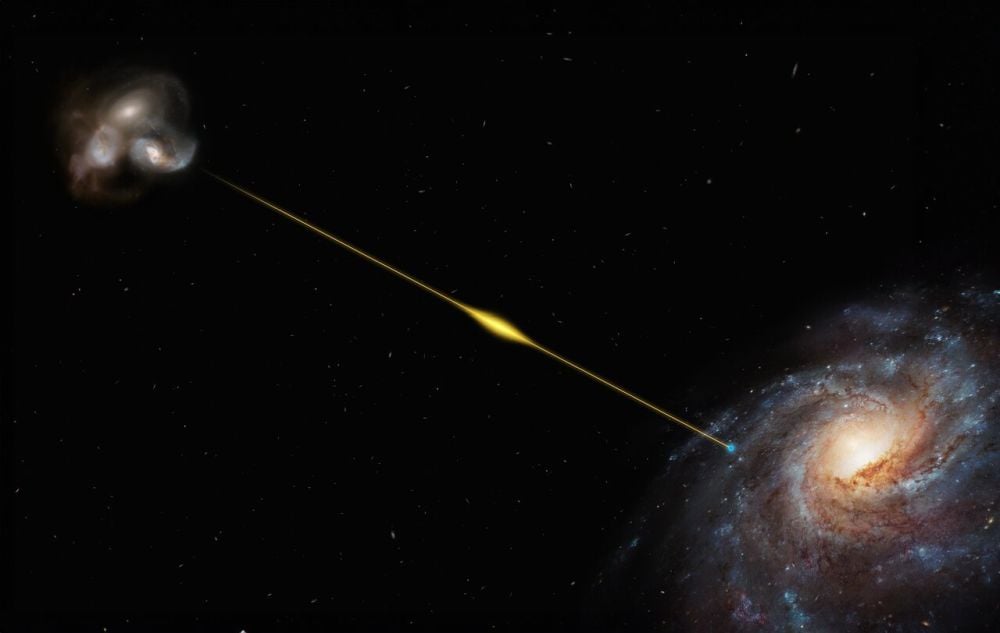
There are parts of the universe that are extremely hard to see, even for our most advanced telescopes. Gas and dust don’t emit any light, and are only visible by the light that they happen to block from stars and galaxies. Magnetic fields are even harder since regular light typically passes right through them. However, according to a new paper available in pre-print on arXiv, by Manisha Caleb of the University of Sydney and their co-authors, we’re currently commissioning a potentially game-changing new tool that could use a particularly violent astronomical phenomenon to provide new insight into these hard to see places.


Are We Missing the Universe's "Noosignatures"?

A picture of a Acheulean hand axe, a type of noosignature that can be found on Earth. Credit - The Portable Antiquities Scheme, Julian Watters

Astrobiology has long been split into two camps: a search for "biosignatures" and a search for "intelligence." These look for very different things, but they also leave a huge gap in between. It took 3.5 billion years for us to go from the first microbe to a civilization that sent radio waves out into the cosmos. Detecting life in between those stages is a relatively untouched aspect of astrobiology—which is also the focal point of a new paper, "Signs and Signatures of Intelligence", available in pre-print on arXiv, by astrobiologist Julia DeMarines.


Sunday, July 12, 2026

Listening for the Universe's Faintest Whispers, a Billion Supernovae at Once

A model showing the inside of the Super Kamiokande detector.

Buried a kilometre underground in Japan, one of the world's most sensitive detectors may have caught its first faint trace of a sound scientists have been straining to hear for decades, the combined whisper of every supernova that has ever exploded across the universe. It is not yet a confirmed discovery, but if it holds up, it could rewrite how we trace the life and death of stars.


Most Of Moon’s Water Likely Remains Chemically Bound In Its Deep Interior

Geologist-Astronaut Harrison H. Schmitt is photographed standing next to a huge, split boulder at Station 6 on the sloping base of North Massif during the third Apollo 17 extravehicular activity (EVA-3) at the Taurus-Littrow landing site. Credit: NASA

Aside from an unknown quantity of water in the Moon’s permanently shaded polar craters, the lion’s share of what water the Moon may have is likely chemically bound in its deep interior.


China Successfully Tests Reusable Long March-10B

China's Long March-10B booster successfully landed in its retrieval net system on July 10th, 2026. Credit: CCTV

On Friday, July 10th, China achieved a major milestone as its Long March-10B completed a its maiden test flight, which included the retrieval of its first stage booster.


Saturday, July 11, 2026

Friday, July 10, 2026

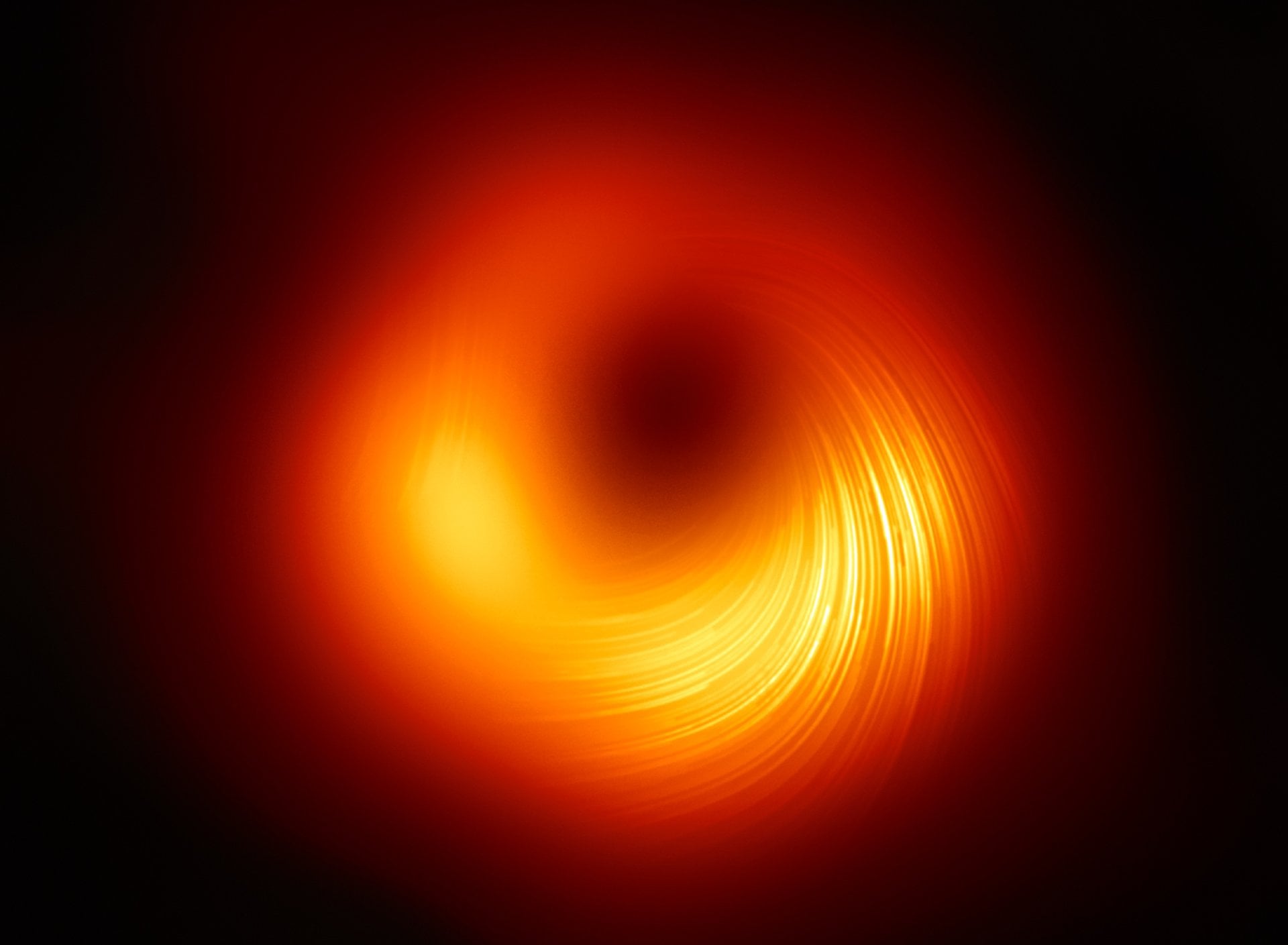
A Rapidly-Growing Black Hole in a Nearby Galaxy Could Provide a Window Into the Early Universe.

Illustration of the black hole at the center of the galaxy SDSS J110546.07+145202.4, highlighting its luminous accretion disk and jet. Credit: MPIfR

The black hole at the centre of a nearby galaxy is growing exceptionally fast, and is producing a burst of radio emission that has never been observed before. With characteristics that are expected in the early Universe, this unique galaxy provides important insights into the processes that governed the growth of the first black holes.


Only Binary Stars Can Create Interacting Supernovae

Most stars, including massive ones that will end their lives as supernova explosions, are in binary pairs. Some of the massive, donor stars in these relationships will explode as interacting supernovae due to material ejected before it explodes. The material forms a cocoon of circumstellar material that is illuminated for much longer than a typical supernova. Image Credit: ASIAA/Sung-Han Tsai

When a massive star reaches the end of its life, it explodes as a supernova that can light up the sky for months. But some supernovae stay luminous for much longer, and astrophysicists have wondered what causes their extended brightness. New research points to binary stars, where one star expels material right before the explosion that creates a cocoon of circumstellar medium.


Thursday, July 9, 2026

How 'Star City' Reimagined the Space Race With Soviets as the Stars

A female cosmonaut (played by Alice Englert) speaks after landing on the moon in "Star City." (Credit: Apple TV)

How do you capture the mood of the 1960s space race in a fictional universe where the Soviets beat the Americans to the moon? The production team for Apple TV's "Star City" series rose to the challenge.


To Ancient Astronomers, Theta Eridani Was Brighter For A Thousand Years. Now We Know Why

Theta Eridani was considered one of the thirteen brightest stars by ancient astronomers, but it's not that luminous now. That mismatch has puzzled modern day astronomer, who've struggled to understand the discrepancy. But modern observations show it's actually a triple star system, and mass transfer between the stars can explain its ancient luminosity. Image Credit: STScI/DSS

Ptolemy and al-Sufi were keen ancient astronomers, one in Greece and one in Persia, whose observations were separated by almost a thousand years. They both noted that the star Theta Eridani was far brighter than it is today. Now we know why.


Ultra-Black Coating Could Mitigate Light Pollution Caused by Satellites

Image of the Australian desert showing the growing light pollution caused by artificial satellites. Credit: Joshua Rozells

Astrophysicists working tirelessly to tackle the growing impact of satellite constellations have pioneered a new ultra-black coating as one possible way to mitigate the problem.


Wednesday, July 8, 2026

7,000 Galaxy Clusters, Hiding in Plain Sight

South Pole Telescope seen at night (Credit : U.S. Antarctic Program Blue Ribbon Panel

A five year survey by the South Pole Telescope has produced a catalogue of more than seven thousand galaxy clusters, some dating back nearly eight billion years, giving astronomers their most detailed map yet of the universe's largest structures. Hidden inside the data is something even the researchers did not expect, a discovery that is quietly reshaping how we think star formation unfolded across the history of the universe.


Detecting Atomic Weapons in Space

The large majority of satellites are in Low-Earth Orbit, including the handful seen in this image. The Outer Space Treaty prohibits weapons in space, but some are suspicious that Russia is experimenting with them because they placed a suspicious satellite in Low-Earth Orbit. New research proposes a method to detect atomic weapons in space, to keep signatories to the Outer Space Treaty honest. Image Credit: NOAA.

The Outer Space Treaty from 1967 prohibits weapons in space. But a satellite launched by Russia has generated suspicion. Despite claims that it's a normal satellite, some things about it suggest otherwise. New research proposes a way to detect atomic weapons in space, helping enforce the treaty.


The Milky Way's Arms Reach Out Further Than we Thought

An artist’s concept showing the Milky Way galaxy as seen from above, with the estimated positions of spiral arms based on previous data, in blue. Credit: NASA/CXC/SAO/M.Weiss

A new result using NASA’s Chandra X-ray Observatory shows that the outer spiral arms in the Milky Way galaxy may reach wider than previously thought. This finding may lead astronomers to adjust their understanding of our home galaxy’s structure.


The JWST and the Mystery of Massive Quenched Galaxies in the Early Universe

This image shows four of the massive quenched galaxies the JWST found in the early Universe. These images show them as they were around 9 billion years ago, during the Cosmic Noon. The Cosmic Noon was a period of peak star formation in the Universe's galaxies, yet many of these quenched galaxies have been found. Image Credit: David Maltby - University of Nottingham

With its ability to observe the red-shifted light from early galaxies, the JWST has revealed some surprises. Many massive galaxies in the early Universe had ceased star formation and were already quenched hundreds of millions of years sooner than thought. By examining their morphology, new research shows that mergers that were previously hidden from view are responsible.


Tuesday, July 7, 2026

Another Success for Hayabusa 2 as it Completes a Flyby of Asteroid Torifune

JAXA's Hayabusa 2 spacecraft has delivered our first closeup image of asteroid Torifune. The image clearly shows that the asteroid is a contact binary made of a pair of once separate asteroids that joined together. Image Credit: JAXA, The University of Tokyo, Chiba Institute of Technology, Institute of Science Tokyo, AIST, Paris Observatory, IAC.

JAXA's Hayabusa 2 has completed its flyby of asteroid Torifune. The spacecraft came within about 800 meters of the asteroid's surface. Though the spacecraft is travelling very rapidly, making navigation challenging, it was still able to capture clear images of the asteroid's boulder-strewn surface. Based on ground-based observations, scientists suspected that Torifune was a contact binary asteroid, and these images confirm it.


The Euclid Space Telescope Has Found 31 New Ancient Quasars, Including the Most Ancient One Ever Found

This artist's illustration shows a quasar, an extremely luminous AGN powered by a supermassive black hole. The Euclid space telescope has found 31 new quasars in the high-redshift Universe, which can be used to probe dark matter distribution in the early Universe. Image Credit: ESA. Licence: CC BY-SA 3.0 IGO or ESA Standard Licence

Euclid is only 1.5 years into its Euclid Wide Survey and has found 31 new quasars from the Universe's first 800 million years. Though the Survey isn't specifically aimed at finding ancient quasars, it's proving to be remarkably effective at it. This large sample of quasars will help with the study of ancient galaxies and supermassive black holes.


Astronomers Using Chandra Data Produce the Most Detailed View of the M87 Jet in X-rays

The powerful jet emanating from the supermassive black hole at the center of the M87 galaxy. Credit: NASA/ESA/STScI

Combining data from NASA's Chandra X-ray Observatory with advanced image-processing techniques to produce the sharpest X-ray view yet of the relativistic jet from M87's supermassive black hole.


Galaxy Mergers Aren't Always Obvious

The JWST's Mid-Infrared Instrument (MIRI) captured this image of the galaxy Centaurus A. MIRI revealed otherwise hidden structures and dust in the galaxy, including looping patterns and filaments. These are evidence of a past collision. The image also shows the galaxy's supermassive black hole, which is actively feeding and luminous. Image Credit: NASA, ESA, CSA, STScI. Image Processing: A. Pagan (STScI), J. Depasquale (STScI), M. Garcia Marin (ESA Office at STScI)

Mergers are a part of a galaxy's life in this Universe. Though clear signs of these mergers fade over hundreds of millions of years, evidence is still present, yet obscured, in the galaxies that experience them. The powerful JWST has made it possible to find this evidence, and it did so recently for Centaurus A.


Monday, July 6, 2026

University Team Proposed Retractable, Pressurized Tunnels for Missions to Mars

![System Concept of Operations for the HATCH concept. Credit: BLiSS team/NTRS](/article_images/Screenshot_2026-07-04_at_18-23-20_UMich_BLiSS_XHab_LATCH_Final_Rpt_1.pdf_20260706_175317.png) *System Concept of Operations for the HATCH concept. Credit: BLiSS team/NTRS*

As part of NASA's Moon to Mars eXploration Systems and Habitation (M2M X-Hab) 2026 Academic Innovation Challenge, a University of Michigan team proposed an actuated, pressurized tunnel system that would save countless hours of work and preparation by connecting the astronaut's habitat with other surface elements.


Andromeda's Newest Dwarf Galaxy is Extremely Dim

Andromeda XXXVI (And 36) is shown in red in this image. It's one of many dwarf galaxies found around Andromeda, or M31, in the center of the image. And 36 is about 12.5 billion years old and is about 390,000 light years away from Andromeda. Image Credit: Sakowska et al. 2026. A&A.

Astronomers have discovered an extremely low-mass and dim dwarf galaxy around Andromeda. Called And 35, it's an Ultra-Faint Dwarf Galaxy (UFDG) and so far, the researchers have detected only 46 of its stars. Lambda-CDM predicts that there should be many UFDGs around galaxies like Andromeda and the Milky Way, so finding more of them is important.


New Horizons Watches the Solar Wind as it Slows Down

An artist's conception of the heliosphere, the bubble generated by the Sun's magnetic field and envelopes the solar system. The Sun generates the solar wind that flows out past the planets. Credit: NASA's Goddard Space Flight Center Conceptual Image Lab

Where does the Solar System end and interstellar space begin? That's a question scientists have been working to answer using spacecraft traveling out beyond the Sun's influence. A team of researchers from the Southwest Research Institute led by Heather Elliott, is using the Solar Wind around Pluto instrument onboard New Horizons to track the solar wind in the outer reachers of the Solar System.


A New Net-Membrane Could Clean Up Some Tricky Space Debris

Image of the RemoveDEBRIS debris removal demonstration satellite, which used a net to prove the concept of deorbiting debris with that implement. Credit - NASA/Expedition 56 crew

We’ve reported on all kinds of wacky ideas for capturing and deorbiting space debris safely. From electric tethers to lasers, engineers and scientists have been trying everything they can think of to deal with the ever-increasing orbital debris problem. But one simple design keeps popping up over and over again - a net. A new paper from researchers at the Chinese Academy of Sciences and the University of Electronic Science and Technology of China details one of the most advanced net concepts yet - but whether we can actually build one remains to be seen.


The Square Kilometre Array Will Revolutionize the Hunt for Alien Life

Artist's impression of the SKA. Credit - SKA Project Development Office and Swinburne Astronomy Productions

With new technologies come new opportunities. And that is especially true in astronomy - with every new advanced telescope we have the potential to see (or in some cases, listen) further and more clearly than we ever have before. That is certainly the case for the new Square Kilometre Array (SKA), which is currently undergoing a multi-year roll out phase. Despite that drawn out process, astronomers are already excited about its potential, and a new book chapter from Dr. Chenoa Tremblay and her co-authors details how this new technology could be used to answer one of the most fundamental questions - are we alone?


Sunday, July 5, 2026

Nearby "Super Earth" Could Host Life After All

Artist’s conception of the view from the surface of the habitable-zone super-Earth exoplanet GJ 3378b. Credit: Nikolai Berman/UC Irvine.

Using the Hobby-Eberly Telescope at McDonald Observatory, astronomers have taken a closer look at a nearby exoplanet and discovered it may be more Earth-like than previously thought.Using the Hobby-Eberly Telescope at McDonald Observatory, astronomers have taken a closer look at a nearby exoplanet and discovered it may be more Earth-like than previously thought.


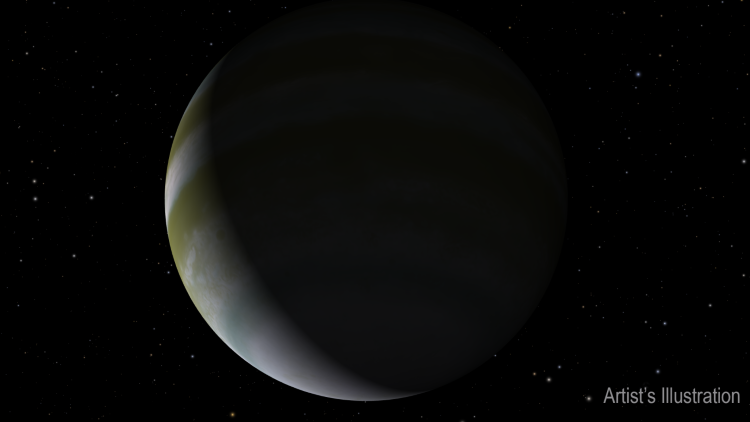
Astronomers Characterize "Improbable" System Shaped by Brown Dwarf

None

An international team involving over ten institutions, with a strong participation from ESO and INAF, has characterised TOI-201 c, the transiting brown dwarf with the longest period for which mass has been measured. The study, published today in Nature, reveals a compact, coplanar system in which the presence of a massive, eccentric object redefines the stability boundaries for the inner planets