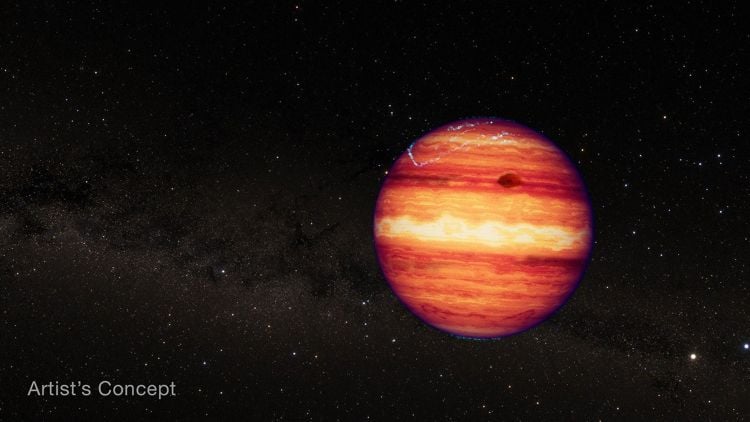
Jupiter’s moon, Io, is the most volcanically active planetary body in the solar system, boasting hundreds of active volcanoes spewing molten lava into space. This occurs from a process called tidal heating where Jupiter’s massive gravity constantly stretches and compresses the much smaller moon during the latter’s non-circular orbit. However, a lesser-known fact is that Io’s volcanic gases fuel Jupiter’s aurorae by traveling along Jupiter’s magnetic field lines, resulting in Jupiter’s bright aurorae observed by spacecraft and Earth-based telescopes. But what if this same phenomenon could be used to detect Io-like exomoons, also called exo-Ios, orbiting Jupiter-like exoplanets?

No comments:
Post a Comment