Wednesday, September 30, 2026

Mars' North Pole Ice Is Far Cleaner Than Expected

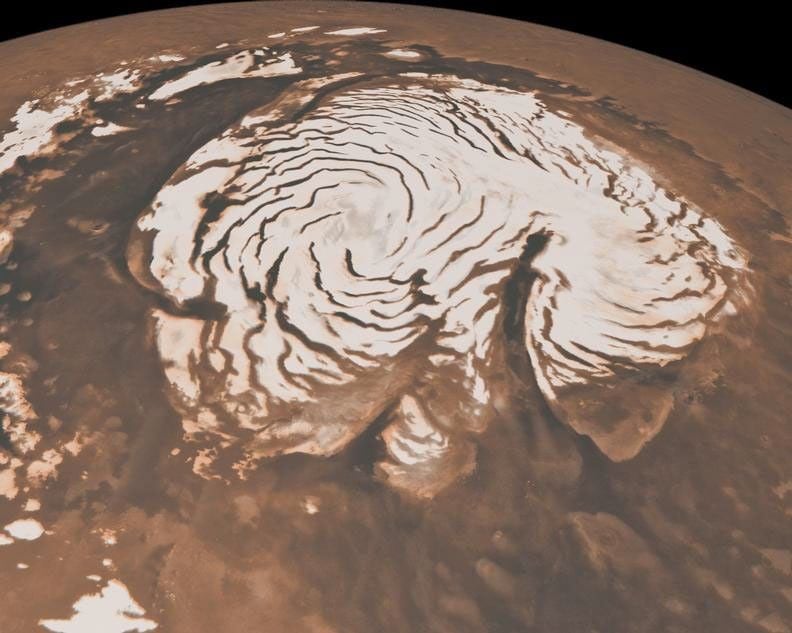
North Pole of Mars. (Credit: NASA/JPL-Caltech/MSSS)

The planet Mars is known for its massive dust storms, dust devils, and two large polar ice caps, with its north polar cap being one of the Red Planet’s most striking features. Comprised of water ice, the north polar cap not only holds potential for being a source of water for future human missions, but it also helps researchers’ piece together past climates on Mars. But an ongoing debate within the scientific community is the ice-dust relationship at the north polar cap, specifically how much dust comprises the north polar cap compared to the much larger amount of water ice.

First Direct Image of Protoplanet Swirling Surrounding Gas

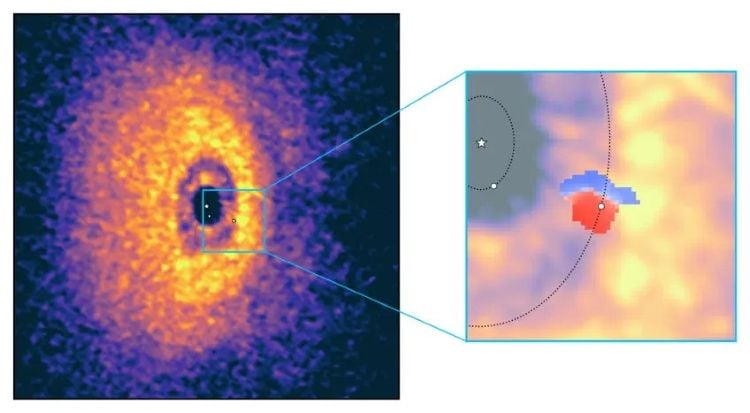
Image of WISPIT 2b (inset outer white dot with red and blue) and WISPIT 2c, (inset inner white dot) taken by ALMA in Chile. WISPIT 2b is the first directly imaged protoplanet (young planet) with gas moving towards us being blue and gas moving away from us being red. (Credit: M. Benisty, MPIA / ALMA)

The formation and evolution of planets is the driving force behind both where and how we might find life beyond Earth. This complex and lengthy process first begins with a massive ball of gas and dust that swirls until it flattens into a disk, followed by rocks ranging in size from pebbles to kilometer-scale objects clumping together in a process known as accretion, as they too swirl around within the larger disk and form rocky planets closer to the star and the farther out planets collect the gas, ice, and dust that the star couldn’t evaporate. Until now, researchers have been limited to visualizing the swirling gas and dust forming planets through computer models.


Coldest Lava Exoplanet Found to Hold an Atmosphere

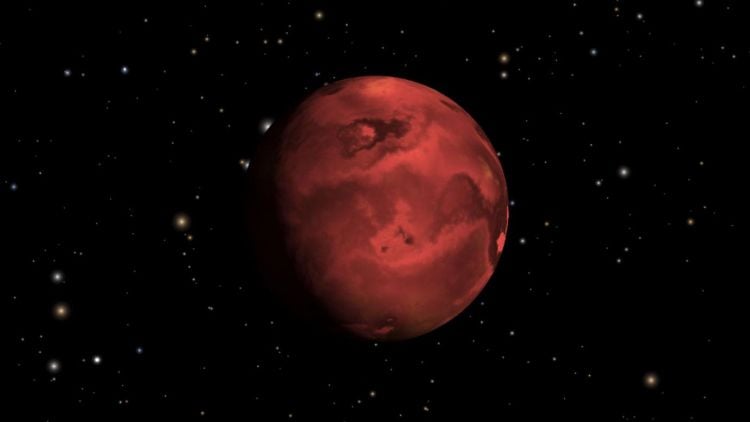
Artist's illustration of a lava exoplanet. (Credit: NASA)

Exoplanets continue to challenge our understanding of planetary formation, evolution, and whether they might be able to support life as we know it. Scientists often use planets in our solar system as analogs for exoplanets, studying exoplanets with extremely short orbital periods forces scientists to constantly rethink our understanding of what planets can withstand during their lifetimes. One such type of exoplanet that has entered the foray in recent years are “lava world” exoplanets, and especially lava exoplanets that orbit dangerously close to their stars. But while it has been long known that lava worlds on with higher temperatures have atmospheres, “colder” lava worlds have been found to lack atmospheres.


Tuesday, September 29, 2026

Strange giant planet TOI-1355 b set to vanish from view in 2033

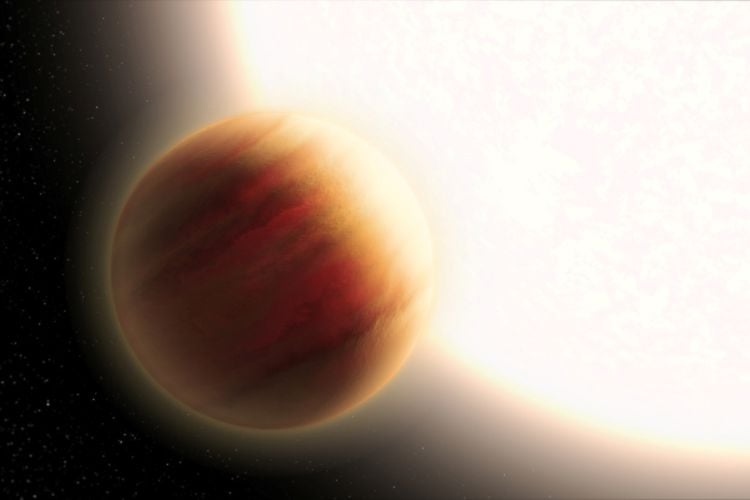
Artist's impression of a hot Jupiter. (Credit: NASA, ESA, L. Hustak (STScI))

Since their first discovery in 1995, hot Jupiter exoplanets (hot Jupiters, for short) quickly challenged our understanding of exoplanet formation and evolution, including exoplanetary system architecture. This is because, as their name implies, they orbit at extremely close distances to their host stars, ranging from a few days to a few hours. Some of their orbits are even oval-shaped, called eccentric in the scientific community, meaning their orbit is oval-shaped. But could such an orbit cause a hot Jupiter to completely vanish from view, preventing astronomers from studying it?


The Rate of Starbirth is Crashing in the "Modern" Universe

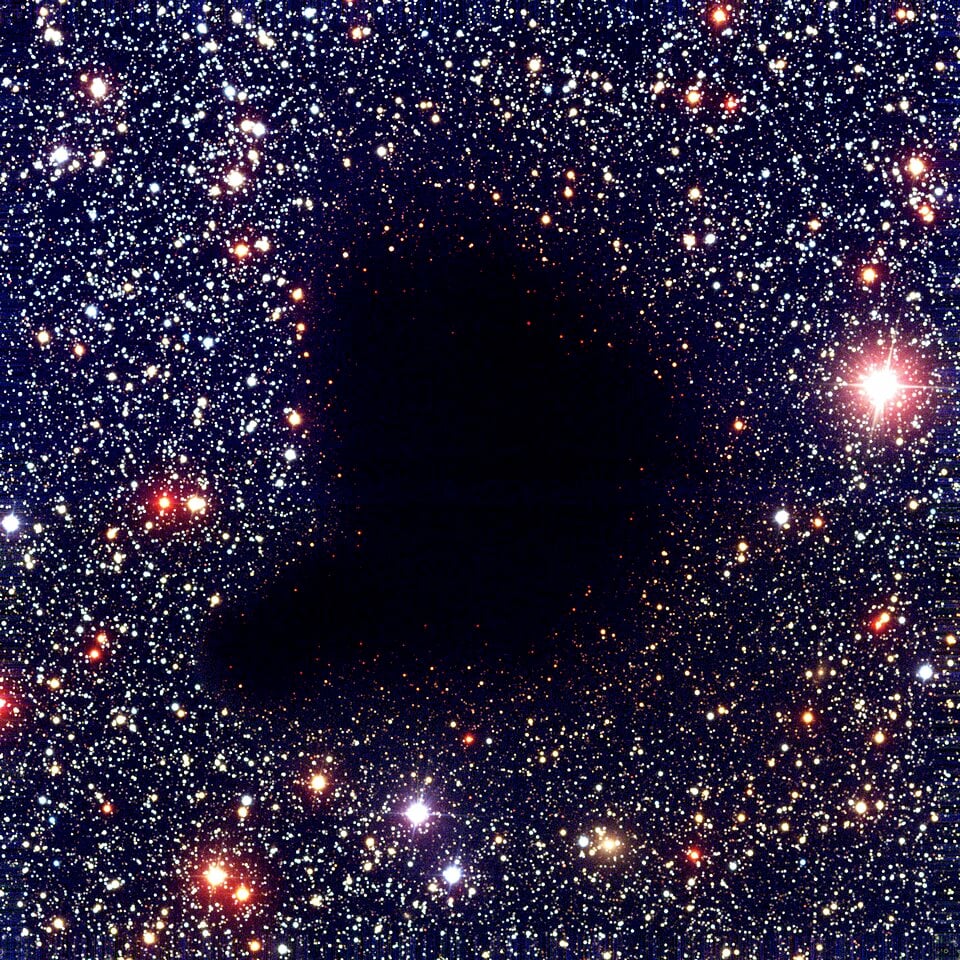
The cold molecular cloud Barnard 68 is a good example of the places where the material to form stars originates. A recent study shows that these clouds aren't being replaced as quickly as they used to be and star formation is slowing down over the past 4.5 billion years. Credit: ESO/VLT/FORS1

The Universe has been making fewer stars lately and astronomers want to know why. The obvious answer is: there hasn't been enough starbirth material. But, is that true? Is some other process at play? An international team led by researcher Hong Guo of the Chinese Academy of Sciences decided to dig into the reasons why it looks like starbirth is falling off.


Measuring the Distance Between Quasar Pairs Just Got Easier

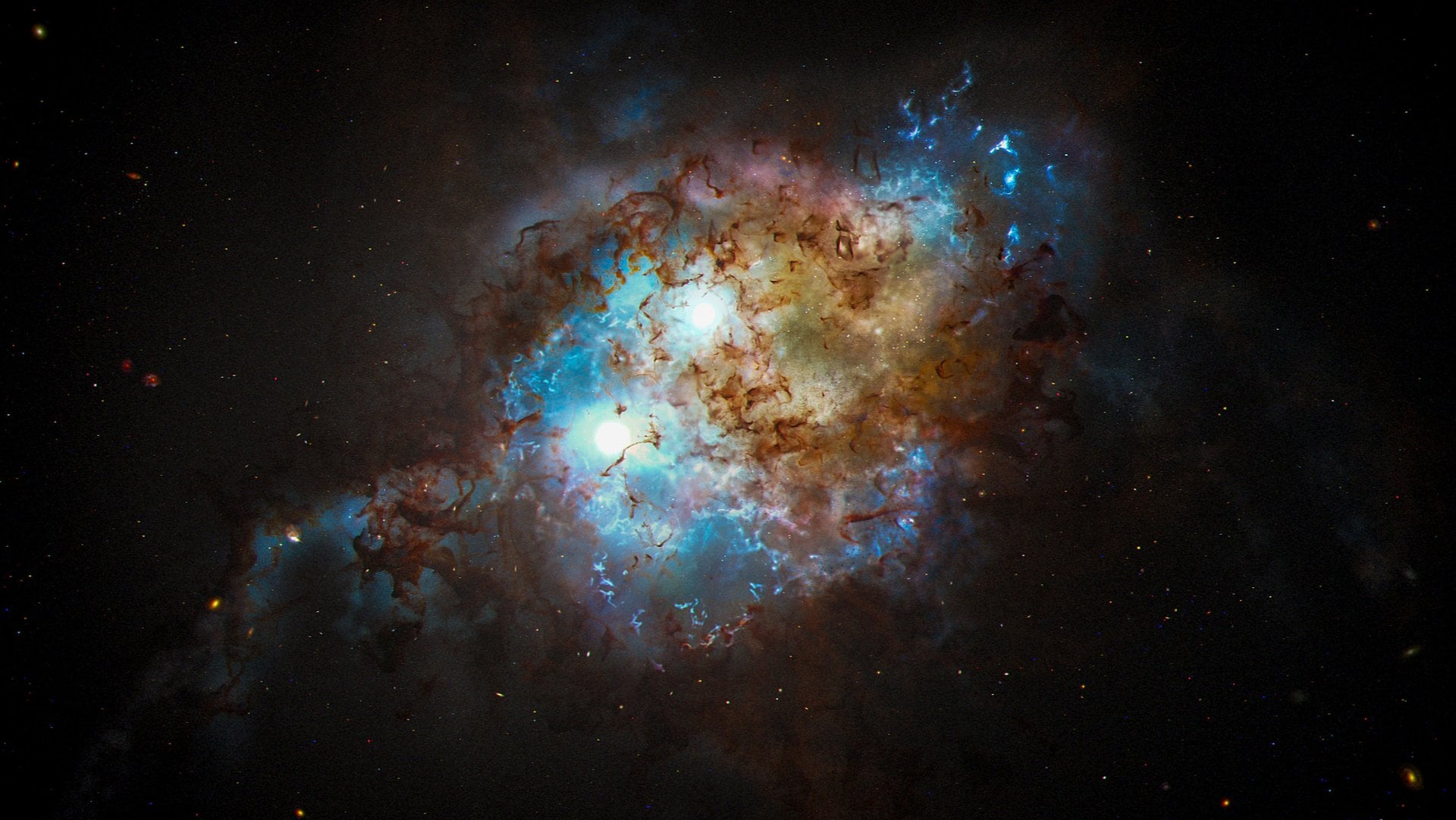
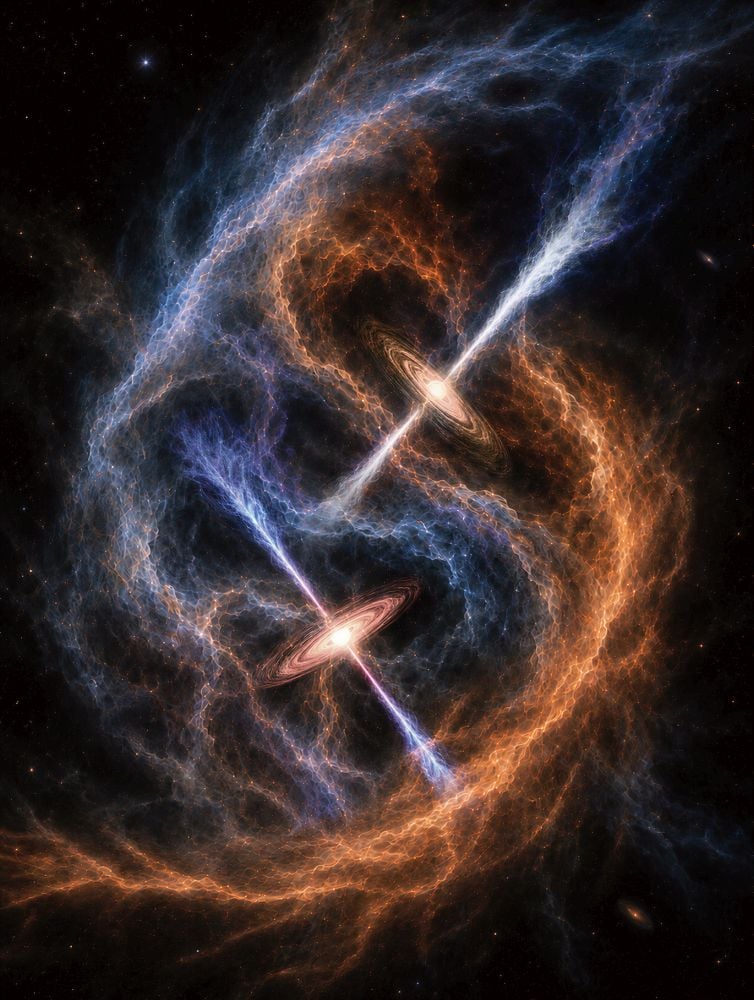
Artist’s conception showing the intense light from a pair of quasars in the cores of two galaxies in the process of merging. Credit: NASA/ESA/Joseph Olmsted (STScI)

A new way to accurately measure the distance between quasar pairs is showing promise through University of Alberta research.


A New Test Looks For A Subtle Twist In Ancient Light

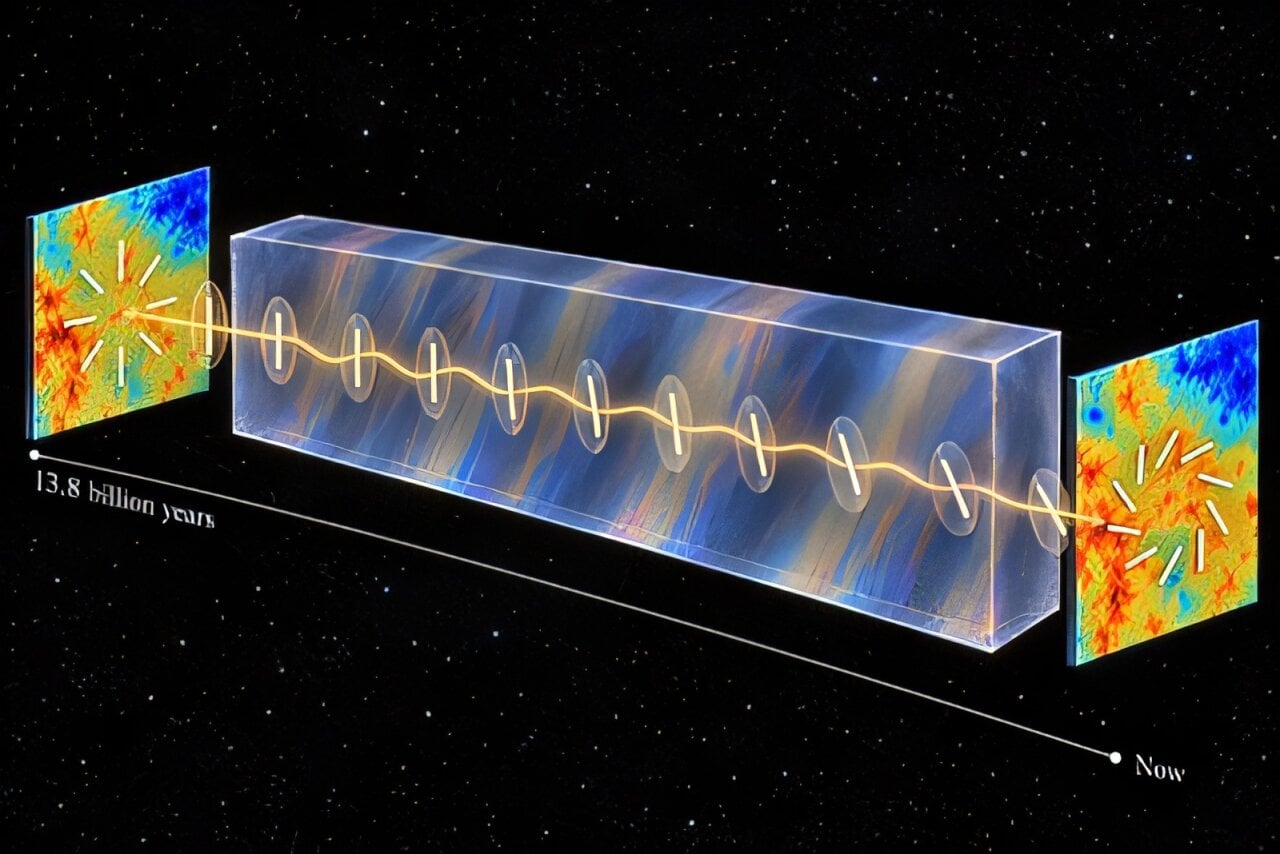
Visualization of the rotation of E-modes to B-modes by cosmic birefringence. Credit: Anto Lonappan and Brian Keating, made with AI assistance.
The standard model of cosmology predicts that the Universe is homogeneous. A new study tests this using the polarization of the cosmic microwave background and finds this isn't quite true. This study supports an earlier study which also found a small polarization bias.


Monday, September 28, 2026

Diving into an Out-of-sync Galaxy

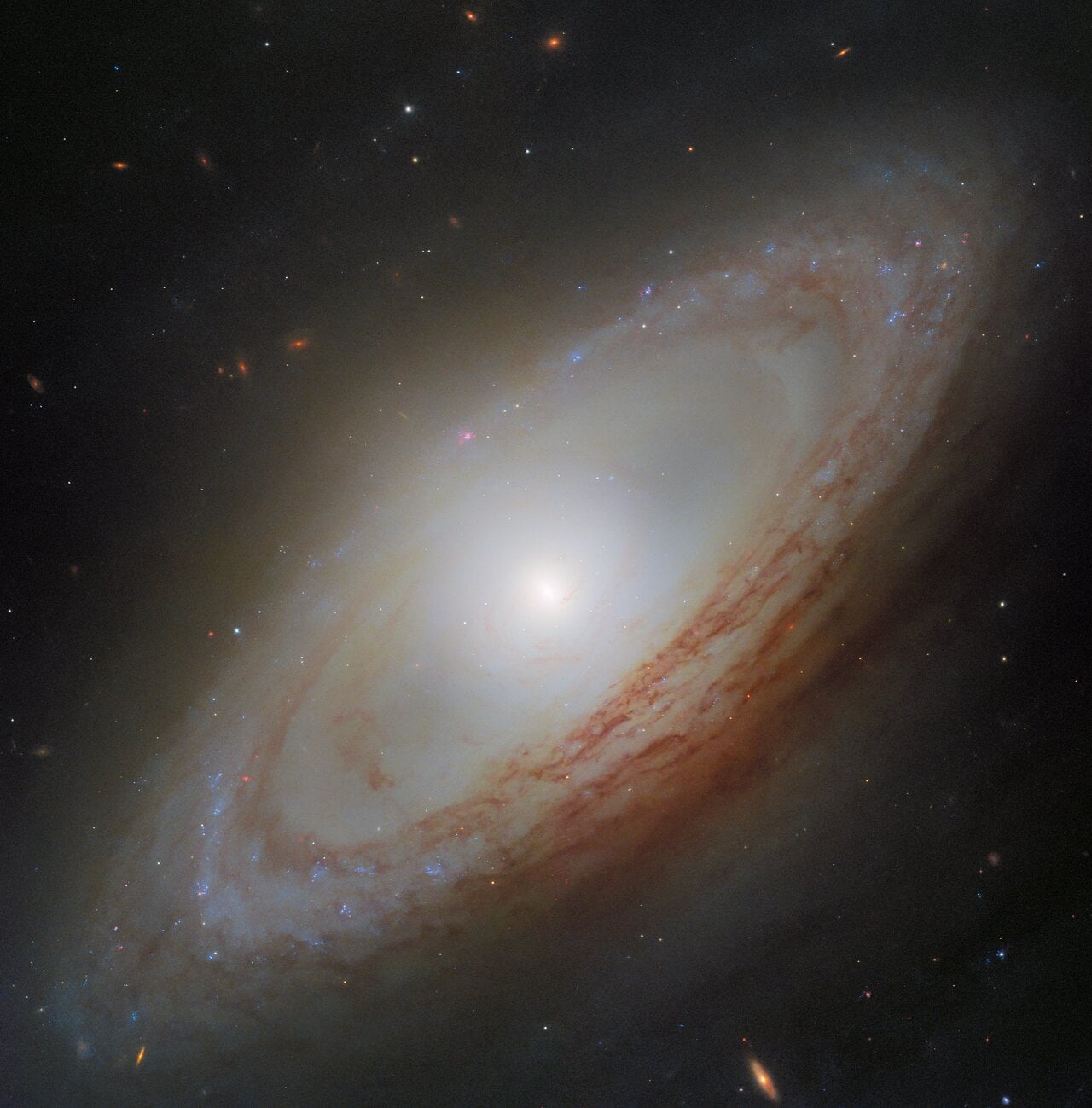
The spiral galaxy NGC 4698 is a member of the Virgo Cluster of galaxies. Its serene vision hides the fact that it has a tail of hydrogen gas stretching away from it; the spin of its arms is decoupled from the spin of the stars and gas in the center, and its bulge stretches out in an odd shape. Credit: ESA/Hubble & NASA, D. Thilker, the MAUVE-HST Team

Galaxies are like snowflakes, no two exactly alike, even the spirals. The Hubble Space Telescope did a visual dive into the distant spiral NGC 4693 and found some intriguing hints to its past. For one thing, this member of the Virgo Cluster seems to have a central region that's rotating out of sync with the spiral arms and bulge. Those arms don't seem to connect to the central region, and the bulge itself seems to extend out above the plane of the galaxy.


SpaceX's Starship Rocket Does Its Job During First Orbital Flight

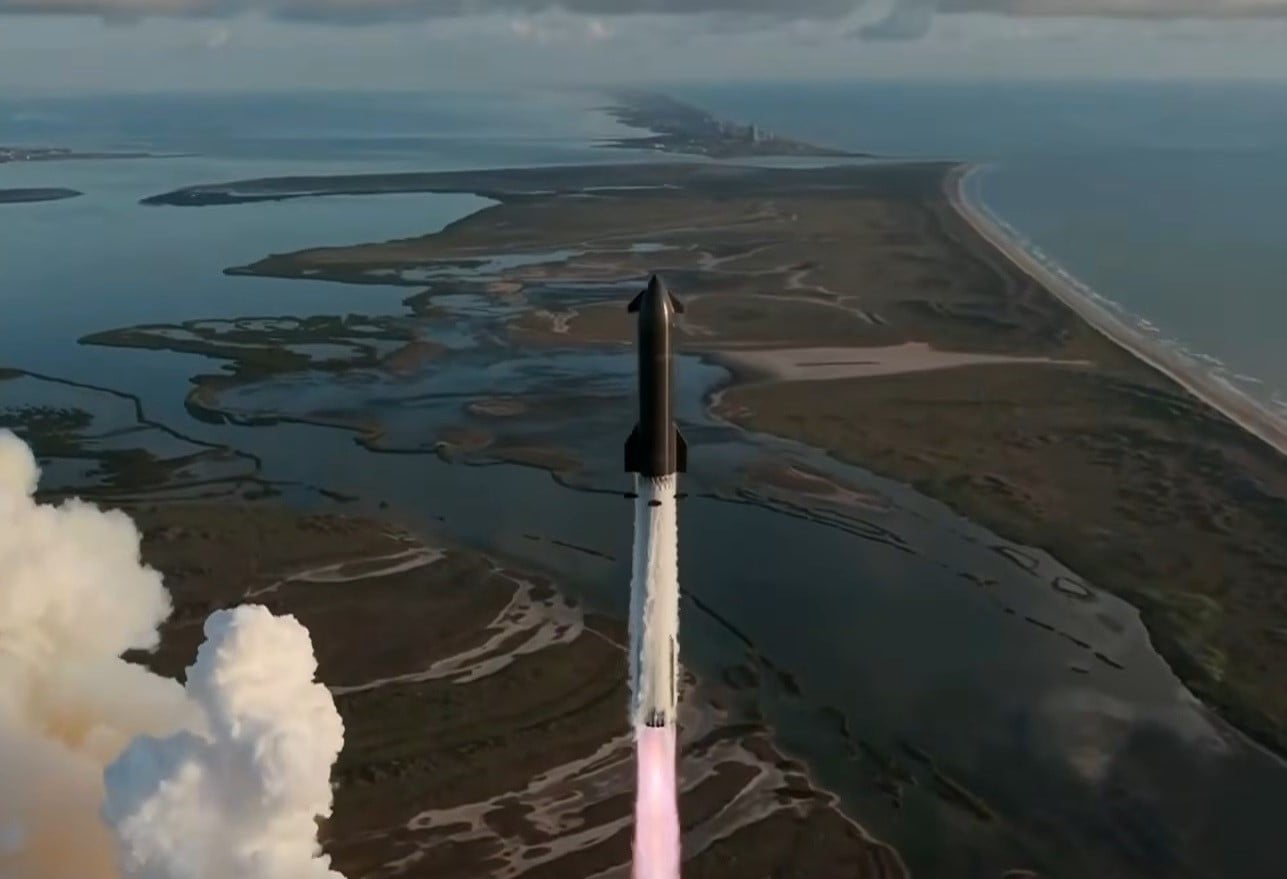
SpaceX's Starship rocket rises from its Texas launch pad for its first orbital flight. (Credit: SpaceX via X)

SpaceX sent its Starship super-rocket on its first orbital flight — a shorter-than-planned test mission that put operational Starlink satellites into orbit for the first time.


Mars Has a Warm Region Inside

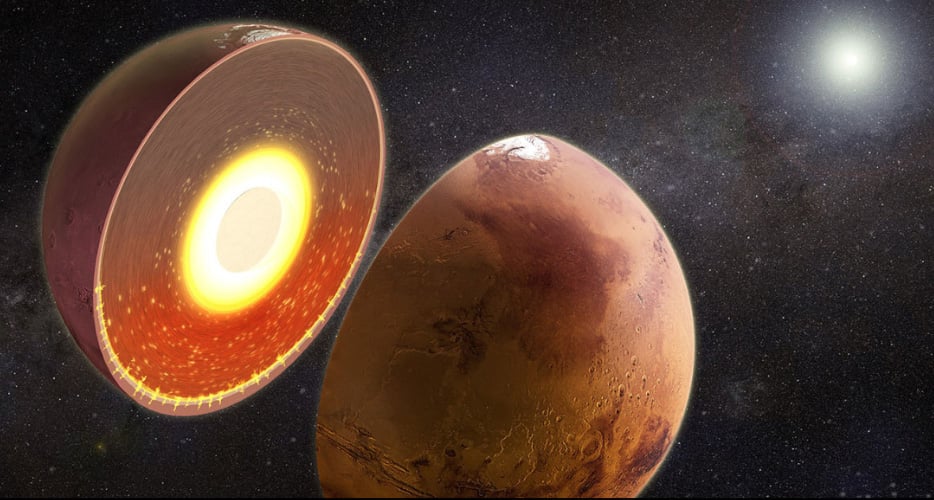
Studies of Mars using tidal tomography have found a strange warm spot under the southern hemisphere surface. Credit: Byrne, et al. University of Arizona.

Something deep inside Mars has scientists looking for clues to its internal evolution. A team at the University of Arizona led by Alexander Byrne, used a technique called "tidal tomography" to probe a heat anomaly in the southern hemisphere mantle. It turns out this subsurface region measures about 200 to 400 degrees Celsius warmer than the rest of the mantle. That warm spot may contain information about how Mars has changed over its lifetime.


Why the World’s Biggest Radio Telescope Had to Tweak Nature’s Perfect Sunflower Spiral

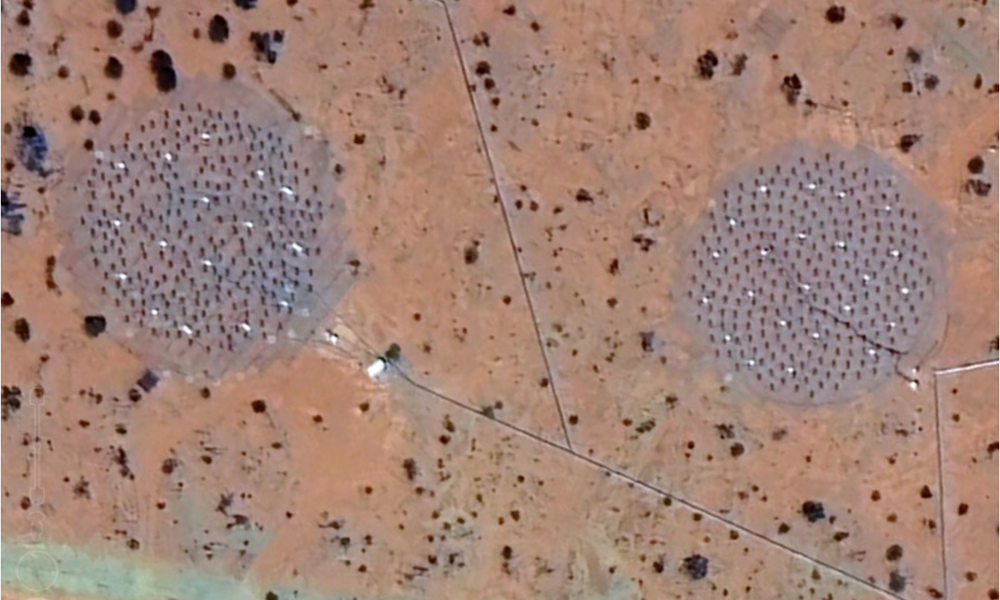
Images of the AAVS2 test bed (left) and the AAVS3 test bed (right) as seen from space. Credit - S. Asayama et al.

Scientists love taking inspiration from nature. The evolutionary processes that have created such a diverse panoply of life on Earth can be a great source of ideas in solving technical problems. One such example is the pattern of sunflower seeds - they are arranged in a mathematically optimized pattern known as a Vogel spiral, and the international team building the Square Kilometer Array (SKA) in Australia decided to lay out their antennas in a similar pattern. But, as they report in a paper recently published in the Journal of Astronomical Telescopes, Instruments, and Systems, when they did so they found a huge blind spot in the data which hints that maybe this particular natural pattern might need to be modified to work well for this particular application.


A 1,000°C Lunar Microreactor Could Power the Next Era of Moon Bases

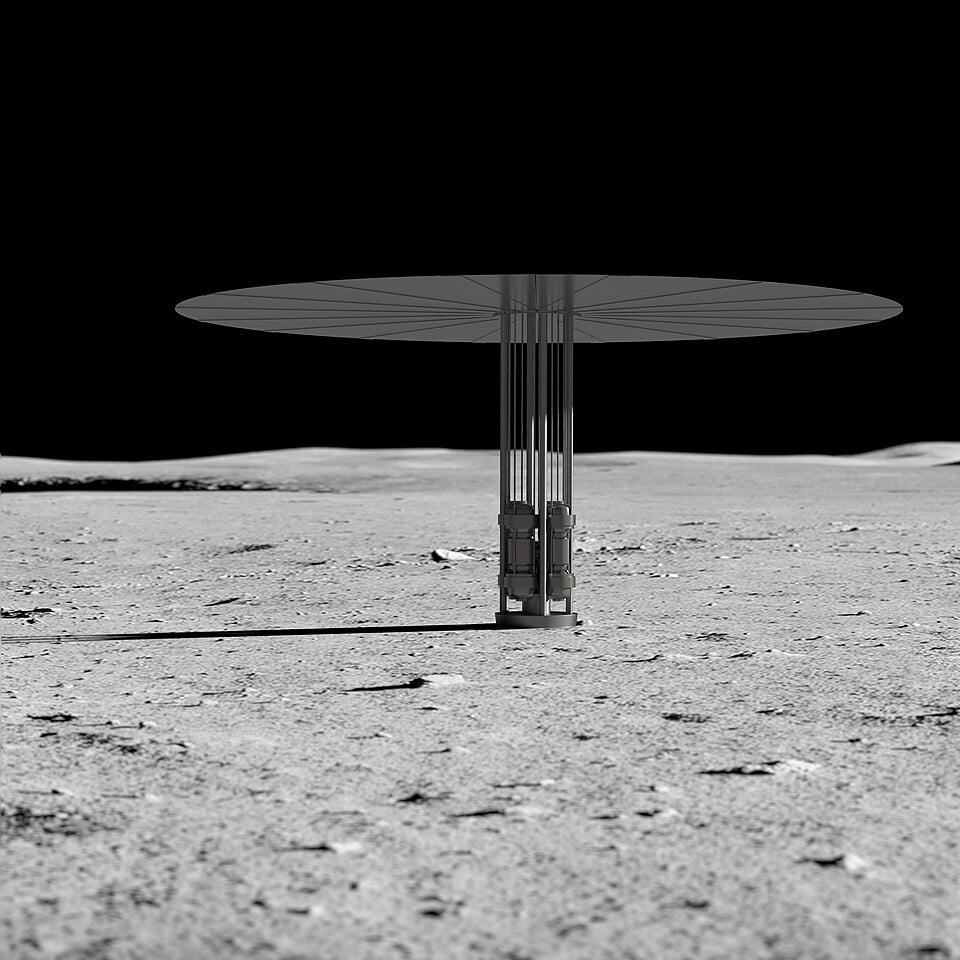
Image of the Kilopower nuclear reactor - a NASA project to bring nuclear power to the lunar surface. Credit - NASA

As humanity continues to move towards a permanent settlement on the Moon, we still have at least one big hurdle to face - the lunar night, which lasts for roughly fourteen days straight and can drop temperatures to a bone-chilling -223°C. In order to survive those conditions, we need a power source that doesn’t come and go with the Sun, or rely on non-existent stock of coal, gas or wind. In other words, we need nuclear power, and a new paper, available in pre-print on arXiv by Julius Mercz of the Technical University of Munich and his co-authors, describes a new type of nuclear reactor that wouldn’t just power a habitat’s environmental systems, but also enable its materials extraction technologies as well.


Sunday, September 27, 2026

The Solar System’s First Planets Were Made of Fire, Not Ice

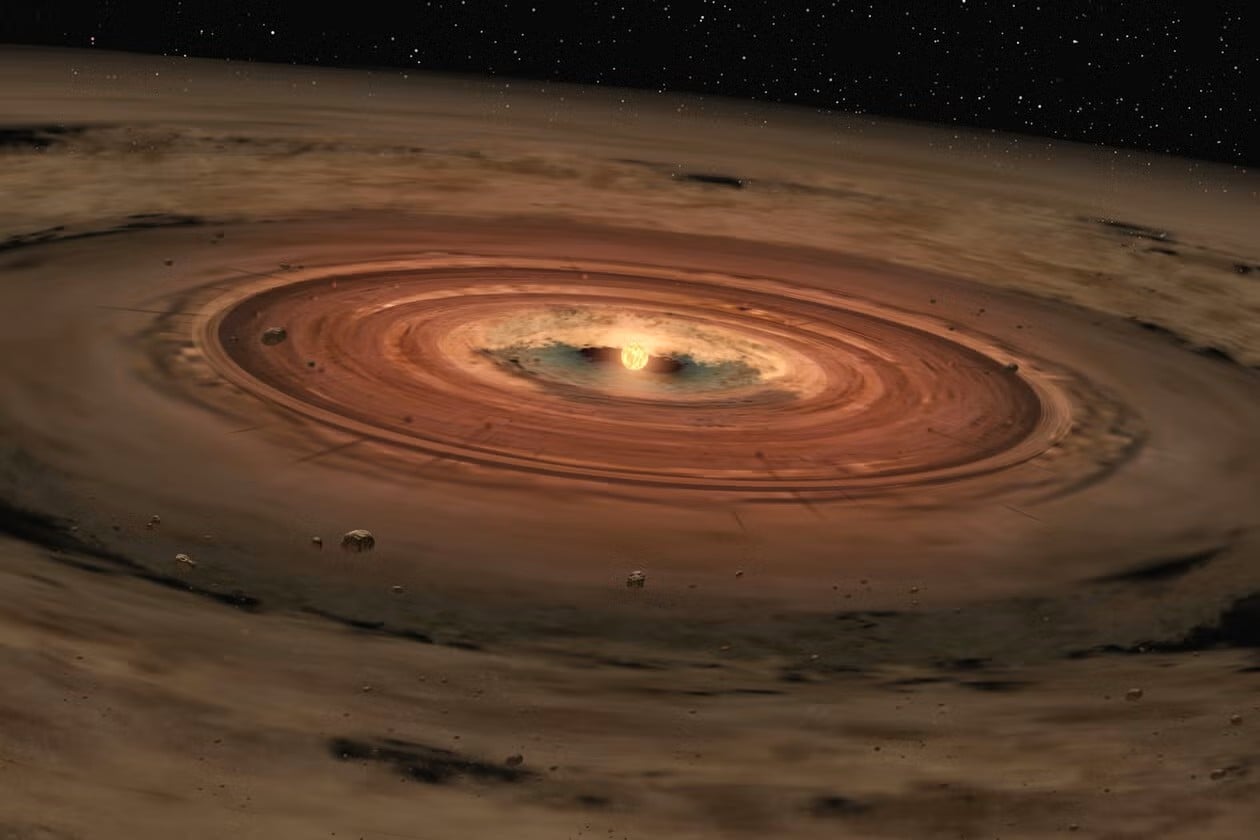
Artist's concept of a very young star and its protoplanetary disk. Credit - NASA / JPL

The early stages of the solar system remain shrouded in mystery. Not much remains from that time, but scientists have developed plenty of theories about what was going on back then. One of those theories attempts to answer a simple question - did the early system prefer “fire” or “ice”? A new paper published in Nature Astrophysics from lead author Damanveer Grewal, an assistant professor of Earth and planetary sciences at Yale, and his co-authors, have a definitive answer to that question - the early solar system preferred fire.


Saturday, September 26, 2026

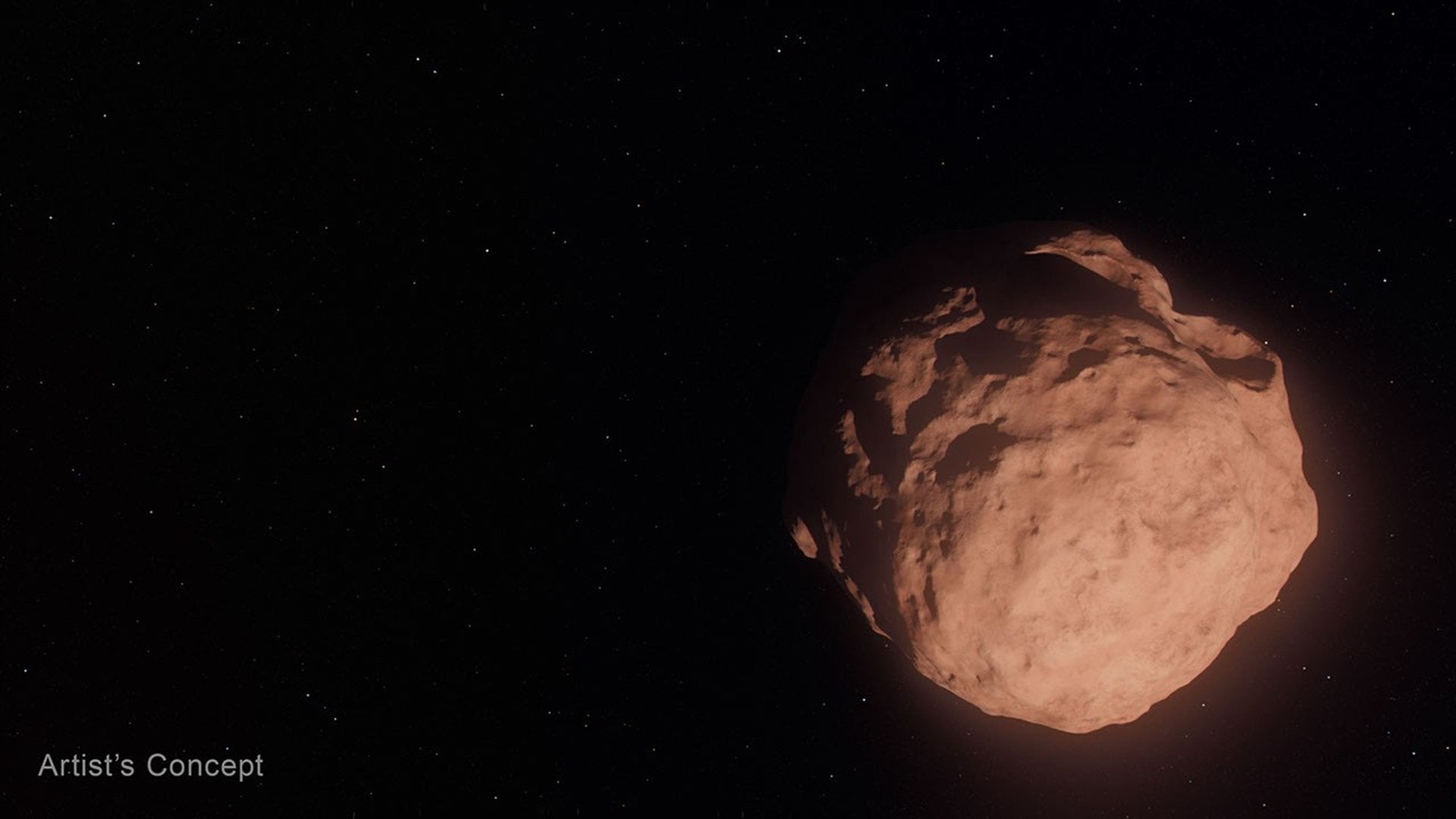
JWST Finds Dynamic Structural Evolution in Chariklo’s Rings

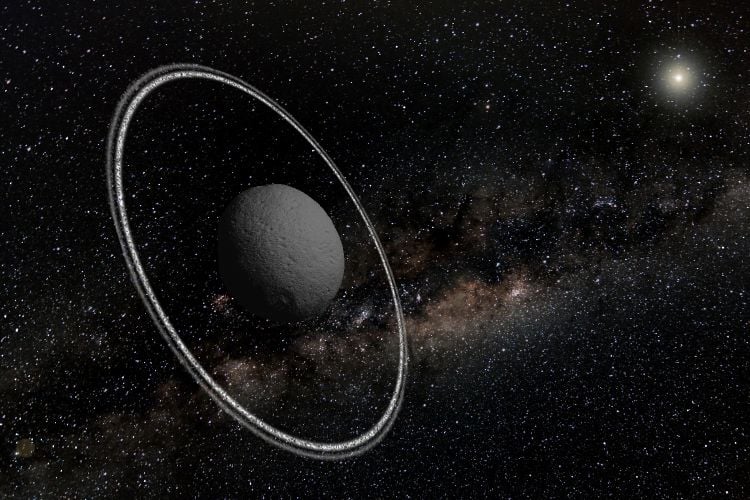
Artist's impression of Chariklo and its rongs. (Credit: Lucie Maquet, Observatoire de Paris - PSL)

When we think of asteroids, we often think of the main asteroid belt between Mars and Jupiter that contains the majority of the known asteroids in our solar system. However, our solar system hosts several other populations of asteroids and icy rocks, including the Jupiter Trojan asteroids that orbit in Jupiter’s orbit, and the icy bodies and comets of the Kuiper Belt. But there’s one population of asteroids that often gets overlooked called Centaurs, primarily because their orbits are not in a fixed location and instead whose orbits cross the orbits of the outer planets.


Carbon Rocks Deep Underground Could Hold the Evidence of Mars' Watery Past.

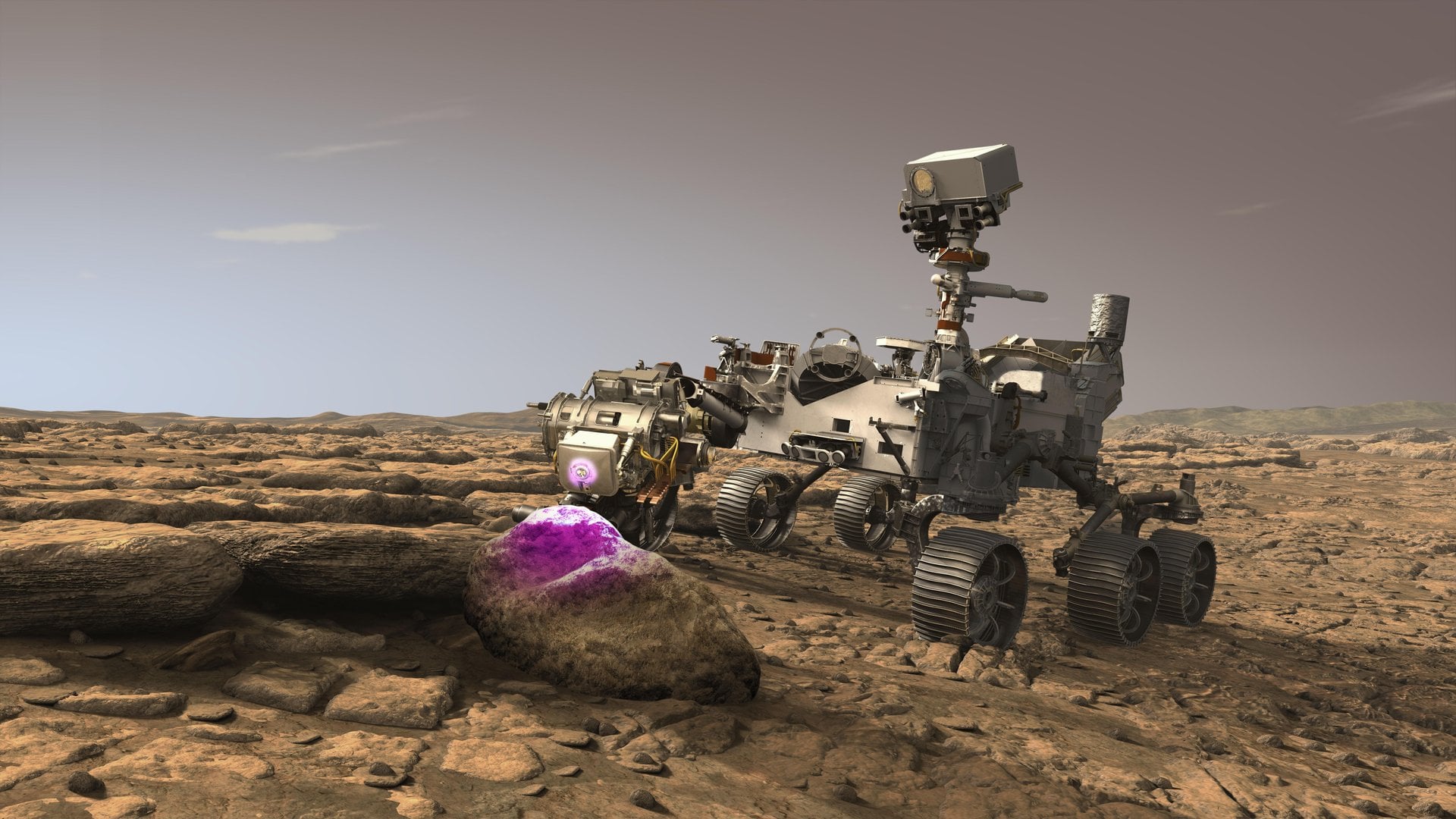
Mars Perseverance rover - PIXL studies a rock (artist concept). Credit: NASA/JPL-Caltech

A new geochemical modeling study led by researchers at JAXA and the University of Tokyo addresses Mars' "missing" stores of carbonate rocks.


Friday, September 25, 2026

Astronomers Find a Sub-Neptune Orbiting Completely Backward Around a Red Dwarf

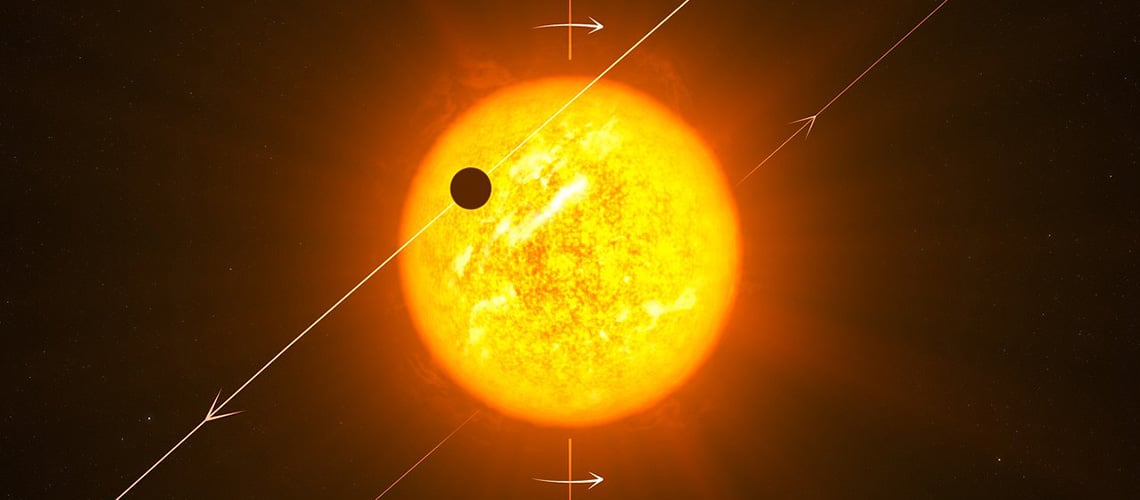
Artist's depiction of a planet in retrograde motion. Credit - ESO/L. Calçada

In our own solar system, all eight planets orbit our Sun in a nice, orderly fashion. None are more than 7° or so out of alignment with the equator, and all of them rotate in the same direction as the Sun itself. But that’s not the case for all solar systems, and a new paper published in Astronomy & Astrophysics from a team of researchers led by Yann Carteret, a PhD student at the University of Geneva (UNIGE), describes the first time we’ve ever found an exoplanet orbiting the opposite direction of its red dwarf parent star - and it has major implications for our understanding of planet formation theory.


Thursday, September 24, 2026

Perseverance Reveals How Complex Water Systems Shaped the Jezero Crater on Early Mars

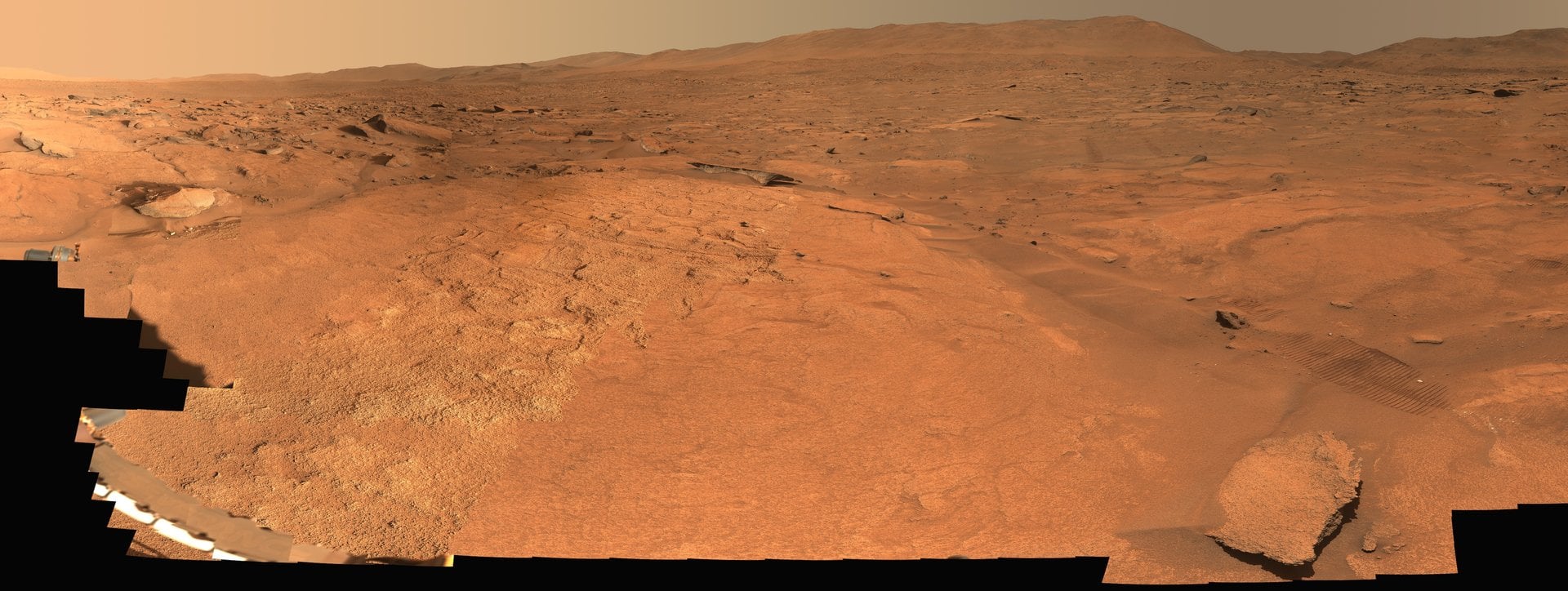
The Perseverance rover captured the data used in this panorama of the “Margin Unit,” a geologic area that hugs the inner edge of Jezero Crater’s rim, between Oct. 8 and Oct. 16, 2023. Credit: NASA/JPL-Caltech/MSSS

A new study reveals that Jezero Crater’s enigmatic ‘Margin Unit’ was shaped by a complex sequence of ancient lakes, groundwater systems, and hydrothermal fluids.


Stanford Engineers Teach Spacecraft to "Dream" Their Way to the Space Station

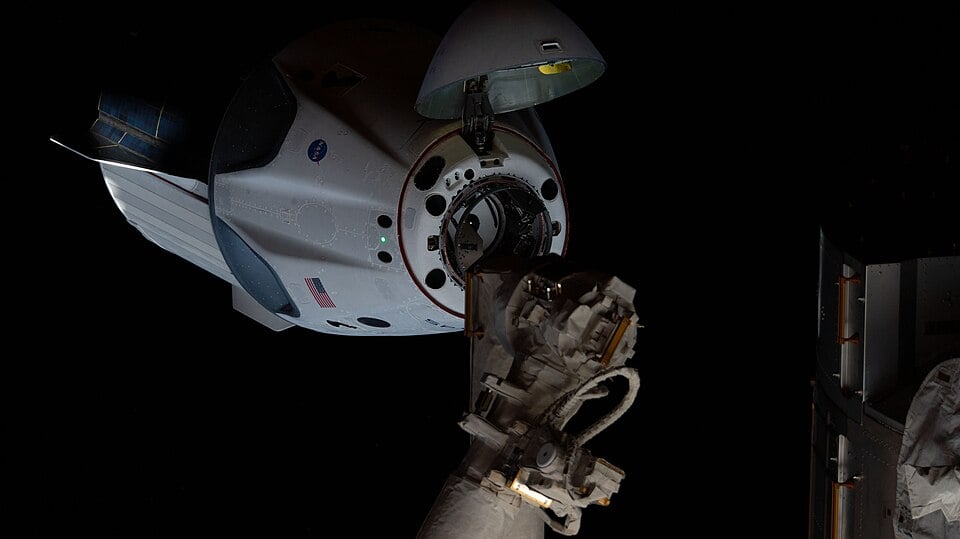
A Dragon capsule approaching the ISS. Credit - NASA / Chris Cassidy

Docking with the ISS may seem simple. However, actually doing so is a showcase in how difficult orbital mechanics can be. It’s equivalent to traveling down a highway at 28,000 km/hr and parallel parking into an open garage on a multi-billion dollar laboratory traveling at the same speed. If you try to accelerate forward you actually drift up, and there’s no air friction to naturally slow you down. Oh, and if you hit the lab, everyone onboard both your craft and the station dies, and the resultant debris field could both wipe out dozens of satellites and even people on the ground. No pressure, obviously. For decades, aerospace engineers have been docking successfully using hard coded physics equations and human pilots to correct them. But now, a new paper, available in pre-print on arXiv from researchers at Stanford, is taking a shot at building an AI to perform a series of “mental simulations” that could fundamentally change how future spacecraft interact with each other.


Wednesday, September 23, 2026

Strange Galaxies in the Early Universe Were Shaped by Weird Stars

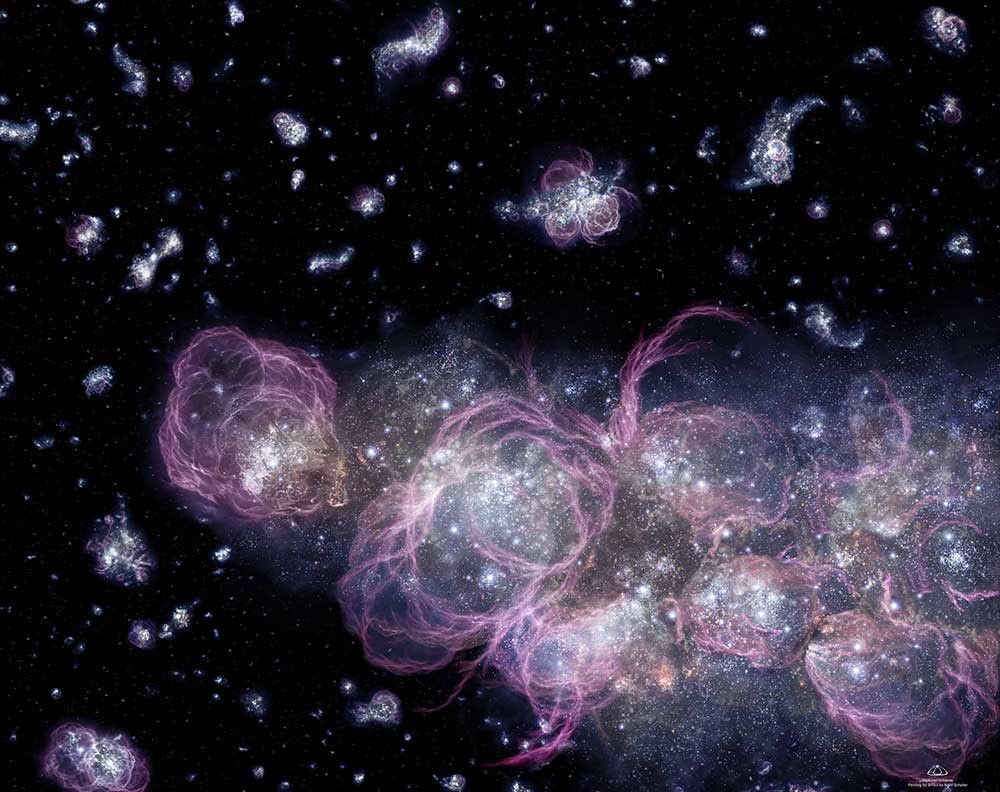
The earliest stars in the Universe began forming some 100 million years after the Big Bang. They lived fast, died young, and left behind material that got recycled into the next generations of stars. Along the way, these also influenced the evolution of their galaxies. CREDIT: NASA/STScI/A. Schaller.

Galaxies and their stars in the early Universe look a lot weirder than those we see today, and astronomers want to know why. A team of researchers at the University of Utah decided to survey certain stars in nearby galaxies as analogs of those that existed when the Universe was still in its infancy. The survey, called the "Treasury of Extremely Metal-Poor O Stars (TEMPOS), used the ultraviolet (UV) light streaming from those relatively close-by stars as detected by the Hubble Space Telescope's Cosmic Origins Spectrograph.


New Lunar Crater Offers Keys To Moon’s Shallow Subsurface

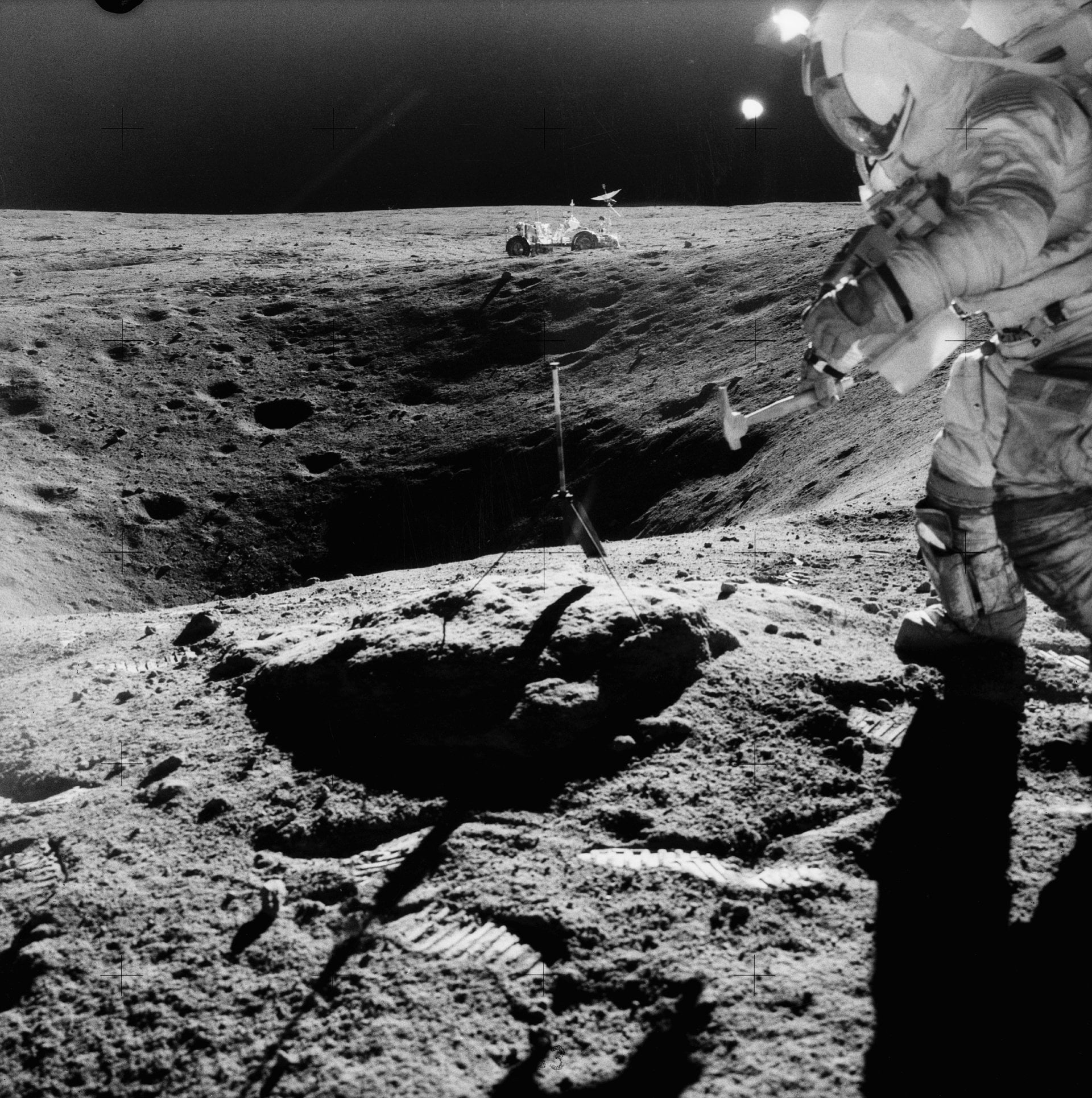
Astronaut John W. Young, commander of the Apollo 16 lunar landing mission, stands on the rim of Plum Crater while collecting lunar samples at Station 1 during the first Apollo 16 extravehicular activity (EVA-1) at the Descartes landing site.  Credit:  NASA via Wikipedia

Asteroids which strike the Moon and create new craters offer lunar scientists a window onto the workings of our natural satellite’s shallow subsurface.


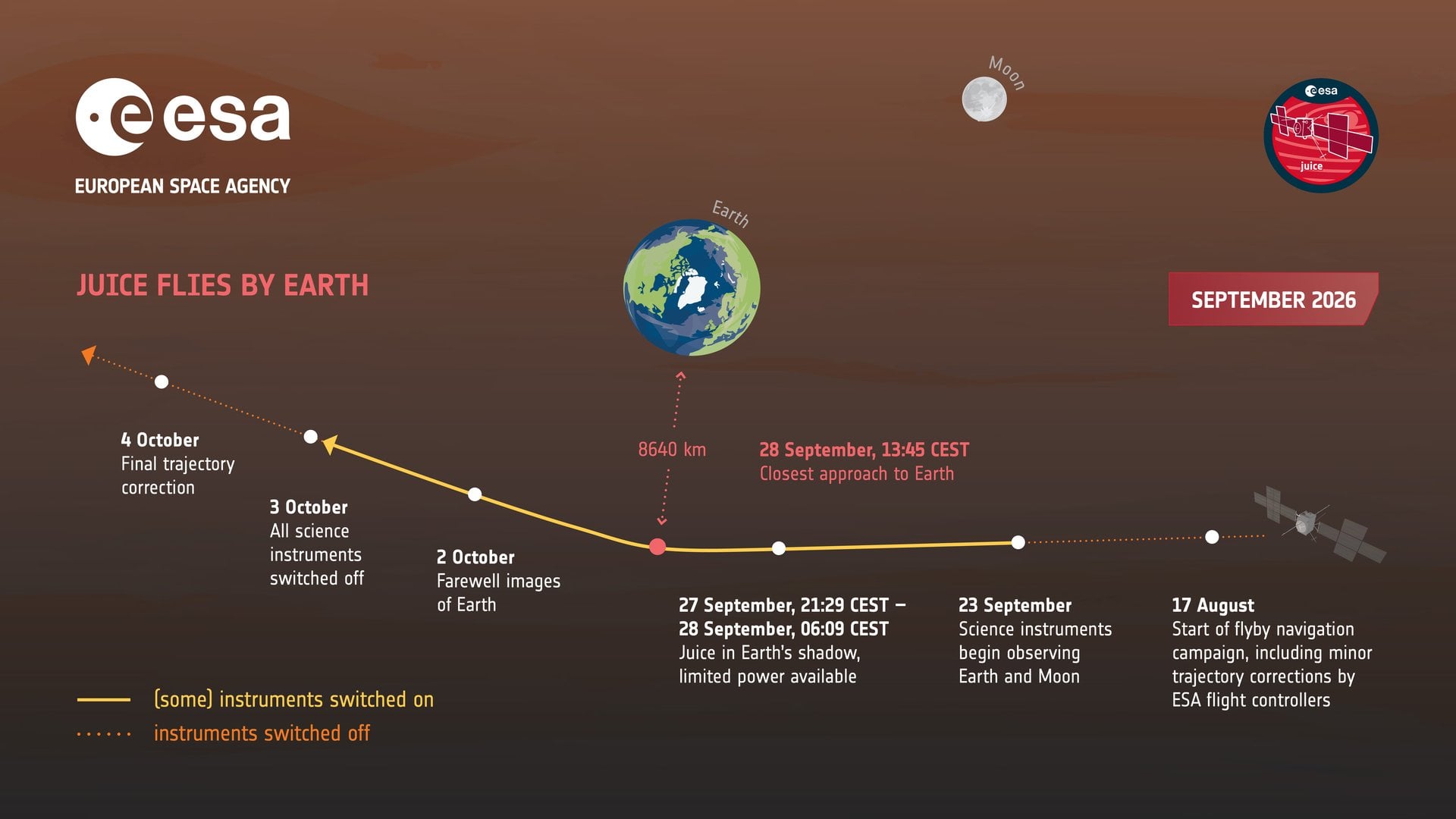
JUICE Mission to Swing by Earth on September 28

Infographic showing Juice's flight past Earth with a dotted orange line. Credit: ESA

The European Space Agency’s Jupiter Icy Moons Explorer (Juice) will return to Earth on 28 September, with flight controllers guiding the spacecraft close to our home planet to alter its speed and direction en route to Jupiter.


Astronomers Directly Image the Youngest Exoplanet Ever

ARtist' image of the forming planet around Elias 2-24. Credit - W.M. Keck Observatory / A. Bernardi et al.

Most exoplanets we find have been around a long time. They’ve cleared out their orbital path (one of the requirements of planethood, as fans of Pluto well know), have their own gravitational pull, and in many cases shine with their own infrared light. But it takes a long time to get to that point - finding “young” planets is much harder. But a new paper available in The Astrophysical Journal Letters by a research team led by Andrea Bernardi of Diego Portales University in Chile describes a new paper that definitely takes the prize as the youngest exoplanet we’ve yet found.


How Diffractive Solar Sails Could Stop a Killer Asteroid at 100 km/s

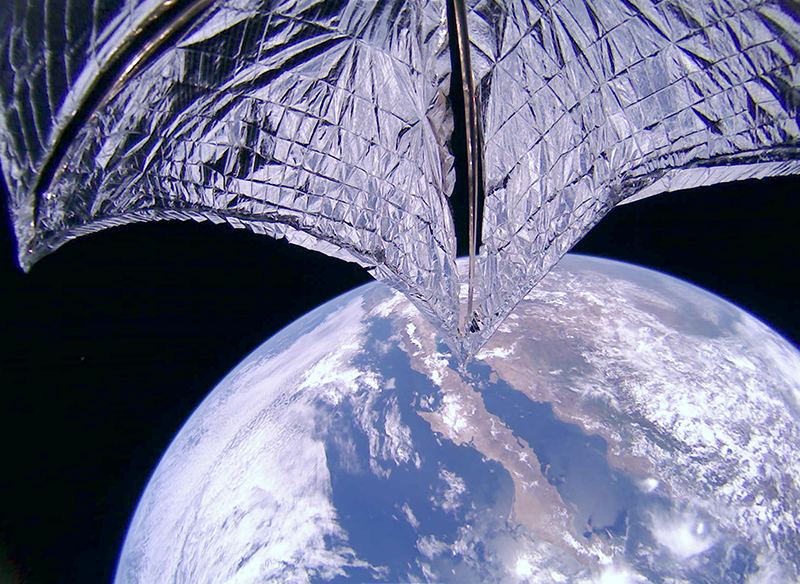
Image of the deployment of Lightsail 2. Credit - The Planetary Society

Asteroids don’t come with a warning label that they might one day hit Earth. While we don’t know of any currently on course to do so, we are finding thousands of new ones each year, and there’s always a potential that one could. We proved a viable technique for dealing with that eventuality - the DART mission successfully moved a small asteroid using a “kinetic impactor” - basically a big rod designed to push the asteroid off its trajectory. But DART had one big flaw - it was traveling in the same direction as the asteroid, and approached it from behind, eventually hitting it with an impactor launched while in orbit around it. That technique might work if we have enough warning, but would require years of orbital mechanical maneuvering to pull off. An alternative, proposed by researchers at Beihang University, is to use a new type of solar sail to deflect a potentially hazardous asteroid by hitting it head on.


SKA May Detect Magnetic Fields on Distant Exoplanets

Artist's impression of an exoplanet and its magnetic field. (Credit: ESO/M. Kornmesser, L. Calçada)

Studying exoplanets has provided astronomers with a plethora of insights regarding what characteristics need to be searched to find life beyond Earth. For the longest time, astronomers merely thought an exoplanet in a star’s habitable zone was a sufficient criterion for an Earth-like world. However, astronomers have learned that certain stars are more active than our Sun, resulting in exoplanets orbiting in the habitable zone being blasted with far more radiation than Earth could handle. In recent years, astronomers have recognized that a planet’s magnetic field, which shields the Earth from harmful radiation, could be a prime characteristic for identifying Earth-like worlds.


Tuesday, September 22, 2026

First Diagnostic X-Rays in Space Mark New Era for Astronaut Health

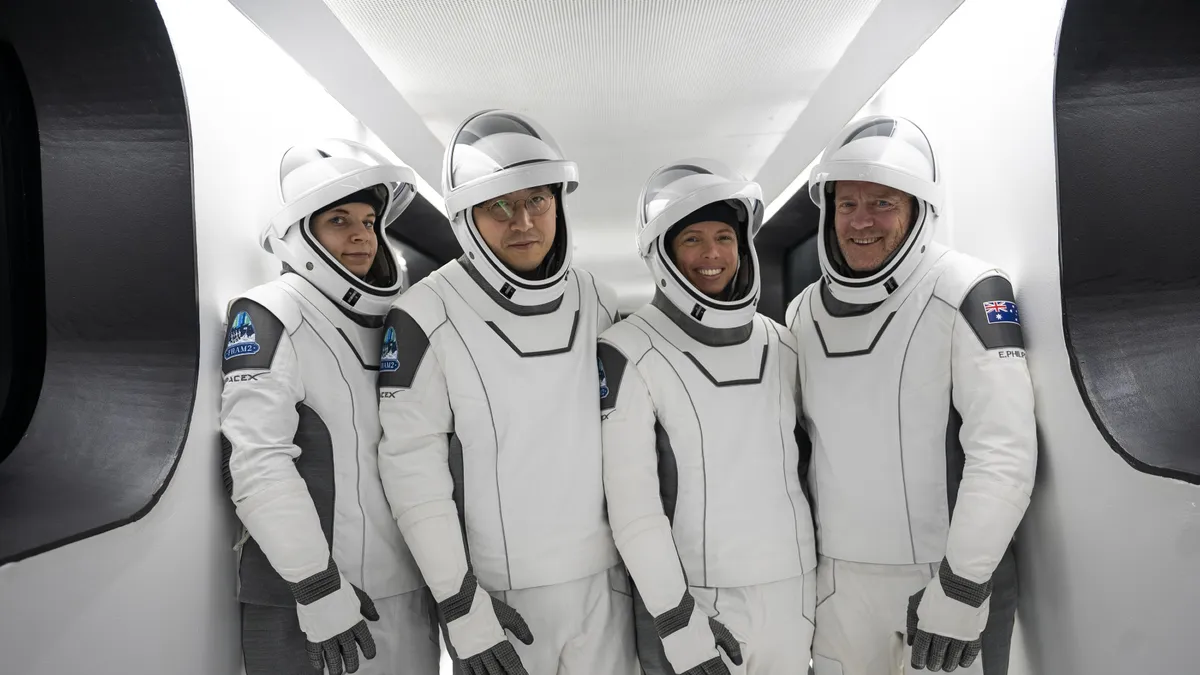
Fram2 astronauts, from the left: Pilot Rabea Rogge, commander Chun Wang, vehicle commander Jannicke Mikkelsen, and medical officer Eric Philips. Credit: SpaceX

A team of researchers acquired the first diagnostic X-ray images during a commercial spaceflight, demonstrating that X-ray medicine can be performed in space.


3I/ATLAS Has An Extreme Taste For Heavy Water

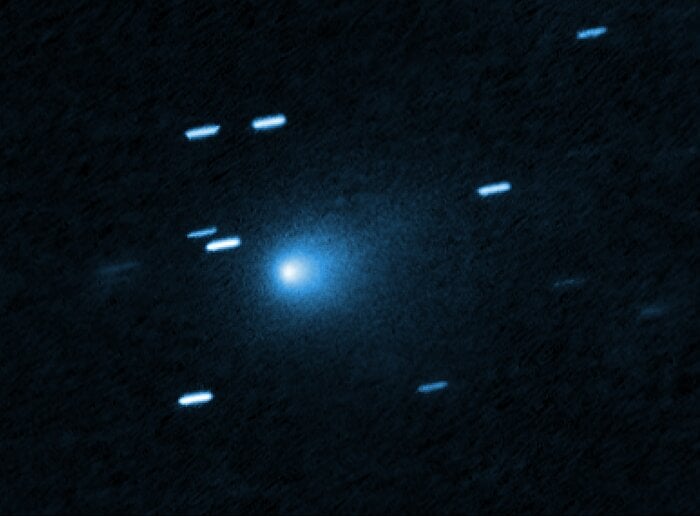
Hubble image of interstellar comet 3I/ATLAS, which was used in the study. Credit - NASA, ESA, D. Jewitt (UCLA); Image Processing: J. DePasquale (STScI)

More and more details about 3I/ATLAS are filtering through the scientific process as time goes on. Our third known interstellar visitor attracted the attention of some of the most powerful observatories in the world when it was discovered in July 2025, and some of those telescopes found something peculiar - the isotopes it contained appeared different. A new paper submitted to The Astrophysical Journal Letters (and available in pre-print on arXiv) by Kenji Furuya of the RIKEN Pioneering Research Institute in Japan and his co-authors, shows how that isotopic discrepancy is likely due to the “low-metallicity” of the stellar nursery 3I/ATLAS was born in.


Space Rocks Carry Hundreds of Thousands of Complex Organic Molecules—and We Just Photographed Them

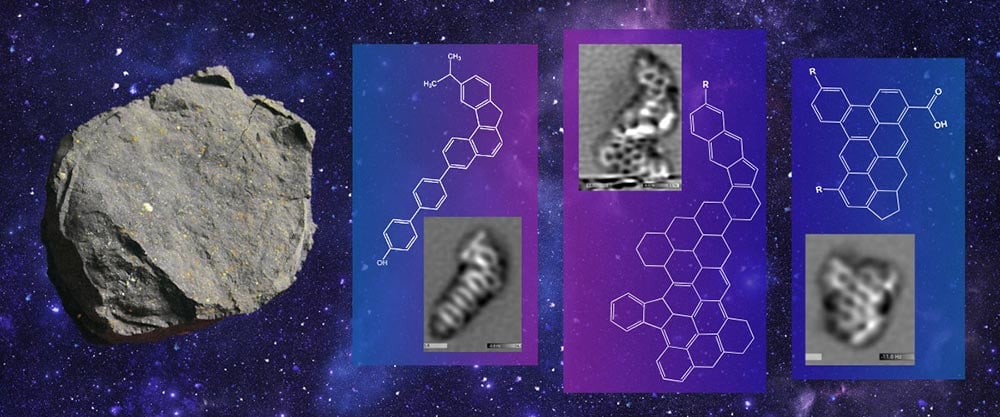
Some of the structures of the organic compounds found in the meteorites along with their chemical structures, as shown by AFM imaging. Credit - Brookhaven National Laboratory / J.W. Frye-Jones et al.

Scientists have known for a while that meteorites contain the “building blocks” of life - complex organic molecules such as amino acids, simple sugars, or even the chemical rungs of DNA. But anyone who has taken an organic chemistry class knows there are plenty of other carbon-based molecules out there, and a new study from Joseph W. Frye-Jones of the National High Magnetic Field Laboratory and Florida State, which was published in The Planetary Science Journal, found tens of thousands of types of previously unseen organic compounds in two of the world’s most famous meteorites.


Monday, September 21, 2026

A Rare, Distant Clump of Early Galaxies Reveals Ancient Cosmic Secrets

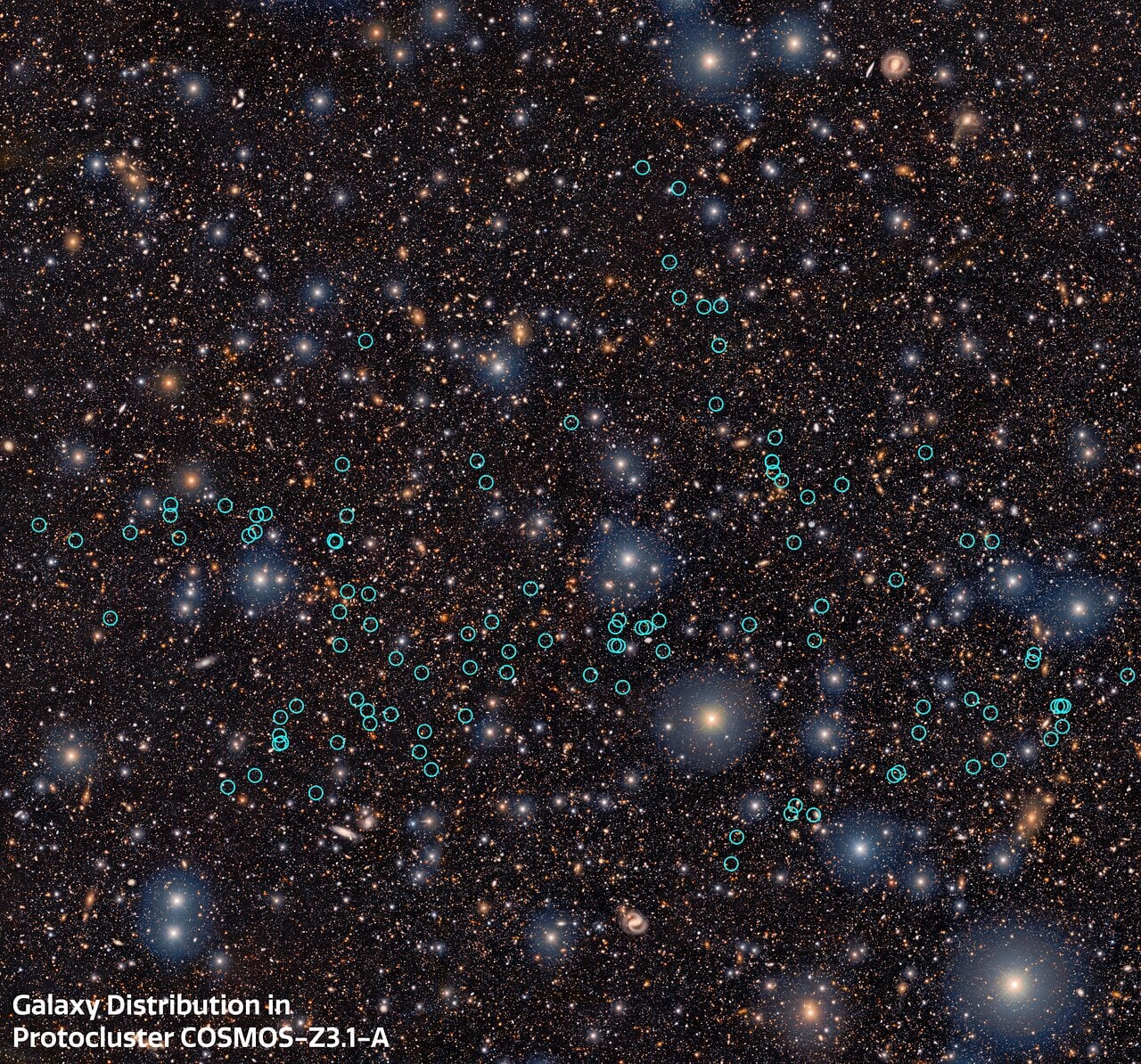
An annotated view of a map of the newly discovered proto-supercluster COSMOS-z3.1-A. It was discovered in data from a large survey of the Southern Hemisphere sky taken by the Dark Energy Camera mounted on the Blanco telescope on Cerro Tololo, Chile. Credit: CTIO/NOIRLab/DOE/NSF/AURA

The discovery of a very early and rare proto-supercluster of infant galaxies may help give clues to the formation of such clusters and their connection to the Cosmic Web.


Smashed Icy Moons Cool Too Rapidly to Retain Oceans

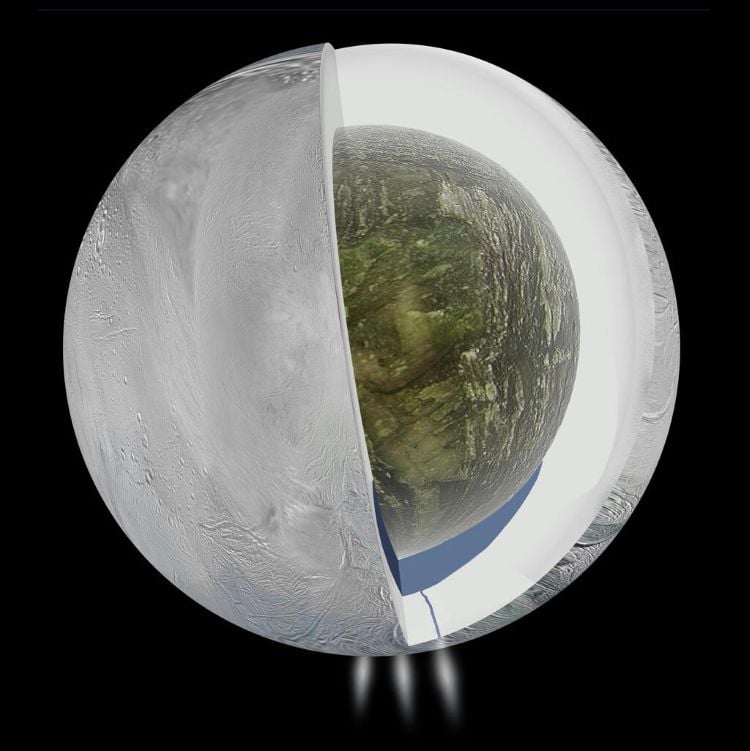
Diagram depicting Saturn's moon, Enceladus, and its subsurface ocean. (Credit: Southwest Research Institute)

There are more than 450 confirmed moons orbiting the eight major planets, but only a handful of them provide unique scientific value to pique the interests of the scientific community, specifically their potential for hosting life as we know it. This is due to the subsurface oceans that exist beneath icy crusts, including Jupiter’s Europa and Ganymede, and Saturn’s Enceladus. But what processes are responsible for producing these subsurface oceans, or potentially preventing them from forming in the first place?


Earth's Center of Mass Drifts Less Than We Thought

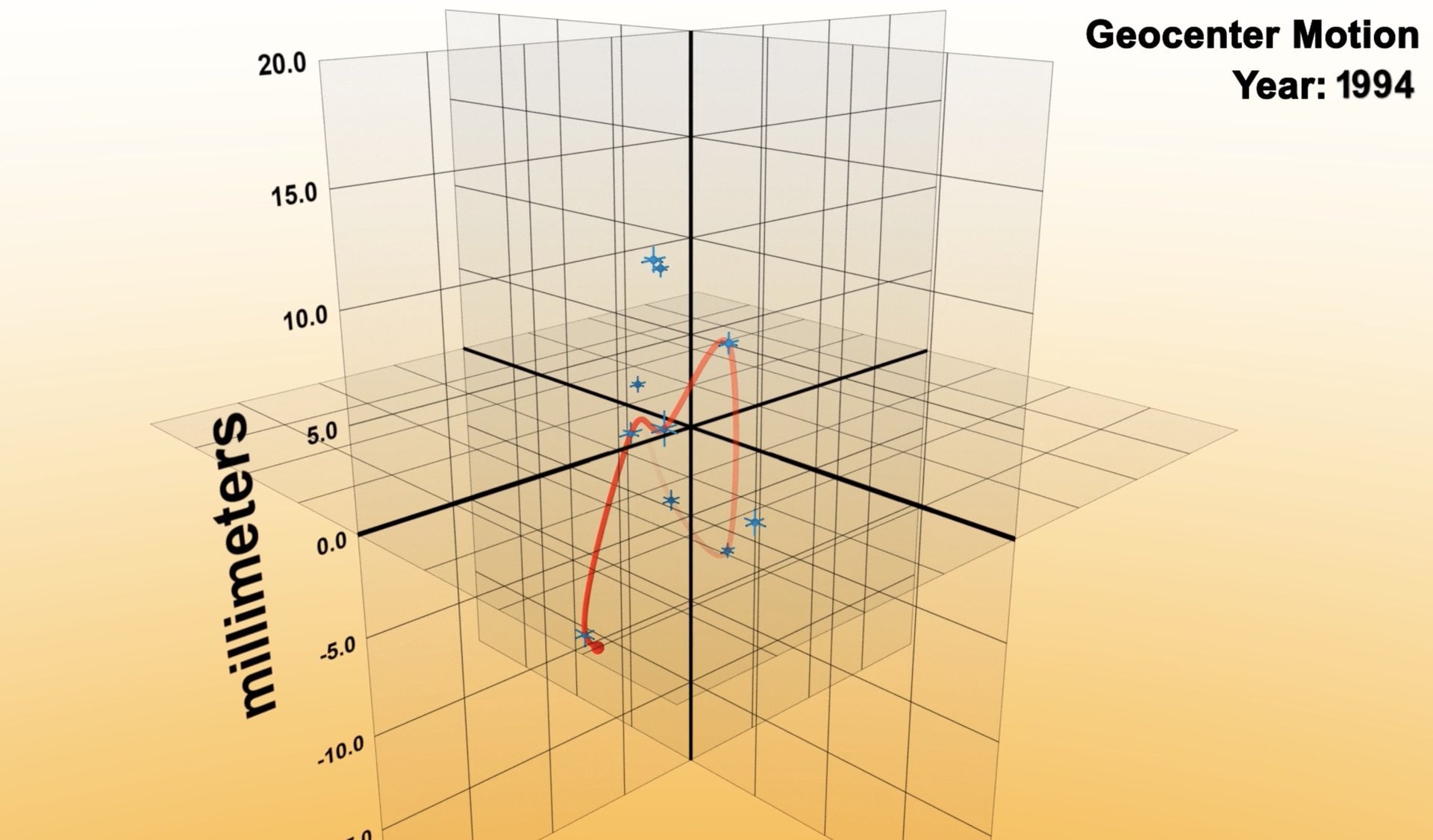
The Earth's center of mass drifts by millimeters over the years. Credit: NASA’s Scientific Visualization Studio

Earth's center of mass isn't stationary. It drifts seasonally and over the course of years. A new study measures this down to the scale of millimeters and finds the seasonal drift is smaller than we thought.


Solar Orbiter Catches the Sun’s Missing High-Speed Vibrations

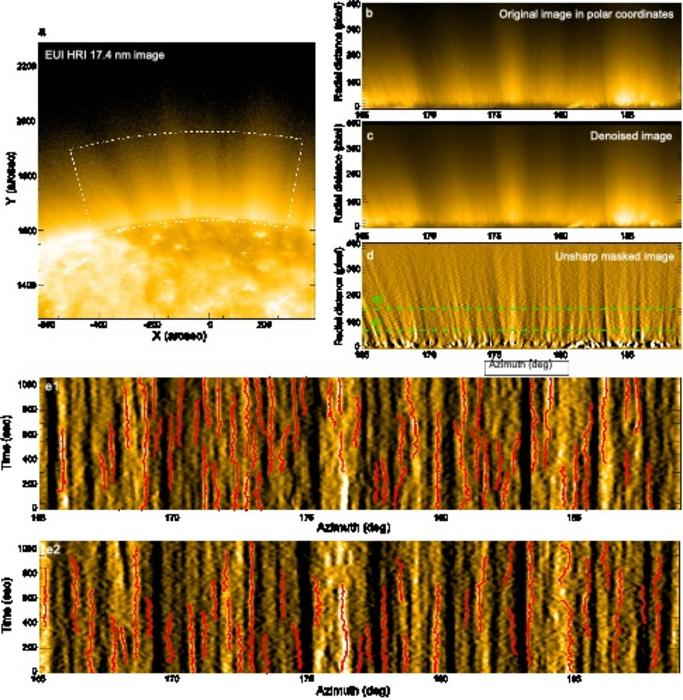
Images from the EUI of the Solar Orbiter show the fine plumes and "transverse" wave motion in the upper atmosphere of the Sun. Credit - Science China Press

The Sun’s magnetic fields are a twisty, curvy, ever changing mess. In particular, our star’s polar regions host regions called polar coronal holes that host invisible magnetic highways that stretch out into interplanetary space. But there’s a lot we don’t know about how those highways actually work, and in particular how they give the particles that form the fast solar wind an extra “kick” that sends them zooming at hundreds of kilometers per second. A new paper from a team led by Dr. Yuhang Gao and Prof. Hui Tian at Peking University, and published recently in the journal National Science Review, thinks they might have found an answer by using high-speed shots from Solar Orbiter to detect never-before seen rapid, high-frequency magnetic waves in those areas.


Astronomers Uncover "Hypersoft" X-ray Sources

Image of M101, the Pinwheel Galaxy, one of the homes of some of the HSSs. Credit: X-ray: NASA/CXC/Univ. of Alabama/M. Muhibullah et al.; Optical: NASA/ESA/STScI; Image Processing: NASA/CXC/SAO/N. Wolk

X-rays showcase some of the most unique astronomical objects in the universe. Neutron stars and black holes siphoning gas from companion stars stick out like sore thumbs at this level of radiation. However, according to a new paper by Mustafa Muhibullah and Jimmy Irwin from the University of Alabama and Rosanne Di Stefano from the Center for Astrophysics at Harvard & the Smithsonian, there appears to be another group of ultra-bright X-ray emitters that we’ve completely missed until now. They call them Hypersoft X-ray Sources (HSSs) and, according to a press release accompanying the paper, might answer two long-standing astronomical questions.


Sunday, September 20, 2026

The Sun Is Physically Capable of Producing a "Superflare" According To A New Study

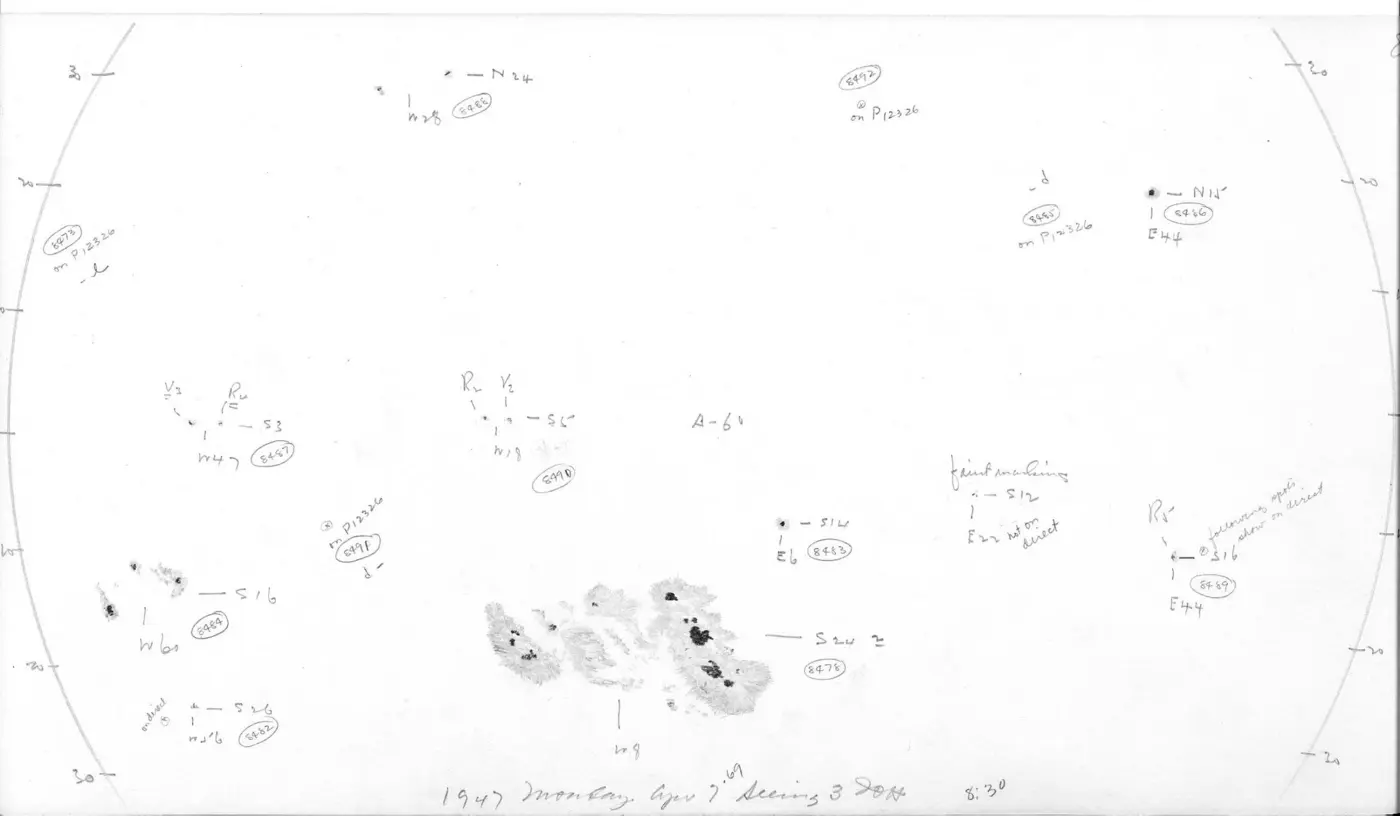
Hand-drawn image of sunspots from the Great Sunspot of 1947. Credit - Mount Wilson Observatory

We have long known that the Sun is active. It “flares” quite often, sending huge amounts of energy off in a certain direction - sometimes directly at Earth. But we also know that, compared to other Sun-like stars, it seems relatively quiet, and not capable of producing the “superflares” we sometimes see in its stellar equivalents. That sounds like great news for humanity, and some scientists have even argued that lack of superflares was a critical impetus for the development of complex life on Earth. But a new paper from Natalie Krivova of the Max Planck Institute for Solar System Research and her co-authors in the journal Philosophical Transactions A calls the assumption that our Sun is incapable of such dramatic outbursts into question. That also means that, eventually, our highly technological society could bear the brunt of one of them.


Saturday, September 19, 2026

MIT Research Could Lead to Refueling Depots on Mars

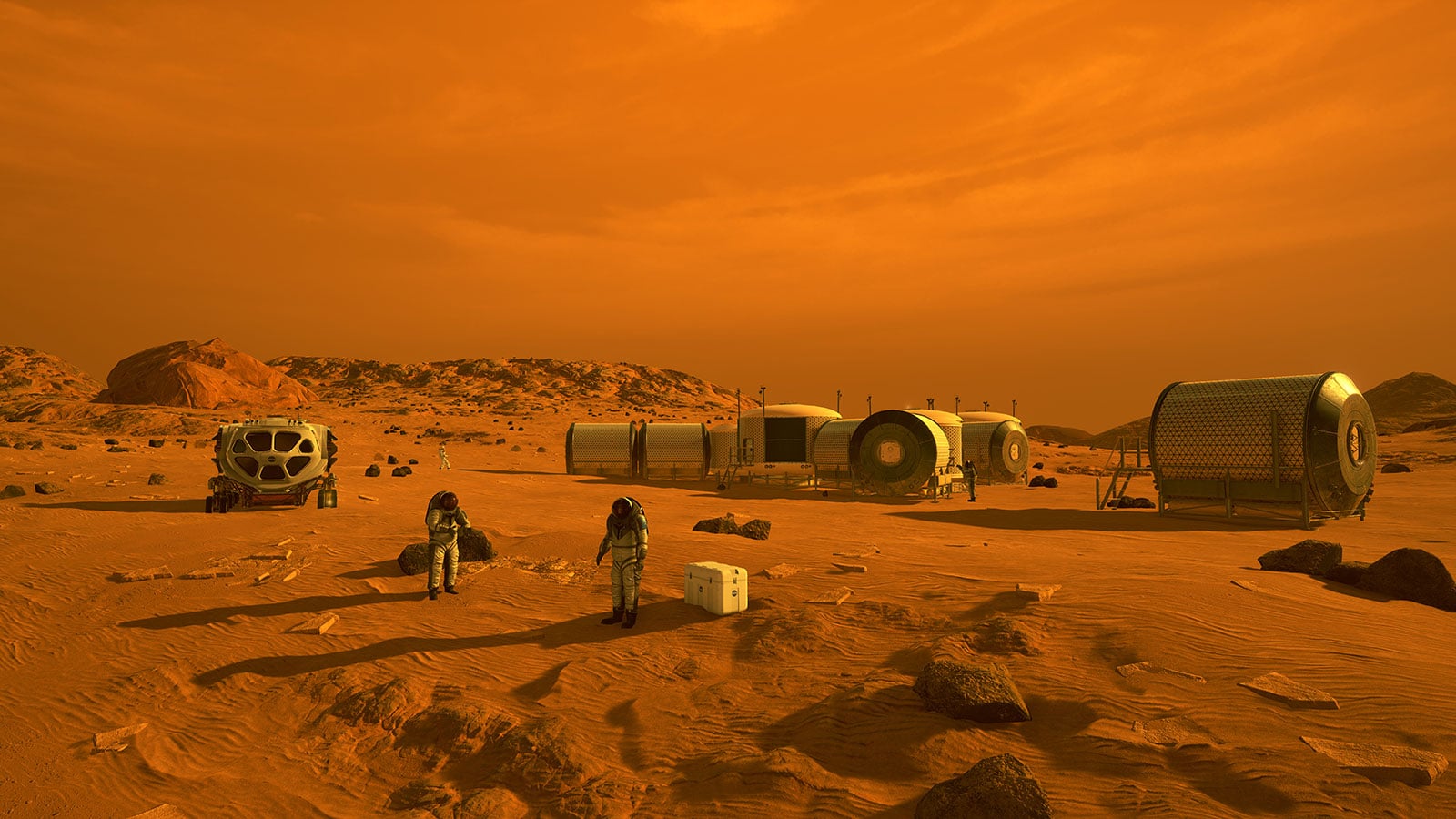
NASA artwork of a potential Mars habitat in conjunction with other surface elements on Mars. Credit: NASA

MIT PhD candidate Lanie McKinney is developing technology to convert the chemicals in the Martian atmosphere into propellant to bring astronauts home.


Researchers Measure the Environment Where the First Supermassive Black Holes Formed

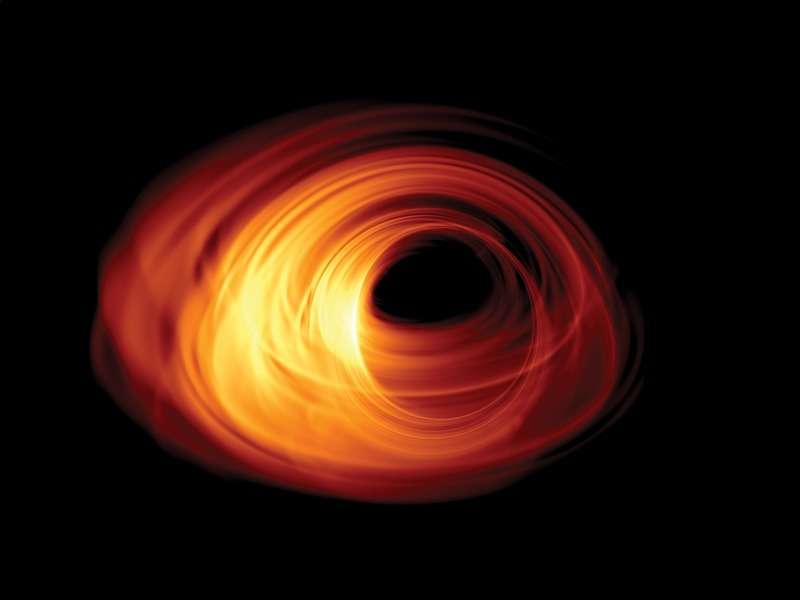
Artistic impression of the event horizon around the black hole at the center of our galaxy. Credit: M. Moscibrodzka/T. Bronzwaar/H. Falcke/Radboud University

Scientists theorize that the rapid emergence of supermassive black holes (SMBHs) in the early Universe can be explained by the direct-collapse black hole (DCBH) scenario. In a recent study, astronomers investigated the potential host environments of DCBHs and found that this scenario is a plausible explanation for how the "seeds" of SMBH formed.


Friday, September 18, 2026

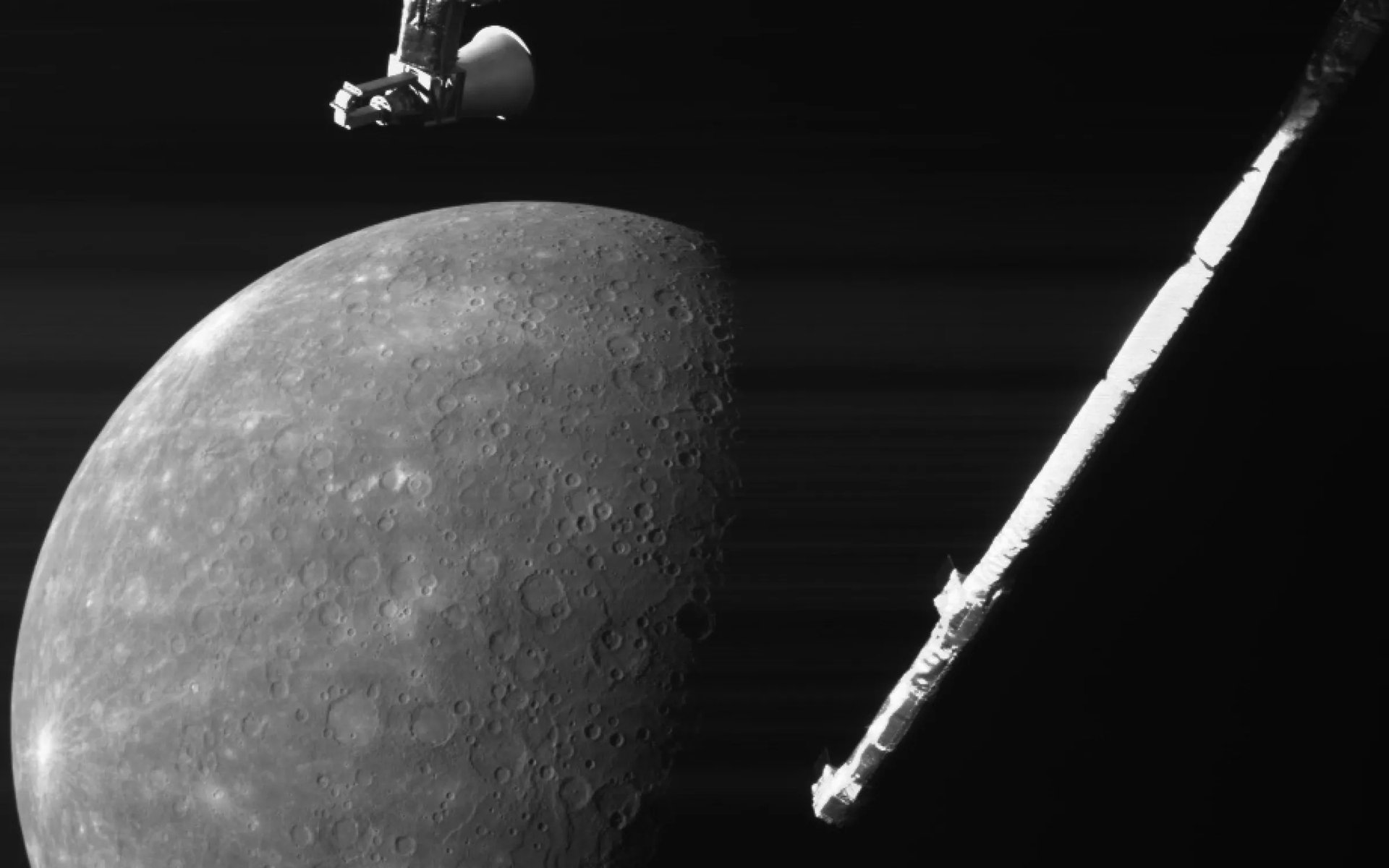
BepiColombo Makes Up-Close Measurement of Mercury's Solar Bombardment

None

BepiColombo's measurements of particle bombardment at Mercury will help assess the impact of space storms on Mercury's surface and on Earth's atmosphere.


The Red Planet Has a Purple Side

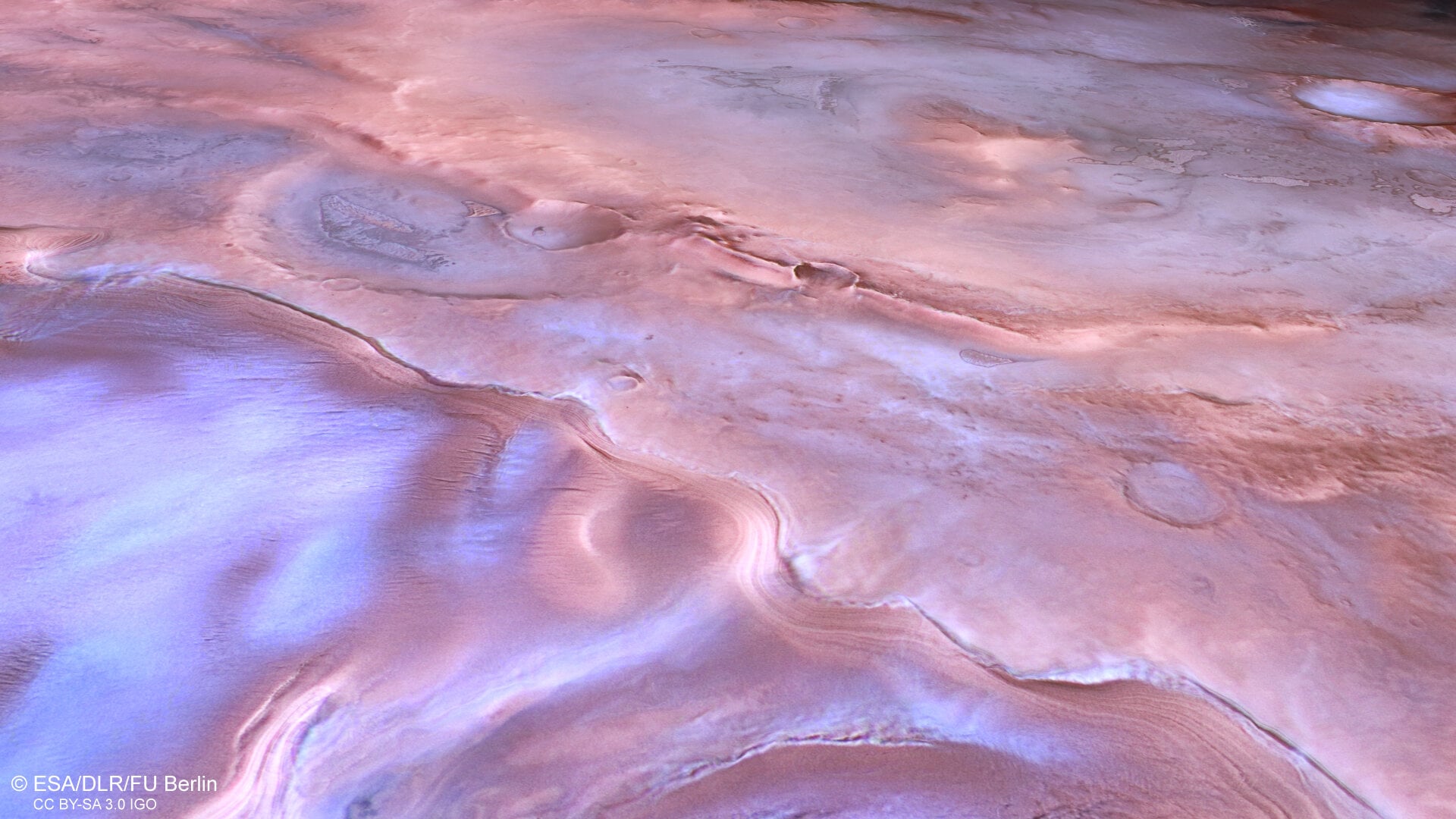
Mars is known for its reddish colour palette, a result of ancient iron oxides. But these striking pinks and purples are much different from the rest of the red planet. This orbital image shows Thyles Rupes, its cliff face, and a nearby glacier, where the atypical colours come from a mix of dust and frost. The image is from the High-Resolution Stereo Camera on the ESA's Mars Express orbiter. Image Credit: ESA/DLR/FU Berlin. Licence: CC BY-SA 3.0 IGO or ESA Standard Licence

Mars appears red because of iron oxides in the regolith. But it's not uniformly red. Different lighting conditions and different materials accumulated on the surface can make it appear purple, as in these images from Mars Express and its High-Resolution Stereo Camera.


To Understand The Solar Cycle, Notice How The Sun Sleeps

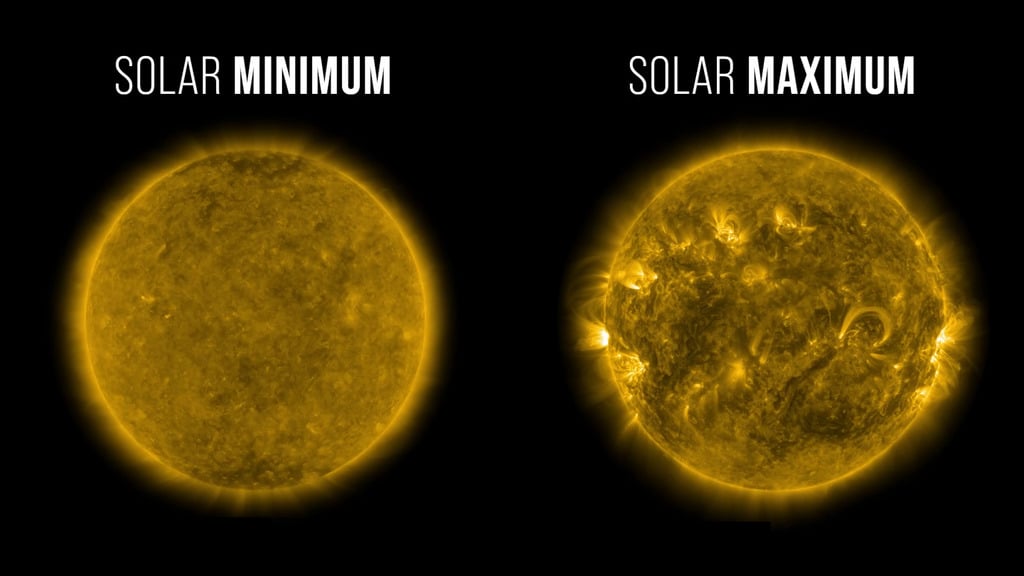
Images from the Solar Dynamics Observatory highlight the appearance of the Sun at solar minimum (left, Dec. 2019) versus solar maximum (right, May 2024). Credit: NASA/SDO

Astronomer Sandra Chapman has found a connection between the quiet period of one solar cycle and the active period of the next. Her data shows how a critical cutoff point is the key, but the real test will be the solar maximum of Cycle 26 in the 2030s.


Astronomy’s Decades-Long Quest To Understand Cosmic Topology

NGC6782 is one of the largest galaxies in the universe. A new study has explored star formation and the evolution of some of the most massive galaxies across the cosmos (Credit : ESO/VLT)

Cosmic topology is as esoteric as cosmology can get. But a growing number of astrophysicists think it holds keys to understanding the universe on its largest scales.


Thursday, September 17, 2026

Researchers Develop a Way to Check the Weather on a Exoplanet

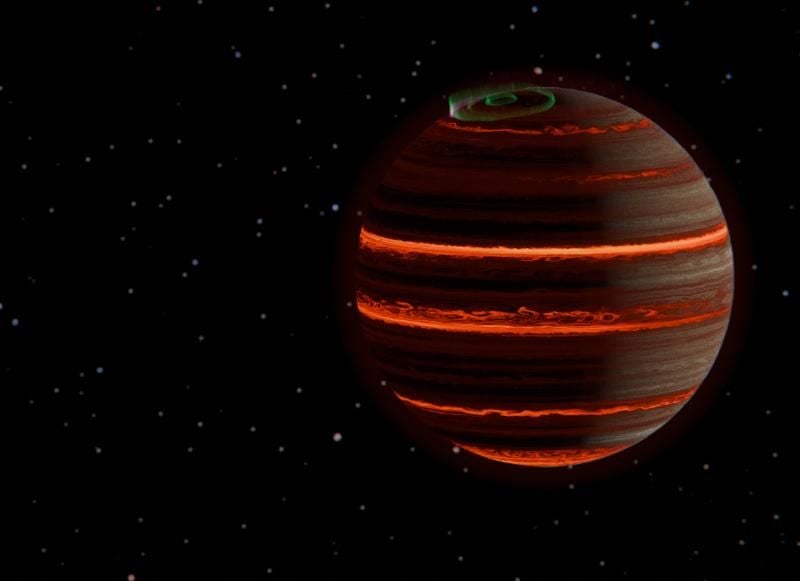
An artist’s impression of the extrasolar world, SIMP 0136. Credit: Dr. Evert Nasedkin

Scientists from Trinity have developed a powerful way to unravel the changing weather patterns on distant worlds. Using this approach, they discovered that the weather on a well-studied brown dwarf, “SIMP 0136”, previously linked with Northern Lights-like phenomena, is largely shaped by just two dominant processes: changes in temperature and the vertical structure of its clouds.


A Zombie White Dwarf Star is Born Again. Hallelujah!

Sakurai's Object is an unusual star that is undergoing evolutionary changes on human timescales. Over thirty years, it has becomes six times brighter. This is due to a very late thermal pulse. As a result, it's transitioned from a white dwarf to a Wolf-Rayet type star, and is called a 'born again' star. The middle panel is an ALMA image that shows the expanding shell of material from the pulse. Image Credit: Stefan Kimeswenger, University of Innsbruck; Peter van Hoof, Royal Observatory Belgium

30 years ago, an amateur astronomer noticed a white dwarf star suddenly getting brighter. New research shows this is due to a Very Late Thermal Pulse, a type of helium flash. The star has heated up and become brighter, and is now called a 'born again' star. It's evolved into a Wolf-Rayet type star, and astronomers will get to watch as it continues to evolve on human timescales.


Wednesday, September 16, 2026

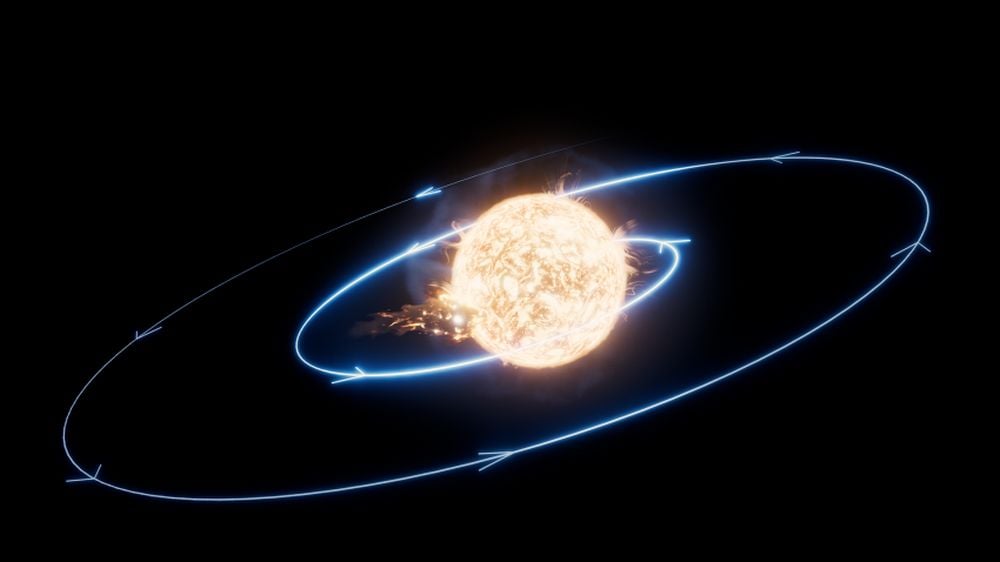
The Sun May Have Swallowed a Planet

An artist’s impression of a star engulfing a planet. The blue line traces the path of the planet as it spirals toward the star and ultimately collides with it.
NASA, ESA, CSA, Ralf Crawford (STScI)
Licence type
Attribution (CC BY 4.0)

New research suggests that some unusual characteristics of the Sun may be explained if it swallowed a large planet sometime during the Solar System’s formation.


Mercury is Shrinking, But Faster Than Previously Thought

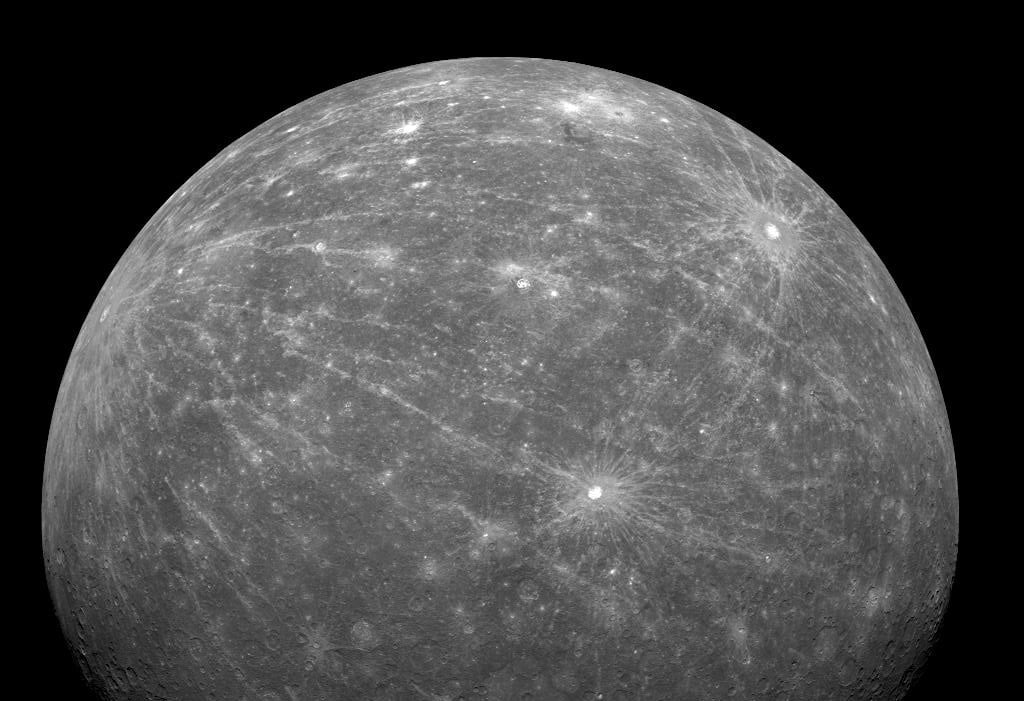
Mercury as seen by NASA’s MESSENGER spacecraft in 2008. Credit: NASA/JHUAPL/Carnegie Institution of Washington

The rough, impact-debris-covered surface of Mercury has hidden the true rate at which Mercury has been shrinking, which scientists previously underestimated by 30%


When Stars Engulf Rocky Planets, Beryllium Gives It Away

This illustration shows a planet spiralling inwards, where it's engulfed by its star. Researchers have developed a method to determine which stars have eaten rocky planets. It's all based on the rare element Beryllium. Image Credit: NASA, ESA, CSA, Ralf Crawford (STScI).
Licence: Attribution (CC BY 4.0)

Astronomers know that stars can engulf planets when they stray too close. But how can they know, by looking at a star, if it has ever done so? The answer lies in Beryllium, an element not synthesized inside stars.


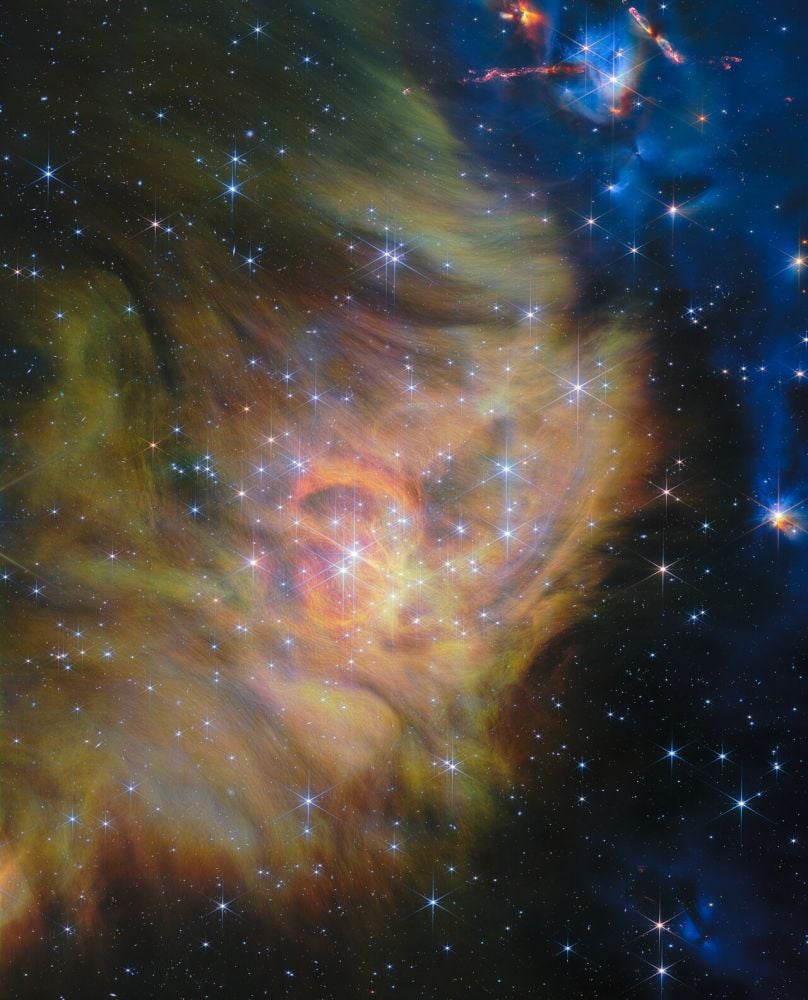
Webb Searches for Brown Dwarfs in a Stunning Star-Forming Region

The JWST captured this image of the star-forming region IC 348 with its NIRCam instrument. At 1,000 light years away, the region is relatively close to us. This makes it a good place to search for the lowest-mass brown dwarfs. Image Credit: ESA/Webb, NASA, CSA, K. Luhman, C. Alves De Oliveira, M. Zamani (ESA/Webb)

How small can brown dwarfs be before the definition breaks down? That question is at the heart of new research, and new JWST images. Using the space telescope, researchers have discovered a new class of brown dwarfs with low masses, marked by a peculiar hydrocarbon feature.


For Trans-Neptunian Objects, The Past Is Written On Their Surface

This artist’s concept depicts a Trans-Neptunian Object, a small, faint, icy body orbiting the Sun beyond the orbit of Neptune. Credit: NASA, ESA, Leah Hustak (STScI)

Some Trans-Neptunian Objects (TNOs) formed closer to the Sun and migrated to the outer solar system, while others formed there originally. A new study finds that "hot" and "cold" origin TNOs can be distinguished not only by their orbits, but also by their surface color.


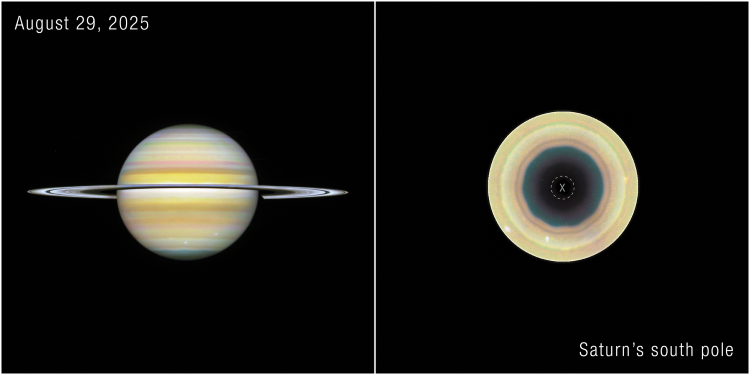
Saturn's South Pole Features Newly Formed Atmospheric Decagon

Astronomers examining recent Hubble Space Telescope images of Saturn have spotted a remarkable 10-sided wave pattern, or decagon, cutting through several layers of the gas giant's southern atmosphere. (Credit: NASA, ESA, STScI, Agustin Sánchez-Lavega (UPV), Amy Simon (NASA-GSFC), Michael Wong (UC Berkeley); Image Processing: Alyssa Pagan)

The planet Saturn is arguably the most recognizable planetary object in the entire solar system because of its massive rings. Anytime a child is asked what their favorite planet is, the answer is often “The one with the rings!” But, while Saturn’s rings are its most striking feature, the famed planet has a myriad of other unique features that often get overlooked, specifically its polar activity. This includes a long-known rotating hexagon in its north polar region, but what kinds of activity could be occurring in Saturn’s southern polar region, and what could this teach scientists about planetary formation and evolution?


Tuesday, September 15, 2026

If Venus Had An Ancient Moon, It Was Doomed

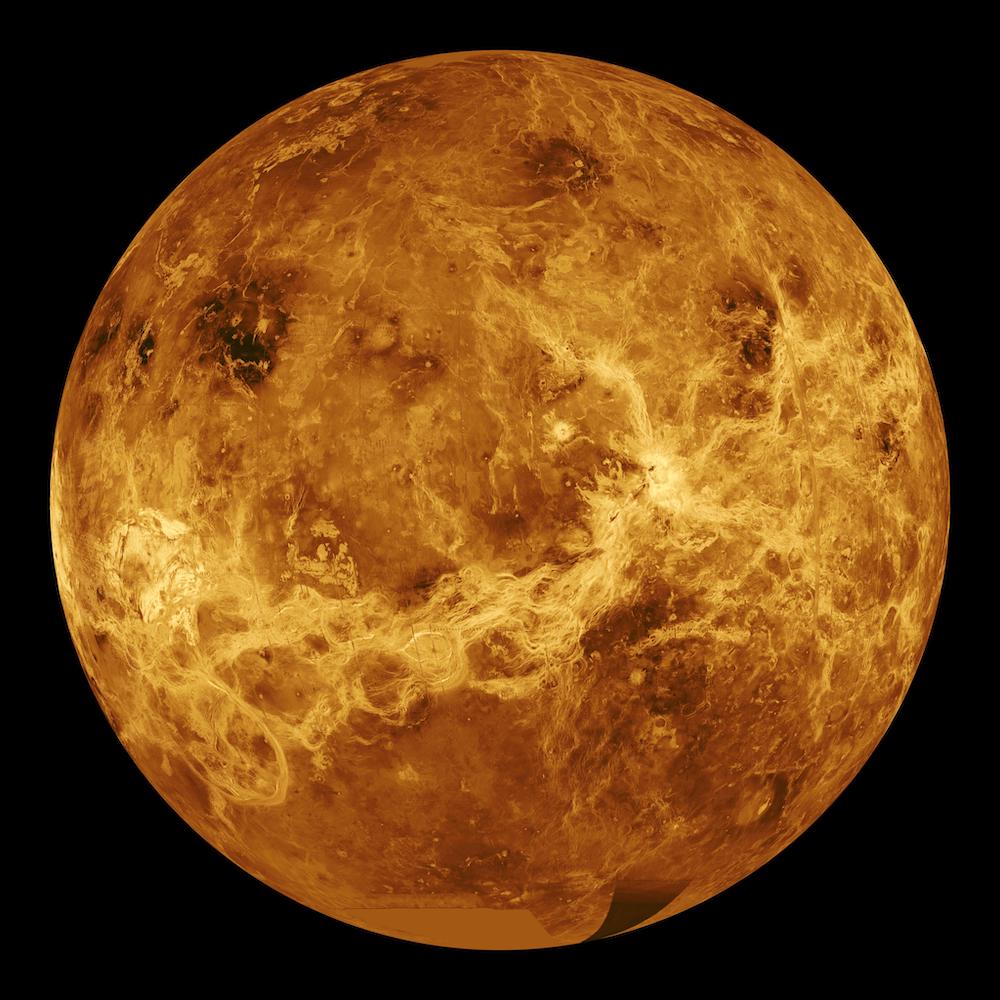
A false-colour radar image of Venus' surface based on Magellan data. New research says that the planet may have had a moon in the past. But it was eventually pulled toward the planet, where it was consumed. Image Credit: NASA

Earth has a big beautiful Moon, while Venus, its 'sister planet', doesn't. Why is that? Did it ever have one? If it did, new research shows it was never going to last very long.


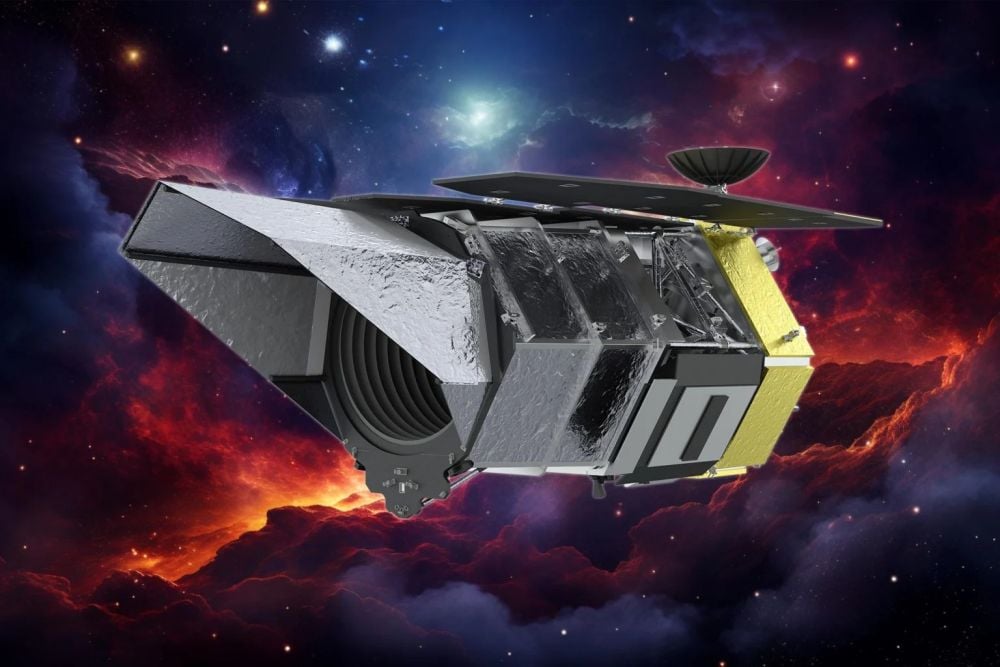
From 10 to 22 years: The Nancy Grace Roman Space Telescope's Mission Has Just Been Extended.

This illustration shows the Nancy Grace Roman at L2, hard at work deciphering the Universe's mysteries. Image Credit: NASA’s Goddard Space Flight Center

More good news for NASA's Nancy Grace Roman Space Telescope. The telescope's first mid-course correction was extremely efficient, using only 10% of the fuel allotted for it. This efficiency, coupled with other factors, means the powerful space telescope will likely have an additional ~12 years of observing time.


ALMA is Watching a Massive Binary Star System Form

This artist's illustration shows a pair of young binary stars and their misaligned disks. They're still in the process of forming, and that's giving astrophysicists and opportunity to learn more about binary star formation. Image Credit: Y. Zhang

Astronomers used 8 years of observations to create a 3D image of a very young, very massive binary star as it forms. The image shows that the disks in the system are all misaligned. Those misalignments, together with the orbit, are clues to the system's chaotic history.