Monday, August 24, 2026

Can We Steal Energy from Black Holes? Part 1: Leveling Up Spacetime

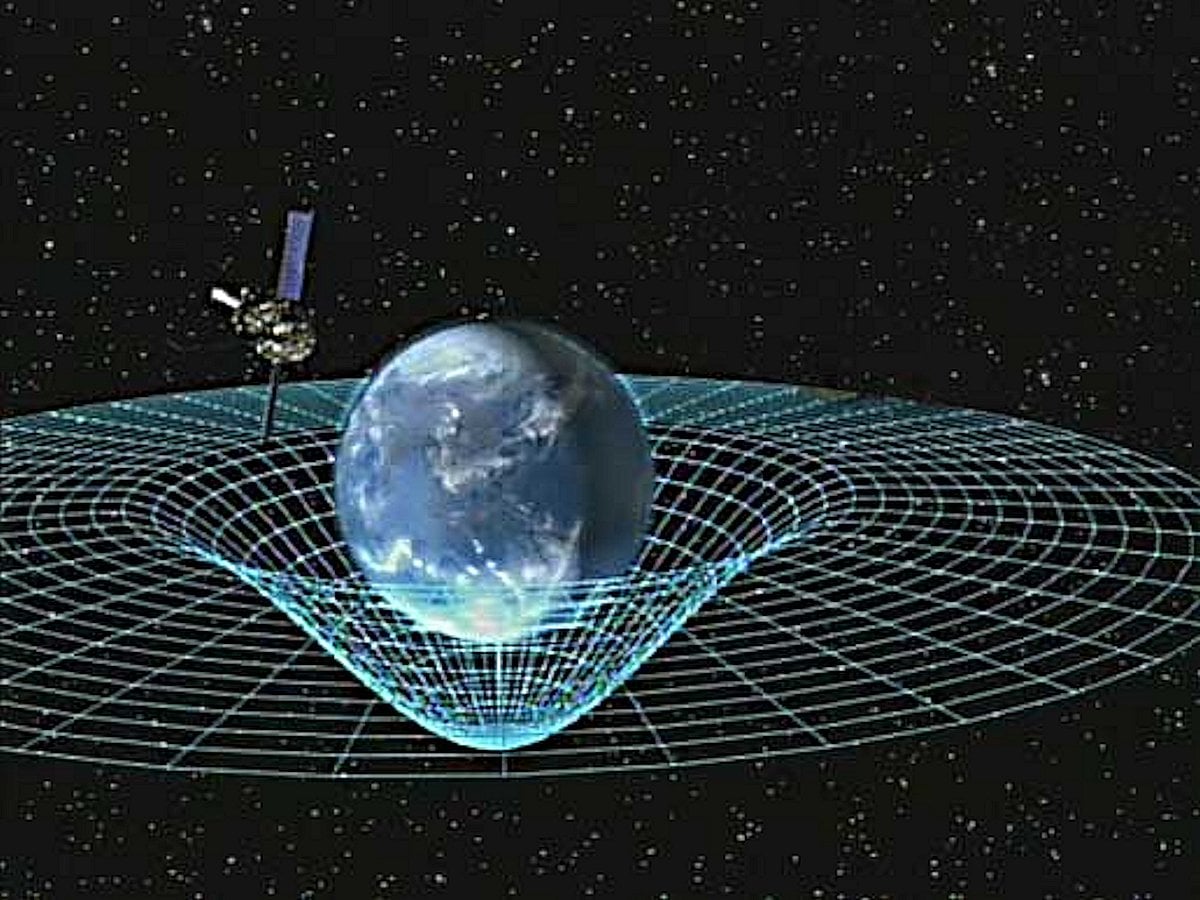
An illustration of spacetime as a warped grid around the Earth, the picture at the heart of general relativity and frame dragging. Credit: NASA (public domain).

Roger Penrose found a way to extract energy from a spinning black hole without breaking any laws of physics. To understand it, we first have to level up our picture of spacetime, from Newton's empty stage to a swirling, draggable fabric.


NASA Starshade Would Enable Astronomers To Directly Image Rocky Exoworlds

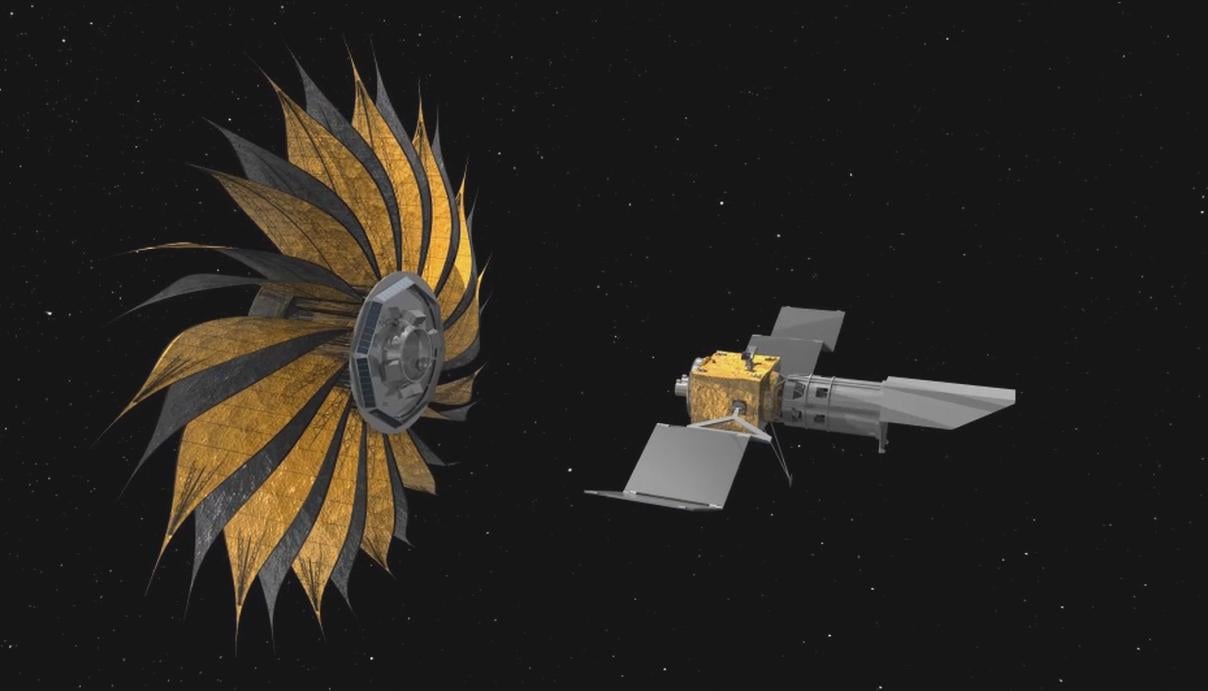
An artist's concept of a generic starshade.  Credit:  Public Domain

Innovative NASA-funded orbital starshade could help capture first direct images from extrasolar earths.


Sunday, August 23, 2026

Astronomers Use Rare Ultra-Magnetic Star to Crack a Quantum Mystery

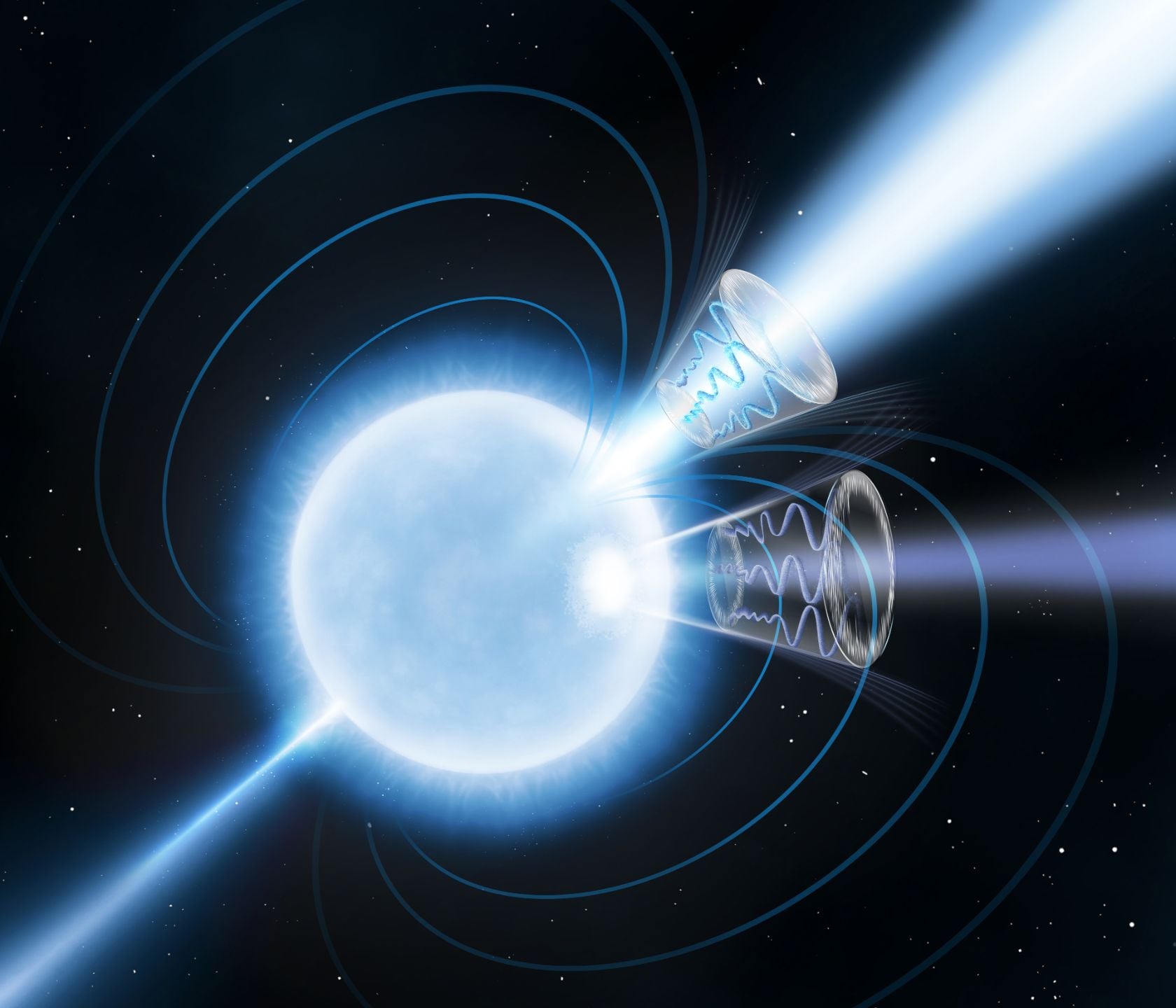
A Swinburne astronomer may have just confirmed one of the quirkiest aspects of quantum mechanics: that seemingly empty space can alter the behavior of light. Credit: NASA.

An international team observed a magnetar known as 1E 1547.0–5408 using NASA’s Imaging X-ray Polarimetry Explorer (IXPE), leading to what could be the first detection of vacuum birefringence taking place in the magnetar’s ultra-strong magnetic field. These findings could potentially resolve a long-standing mystery quantum mechanics.


NASA Highlights Next-Gen Cargo Landers Paving the Way for a Moon Base

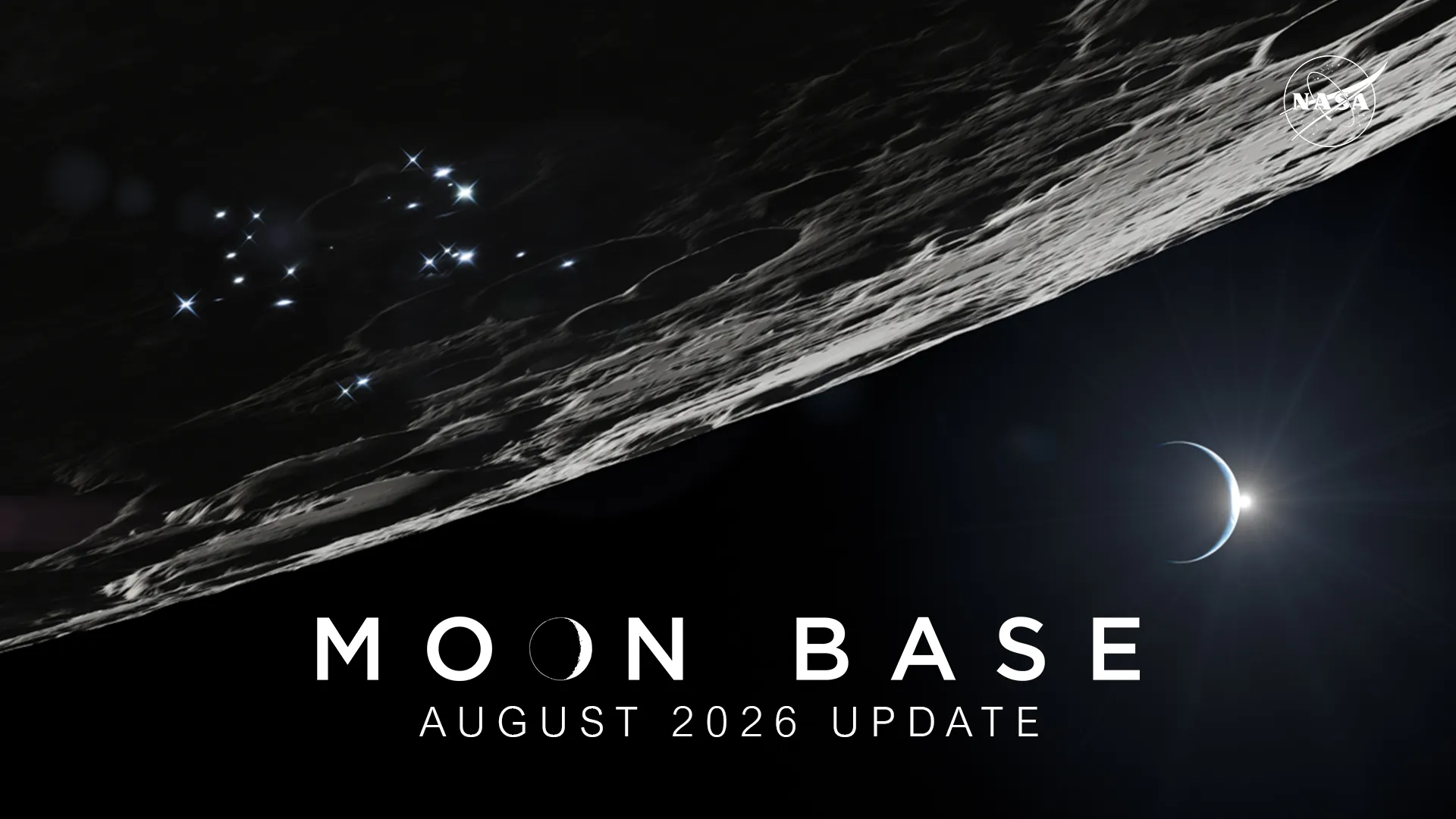
Artist's depiction of a NASA moon based, along with it's update imagery. Credit - NASA

NASA and its commercial partners are making progress on their way to a permanent human presence on the Moon. As part of that, a recent press release and accompanying YouTube video hints they may be looking to provide regular updates to the progress of those efforts - and, at least for this first one, that progress looks pretty good.


Saturday, August 22, 2026

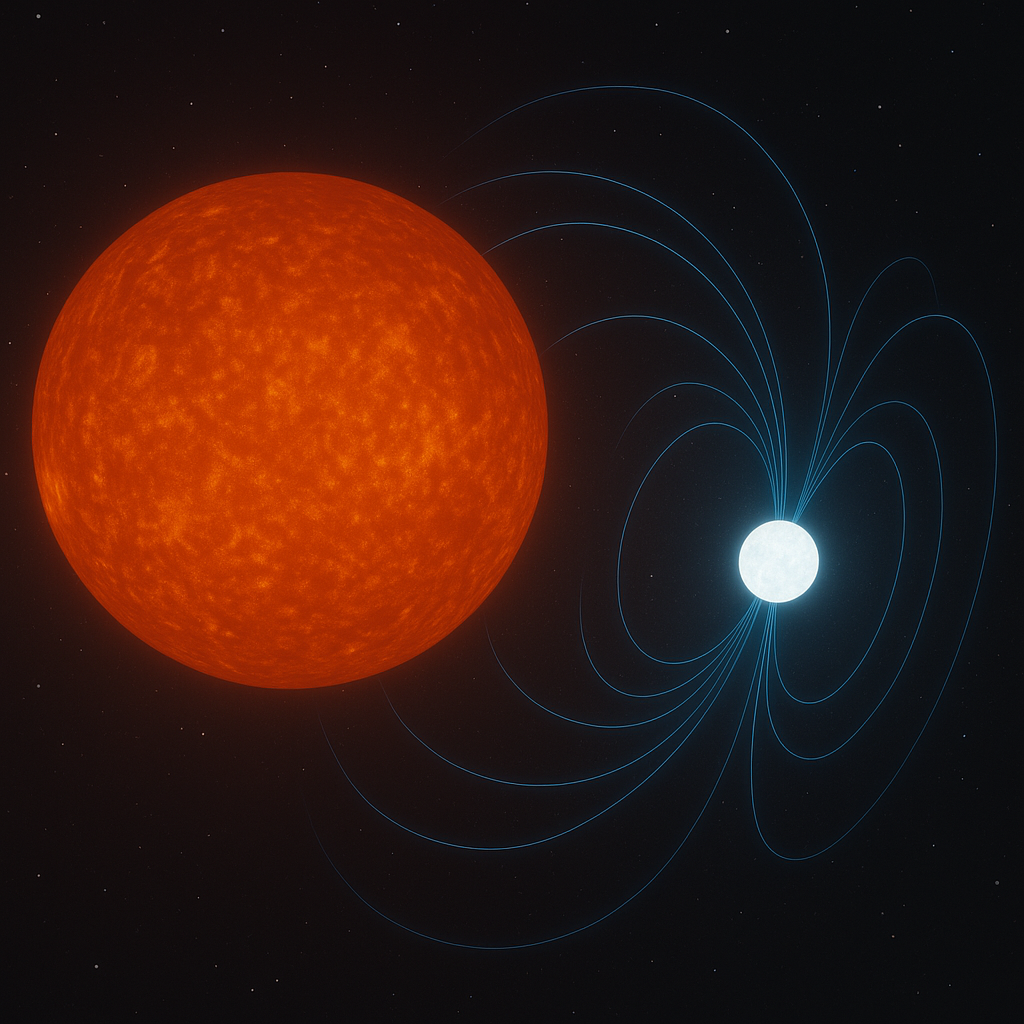
White Dwarf-Red Dwarf Binaries Power Cosmic Lasers

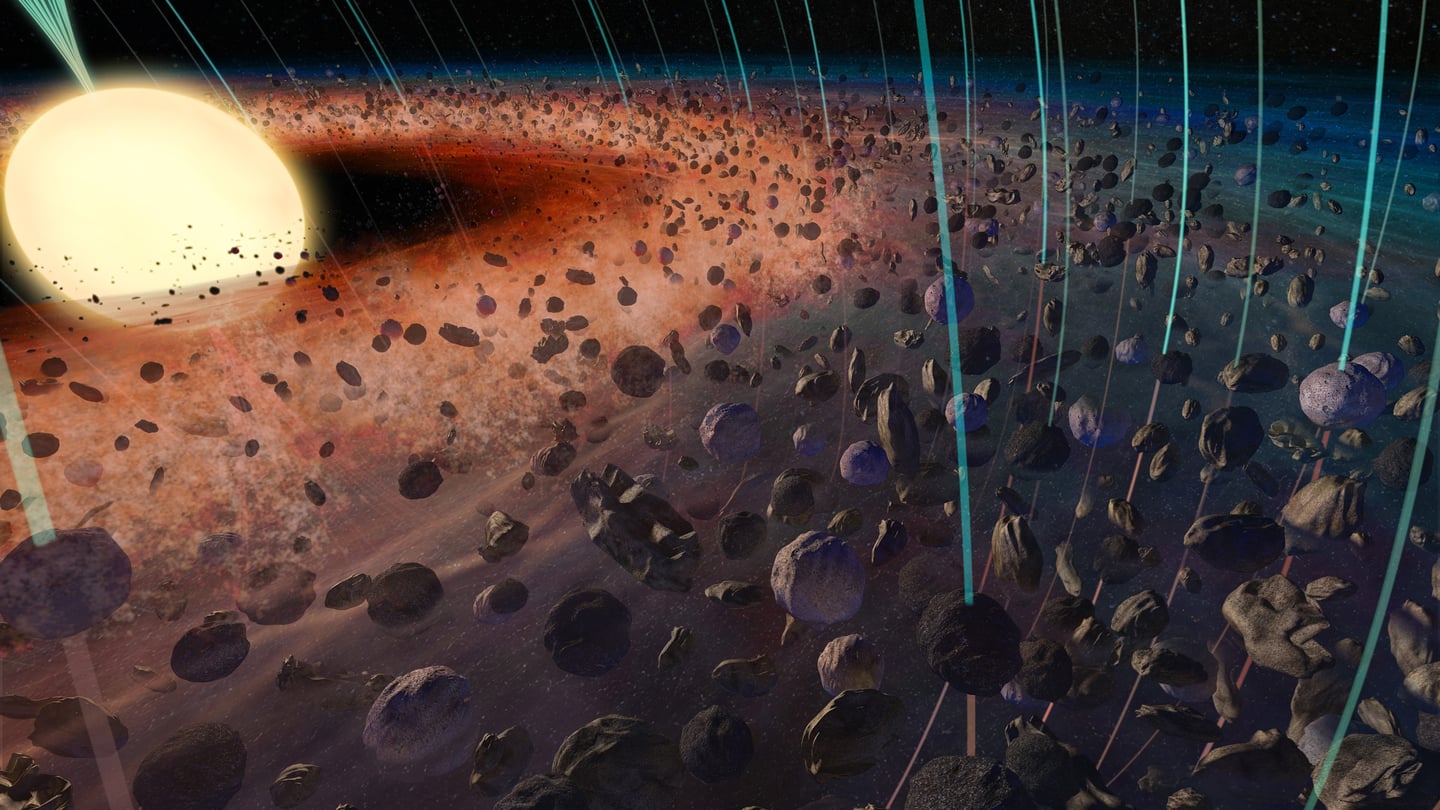
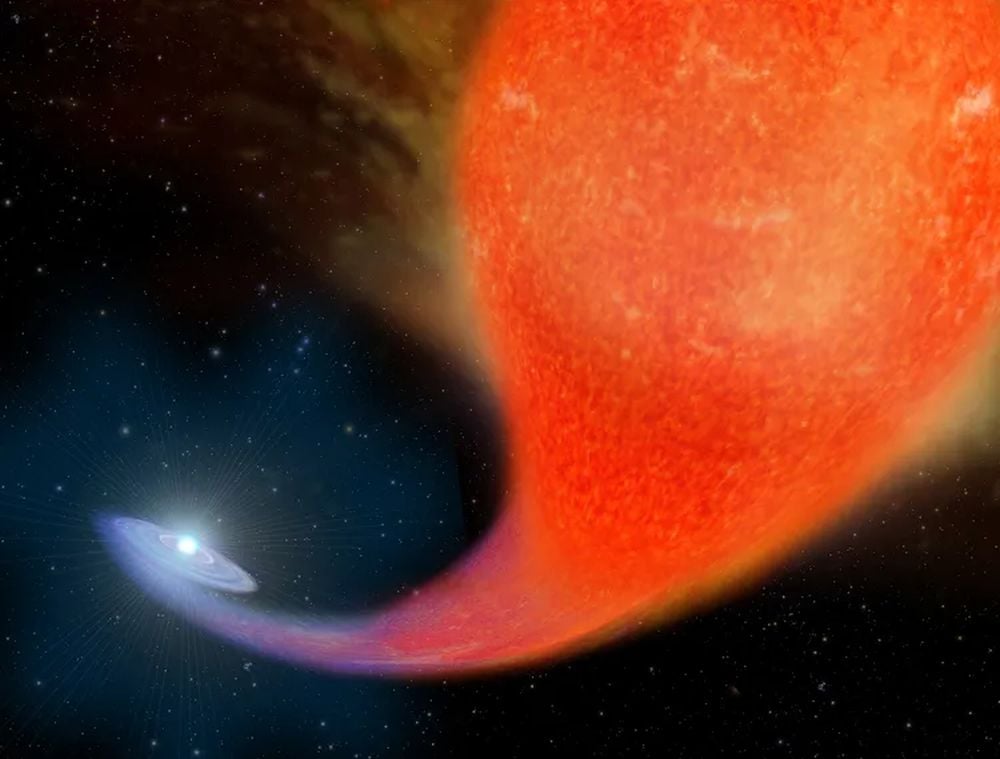
Artwork of a white dwarf–M dwarf binary stars. The white dwarf's magnetic field lines, which are stronger than those from the M dwarf, play a key role in creating long-period bursts of radio emission observed from binary stars like these. Credit: Elias Most (AI-generated)

Researchers have helped unravel the mystery of why certain pairs of stars pulse with regular, long-period bursts of radio waves. The particular class of objects they observed come in pairs that always include a compact dead star, called a white dwarf, locked in orbit with an M dwarf, a red star smaller than our Sun.


Friday, August 21, 2026

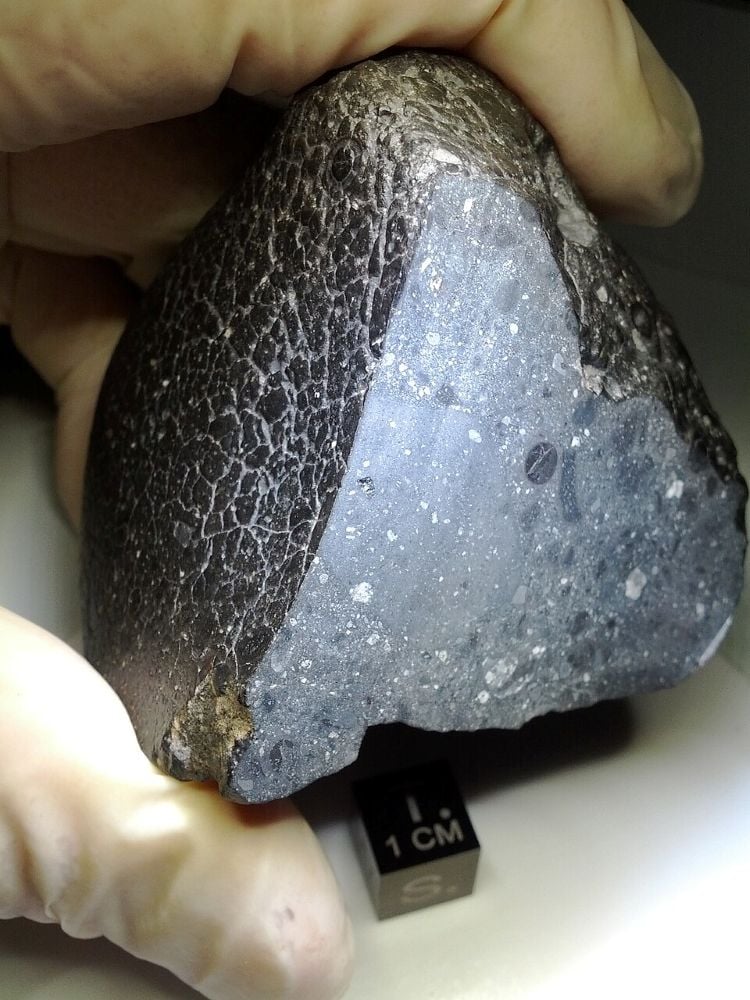
Dry Martian Meteorite Reveals Early Water in Mars's Crust

Meteorite Northwest Africa 7034 (NWA 7034) aka Black beauty. (Credit: NASA)

Billions of years ago, Mars was hypothesized to have been a habitable world with flowing liquid water and the potential for life. But directly studying its ancient past is currently limited to orbiters and rovers, as scientists have yet to obtain direct samples from Mars. However, meteorites have been found on Earth to have potentially originated from Mars during large impacts that flung chunks of the Red Planet into space, eventually being grabbed by Earth’s gravity and crashing into the Earth’s surface.


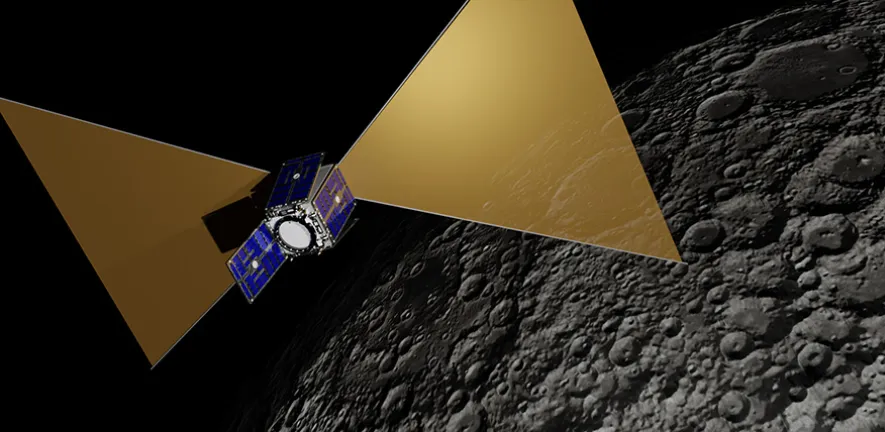
The CosmoQuest Satellite Will Listen to the Early Universe From the Far Side of the Moon

None

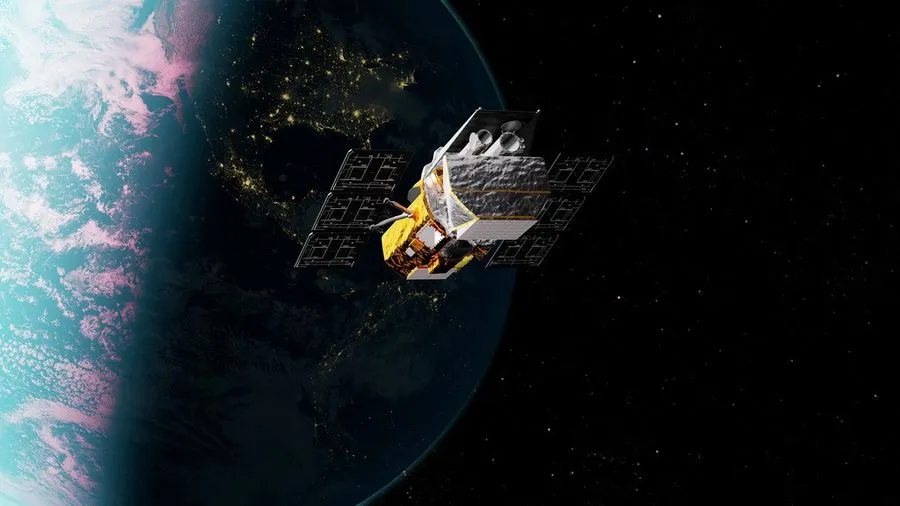
A tiny UK-developed satellite, roughly the size of a small carry-on suitcase, could help answer one of the biggest questions in cosmology: what happened in the roughly 150 million years of cosmic dark ages, before the universe’s first stars appeared?


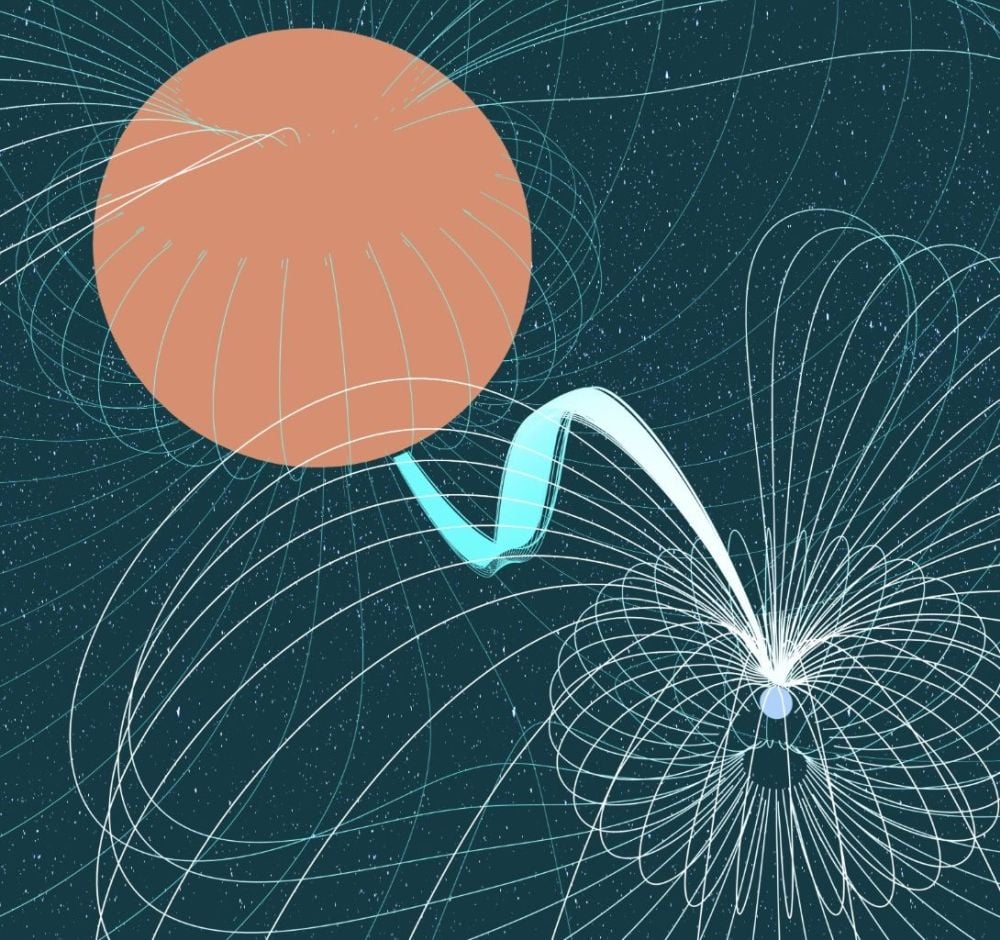
Strange Signals Called Long-period Radio Transits Come From Cataclysmic Variables

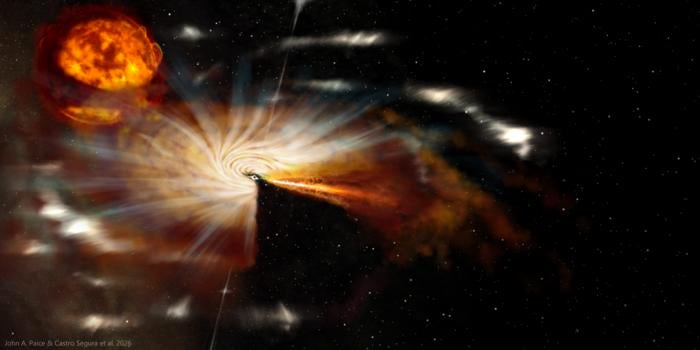
This iullustration shows a white dwarf star accreting material from its companion. New research says that this can explain at least one of the puzzling Long Period Radio Transients, mysterious radio signals that repeat with periods ranging from a few minutes to a few hours. Image Credit: Carl Knox (OzGrav, Swinburne University of Technology) and Joshua Preston Pritchard (CSIRO).

Long-period Radio Transients are sources that emit repeating radio and x-ray signals. The signals are polarized and coherent, and are similar to pulsars in some respects. But the type of astrophysical object responsible for them has been vigorously debated. New research says that at least one of them comes from a cataclysmic variable, a binary star where a white dwarf and a red dwarf orbit closely.


New Solar System Models Show Earth Is No Fluke

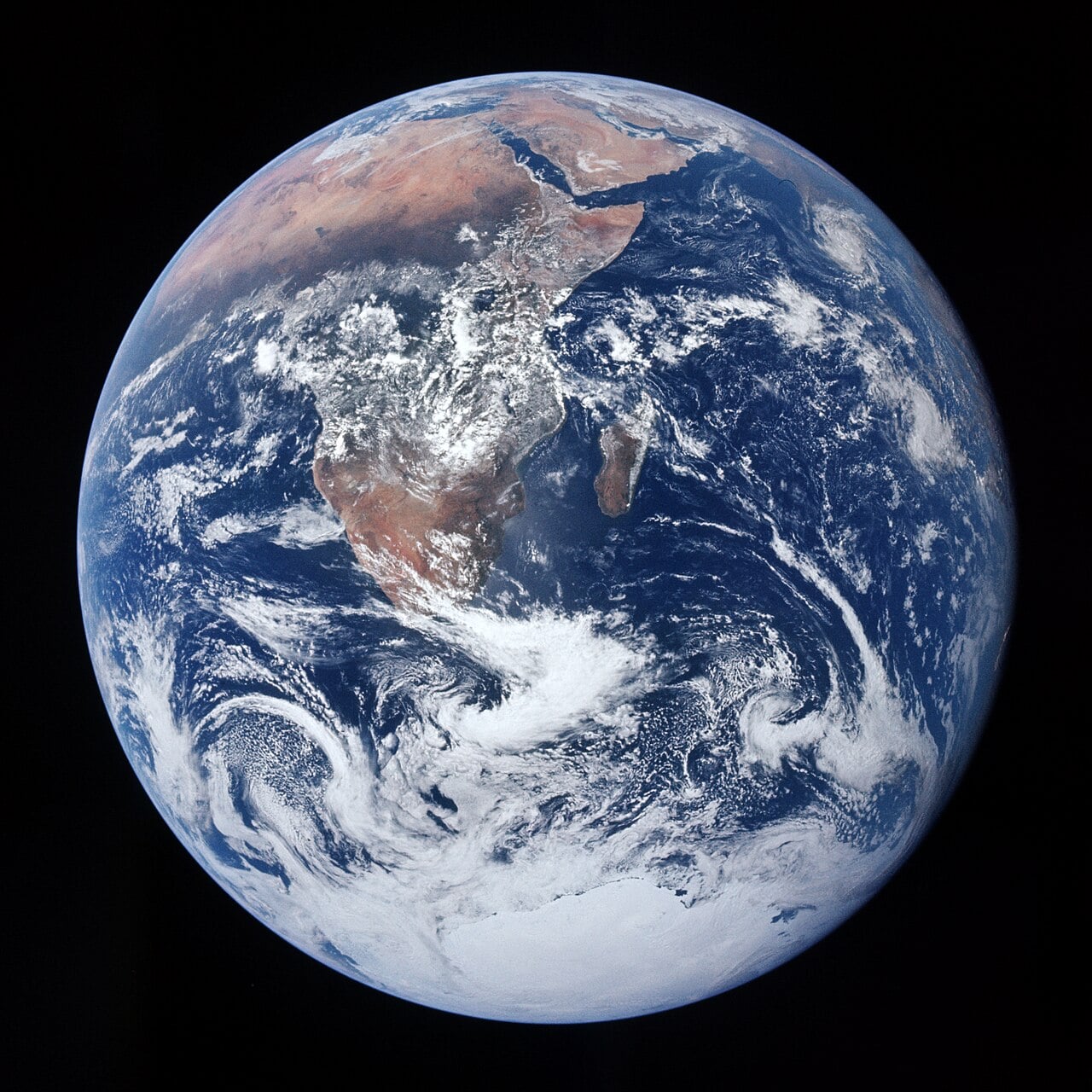
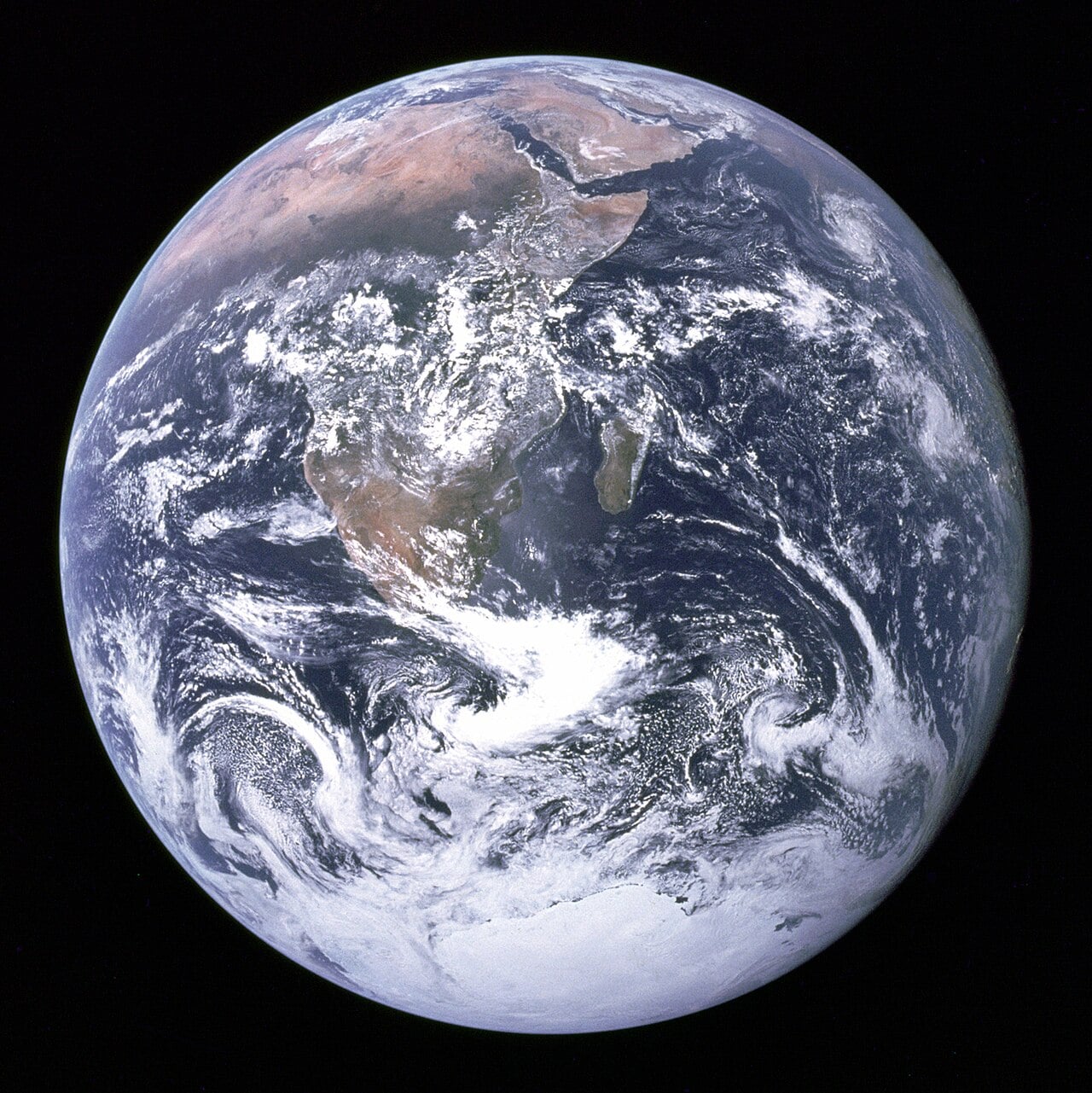
The Blue Marble Credit: Harrison Schmitt / Apollo 17

Astrobiologists use new starting points to produce ‘organic’ models of our solar system’s formation.


Thursday, August 20, 2026

NASA's Lunar Reconnaissance Orbiter Images Falcon 9 Crater on Moon, With Some Help From a Korean Spacecraft

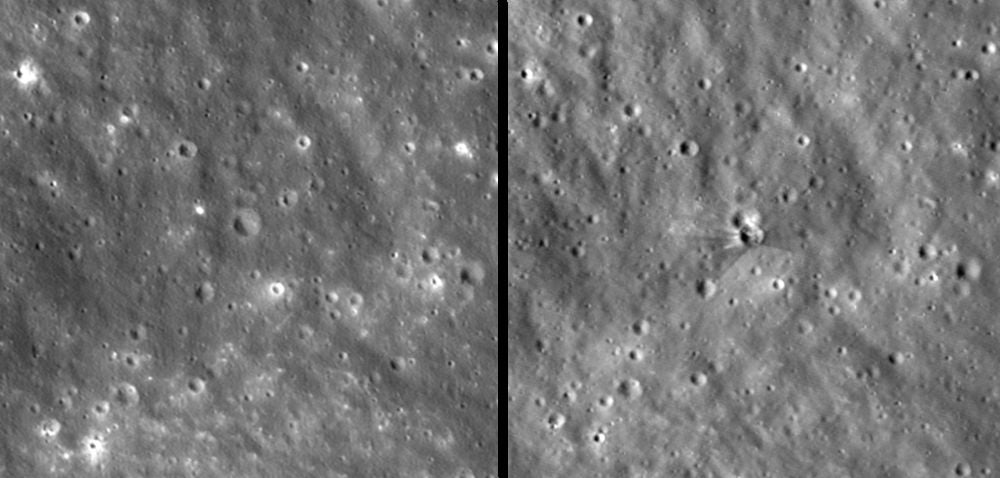
These images from NASA's Lunar Reconnaissance Orbiter show the Falcon upper-stage's crash site on the Moon. The left image is before the crash, the right image is after, showing the impact crater. Image Credit: NASA Goddard/Intuitive Machines

A SpaceX Falcon upper stage crashed into the Moon on August 5th. NASA's Lunar Reconnaissance Orbiter captured images of the crash site from different viewing angles and with different sunlight angles. The images showed that the crater is about 18 meters wide and about 3 meters deep. SpaceX says the crash was an accident.


Mars's Funky Moon Deimos was Shaped by an Impact

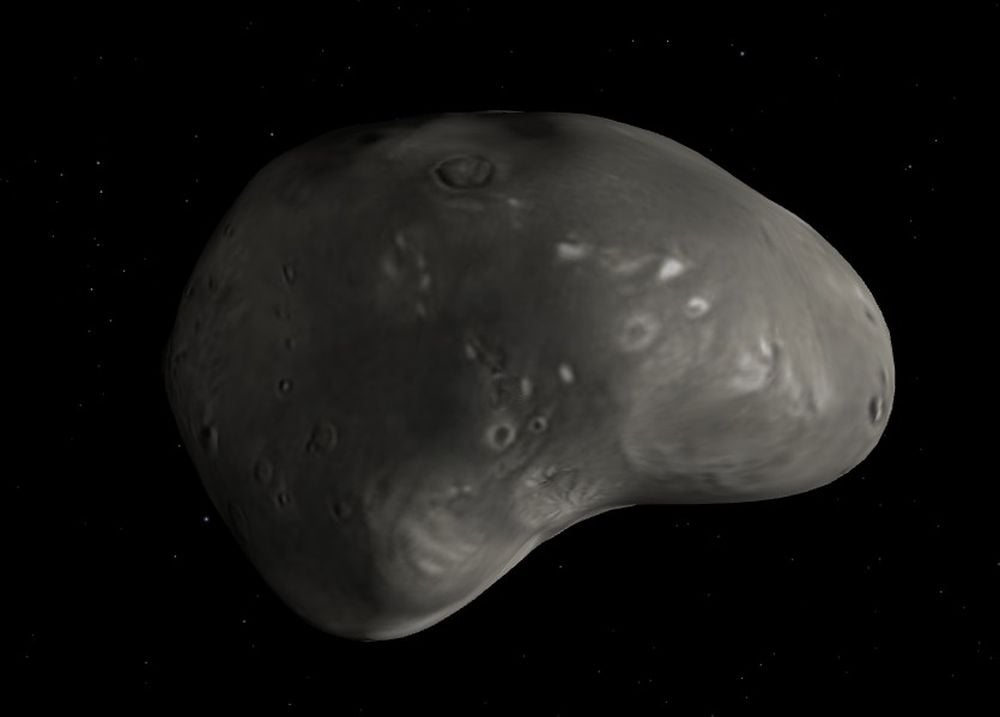
This illustration shows Mars' moon Deimos and its distinctive south pole depression. Thought the moon's surface appears smoother than its sibling Phobos, it's still been battered by impacts. One major impact created the south pole crater, and also spread a layer of regolith on the moon's surface. Image Credit: NASA Eyes on the Solar System.
Mars' moon Deimos has a large crater on its southern pole. It's also covered by a layer of regolith so deep it buries many other, smaller craters. New research shows that an impact is responsible for both, and that the moon is rather fragile and porous, like a rubble pile asteroid.


What Can We Actually Find on an Exoplanet? Part 4: Looking For Us

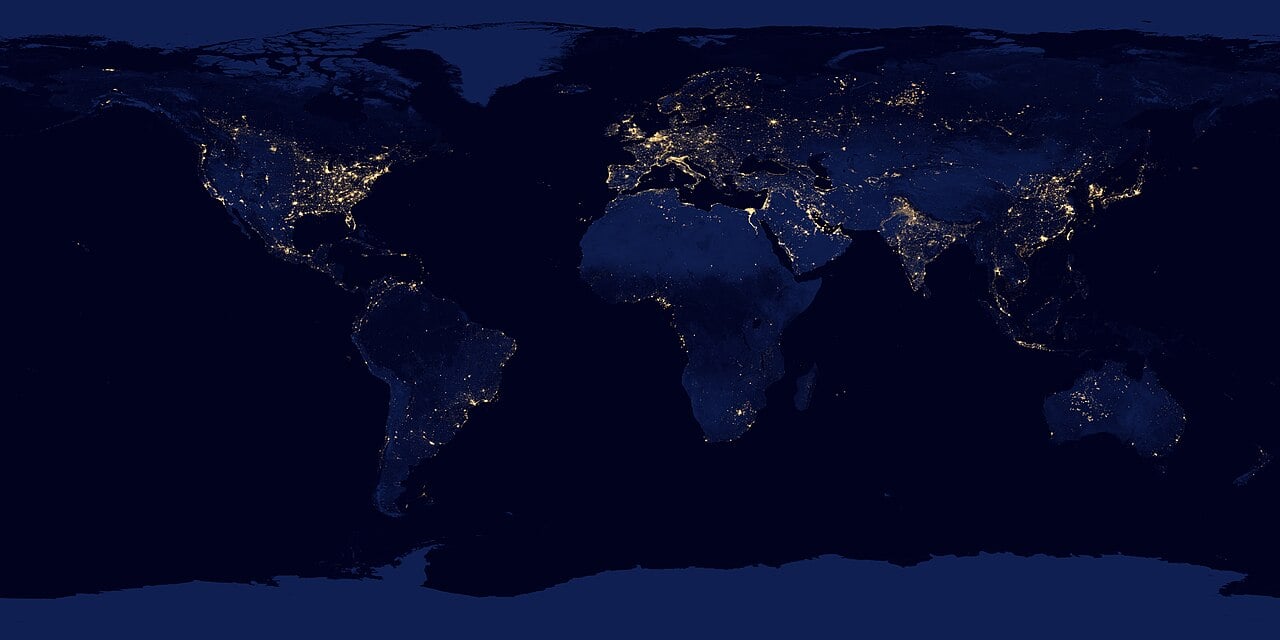
Earth at night, its city lights tracing the footprint of human civilization. Industry leaves atmospheric technosignatures an alien astronomer might detect. Credit: NASA (public domain).
Some signs of an alien civilization are easier to spot than signs of life itself. On technosignatures, from CFCs and industrial gases to the pandemic dip in pollution, and why Earth's most detectable moment might be right now.


Wednesday, August 19, 2026

Webb Captures the Treasure Chest at the Heart of the Carina Nebula

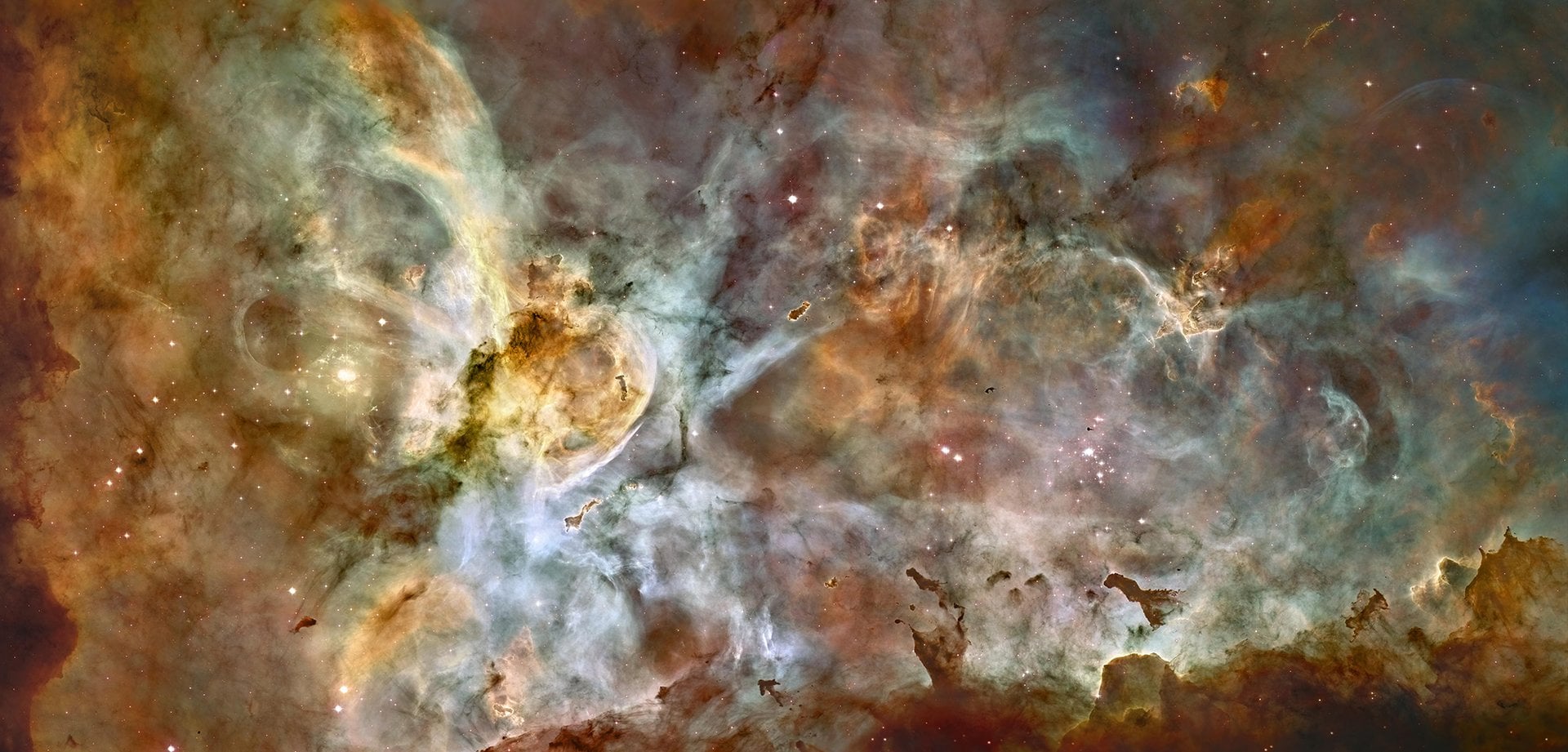
Hubble image of the Carina Nebula (NGC 3372), which lies just 7500 light-years away in the constellation Carina (the Keel). Credit: NASA/ESA/UC Berkeley/STScI/NOAO/AURA/NSF

This NASA/ESA/CSA James Webb Space Telescope Picture of the Month takes us to a fantastical realm within our home galaxy, where piercing starlight and billowing winds sculpt dust clouds into inventive shapes. This scene is from the Carina Nebula, which lies just 7500 light-years away in the constellation Carina (the Keel).


Pluto Planetary Science is the Gift that Keeps on Giving

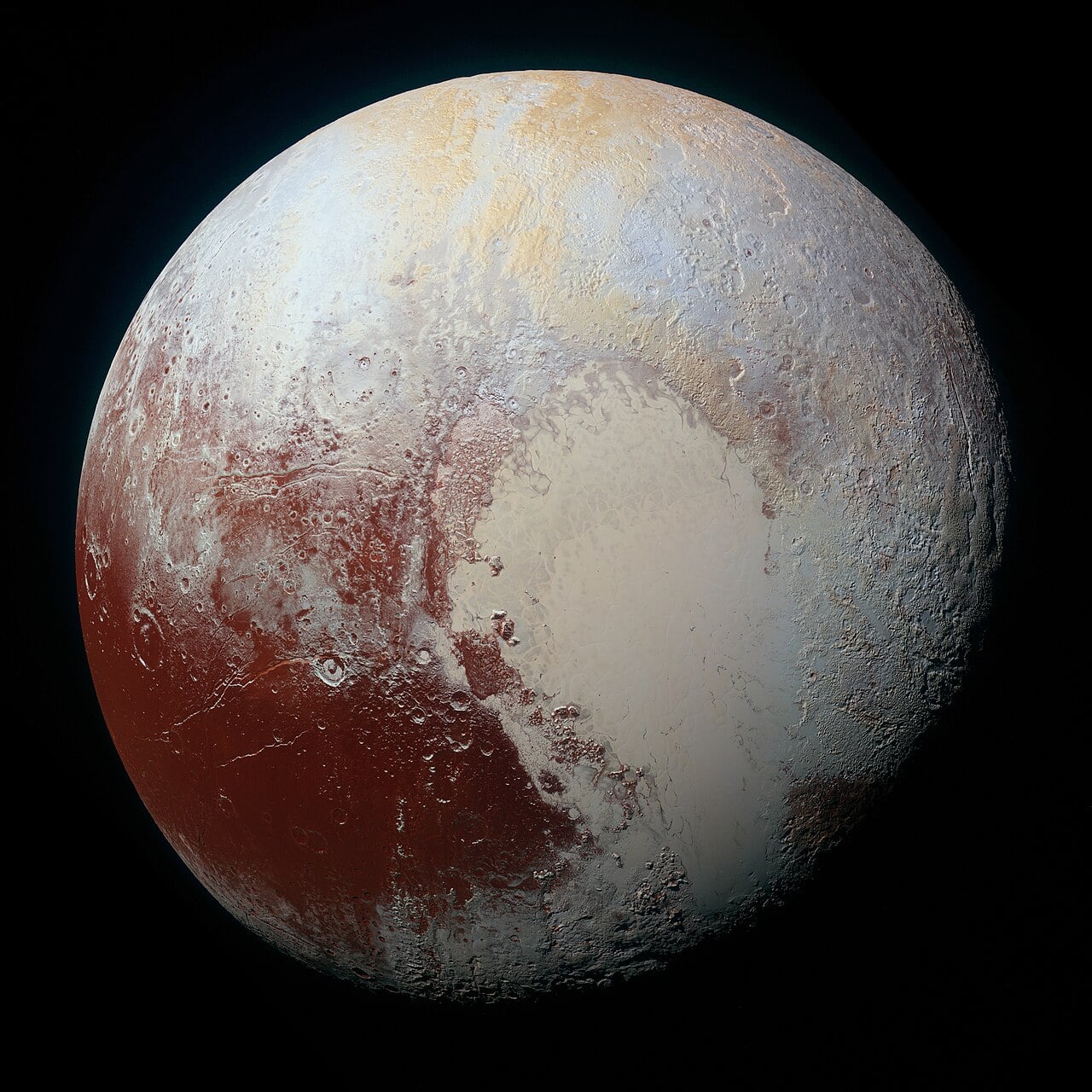
Pluto as seen by New Horizons during its 2015 flyby. Sputnik Planitia is a heart-shaped region that appears to be resurfaced by upwelling liquid nitrogen from below. That action creates what look like convection cells outlined by darker lines that could be flow channels. Credit: NASA/JHU/APL/New Horizons mission

Something's wetting the surface of dwarf planet Pluto along the northern edge of Sputnik Planitia, and planetary scientists have found a good explanation for it. A recent study of new Horizons images taken during the 2015 flyby revealed evidence that liquid nitrogen is rising up through cracks in Sputnik Planitia. That's the giant heart-shaped glacial basin we see in all the Pluto images taken by the spacecraft.


The Fastest Star in the Milky Way Will Test Relativity

These panels are Very Large Telescope images of the star S301 orbiting the Milky Way's SMBH, SgrA*. S301 is the fastest moving S star ever found, and also the closest to the black hole. The star can be used to measure the black hole's spin. S301's orbit is shown with an elliptical curve. In each frame, the solid curve shows the path that the star has already completed up to that point, whereas the dashed one marks the path it will follow afterwards. Image Credit: ESO/GRAVITY collaboration
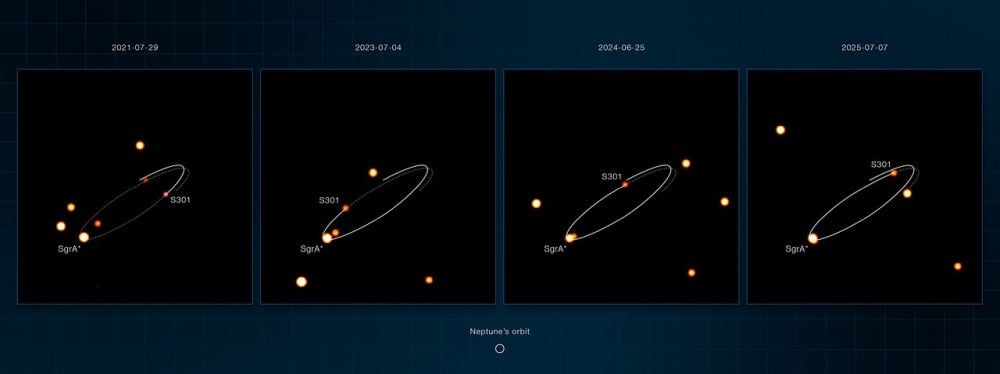
Astronomers have discovered another S star, the population of stars that orbits the Milky Way's SMBH. This one is the fastest of them all, and also comes closest to the SMBH. It will let astronomers test relativity, especially the Lense-Thirring effect.


What Can We Actually Find on an Exoplanet? Part 3: Reading the Face of a Planet

Earth's full disk, the "Blue Marble." Oceans, continents, clouds, and vegetation, all of which can in principle be read off a single distant pixel of light. Credit: NASA (public domain).

A single pixel of light holds astonishing detail. How ocean glint, rotational mapping, and the vegetation red edge let us read a distant planet's oceans, continents, and even forests, all without ever resolving it as more than a point.


Tuesday, August 18, 2026

Life On Earth May Have Had A Cold Start

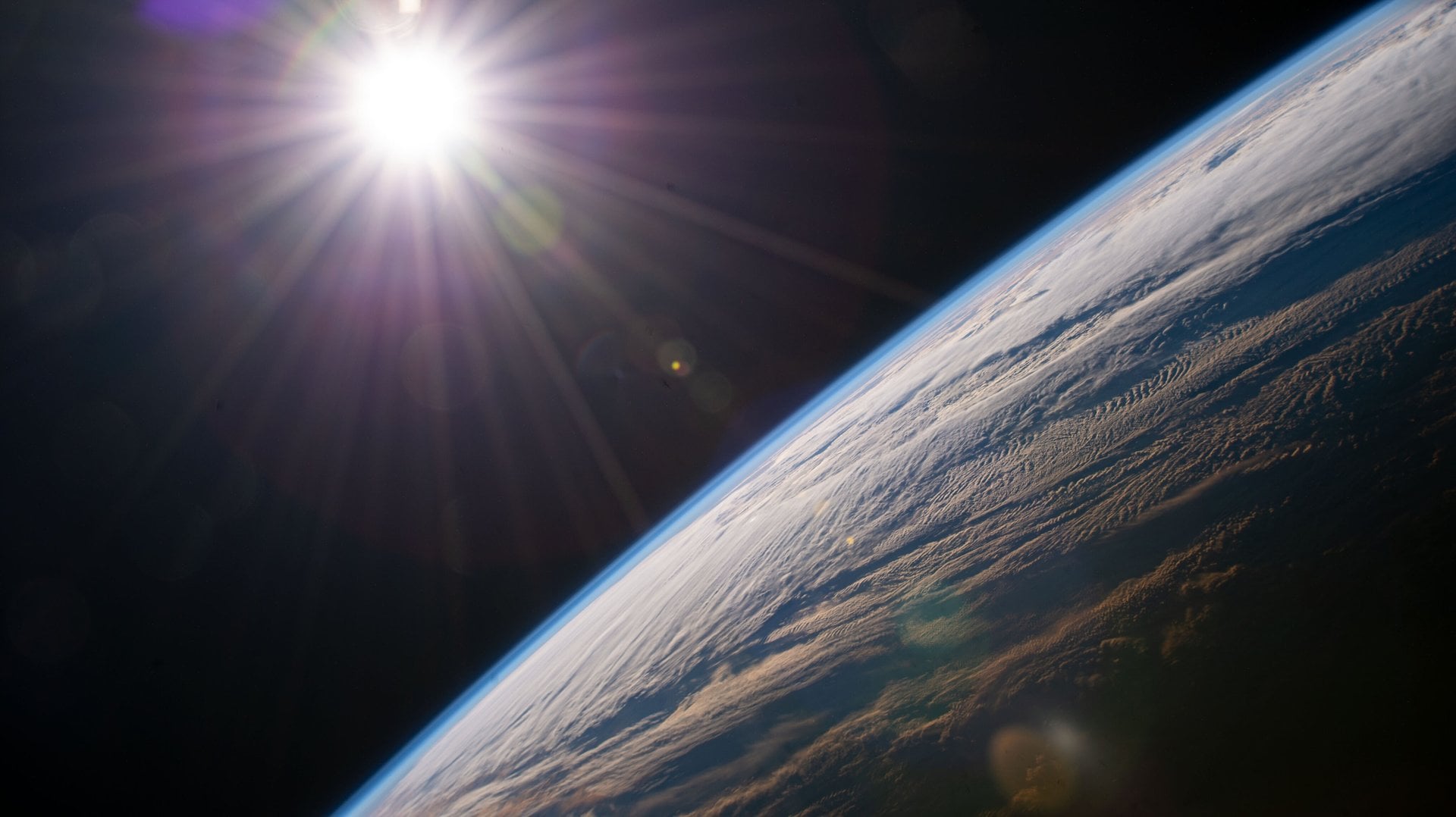
Earth as seen from the International Space Station.  Credit: NASA Johnson

Nitrous oxide (otherwise known as laughing gas) is likely a key atmospheric component of life in the cosmos.


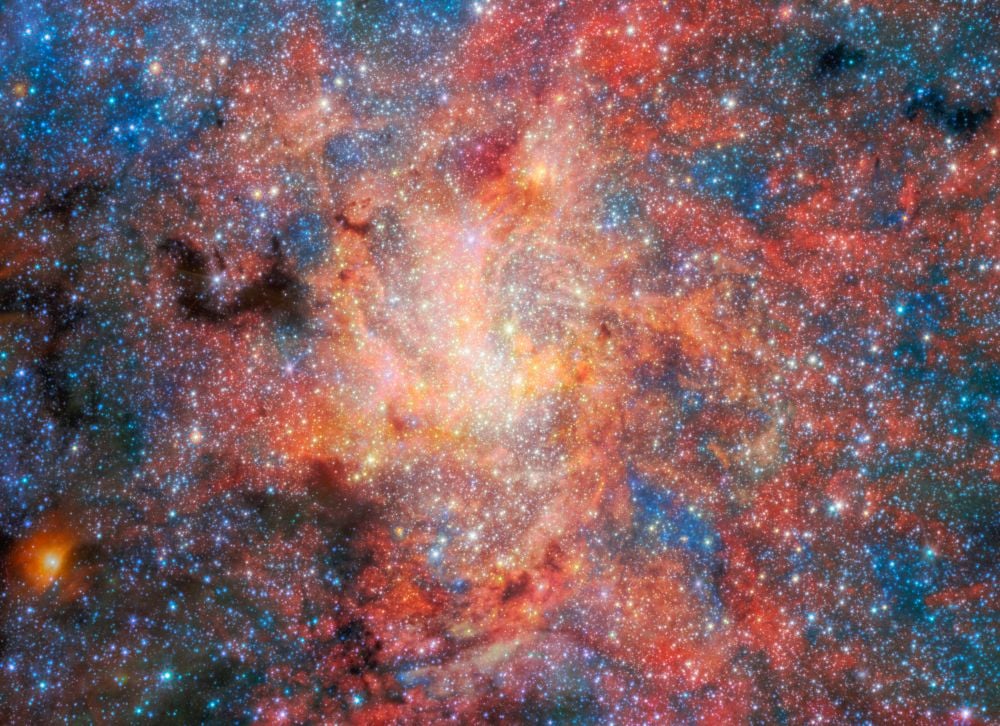
Even Near a Supermassive Black Hole, Stars Enrich the Interstellar Medium

The JWST used NIRCam and MIRI to capture this region near the Milky Way's SMBH. The star IRS 3 is in this field. It's an AGB star, and researchers are studying it to investigate the connection between material cast off from these types of stars and the interstellar medium. The researchers were surprised to find water and dust here, even though powerful radiation from the SMBH inhibit them. Image Credit: ESA/Webb, NASA & CSA, F. Peißker, J. Lu, F. Yusef-Zadeh, N. B. Sabha, C. Chan. Licence: CC BY 4.0 INT or ESA Standard Licence

Astronomers know that evolved AGB stars shed their outer layers, contributing to the makeup of the interstellar medium. But new JWST observations show this can happen even near a supermassive black hole, where powerful radiation could obliterate molecules.


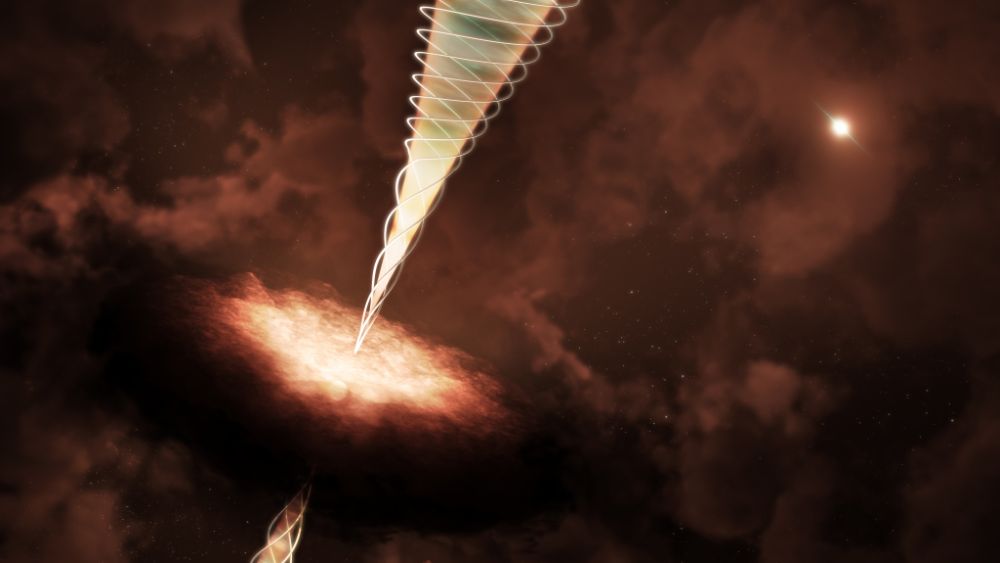
Astronomers Finally See the Twisted Magnetic Fields That Drive Protostar Jets

This artist's illustration shows the twisted magnetic fields from a young protostar, which shape and propel the jets of gas emitted by the star. Decades ago, astrophysicists predicted that these twisted magnetic fields were responsible for launching and shaping these jets, now thanks to ALMA, they've detected them. Image Credit: NSF/AUI/NSF NRAO/M. Weiss

For decades, scientists have theorized that young protostar jets are shaped and driven by complex, twisted magnetic fields. But they couldn't detect them. Now, thanks to ALMA, they've found them around a young binary protostar.


Monday, August 17, 2026

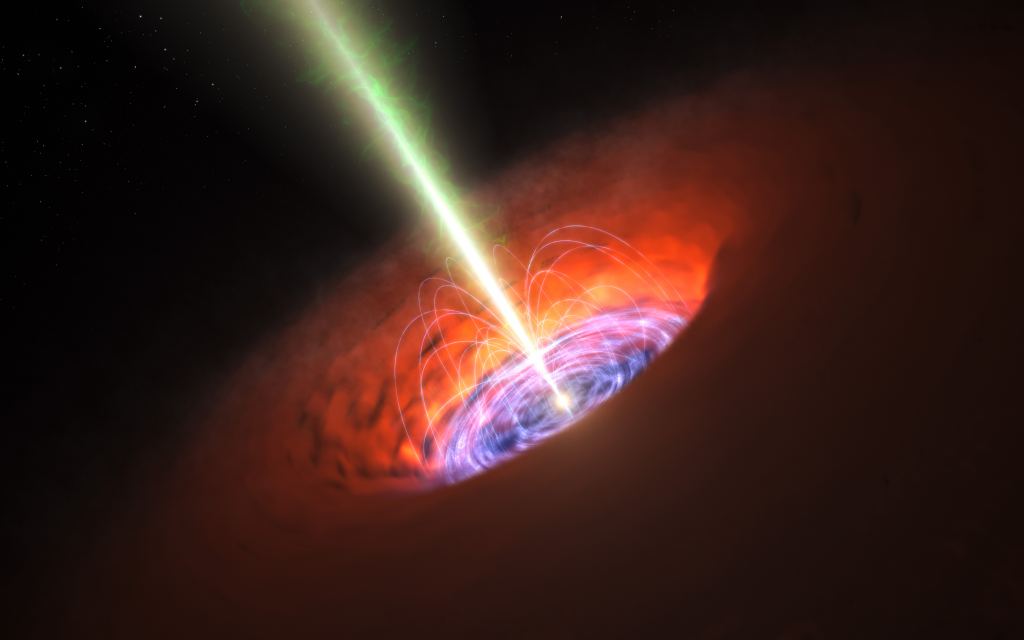
Massive Exoplanets Could Form Around Supermassive Black Holes

This artist's illustration shows an active galactic nuclei with accretion disk and jets. New research says that under specific disk conditions, giant planets could form in the outer regions of the disk. So could black holes, including the elusive intermediate mass black holes. Image Credit: JAXA.

Black holes aren't just engines of inexorable destruction. They're complex regions of space and time, and under the right conditions, giant planets can form in their AGN disks.


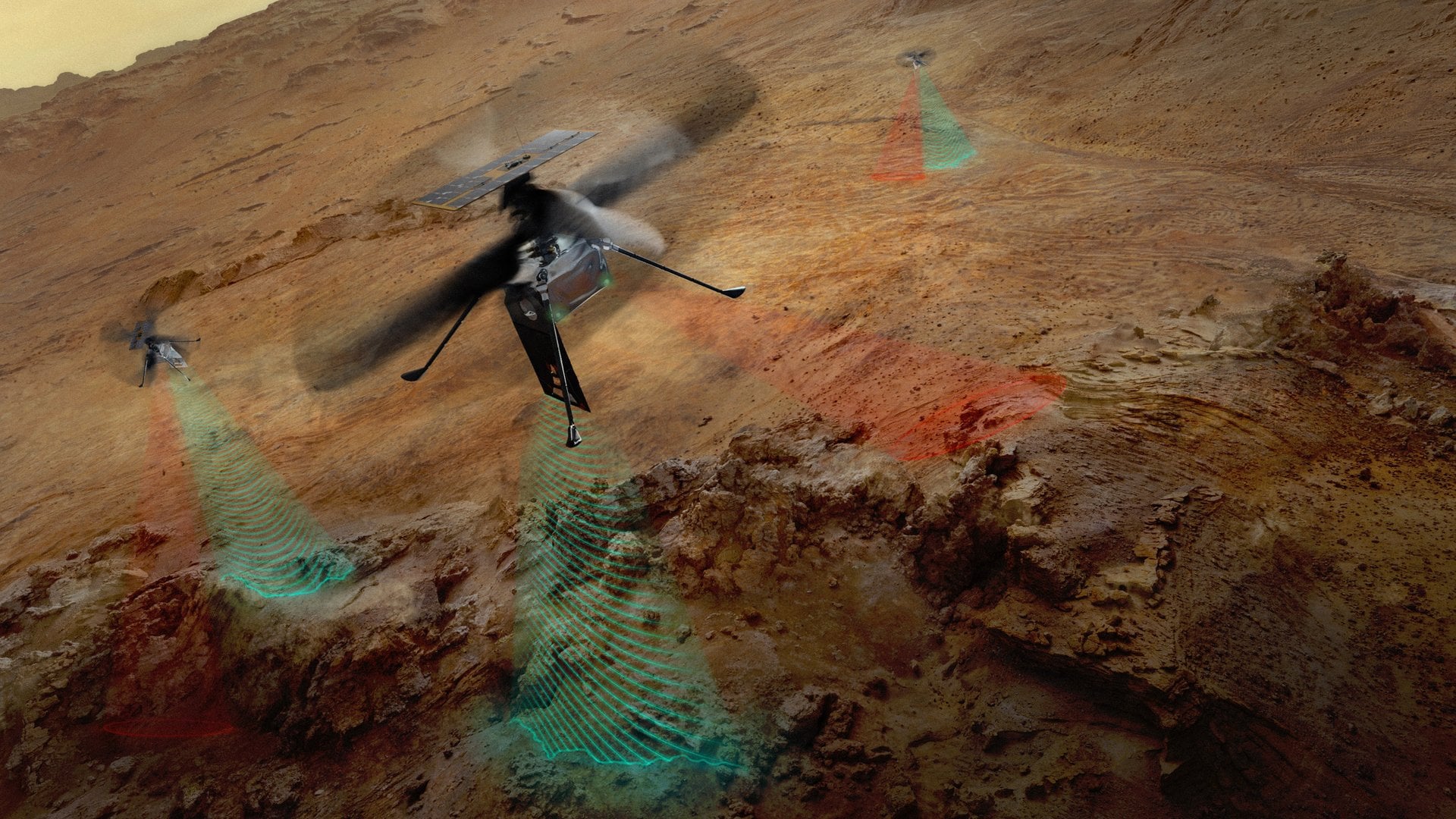
NASA's SkyFall Mars Helicopters Will Feature a Revolutionary Antenna Design

An artist’s concept depicts the three SkyFall Mars helicopters collecting data while flying over the surface of the Red Planet. Credit: NASA/JPL-Caltech

Engineers developed a unique fabric-based design for a ground-penetrating radar that will be a key instrument on NASA’s SkyFall Mars helicopters. The hardware will enable the SkyFall mission’s trio of planetary rotorcraft to use ground-penetrating radar to study the Martian subsurface.


The JWST Little Red Dots Could Be 'Black Hole Stars'

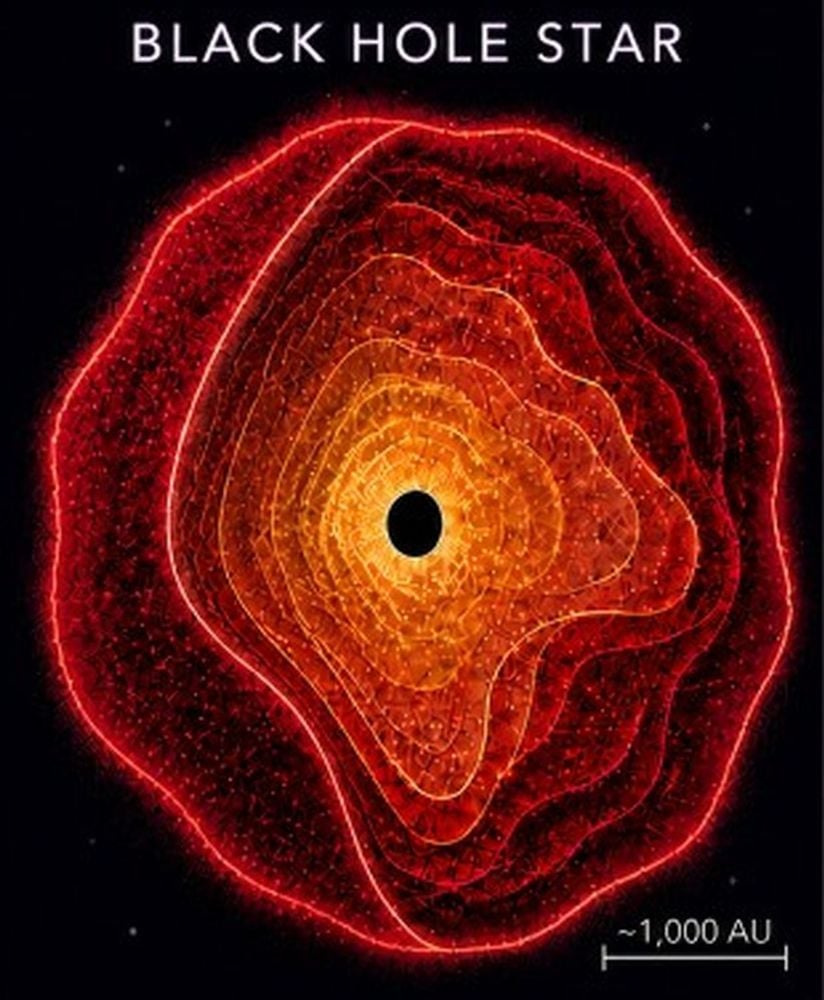
New research proposes that the JWST's Little Red Dots, those puzzling objects from the early Universe, are objects the researchers have dubbed "Black Hole Stars." They're black holes, but instead of just an accretion ring, they're surrounded by a dense cocoon of gas that colours their light red. These could explain the SMBH found so early in the Universe by the JWST. Image Credit: Rohan Naidu (University of Hawai’i)

Little red dots have puzzled astronomers since their discovery in JWST data from the Universe’s deep past. Their ‘powering engines’ might resemble a newly discovered phenomenon dubbed a “black hole star”—an early, rapidly growing black hole wrapped in dense gas. This object, described in a study published today in Nature by researchers at the Institute of Science and Technology Austria (ISTA) and international collaborators, may help explain how billion-solar-mass black holes formed so soon after the Big Bang.


Nuking An Asteroid on Short Notice Could Save Us

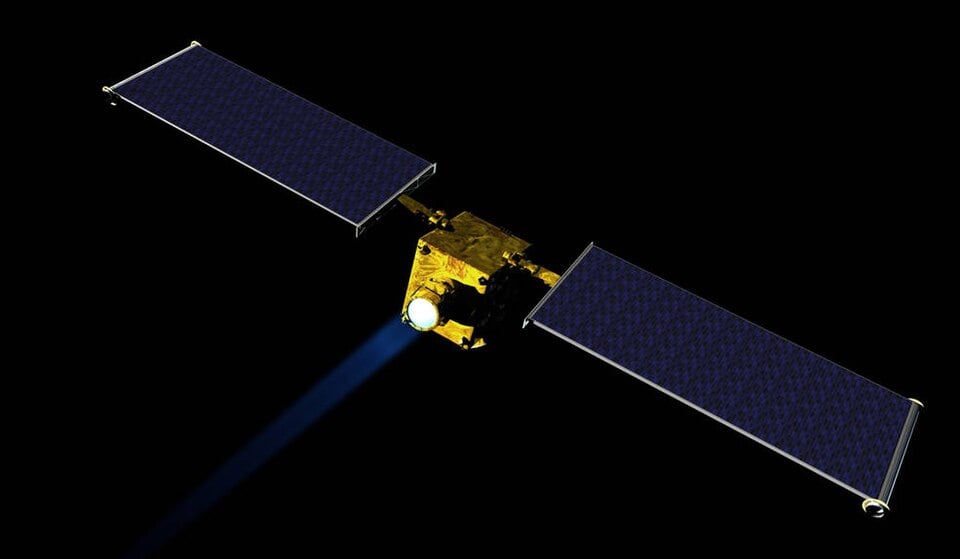
Artist's concept of the DART satellite. Credit - NASA / JHU APL

Readers of a certain age will remember a golden area of asteroid films, capstoned by two with very different endings. Deep Impact engrained the devastating consequences of letting a large piece of rock hit our planet, whereas Armageddon, though arguably the more kitschy of the two films, was an uplifting story about technical ingenuity and sacrifice. And now, the central crux of that movie’s storyline - essentially blasting an asteroid with a nuclear detonation - is taking center stage as our last line of defense against a potential Deep Impact scenario. A new paper from researchers at the China Academy of Launch Vehicle Technology, and published in Space: Science & Technology, describes two potential scenarios examining how we might actually be able to nuke a space rock - and whether it would actually save us.


What Can We Actually Find on an Exoplanet? Part 1: The Atmospheric Fingerprint

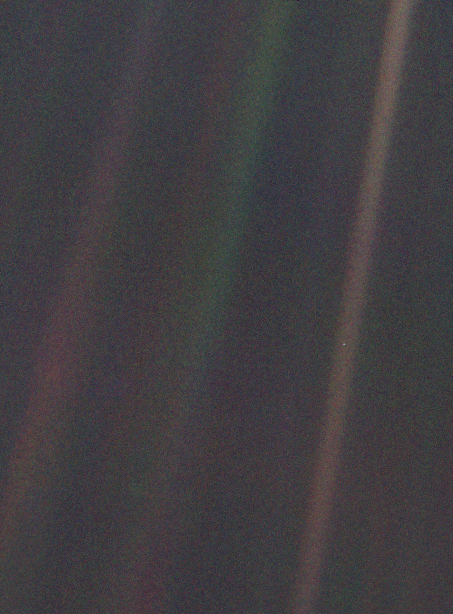
The Pale Blue Dot: Earth photographed by Voyager 1 from six billion kilometers away in 1990. Everything we are is in that single point of light. Credit: NASA/JPL-Caltech (public domain).

If an alien civilization could see Earth only as a single pale blue dot, what could they learn? We start with transit spectroscopy, the biosignature cocktail of oxygen, methane, ozone, and water, and why even the James Webb will struggle to find life.


Saturday, August 15, 2026

The Planet That Lied About Its Own Spin

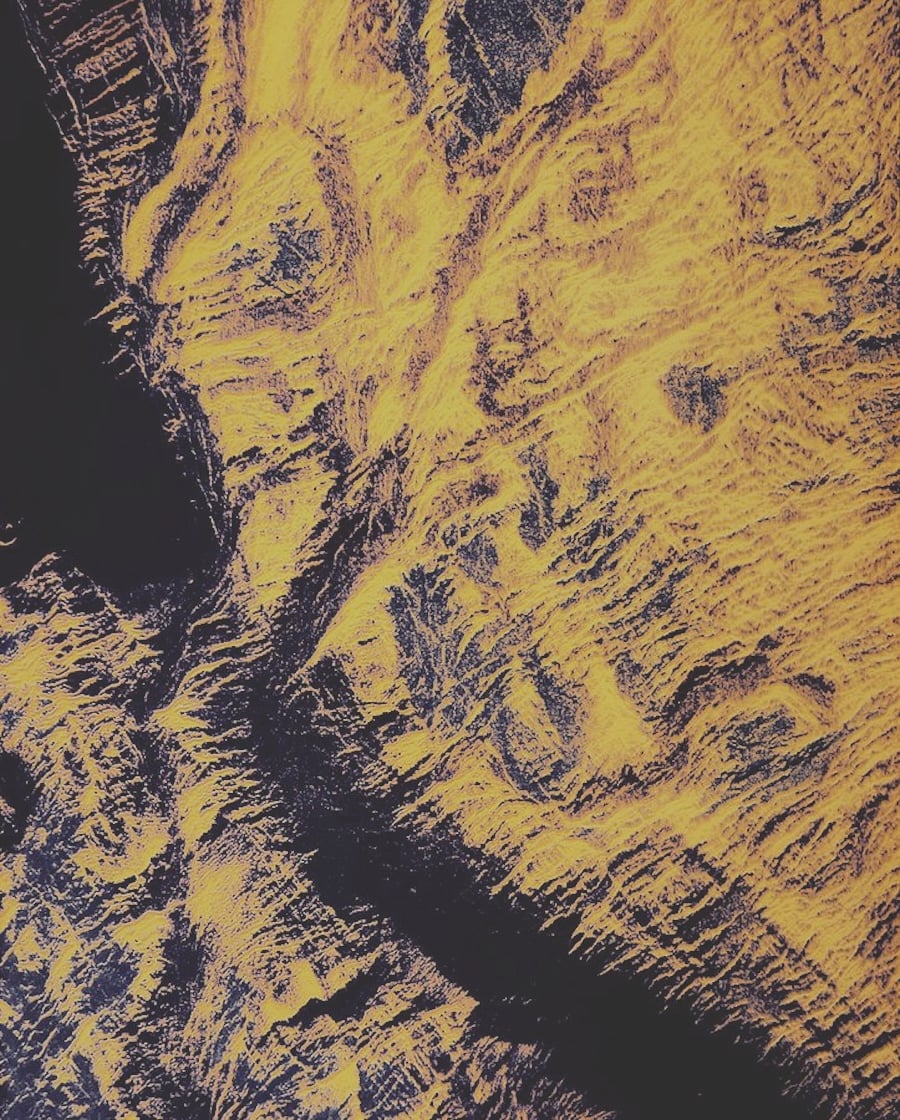
A radar mapped view of Venus's surface from NASA's Magellan mission since thick cloud hides the surface entirely, radar is one of the only ways to see the solid planet the paper argues astronomers have been mismeasuring by watching its clouds instead (Credit : NASA/JPL-Caltech)

A new study warns that astronomers measuring the rotation of distant exoplanets may often be measuring atmospheric winds instead, since the clouds of Venus circle the planet roughly 60 times faster than Venus itself actually spins. Kane proposes using multi-wavelength observations to correct for this, work that will matter enormously once the European Space Agency's PLATO mission launches in 2027 and, researchers predict, discovers several hundred Venus like exoplanets.


The Sun Doesn't Care About Your Flight Schedule

Earth's Van Allen radiation belts, the inner and outer bands of trapped high energy particles that swell dramatically during solar storms, the very radiation environment aircraft at cruising altitude briefly share in during an extreme space weather event ( Credit : NASA's Goddard Space Flight Center/Johns Hopkins University Applied Physics Laboratory)

New research shows that extreme space weather can significantly raise radiation exposure on commercial flights and increase electronic faults in aircraft systems. A severe 1956 scale solar storm could expose passengers to a year's worth of radiation in a single flight, and the researchers point to last year's Airbus A320 grounding, triggered by a solar radiation linked flight computer fault, as proof this isn't theoretical. To address the gap, the team has proposed a new aviation specific radiation scale designed to give airlines clearer, more reliable guidance on when to monitor, reroute, or ground flights during severe events.


Friday, August 14, 2026

The Tarantula That Lost Its Fire

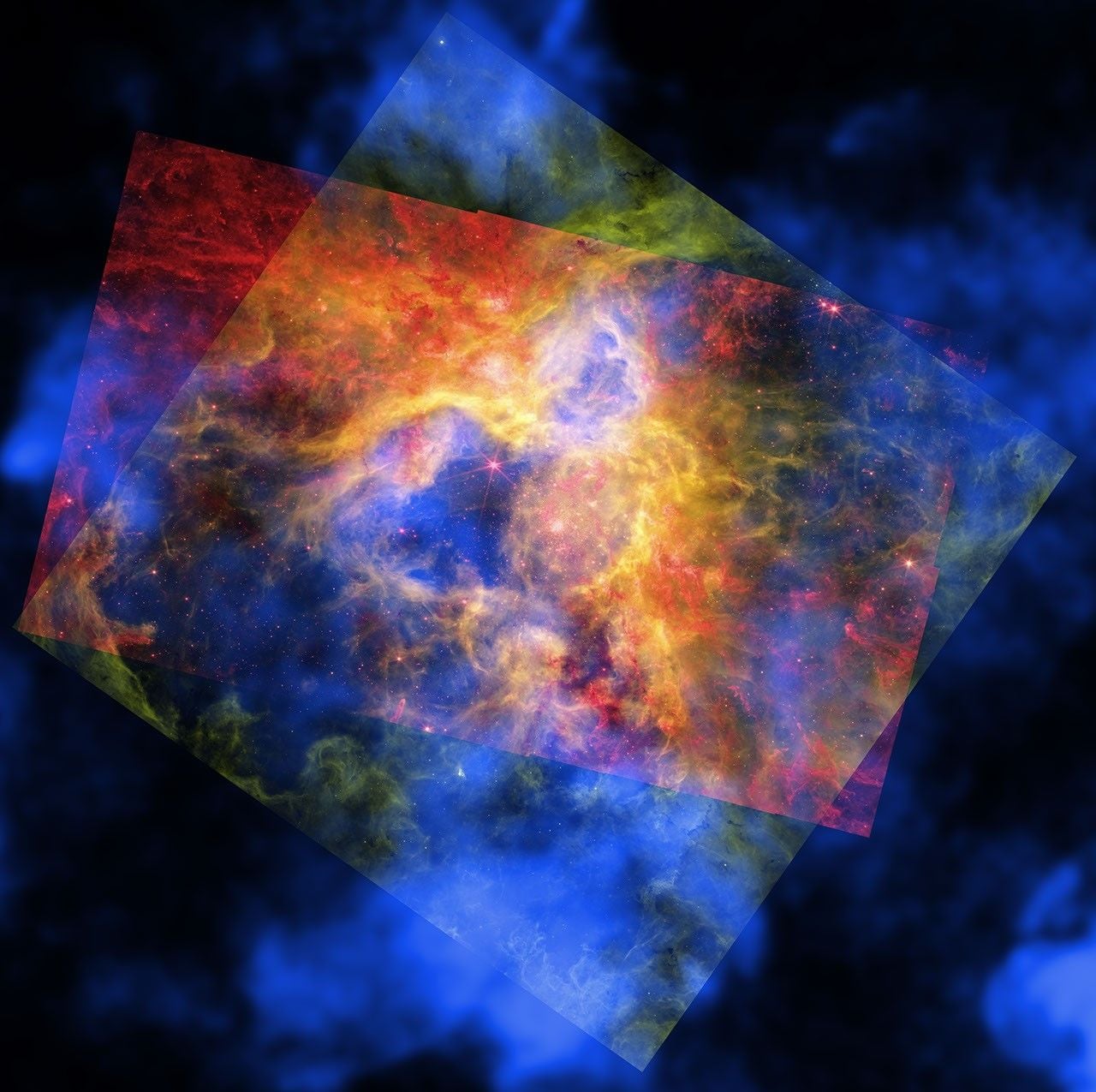
The new composite image of the Tarantula Nebula (30 Doradus), layering X-ray data from Chandra (blue), infrared from Webb (red), and optical data from Hubble (green) — the combination that let astronomers trace where the nebula's missing energy has been escaping to (Credit : X-ray: NASA/CXC/Ohio State Univ./J. Rodriguez et al; Infrared: NASA/ESA/CSA/STScI; Optical: NASA/ESA/STScI; Image Processing: NASA/CXC/SAO/P. Edmonds)

A new composite image combining data from Chandra, Hubble, Webb and the retired Spitzer telescope has helped astronomers solve a long standing puzzle in the Tarantula Nebula, a star forming region 160,000 light years away. Young, massive stars there should be heating enough gas to emit X-rays, but observations showed far less X-ray emission than predicted.


Upgraded Sardinia Radio Telescope To Continue Probing Mysterious Fast Radio Bursts

Italy's Sardinia Radio Telescope. Credit: Bruce Dorminey

Largest Italian radio telescope located on an out of the way mountain plateau in southern Sardinia sheds light on the cosmos’ still misunderstood Fast Radio Bursts (FRBs).


Another First for the JWST: It Detects Three Supermassive Black Holes in the Same Galaxy

This AI-generated image shows the three black holes (not to scale) found in a galaxy only about 1.2 billion years after the Big Bang. It's evidence that mergers played an important role in galaxy growth billions of years ago. Image Credit: MPE (generated with AI)

Astronomers working with the JWST have found a galaxy only 1.3 billion years after the Big Bang that contains three black holes. Two are close to the galaxy's center and will merge soon. The third is more distant, and is expected to merge much later. The discovery shows that black hole mergers were an important contributor to the masses of the SMBH we find in galaxies today.


Thursday, August 13, 2026

A Rare Extragalactic Stellar Stream Reveals Hidden Dark Matter

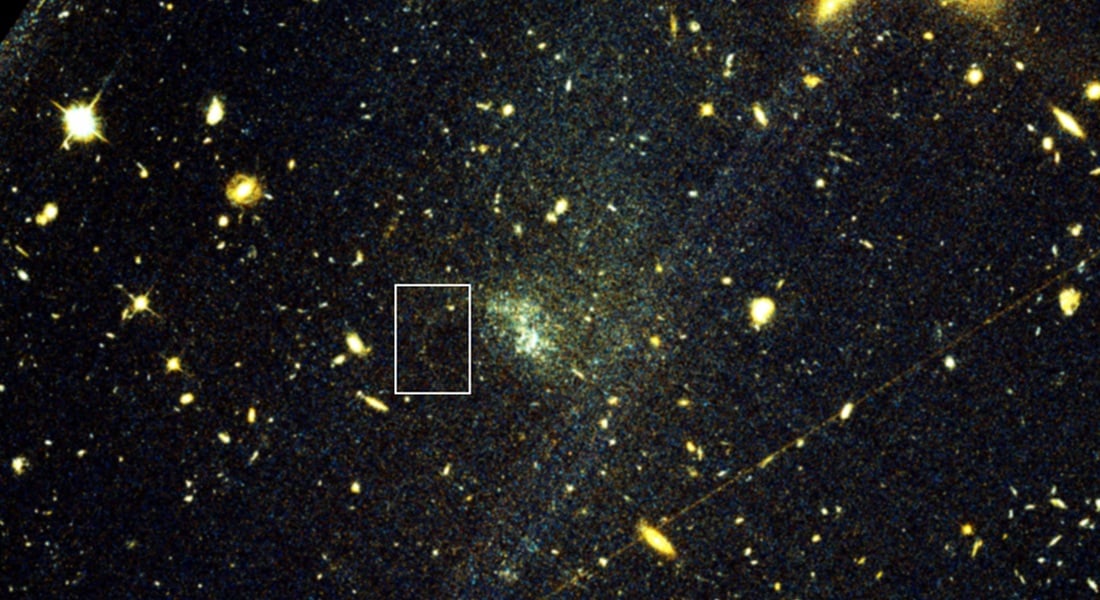
Hubble Space Telescope image showing the globular cluster stellar stream. Hubble Space Telescope and Holm et al. (2026)

Scientists have discovered a rare star formation hidden in a distant galaxy, unlike anything seen before beyond the Milky Way. What’s more, the discovery offers a brand new way to measure the distribution of dark matter in distant galaxies.


The Rooms We Build To Survive In, And The Ones We Build To Live In

The CHAPEA Mission 1 crew enters their 1,700 square foot Mars surface simulation habitat at NASA's Johnson Space Center, the start of a 378 day analog mission designed to study crew health and performance in isolation (Credit : NASA/Josh Valcarcel)

What does a home actually need to do for us, beyond keeping the weather out? Engineers at MIT have started mapping the answer for astronauts heading to the Moon and Mars, tracing exactly how the walls, layouts and lighting around a person shape their stress, their loneliness and their sense of belonging. It turns out the science of surviving a place and the science of living in one are not the same thing at all, and I have spent enough of the last year thinking about that difference to know how much it matters.


The Ingredients For Planets Turned Up Astonishingly Early

A protoplanetary disc around the young star HL Tauri, 450 light years away, its rings carved by forming planets. The Portsmouth simulations suggest discs much like this one existed within 100 million years of the Big Bang (Credit : ALMA (ESO/NAOJ/NRAO))

Planet building was supposed to be one of the universe's slow projects, something that only got going billions of years after the Big Bang. New research suggests otherwise. The raw materials for rocky worlds, and perhaps even the water needed for life, may have been ready to go just 100 million years after the Big Bang, long before the first galaxies had even taken shape.


A Massive Stream of Gas Tilted This Planet-Forming Disk

This artist's illustration shows the trillion-mile long stream of gas feeding into the GW Orionis triple-star system. New research suggests that the stream of gas is responsible for the star system's tilted, misaligned disk. Image Credit: NSF/AUI/NSF NRAO/B. Saxton

Astronomers found evidence that a giant stream of gas flowing into the GW Orionis young triple-star system may have tilted its planet-forming disk, offering a new explanation for why some planetary systems are misaligned. The next step is to search for shock fronts in the system, and to search for more of these massive streams of gas in other systems.


Amazing Views of Wednesday's Total Solar Eclipse

Totality and the solar corona as seen from León, Spain. Credit: Chris Becke.

It was an eclipse for the ages. This past week, many an eclipse chaser and the ‘eclipse curious’ made the journey to stand in the shadow of the Moon, for the only total solar eclipse of 2026. Viewers across northeastern Spain had thrilling views of a low to the horizon eclipse at sunset, while viewers to the north and across Iceland had dicier, cloudy skies to contend with. Here are amazing reader views of the eclipse, along with a few special ones from space.


Wednesday, August 12, 2026

Two Million X-Ray Sources, and One Cluster That Doesn't Fit

The X-ray sky as eROSITA sees it, the whole celestial sphere projected onto an ellipse with the Milky Way running horizontally through the middle. Photons are colour-coded by energy: red for the softest, blue for the hardest (Credit : MPE, J. Sanders for the eROSITA consortium)

The eROSITA telescope has released its second great catalogue of the X-ray sky with close to two million sources across half the sky, roughly double what it published before. Buried in it is a result from Bonn that matters more than the headline number. A team there went after the faintest part of a massive galaxy cluster, the outer region where fresh material is still arriving along threads of gas stretching between clusters. Nobody had measured that emission before. The gas turns out to be hotter, denser and poorer in heavy elements than the models say it should be.


Twenty Years of Watching One Galaxy, and It Made Less Sense

A blazar occurs when matter falling toward a supermassive black hole is flung outward at nearly the speed of light along jets pointing in opposite directions. When one happens to aim at us, the whole galaxy collapses to a single brilliant point (Credit : NASA/JPL-Caltech)

Blazars are galaxies with a jet aimed almost directly at us, and they flicker across every part of the spectrum at once. Almost everything we think we know about them comes from short observing campaigns just a handful of days, every year or two, in one narrow band of energy. A Polish and German team has now done the opposite, following a single blazar for nearly twenty years with two orbiting observatories and in two observations from 2012 they found something in the spectrum that nobody had predicted.


Nine Hundred Telescopes and One Chance a Year

Webb's primary mirror is 6.5 metres across, built in 18 hexagonal segments that folded like a drop leaf table to fit inside a rocket. Reading an Earth twin's atmosphere would need something closer to thirty metres (Credit : NASA/Chris Gunn)

Reading the atmosphere of another world means catching starlight as it filters through that planet's air during a transit. The signal is about one part in a million and a true Earth twin transits only once a year, so you cannot simply repeat the measurement until the noise averages away. Each attempt has to work on its own. A team led from Shanghai has proposed the alternative to building an impossibly large mirror in space - nine hundred, one metre telescopes, flying together, watching the same transit and analysing the light together.


Tuesday, August 11, 2026

Every Snowflake Needs a Speck of Dust and So Do Planets

A cut face of the Allende meteorite. The round grains are chondrules; the irregular white patches are calcium-aluminium-rich inclusions, the oldest solids in the Solar System.

A snowflake cannot form out of nothing. Water vapour will sit in the air quite happily, supercooled and reluctant, until it finds a speck of dust to build on and then it crystallises around it. Cosmochemists have had a version of that problem for decades. The early Solar System was a furnace of gas, and the first solid grains had to condense out of it somehow, yet condensing from a perfectly uniform gas is slow and difficult work. New research from Caltech, analysing fragments of a meteorite that fell over Mexico in 1969, suggests the seeds were already there. Buried inside the oldest solids we possess are specks of stardust from a star that lived and died before the Sun existed.


What If There's a Star Inside a Black Hole?

The shadow of the supermassive black hole at the centre of M87, the first ever directly imaged. We can photograph the boundary. What lies inside it remains a matter for the mathematics (Credit : Event Horizon Telescope Collaboration)

Ask what lies inside a black hole and the honest answer has always been a bit of a shrug and something about a singularity, a point where density becomes infinite and physics stops being able to tell you anything at all. It is the most unsatisfying answer in astrophysics, second only perhaps to what happened before the Big Bang. Now two theorists in China have produced a solution in which something else sits inside the horizon entirely, a neutron star, whole and intact, twelve kilometres across, its interior perfectly well behaved and apparently defying the laws of physics.


Watching the First Moments in a Star's Death

This artist's illustration shows a star exploding as a supernova. Astrophysicists caught the shock break out from a supernova 500 million light years away, the first indication of a massive stellar explosion. By detecting the break out, researchers were able to learn a lot about the progenitor and its surroundings. Image Credit: NASA/Swift/Skyworks Digital/Dana Berry

Astronomers were fortunate when the Einstein Probe detected the difficult-to-observe initial shock break out (SBO) from a supernova. The SBO is the first electromagnetic indication that a star is going to explode, and by observing it and the aftermath, researchers were able to determine what type of progenitor star exploded, and what it's pre-explosion environment was like.


Monday, August 10, 2026

The Odds of Finding Water on Mars

A cross section of buried Martian ice, exposed in bright blue where a steep slope has eroded away. HiRISE on Mars Reconnaissance Orbiter caught this one at 56 degrees south, the right latitude for ice, the wrong one for astronauts (Credit : NASA/JPL-Caltech/UA/USGS)

Mars has plenty of water, and almost all of it is in the wrong place. The poles are rich in ice, the equator, where you would actually want to land, has none within reach. That leaves the mid-latitudes, and until now the honest answer about what lies beneath them has been a bit of a shrug. Two new studies from the Planetary Science Institute have changed the shape of that answer. Rather than simply asking whether the data are consistent with buried ice, they have started calculating the odds and can now say, of a given patch of Martian ground, that there is a 64 per cent chance of finding ice if you dig there.


The Telescope That Points Itself

The Víctor M. Blanco 4 metre Telescope at Cerro Tololo, Chile. For two observing campaigns this year, the decisions about where to point it were made by a machine (Credit : CTIO/NOIRLab/NSF/AURA)

Time on a large professional telescope is one of the scarcest resources in science. Astronomers wait months for a few hours, and every one of those hours is a running argument with the weather, the Moon and the atmosphere. Point at the wrong target at the wrong moment and the data comes back soft, washed out, or useless, with the next chance half a year away. A team has now handed that argument to a machine. Their system was trained not on the rules astronomers use but on what astronomers actually did, night after night, for years.


Interstellar Travel III: Antimatter to the Rescue?

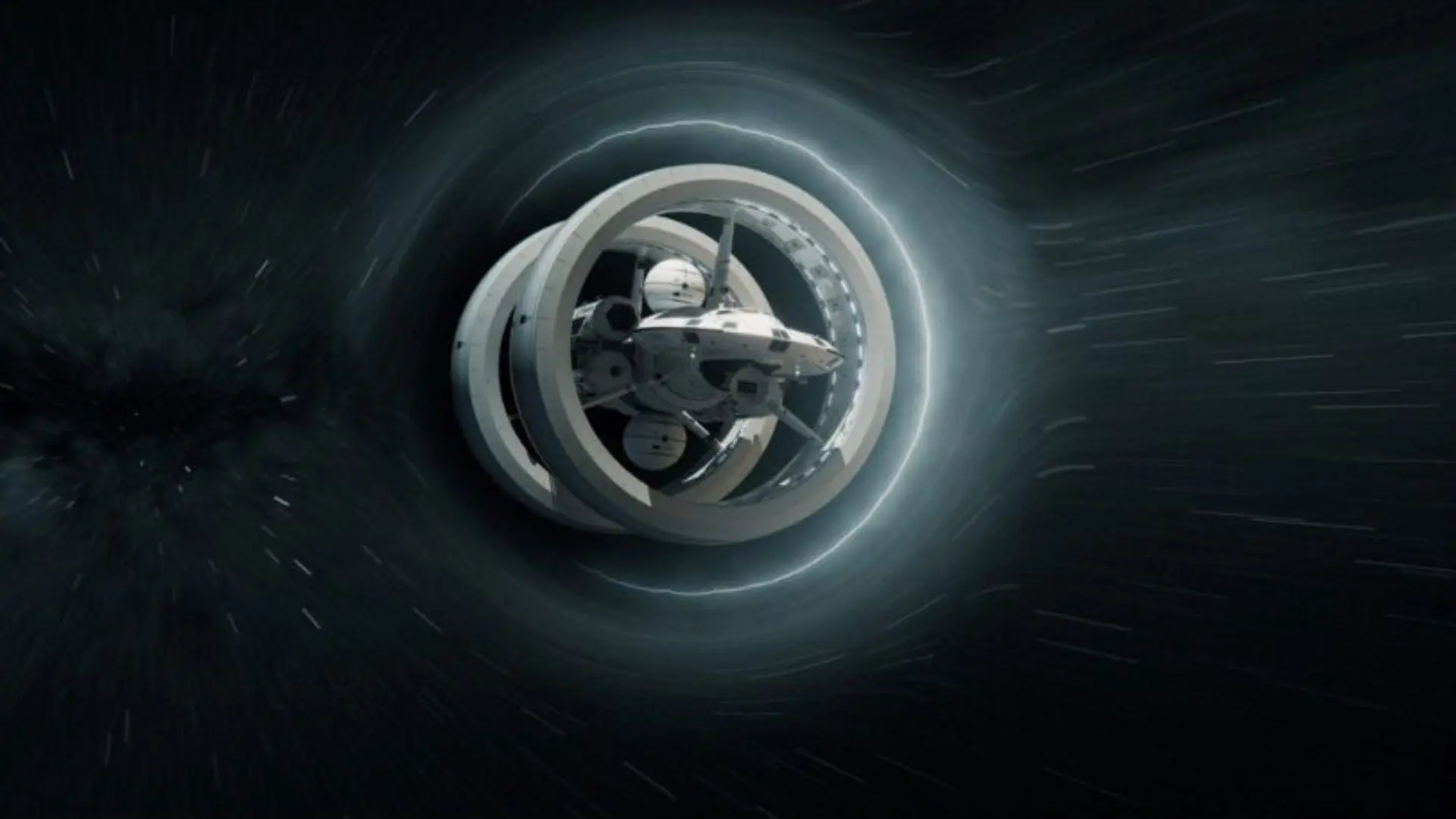
Vacuum to Antimatter-Rocket Interstellar Explorer System (VARIES) concept artwork. Credit and ©: Adrian Mann.

With the end of the Space Age and the winding down of the Cold War, scientists again returned to the question of interstellar flight. Having failed to realize a working concept that could be realized in the near term, more exotic ideas began to be considered, reflecting further breakthroughs in theoretical physics.


Ancient Maltese Seafarers Likely Navigated By The Stars

Sunset over the present-day main island of Malta.  Credit:  Bruce Dorminey

Ancient Maltese seafarers had both a complex cosmology and likely at least rudimentary skills in celestial navigation. It's thought that they used stars in the southern constellation of Crux to make their way around the south-central Mediterranean.


Sunday, August 9, 2026

NASA's MAVEN Illuminates New Understanding of Auroras at Mars

This illustration depicts charged particles from a solar storm stripping away charged particles of Mars' atmosphere, one of the processes of Martian atmosphere loss studied by NASA's MAVEN mission.
Credit: NASA/GSFC

NASA MAVEN (Mars Atmosphere and Volatile Evolution) mission scientists have uncovered a key puzzle piece in understanding certain types of auroras on Mars, finding that they form in a similar way to Earth-based auroras.


Friday, August 7, 2026

SpaceX Junk Hits the Moon. Not a Good Sign

Still pic of animation video of the SpaceX upper stage striking the lunar surface. Credit: NASASpaceNews

The spent upper stage from a SpaceX Falcon 9 rocket has struck the Moon, illustrating the hazard posed by debris in cislunar space. This problem will increase as launches to orbit and to the Moon become more common in the coming years.


Astronomers Find a New Object from the Early Universe Using Webb Data

The MACS J0308.9+2645 cluster, as captured by Webb's Near-Infrared Camera (NIRCam). Credit: NASA/ESA/CSA/STScI

Homer Dávila Gutierrez, director of SKYCR.ORG, has identified a gravitational arc candidate in the galaxy cluster MACS J0308.9+2645 from public data from the James Webb Space Telescope. The object had not been previously reported and is located at a photometric redshift close to 4.4. The preprint is available on arXiv and the manuscript is under review in Publications of the Astronomical Society of Japan.


Preview to Totality: A Resource Guide to August 12th Total Solar Eclipse

Totality as seen from western Australia in 2023. Credit: Eliot Herman.

It’s almost show time. We’re just a few days away now, from the only total solar eclipse of 2026. While eclipses are a surety as the celestial gears of the Universe grind on, there are always a few unknowns leading up to eclipse day. We wrote a recent guide to the upcoming total solar eclipse featuring totality across Greenland, Iceland, the North Atlantic and Spain on August 12th. As that date is now only a few days away, it’s a good time to look at prospects and resources to have at the ready leading up to eclipse day.


Thursday, August 6, 2026

Scientists Watch as a Distant World's Atmosphere Shrinks and Thins

A New Horizons parting shot of Pluto's thin, hazy atmosphere as it appeared in 2015. Scientists are measuring starlight as it streams through the atmosphere to get information about how the blanket of nitrogen and other gases is changing as Pluto moves farther from the Sun. Courtesy New Horizons, NASA. Public domain.

As dwarf planet Pluto moves along in its distant, high-obliquity 248-year orbit, its atmosphere is changing. That's because it's beginning to travel through colder, darker parts of the outer Solar System for the next 88 years. As a consequence, the mostly-nitrogen atmosphere is expected to grow gradually thinner and eventually freeze out over the coming decades. When that happens, the atmosphere will shrink.


Tuesday, August 4, 2026

Scientist Constructs "Big Picture" of Mars Water from Rover Data

A pictorial history of water on Mars by space artist Michael Carroll. This is based on Viking data and work done at NASA Ames. A study of rover measurements of water-related minerals on the Red Planet shows that water may well have been more widespread than previously thought. Courtesy Michael Carroll, public domain.

Rover data from more than 20 years ago has revealed clues to the existence of liquid water on ancient Mars. The NASA Spirit Rover carried a specialized instrument called a Mössbauer Spectrometer that performed mineralogical analyses of soil, rock, and dust on the surface of the Red Planet at Gusev Crater. Individual measurements didn't always indicate definitive proof of water, but when scientist Paolo de Souza of Edith Cowan University in Australia examined years' worth of measurements together, a definite pattern began to show up in the existence of minerals that could only exist in the presence of water. His analysis shows that Mars used to sport a lot more water than scientists expected and that the data showing its existence was in the data all along.