Showing posts with label science. Show all posts

Tuesday, August 4, 2026

See the Perseid Meteors on a New Moon Year

A composite of the 2016 Perseids over Arizona. Credit: Rob Sparks.

You couldn’t ask for a better year for one of the top annual meteor showers. If skies are clear be sure to watch for one of the top skywatching draws of 2026: the August Perseid meteor shower. While the Perseids are a draw on any year, 2026 is special, and has a few things going for it in terms of the Moon phase, peak timing and prospects.


Monday, August 3, 2026

Interstellar Travel: the Birth of Fusion Drives

Logarithmic map of the Solar System and its closest stellar neighbors. Credit: Pablo Carlos Budassi

During the Space Age and Cold War, fusion-powered spacecraft systems were investigated as a possible means of reaching another star system within a human lifetime. Many of the proposed ideas are still on the table today, waiting for future advancements to make them realizable.


Zodiacal Dust in Exoplanetary Systems Could Hinder Our Search For Life On Other Worlds

A column of zodiacal light stretches skyward beyond Mount Teide in the Canary Islands. Credit: StarryEarth, CC BY-NC 2.0

Most exoplanetary systems have a plane of dust similar to the zodiacal dust of our solar system. This dust absorbs some of the very light we use to find biosignatures in exoplanet atmospheres, and could make our search for life more challenging.


Friday, July 31, 2026

Smashed Ice Worlds Formed Neptune's Inner Moons and Rings

Diagram illustrating the formation and evolution of Neptune's current moon system. (Credit: Davis et al. (2026))

The planet Neptune has 16 known moons, with its largest Moon, Triton, comprising more than 99.5 percent of the mass of all of them. Triton’s incredible size has led scientists to hypothesize it was a captured object originating from the Kuiper Belt, which wreaked havoc on Neptune’s original moon system upon its capture and subsequential elliptical orbit. Today, some remnants of these original moons are part of the dusty rings that orbit Neptune. But what did that original moon system consist of? Were they the same small worlds observed today or are they pieces of what was once much larger worlds?


Interstellar Travel: The Space Age and Nuclear Rockets

Given time and the right kind of commitment, could the dream of interstellar travel become a reality? Credit:

Given the state of our technology, it would take a spacecraft a ridiculously long time to reach even the nearest star in our galaxy. However, scientists continue to ponder ways in which we could achieve the dream of interstellar spaceflight. Here are a few of their best ideas.


Astronomers Measure the Long Reach of a Quasar

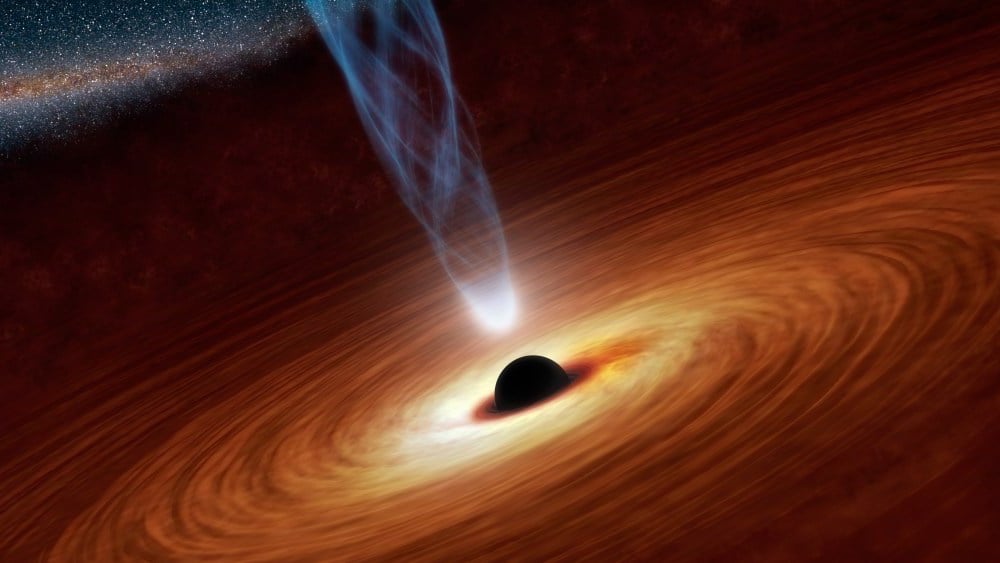
Schematic illustration of the hierarchical structure of the Universe, from a galaxy group (a collection of galaxies) to an individual galaxy and the supermassive black hole at its center. Although a black hole is more than 100 million times smaller than the radius of its host galaxy, it plays a crucial role in the galaxy's central region. ©Tohoku University

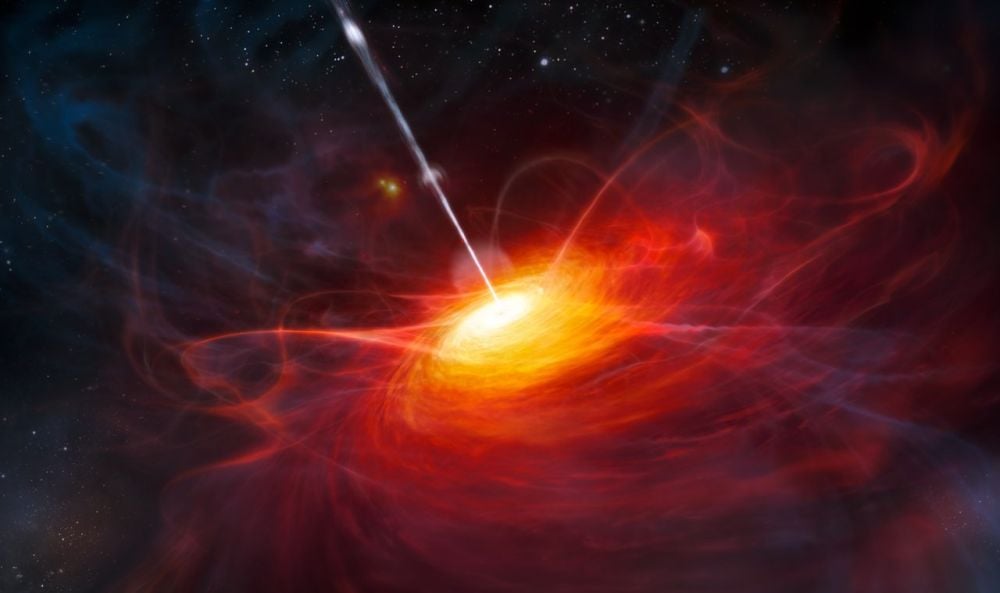
There are a number of things in the Universe that could wipe out life as we know it, but — for now, and for Earth — a blast from our galaxy's supermassive black hole isn't one of them. That's not to say that Sagittarius A* doesn't pose a danger. If it wakes up someday and blasts out a strong wind, that definitely could affect Earth. It could well have powered a quasar in the past, and could do so again.


Thursday, July 30, 2026

Mercury's Weak Magnetic Field Periodically Traps Solar Wind

Image of Mercury taken by NASA's MESSENGER spacecraft. (Credit: NASA, Johns Hopkins University Applied Physics Laboratory, and the Carnegie Institution of Washington)

The planet Mercury is the first planet from the Sun but also one shrouded in mystery. This is primarily due to the limited number of spacecrafts that have visited it, but this limited data has provided scientists with new and exciting characteristics previously thought impossible. One fascinating aspect is its magnetic field, which was first discovered in March 1974, which both surprised and puzzled scientists due to the planet’s small size, which is measured at about half the size of the continental United States from coast to coast.


What Killed Galaxies in the Early Universe?

An artist’s impression of the galaxy CRISTAL-02, with a huge plume of cold gas extending away from it. This plume is almost as long as the galaxy itself, which is a telltale sign that gas is being driven out of the galaxy. Credit Joshua Worth via Creative Commons CC-BY license
Licence type Attribution (CC BY 4.0)

Galaxies in the infancy of the Universe are the building blocks of more modern galaxies. They began as small "shreds" of material that coalesced over time to form larger ones. That's why astronomers use observatories such as the James Webb Space Telescope (JWST) to study the young Universe. The light from those early objects appears in the infrared part of the spectrum, which JWST is tuned to see.


Radio Array Detects Polarized Light From a GRB

This illustration depicts Faraday rotation in the afterglow of a gamma-ray burst. A powerful jet (upper left) sends polarized radio waves outward through the thin wall of a surrounding bubble of magnetized gas called an HII region. As the light passes through this material, its polarization angle is twisted by the magnetic field. Because the effect is stronger at longer wavelengths, the red and blue waves, which represent different radio wavelengths, exit the bubble oscillating in different directions. By measuring this difference, astronomers were able to map the magnetic environment surrounding GRB 260310A for the first time. Credit: NSF/AUI/NSF NRAO/M.Weiss

On March 10, 2026, the Fermi telescope gamma-ray burst team reported the detection of a long-duration gamma ray burst that occurred when a star exploded inside a dense, highly magnetized cloud of hydrogen gas. That HII region is a bubble of ionized hydrogen created by winds from a massive young star. Astronomers immediately turned as many telescopes as possible to view the burst and its afterglow, including the NSF's Karl Jansky Very Large Array.


Wednesday, July 29, 2026

The Risks of Debris Between the Earth and the Moon for Future Exploration

Diagram of the flight path and retrograde orbit of the Artemis I mission that took it around the Moon. Credit: NASA

A new study from the Chinese Academy of Sciences (CAS) addresses the threat of debris in cislunar space, which could pose threats for future missions bound for the Moon.


Radio Astronomy is Getting a Big Boost from the VLA's New Sky Survey

The Karl G. Jansky Very Large Array in New Mexico. The VLA was upgraded in recent years, and its new sky survey is complete. It's the most detailed radio survey of the sky ever taken. Image Credit: By user:Hajor - Own work, CC BY-SA 3.0, https://commons.wikimedia.org/w/index.php?curid=138997

The National Radio Astronomy Observatory has completed a new survey with the updated Karl G. Jansky Very Large Array (VLA) in New Mexico. It's called the VLASS, the Very Large Array Sky Survey, and it's the most detailed radio survey of the sky ever completed. The VLA used the power of its 28 movable dishes to complete the survey.


White Dwarfs Eat More Planetary Debris Than Thought, But Magnetic Fields Hide It

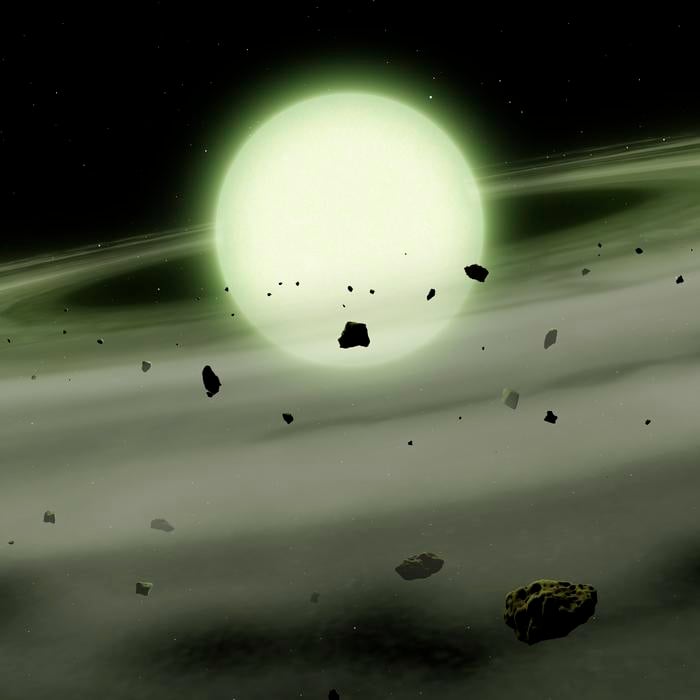
This artist's illustration shows a white dwarf surrounded by a debris disk. Astronomers are finding more and more white dwarfs with metallic debris disks, which suggests the debris comes from planetary systems. New research examines how white dwarfs accrete this debris, showing that it's much more common than thought, and that white dwarfs accrete more planetary debris than thought. Image Credit: NASA, ESA, and G. Bacon (STScI)

Planetary debris disks around white dwarfs appear to be more plentiful than thought. That's because some white dwarfs are magnetic, and those magnetic fields create patches of metallic debris near the stars' poles, where it's more difficult to detect. This leads to an underestimation of debris, something new research is trying to correct.


Tuesday, July 28, 2026

A Wandering Black Hole Meets a Wandering Star

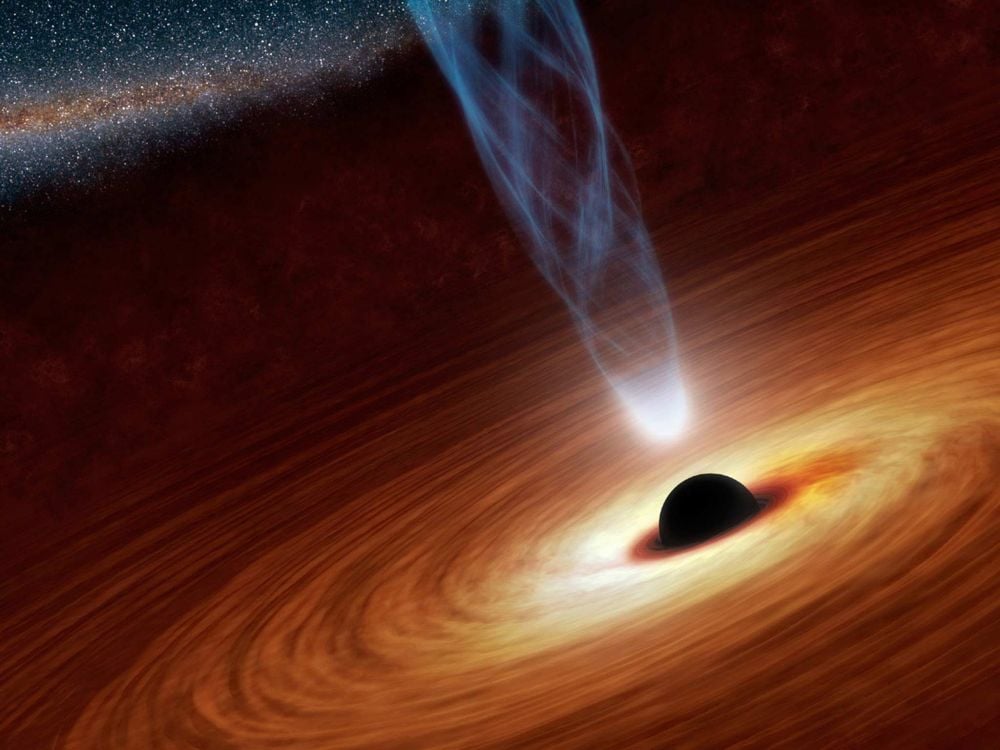
Artist's conception of a tidal disruption event that occurs when a star wanders too close to a supermassive black hole. Courtesy NRAO/AUI/NSF/NASA Hill

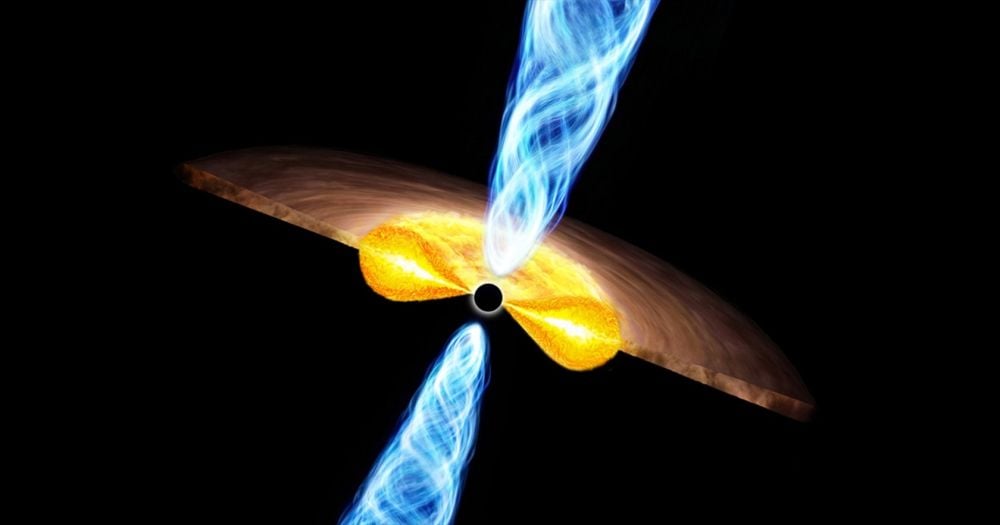
What happens when a black hole and a star meet in the middle of nowhere in a galaxy? It sounds like it could be a dramatic science fiction backdrop, with some hapless starship caught in the crunch. Actually, such encounters in real life are pretty rare. They happen maybe once every 100,000 years. But, when they do occur, the immense gravity of the supermassive black hole tears the star apart. It's an eerie-looking process. The star gets "spaghettified" — that is, pulled on one side by the black hole. That rips out a stream of gas from the star which eventually forms a disk around the black hole.


Samples of Lunar Rock Are Leading Scientists to Rethink the Moon's History

Image of the far side of the Moon taken by NASA's Lunar Reconnaissance Orbiter (LRO). Credit: NASA

Based on a new analysis of the Chang'e-6 lunar samples, scientists are again questioning the timing and intensity of the Late Heavy Bombardment period.


Astrobiology Offers Crucial Window Onto Earth’s Distant Past And Future

This artist's concept shows what the TRAPPIST-1 planetary system may look like, based on available data about the planets' diameters, masses and distances from the host star, as of February 2018.
NASA/JPL-Caltech

The search for extrasolar rocky planets circling other stars is more than mere science. It offers researchers a chance to gain crucial insight into how our own planet functions.


Galaxy Mergers May Not Stifle Star Formation After All, According to Illustris TNG

The JWST captured this image of a pair of merging galaxies named Arp 107. New simulations show that mergers like this, which are common, are not responsible for quenching galaxies. This contradicts the current understanding of galaxy mergers where a merger creates a powerful quasar that then stifles star formation. Image Credit: NASA, ESA, CSA, STScI

In recent years, the idea that galaxy mergers are responsible for quenching galaxies has grown in importance. This paradigm says that galaxies merge, their black holes form a powerful quasar, and that quasar stifles star formation. But new results from the IllustrisTNG simulations shows that this paradigm may not be accurate.


Martian Space Suits Will Need To Be 40% Lighter

Artist's concept of an astronaut working on Mars. Credit - NASA

Long before a human ever sets foot on the Red Planet, we already know how hard the environment is. Once one finally does, the only things protecting them from that harsh environment will be the infrastructure we’ve built up there, and the spacesuit that keeps that in a protective bubble. Unfortunately, modern space suits aren’t built with Martian gravity, which is 3/8ths of Earth’s, in mind. To prove that point, a team of NASA and industry engineers made a presentation at the 55th International Conference on Environmental Systems (ICES) that showed that the newest generation of spacesuits are simply too heavy to use on Mars.


Monday, July 27, 2026

JWST Could Spot Volcanic "Exo-Ios" Around Super-Jupiters

Artist's concept of SIMP 0136+0933 and its aurorae. (Credits: NASA, ESA, CSA, and Joseph Olmsted (STScI))

Jupiter’s moon, Io, is the most volcanically active planetary body in the solar system, boasting hundreds of active volcanoes spewing molten lava into space. This occurs from a process called tidal heating where Jupiter’s massive gravity constantly stretches and compresses the much smaller moon during the latter’s non-circular orbit. However, a lesser-known fact is that Io’s volcanic gases fuel Jupiter’s aurorae by traveling along Jupiter’s magnetic field lines, resulting in Jupiter’s bright aurorae observed by spacecraft and Earth-based telescopes. But what if this same phenomenon could be used to detect Io-like exomoons, also called exo-Ios, orbiting Jupiter-like exoplanets?


Chang'e-6 Samples Provide an Ancient Record of the Moon's Far Side.

Schematic illustration of the contrasting solar wind environments experienced by the lunar nearside and farside under the influence of Earth's magnetosphere. Credit: Zhang, X. et al. (2026)

The samples returned by the Chang'e-6 mission from the far side of the Moon reveal that the two hemispheres have had rather different experiences when it comes to space weather.


Little Red Dots Could Be Ancient Globular Clusters, Each Dominated by a Super-Massive Star

One of the JWST's confounding Little Red Dots is in the left panel, while the globular cluster (GC) 47 Tucanae occupies the right panel. Could these objects be the same thing at different points in evolution? Image Credit: NASA, ESA, CSA, STScI, Dale Kocevski/Colby College, ESO.

Little Red Dots are one of the mysteries uncovered by the JWST. Astronomers have been trying to figure out what they are, and have come up with multiple possibilities. New research says they could be ancient Globular Clusters with supermassive stars in their centers.