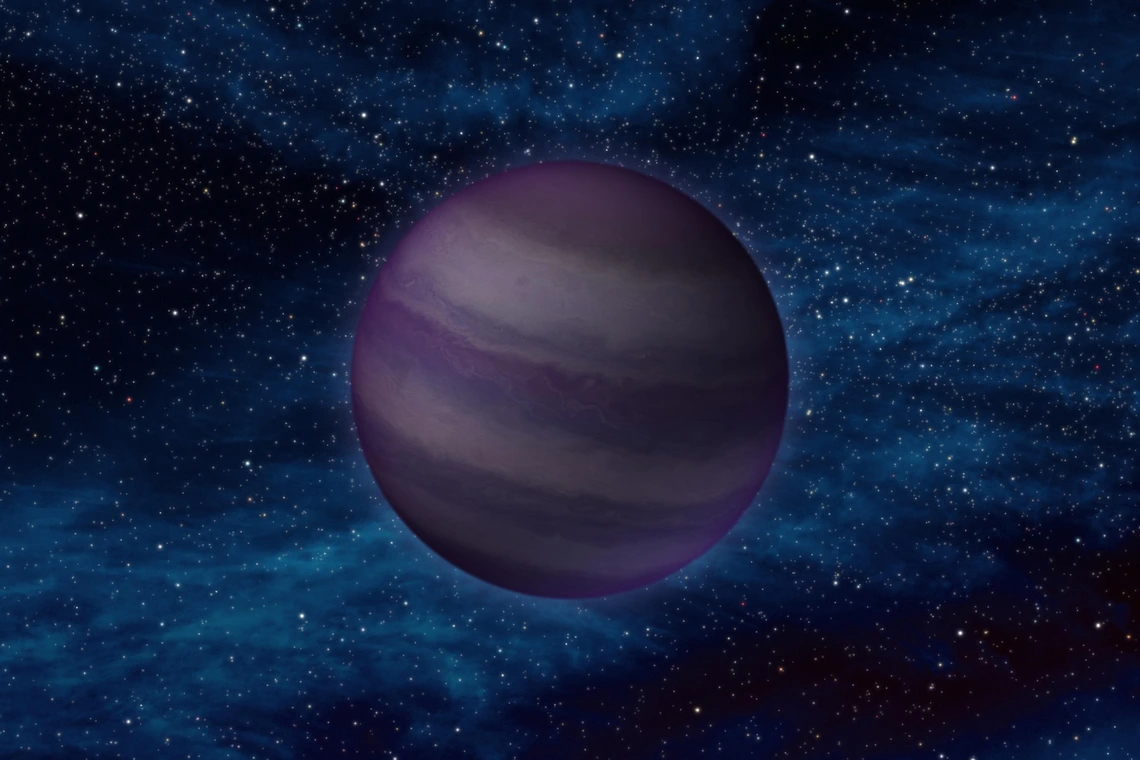
When picturing a star, typically people think of giant balls of burning gas in the sky that emit enough light they are hard to miss. Planets, on the other hand, come in one of two general categories - rocky worlds like Earth or gas giants similar to Jupiter. But there is a third category of astronomical object that doesn’t really fit either of those descriptions, and also doesn’t exist in our own solar system. Known as a brown dwarf, they are sometimes called a “failed star” as they form the same way stars do, but never reach the critical mass of material to create active fusion in the cores. They are also much too massive to be considered a regular planet. But a new paper from researchers led by Brittany Miles of the University of Arizona describes one similarity between the coldest known brown dwarf and some of the planets in our solar system - it has water-ice clouds.

No comments:
Post a Comment