Wednesday, August 13, 2025

When Dwarfs Dance, Do Galaxies Merge?

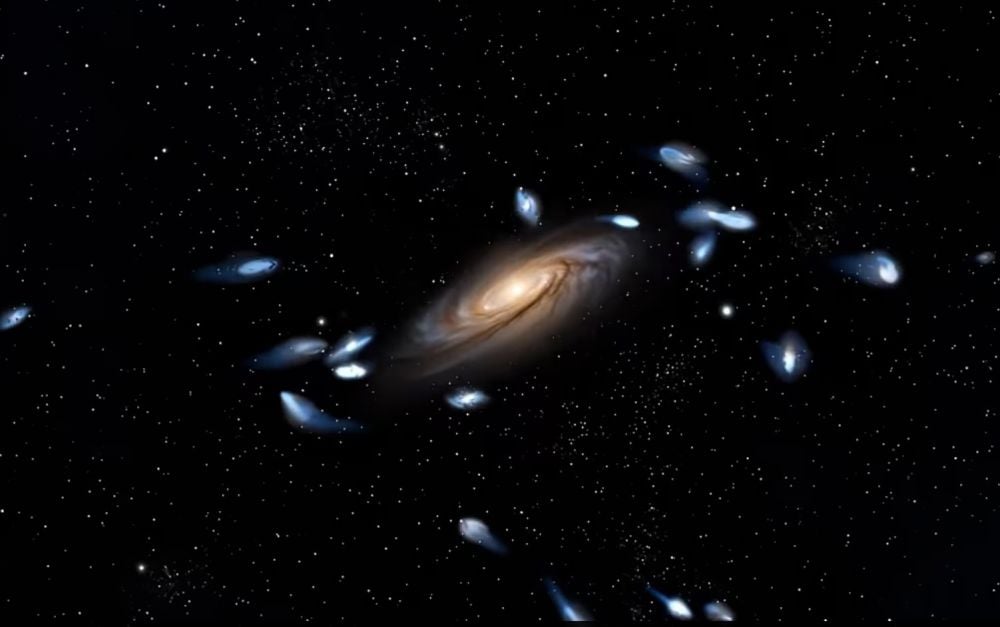
The Milky Way - Andromeda merger could occur in the next few billion years. But what will it look like? Will the pair of galaxies and their dwarfs 'dance' before merging, like other merging galaxies do? Image Credit: University of Queensland.

New research shows how the 'dancing' behaviour of dwarf satellite galaxies can predict mergers between their hosts. A distant pair of galaxies is undergoing the same type of merger that Milky Way/Andromeda will undergo. Can the behaviour of their dwarf satellites tell astronomers what will happen when the MW and Andromeda merge?

Tuesday, August 12, 2025

NASA's Juno Spacecraft Could Intercept 3I/ATLAS as it Approaches Jupiter

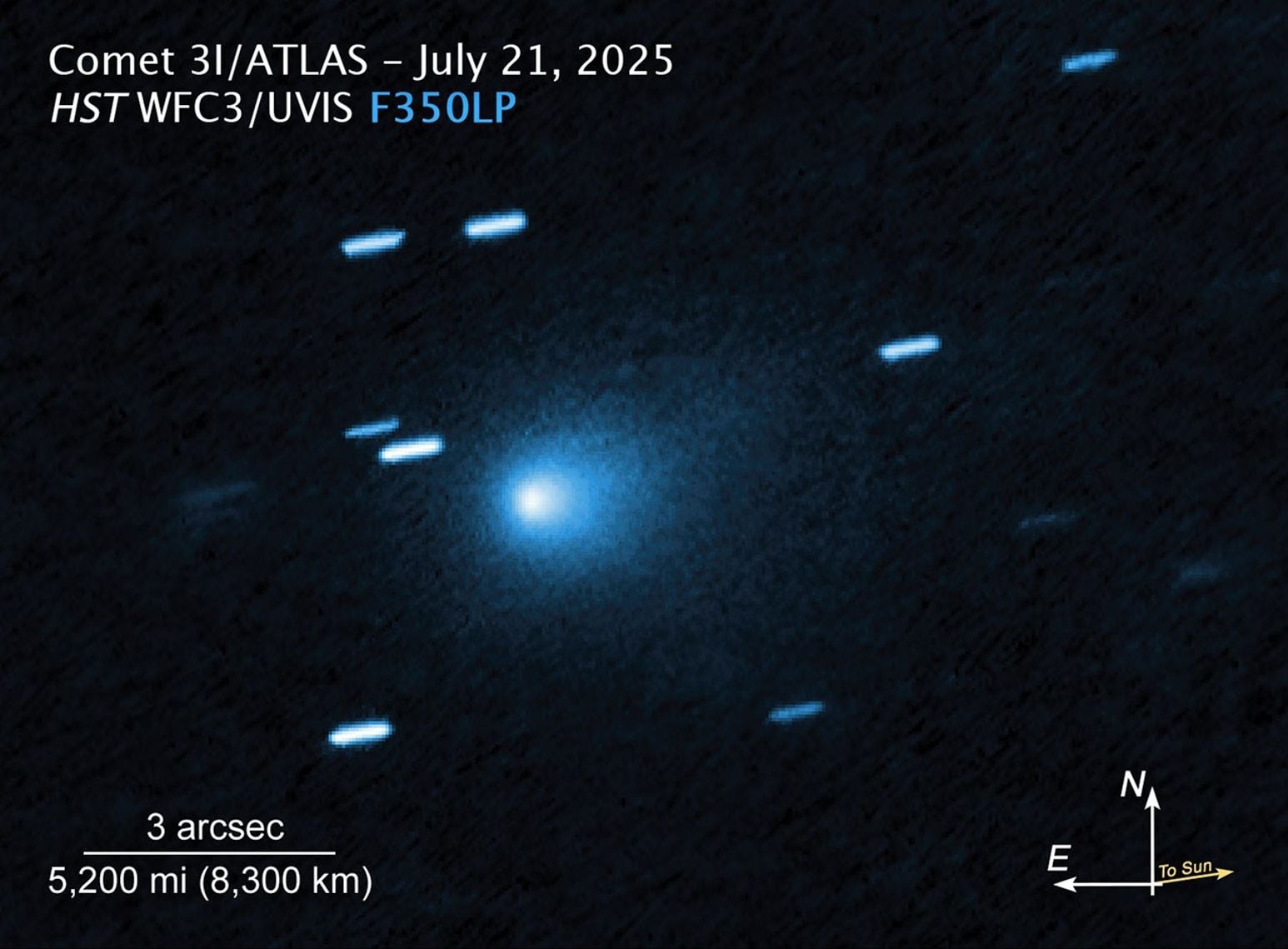
This image of interstellar comet 3I/ATLAS was captured by the Hubble Space Telescope's Wide Field Camera on July 21, 2025. Credit: NASA/ESA/UCLA/STScI

arXiv:2507.21402v1 Announce Type: new Abstract: The interstellar object 3I/ATLAS is expected to arrive at a distance of $53.56(\pm 0.45)$ million ${\rm km}$ ($0.358\pm 0.003$~au) from Jupiter on March 16, 2026. We show that applying a total thrust $\Delta$V of $2.6755}$ to lower perijove on September 9, 2025 and then execute a Jupiter Oberth Maneuver, can bring the Juno spacecraft from its orbit around Jupiter to intercept the path of 3I/ATLAS on March 14, 2026. A close fly-by...


Comet's Water Reveals Clues About Life on Earth

Comet 29P after outburst, this is a stack of 20 images centred on the comet's movement, frames taken with a 0.40m telescope F10 + CCD at La CaƱada Observatory (Credit : Juan Lacruz)

A team of scientists have made a discovery that could help solve one of Earth's greatest mysteries, where did our planet's water come from? Using powerful radio telescopes, the researchers have detected water vapour in a comet located far beyond Neptune's orbit, and the results are changing our understanding of how life sustaining water arrived on our world.


Scientists Use Earth's Shadow to Hunt for Alien Probes

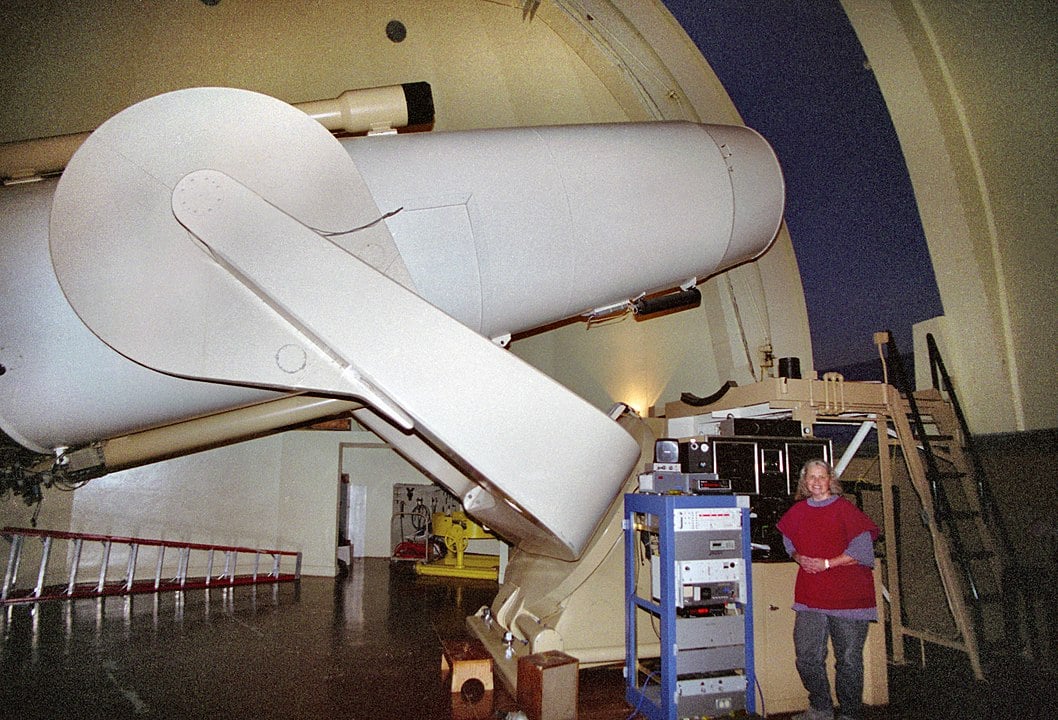
The Zwicky Transient Facility is a wide field astronomical survey using a new camera attached to the Samuel Oschin Telescope (pictured) at Palomar Observatory in San Diego County, California.

For decades, astronomers have searched for signs of extraterrestrial intelligence using radio telescopes and optical instruments, scanning the skies for artificial signals. Now, researchers are taking a different approach, this time looking much closer to home for alien artefacts that might already be in our Solar System.


This Is What Happens Inside Lava Planets

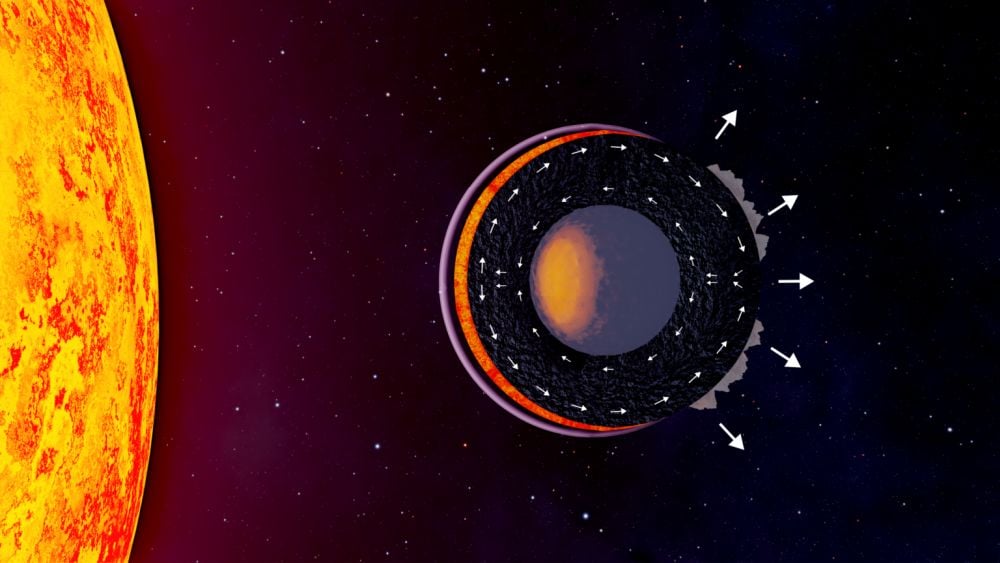
This artist's illustration shows the internal structure of a lava planet in a cold state, showing a day‑side magma ocean overlain by a mineral atmosphere. The arrows indicate the direction of heat transport within the planet’s interior and the thermal radiation emitted from its night side. Credit: Romain Jean-Jaques (Instagram: @romainjean.jacques)

Some exoplanets are so close to their stars that the rock is melted. Astronomers have dozens of these lava planets, maybe more because they're challenging to confirm. New research shows how the JWST can help astronomers understand them.


3I/ATLAS Is Very Actively Releasing Water

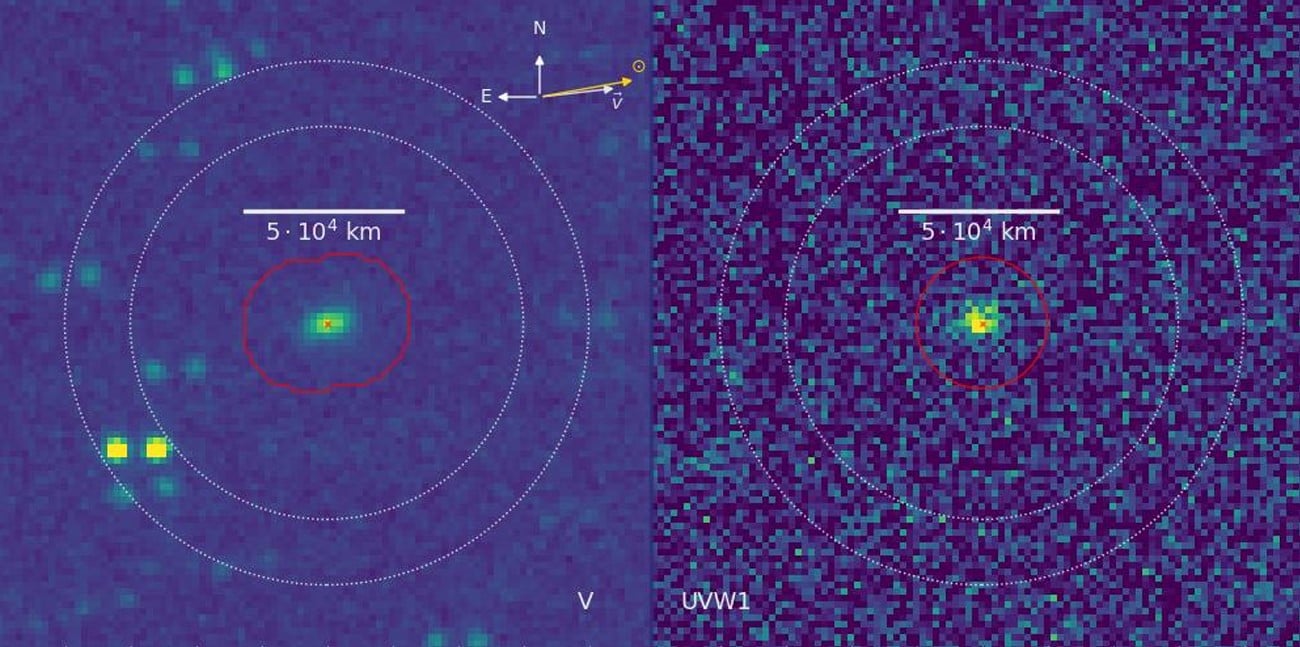
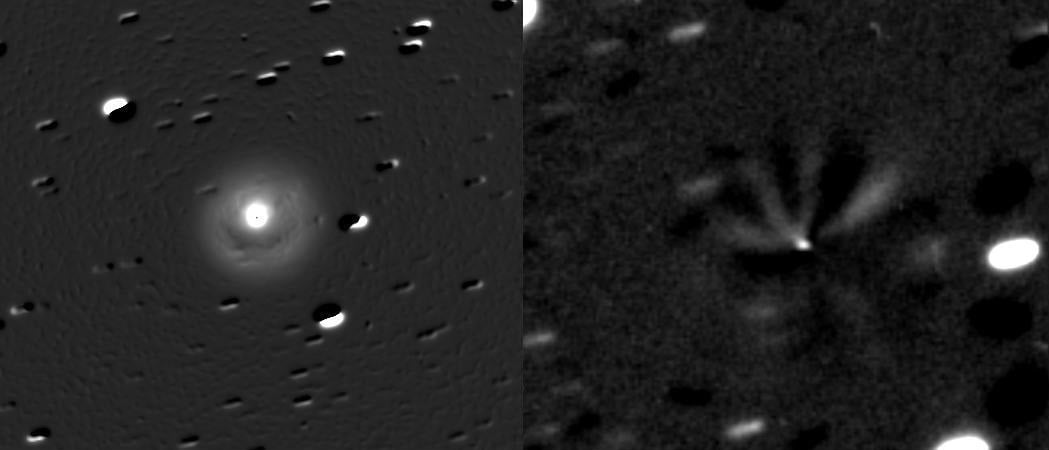
Images of 3I/ATLAS captured by Swift. Credit - Z. Xing et al.

3I/ATLAS, our third discovered interstellar visitor, has been in the news a lot lately for a whole host of reasons, and rightly so given the amount of unique scientific data different groups and telescopes have been collecting off of it. A new pre-release paper from researchers at the Auburn University Department of Physics recounts yet another interesting aspect of the new visitor - its water content.


Monday, August 11, 2025

How Telescope Noise Could Help Us Monitor Climate Change

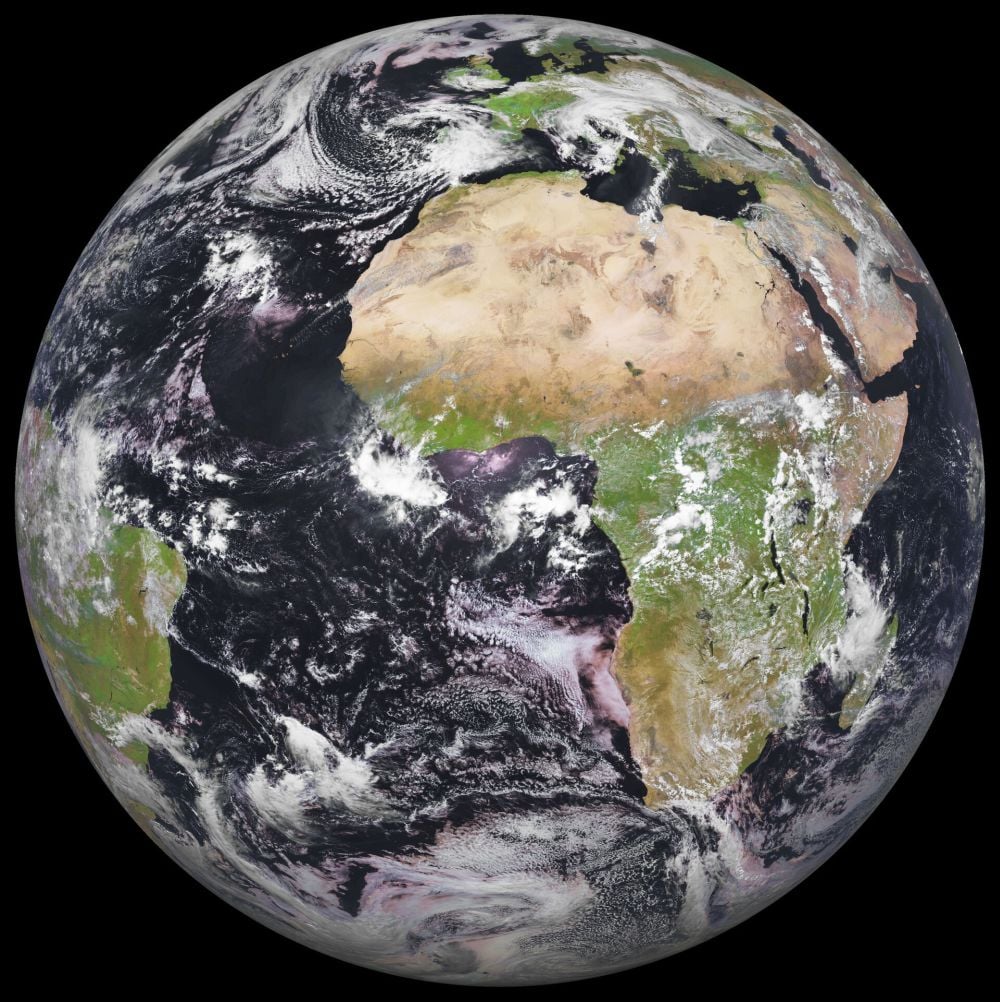
While the American President aims to shut down NASA greenhouse gas monitoring missions, European scientists are figuring out how to use ground-based astronomical telescopes to fill the gap. Image Credit: ESA

University of Warwick astronomers, in partnership with institutions in Spain, are showing how astronomy tools, that are usually used to study stars, can be repurposed as climate sensors, helping us track how Earth's atmosphere is changing in the face of global warming.