Wednesday, August 20, 2025

Roman's High-Latitude Time-Domain Survey Will Find Tens of Thousands of Supernovae

NASA’s upcoming Nancy Grace Roman Space Telescope will see thousands of exploding stars called supernovae across vast stretches of time and space. Credit: NASA Goddard

For thousands of years, humanity viewed the skies as unchanging, except for a few “wandering stars” (that we now know are planets). As we improved our ability to perceive the cosmos with light-gathering telescopes and electronic detectors, we realized that the universe is full of things that change in brightness, whether it be an exploding star or a matter-gulping black hole. NASA’s Nancy Grace Roman Space Telescope is poised to deliver an avalanche of such transients, including thousands of “standard candle” supernovae that allow us to measure the expansion history of the universe.

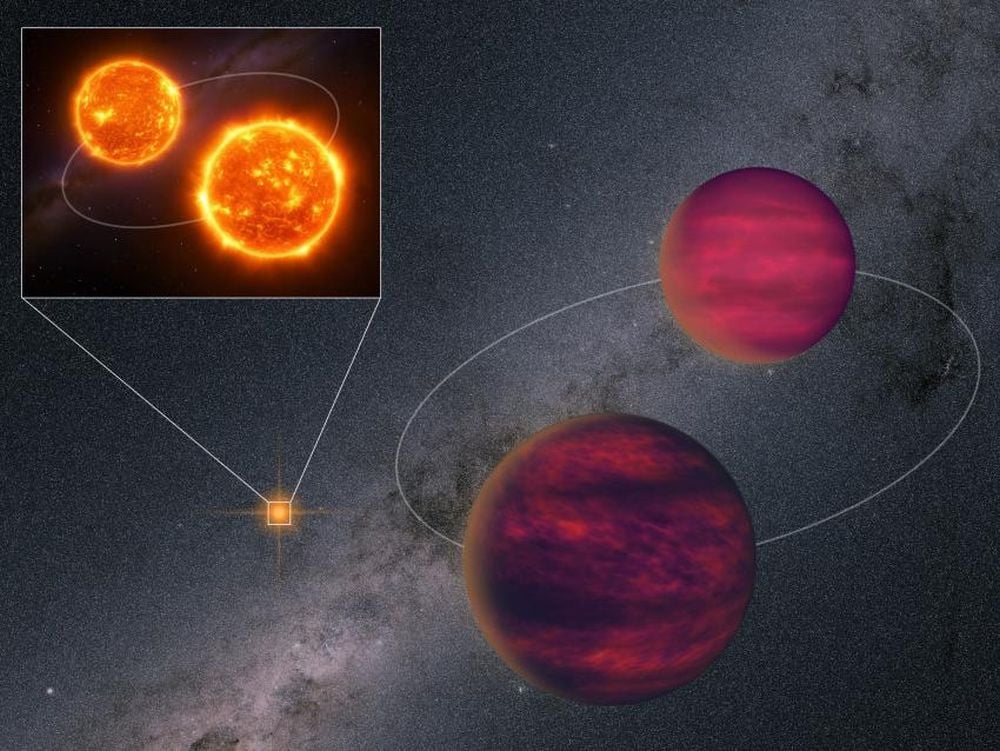
These Rare Star Systems Are A New Tool To Understand Brown Dwarfs

An artist's illustration of a rare quadruple star system consisting of a binary pair of red dwarfs and a binary pair of brown dwarfs. This system could advance astronomers' understanding of dim and difficult to observe brown dwarfs. Image Credit: Jiaxin Zhong/Zenghua Zhang. License type: Attribution (CC BY 4.0)

The discovery of an extremely rare quadruple star system could significantly advance our understanding of brown dwarfs, astronomers say. Brown dwarfs in wide binary orbits offer a chance to determine their properties more clearly.


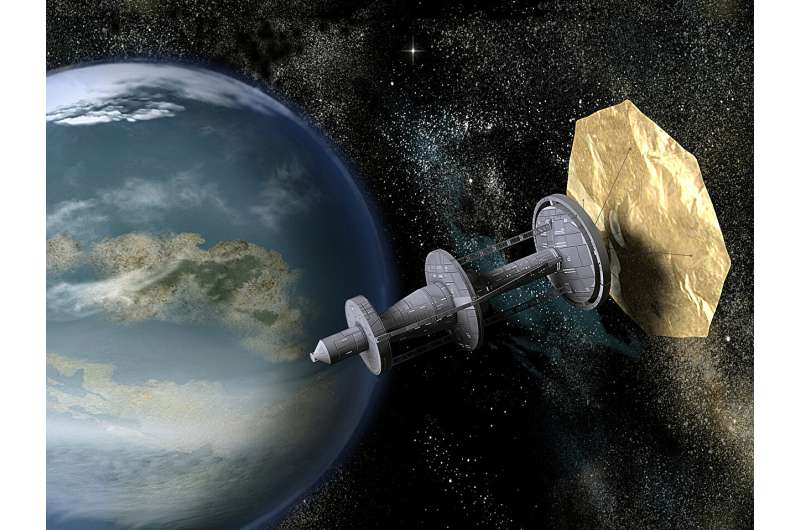
Using Video Game Techniques To Optimze Solar Sails

Solar sail attached to a ship. Credit - University of Nottingham

Sometimes inspiration can strike from the most unexpected places. It can result in a cross-pollination between ideas commonly used in one field but applied to a completely different one. That might have been the case with a recent paper on lightsail design from researchers at the University of Nottingham that used techniques typically used in video games to develop a new and improved structure of a lightsail.


Tidal Forces and Orbital Evolution of Habitable Zone Planets

Artist's illustration of Proxima Centauri b. (Credit: ESO/M. Kornmesser)

How do tidal forces determine a planet’s orbital evolution, specifically planets in the habitable zone? This is what a recently submitted study hopes to address as an international team of researchers investigated how tidal forces far more powerful than experienced on Earth could influence orbital evolution of habitable zone planets with highly eccentric orbits around low-mass stars. This study has the potential to help researchers better understand the formation and evolution of exoplanets, specifically regarding where we could find life beyond Earth.


Tuesday, August 19, 2025

It's Official: Asteroids Ryugu and Bennu Are Siblings

SwRI scientists reviewed spectral data of sample material taken from near-Earth asteroids Ryugu and Bennu (pictured above) and compared them with spectral data of main belt asteroid Polana from the James Webb Space Telescope and found that they closely match. Image Credit: NASA

Some scientists thought that the asteroids Ryugu and Bennu were from the same family. Now that they have samples and JWST spectra from both, the verdict is in: They're both from the Polana collisional family, a diverse and widespread family of asteroids.


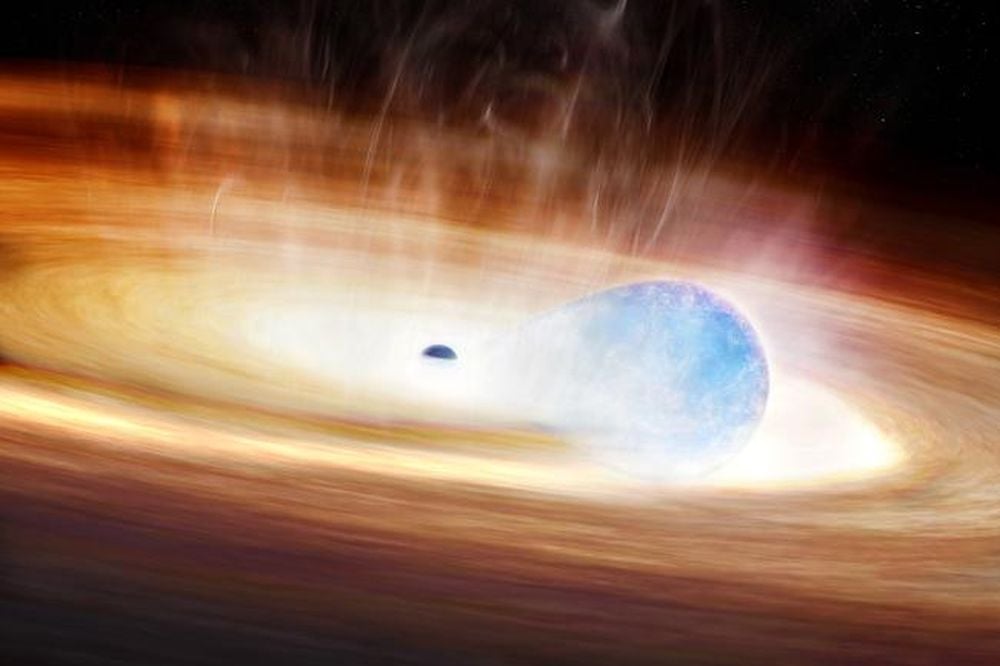
A Distant Star Explodes While Swallowing Its Black Hole Companion

Two of Nature's most fascinating objects combined to form a unique display when an exploding supernovae tried to swallow its companion black hole. Before it could, gravitational stress from the black hole triggered the star's explosion. Image Credit: Melissa Weiss/CfA

Astronomers have discovered what may be a massive star exploding while trying to swallow a black hole companion, offering an explanation for one of the strangest stellar explosions ever seen.


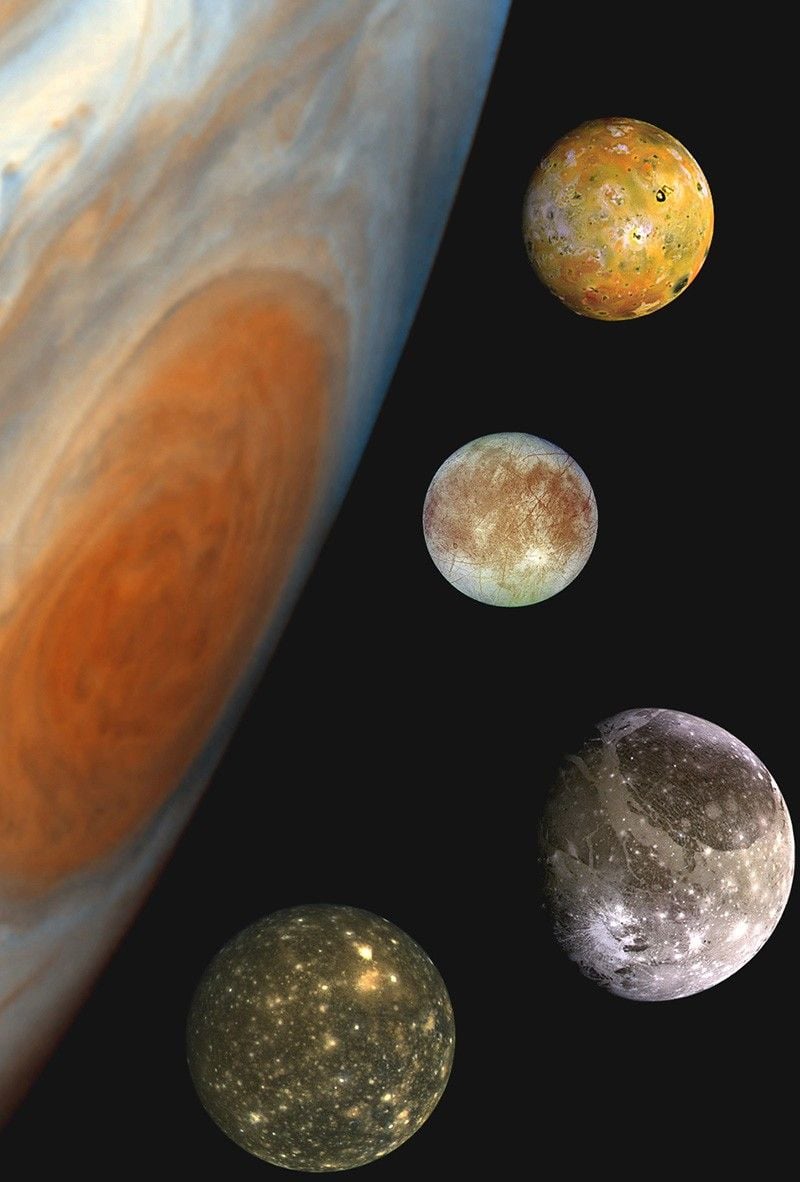
Moon Flybys Could Save Fuel On Interplanetary Missions

Family portrait of Jupiter and the Galilean moons. Credit - NASA

The Three Body Problem isn’t just the name of a viral Netflix series or a Hugo Award winning sci-fi book. It also represents a really problem in astrodynamics - and one that can cause headaches to mission planners in terms of its complexity, but also one that offers the promise of an easier way to enter stable orbits that might otherwise be possible. A new paper from researchers at the Beijing Institute of Technology shows one way those orbital maneuvers might be enhanced while exploring planetary systems - by using a gravity assist from its moons.