Monday, January 5, 2026

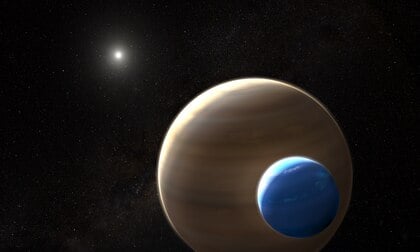
The Ambitious Plan to Spot Habitable Moons Around Giant Planets

Artist's concept of an exomoon around exoplanet Kepler-1625b. Since debunked, this was originally thought to be one of the first exomoon discoveries. Credit - ESA / Hubble

arXiv:2512.15858v1 Announce Type: new Abstract: Despite numerous search campaigns based on a diverse set of observational techniques, exomoons - prospective satellites of extrasolar planets - remain an elusive and hard-to-pin-down class of objects. Yet, the case for intensifying this search is compelling: as in the Solar System, moons can act as proxies for studying planet formation and evolution, provide direct clues as to the migration history of the planetary hosts and, in favourable cases...

Sunday, January 4, 2026

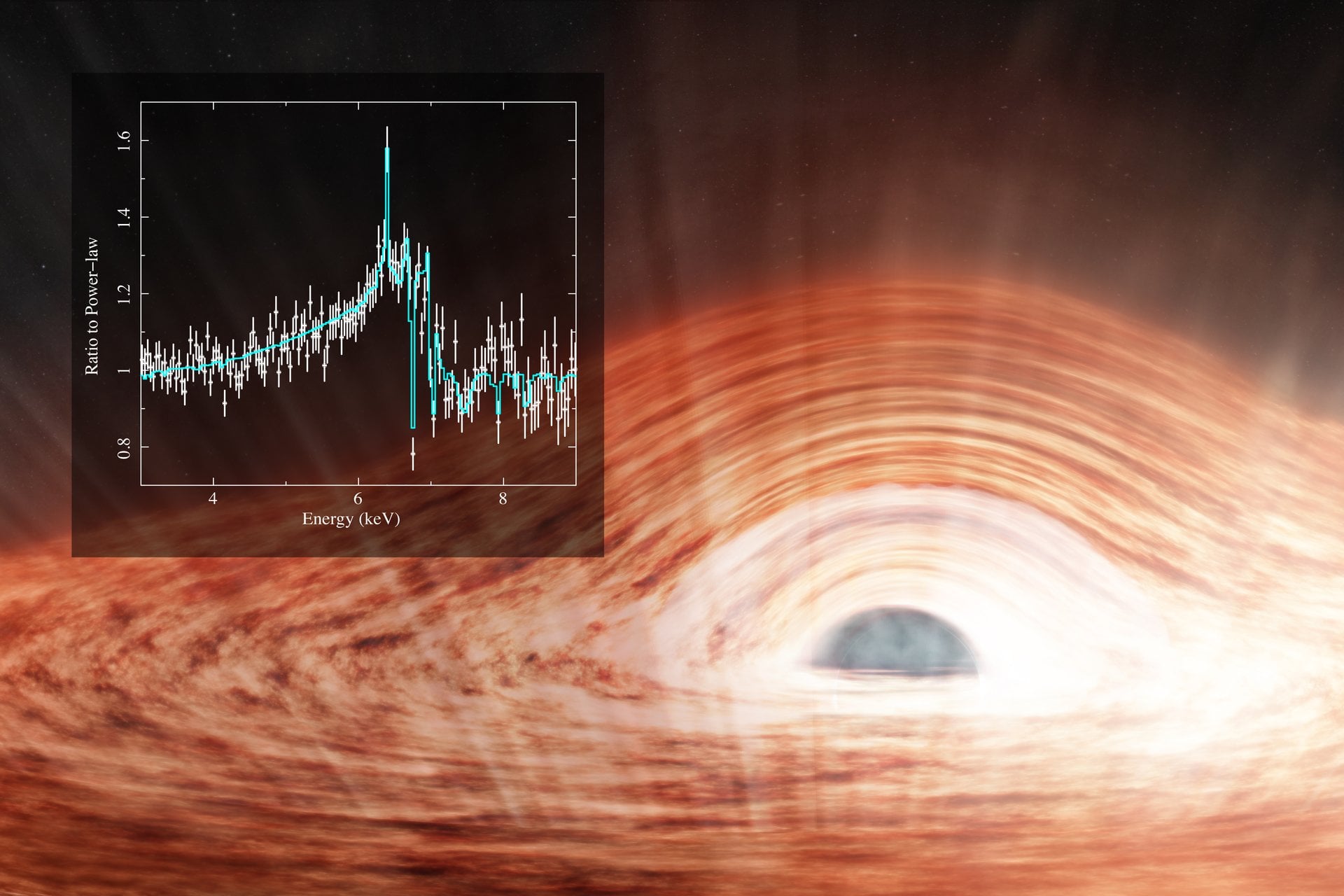
XRISM Provides the Sharpest Image to Date of a Rapidly Spinning Black Hole

Artist's rendering of the innermost regions around the SMBH at the center of MCG-6-30-15 and the spectra obtained by XRISM/Resolve (inset). Credit: CfA/Melissa Weiss

The first results on the iconic active galactic nucleus MCG–6-30-15 captured with the XRISM mission show the most precise signatures yet of its supermassive black hole’s extreme gravity and the outflows that shape its galaxy.


Saturday, January 3, 2026

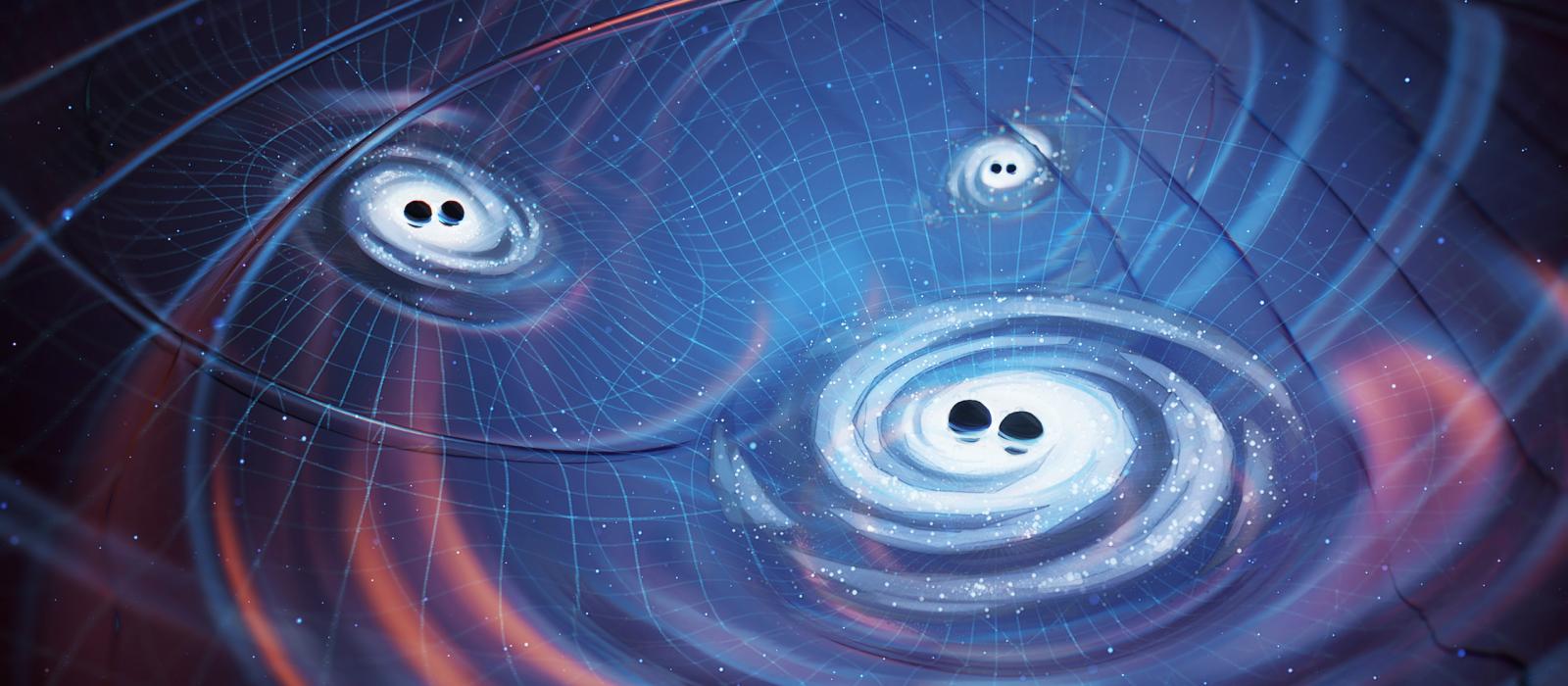
New Research Reveals how Gravitational Waves Could be Used to Decode Dark Matter

Illustration of supermassive binary black hole binary systems at the cores of galaxies and the GWs they produce. Credit: NANOGrav/Olena Shmahalo

A new study by researchers at the University of Amsterdam shows how gravitational waves from black holes can be used to reveal the presence of dark matter and help determine its properties. The key is a new model, based on Einstein’s theory of general relativity, that tracks in detail how a black hole interacts with the surrounding matter.


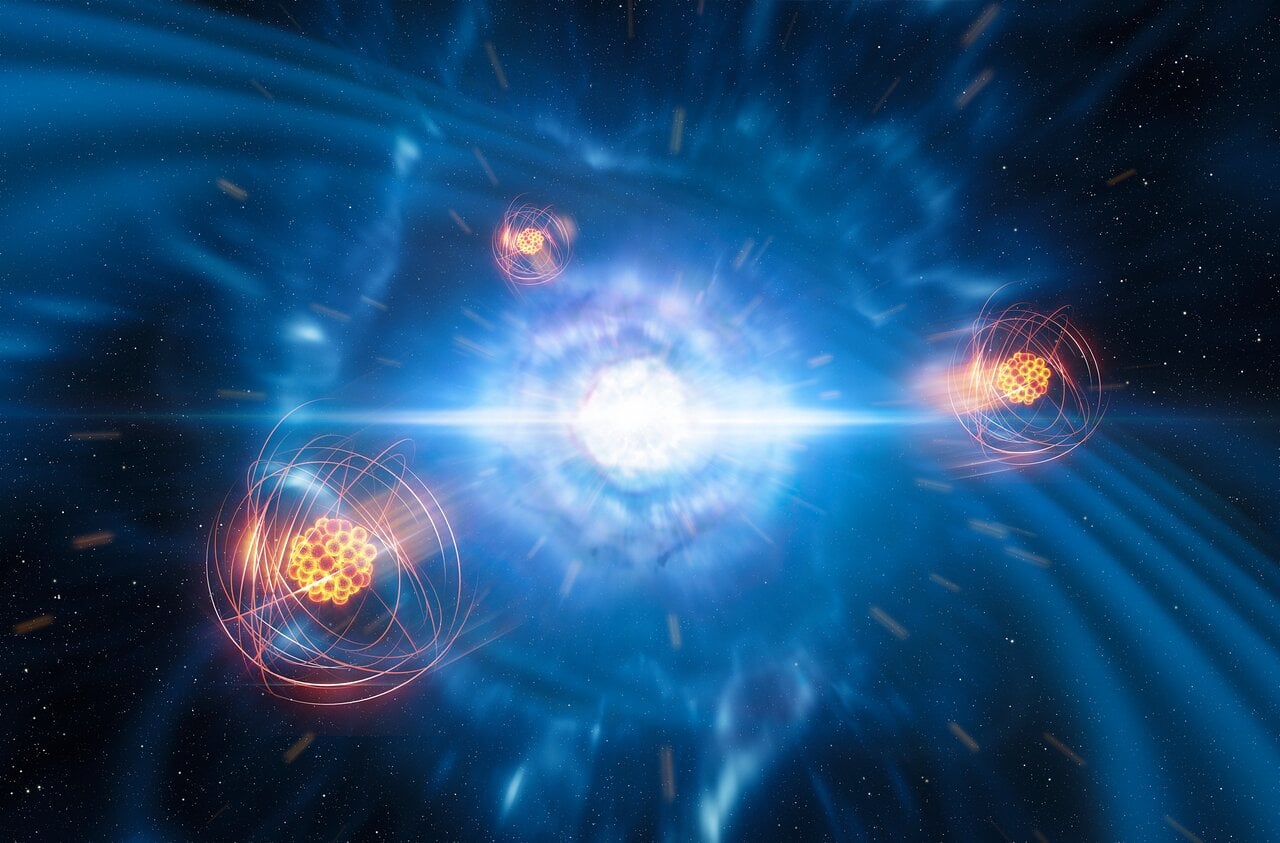
Earth-like Planets Need a Cosmic-Ray Bath

Artist’s impression of strontium emerging from a neutron star merger. Credit: ESO/L. Calçada/M. Kornmesser

Terrestrial planets such as Earth need an early solar system rich in short-lived radioisotopes. But the supernovae that create these elements would tend to rip an early system apart. A new study suggests that these isotopes are produced by a bath of cosmic rays from more distant supernovae.


Friday, January 2, 2026

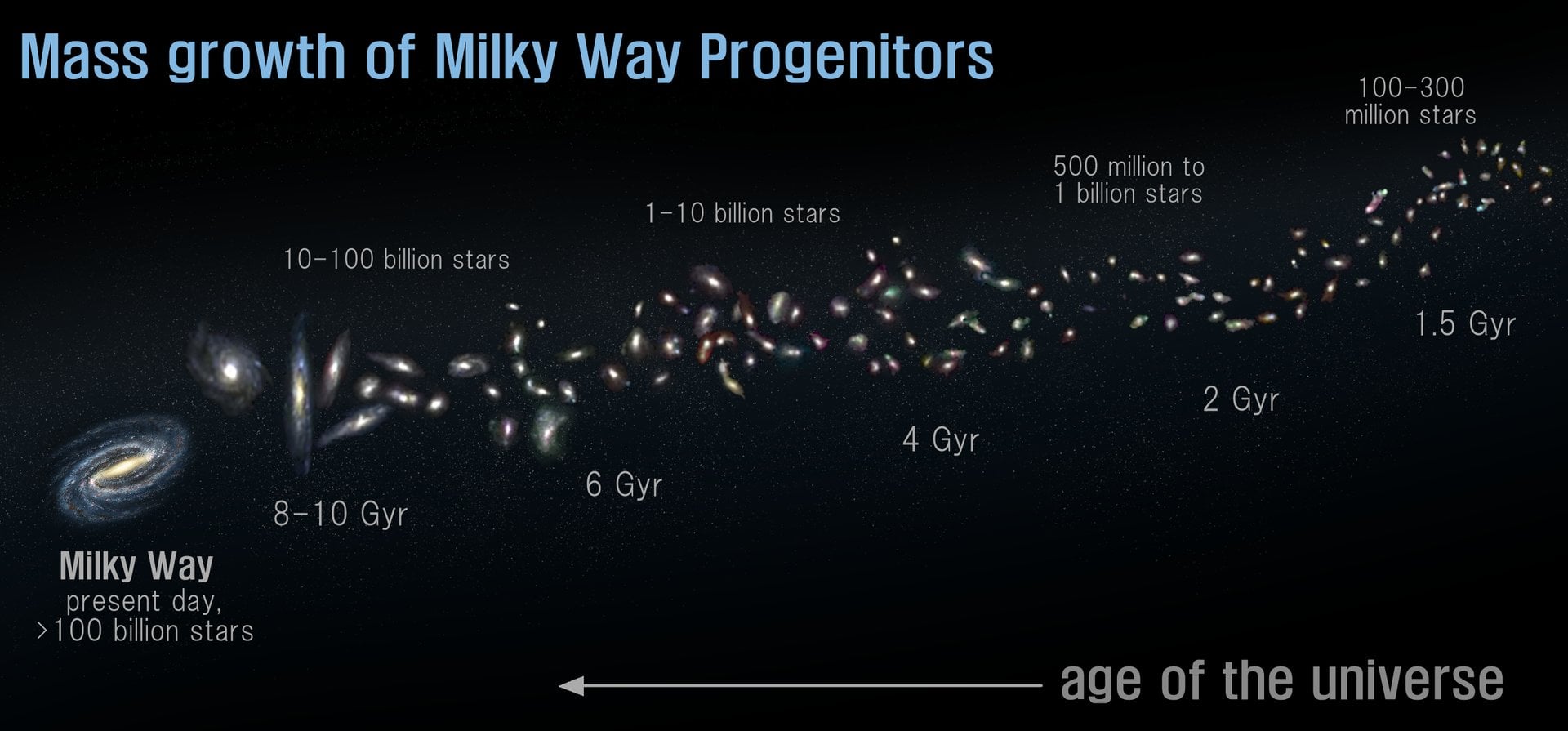
Using Webb, Canadian Astronomers Shed Light on the Milky Way's Turbulent Past

Infographic of Milky Way progenitors by age of the Universe and stellar mass. Credit: Vivian Tan et al. (2025)

A team of Canadian astronomers has used Webb's observations of "Milky Way twins" in the early Universe to learn more about our galaxy's turbulent youth.


Thursday, January 1, 2026

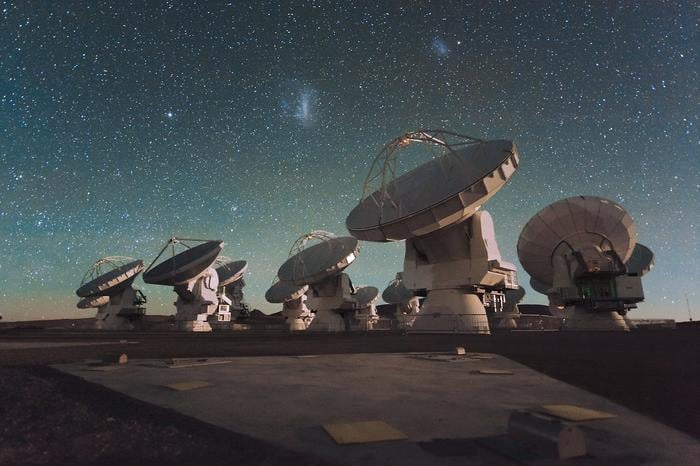
The ALMA Array is Completed With 145 New Low-Noise Amplifiers

The ESO's ALMA telescope array in the Atacama Desert in northern Chile. Credit ©: ESO/C.Malin

The Atacama Millimeter/Submillimeter Array (ALMA), the world's most powerful radio telescope, has received 145 new low-noise amplifiers (LNAs) that will increase its range and sensitivity.


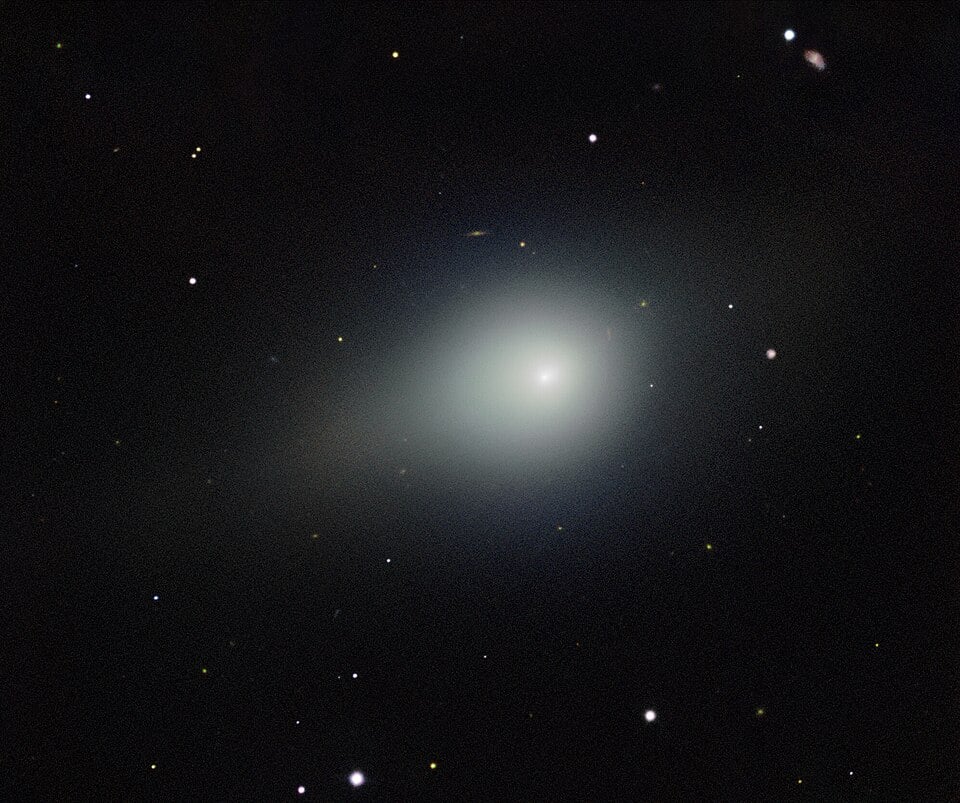
The Interstellar Comet That’s Spilling Its Secrets

Interstellar Comet 3I/ATLAS captured by the Gemini Multi-Object Spectrograph (GMOS) on Gemini North on Maunakea in Hawai‘ (Credit : International Gemini Observatory/NOIRLab/NSF/AURA/B. Bolin)

Astronomers have measured water streaming from interstellar comet 3I/ATLAS for the first time since it passed closest to the Sun. Using a spacecraft that’s been watching the Sun for nearly three decades, scientists detected hydrogen glowing around the comet and calculated that it was producing water at extraordinary rates. These measurements not only confirm that interstellar comets behave remarkably like our own Solar System’s icy wanderers, but also provide crucial clues about what comets looked like in the early universe.