Friday, January 28, 2022

What is Einstein’s Theory of Relativity?

In the history of science and physics, several scholars, theories, and equations have become household names. In terms of scientists, notable examples include Pythagoras, Aristotle, Galileo, Newton, Planck, and Hawking. In terms of theories, there’s Archimede’s “Eureka,” Newton’s Apple (Universal Gravitation), and Schrodinger’s Cat (quantum mechanics). But the most famous and renowned is arguably Albert Einstein, Relativity, and the famous equation, E=mc2. In fact, Relativity may be the best-known scientific concept that few people truly understand.

For example, Einstein’s Theory of Relativity comes in two parts: the Special Theory of Relativity (SR and the General Theory of Relativity (GR). And the term “Relativity” itself goes back to Galileo Galilee and his explanation for why motion and velocity are relative to the observer. As you can probably tell, explaining how Einstein’s groundbreaking theory works require a deep dive into the history of physics, some advanced concepts, and how it all came together for one of the greatest minds of all time!

To break it down, Einstein proposed SR in 1905 to resolve experiments involving light with classical physics. Over the next ten years, Einstien would attempt to generalize the theory to explain how electromagnetism and classic mechanics could be resolved with gravity – which yielded GR. While Einstein’s insights would be confirmed within a few years, they continue to be tested and validated to this very day.

Prof. Albert Einstein delivering the 11th Josiah Willard Gibbs lecture at the meeting of the American Association for the Advancement of Science in on Dec. 28, 1934. Credit: AP Photo

As Einstein is credited with once saying, “If you can’t explain it to a six-year-old, you don’t understand it yourself.” But as noted already, doing that means getting into some history and advanced concepts – like universal gravitation, inertial reference frames, mass-energy equivalence, spacetime, etc. But with a little patience and dedication, the theory of Relativity is something that anyone is capable of understanding.

Galileo and Newton

The story of Relativity goes back to the 17th century and the work of famed Italian astronomer and polymath Galileo Galilee. In 1632, Galileo published Dialogue Concerning the Two Chief World Systems, which many consider to be his magnum opus. In this work, Galileo explained in simple terms how the Heliocentric Model of the Universe (as described by Copernicus) resolved issues that the Geocentric Model could not explain. Among other things, Galileo explained why the Earth’s motion was not obvious to people on its surface.

In keeping with his ability to convey complex ideas with simple and erudite logic, Galileo illustrated how this was possible using the metaphor of a ship at sea. In short, Galileo said that if a person standing on the deck were to drop a ball of wax into a vase of water, they would see the ball descend directly down to the bottom. This would apply regardless of whether the ship was in motion or not. The reason, he stated, is because the ball and everything aboard the ship is part of the ship’s inertial reference frame – i.e., it moves with it.

The same, he argued, holds for a person standing on the surface of Earth as it moves:

“Now these things take place in motion which is not natural, and in materials with which we can experiment also in a state of rest or moving in the opposite direction, yet we can discover no difference in the appearances, and it seems that our senses are deceived.

“Then what can we be expected to detect as to the earth, which, whether it is in motion or at rest, has always been in the same state? And when is it that we are supposed to test by experiment whether there is any difference to be discovered among these events of local motion in their different states of motion and of rest, if the earth remains forever in one or the other of these two states?”
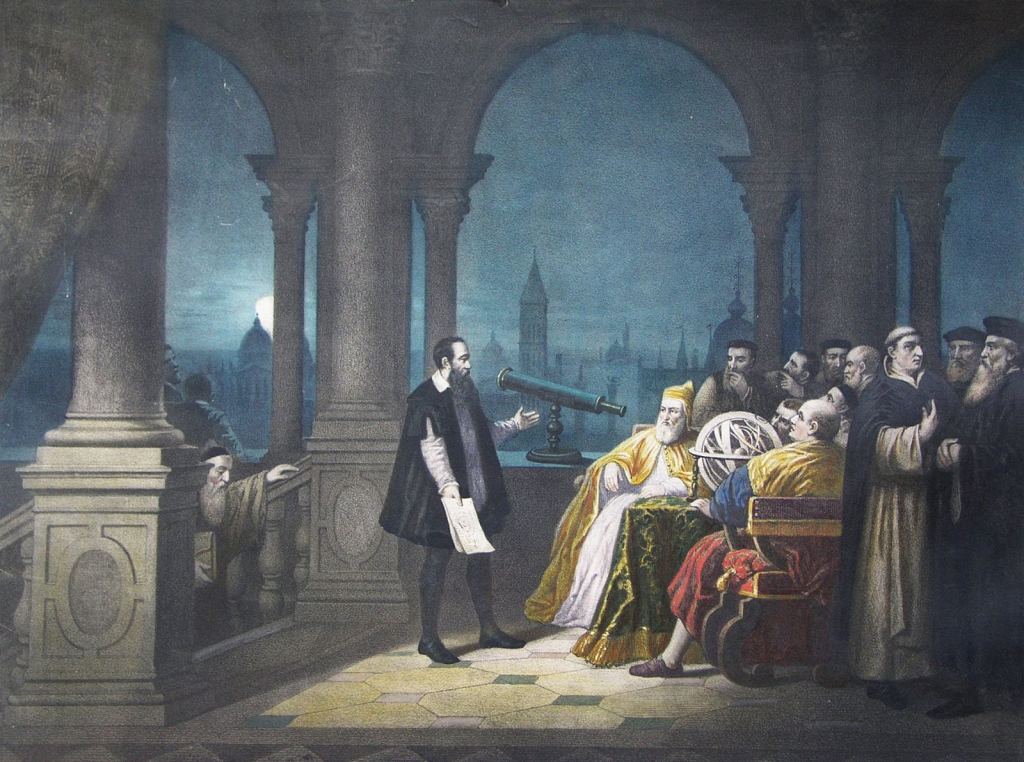
Galileo Star Party
Galileo Galilei displaying his telescope to Leonardo Donato. Credit: Wikimedia Commons

However, to an observer on the shore, Galileo claimed that things would look quite different. If the person standing on the ship’s deck dropped the ball over the side, it would appear to them that it still fell straight down. But to the observer on the shore, it would look like it was following a parabolic path. To them, the ball’s motion would visibly be the result of motion imparted by the moving ship with the Earth’s gravitational pull. In short, the motion and velocity would be relative to the observer.

This came to be known as Galilean Relativity (or Galilean Invariance), which came down to a single postulate: “[A]ny two observers moving at constant speed and direction with respect to one another will obtain the same results for all mechanical experiments.” In other words, the physical mechanics of a system are the same in all reference frames, provided the motion and velocity of the observers remain constant. However, if either of these parameters changes, then the mechanics will change (more on that later).

The explanation would become a key argument used in defense of the Heliocentric Model. For Earth-based observers, the motions of the planets, the Sun, the Moon, and the stars were all relative to the observer (us). But when one cataloged the motions (and the relative size) of these objects in the night sky over time, they would see how these observations could only be explained by the motion of the Earth around the Sun (as well as the rotation of Earth itself) at a constant velocity.

By 1687, Sir Isaac Newton would revolutionize our understanding of physics with his magnum opus, Philosophiæ Naturalis Principia Mathematica. In this tome, Newton synthesized Galileo’s theories on motion with his research into gravitation, which was summarized with his Three Laws of Motion. These included:

  1. A body continues in its state of rest, or in uniform motion in a straight line, unless acted upon by a force.
  2. A body acted upon by a force moves in such a manner that the time rate of change of momentum equals the force.
  3. If two bodies exert forces on each other, these forces are equal in magnitude and opposite in direction.

These three laws describe three physical constants that remain central to modern physics: Intertia, which states that bodies will remain in a state of motion unless an external force speeds them up or slows them down; Force, which can be summarized mathematically as the mass of an object multiplied by its acceleration (F=ma); and Action-Reaction, which establishes when an object exerts a force on another object, the second object exerts an equal and opposite on the first.

This laid the groundwork for Newton’s Universal Gravitation, which states that all point sources with mass attract each other through gravitational force; and the Inverse Square Law, which states that this force is directly dependent on the masses of both objects and inversely proportional to the square of the distance between their centers. In short, Newton argued that the same force that caused the apple to fall from a tree (Newton’s Apple) causes the planets to orbit the Sun, the Moon to orbit Earth, and all other orbital mechanics in the Solar System.

A consequence of Newton’s Universality was that scientists would henceforth see space and time as reference frames that were fixed and separate. Basically, an object’s position and motion could be described in terms of three dimensions in space – length, height, and depth (or the x, y, z axes) – and one dimension in time. This framework for understanding the Universe would become canon for the next two hundred years. Newton’s theories were so influential that the terms Classical Physics and Newtonian Physics (or Mechanics) would be used interchangeably.

By the mid-to-late 19th century, new discoveries in the fields of astronomy, electromagnetism, and particle theory would knock these conventions on their ear. What had previously seemed like an orderly Universe consisting of space and time, matter and energy, and universal reference frames would be replaced by relativistic effects, time dilation, and “spooky action at a distance.”

Electromagnetism

By the mid-19th century, scientists had made multiple breakthroughs in the study of optics (light and colors) and electromagnetic (EM) phenomena. This led to the realization that light is a form of EM radiation and that its properties (how it behaves like a wave) were similar to the propagation of electrical current. Moreover, experiments performed by this time yielded highly-accurate estimates in the speed of light – 299,792,458 m/s (1.079 billion km/h; 670.6 million mph).

In addition, the theoretical work of James Clerk Maxwell and Hendrik Lorentz established that electric and magnetic forces behaved as fields that exert force on point charges. These were summarized in Maxwell’s Equations (1861-62) and the Lorentz Force Law (1895), which describe how electric and magnetic fields are generated by charges, currents, and changes of the fields. Together, these principles form the basis of classical electromagnetism, optics, and electric circuits.

These experiments also yielded highly-accurate estimates for the speed of light – which is currently clocked at 299,792,458 m/s (1.079 billion km/h; 670.6 million mph). Unfortunately, these experiments also presented theoretical problems as far as Classical Physics was concerned. In all cases, the measured speed of light was constant, regardless of whether the source was moving relative to the observer or not. This contradicted a basic tenet of Classical Mechanics and Galilean Relativity.

For example, Earth’s rotation on its axis essentially means that it is rotating towards the Sun. This means that when the Sun is in the east, the light reaching an observer would be approaching and therefore have a greater measured velocity than light observed from any other direction. However, experiments involving optics and the refraction of light, like those performed by Augustin Fresnel in 1818, showed no measurable change in the speed of light.

The Mysterious “Aether”

As a result, scientists began postulating by the early 19th century that space must be filled with some invisible “aether.” This medium, they argued, allowed light to propagate through space but also meant that light was dragged along by it – leading to a change in its velocity. This was exemplified by Fresnel’s partial aether-drag hypothesis, where he stated that the motion of the Earth does not have any influence on how light refracts because “the ether is partially carried along by the earth and light waves inside the optical medium are partially dragged along with the ether.”

This is similar to how sound travels in air or water or ripples propagate across the surface of a pond. Alas, the experiments conducted throughout the 19th century continually indicated that the speed of light was constant. To resolve these theoretical issues with the experimental results, scientists needed to measure the effects of this aether to determine its properties. This required that scientists show that the measured speed of the light was a simple sum of its speed through the medium, plus the speed of the medium.

Hippolyte Fizeau attempted to prove this with his “water tube experiment” (or Fizeau experiment), which he conducted in 1851. After measuring the speed of light in moving water through tubes, Fizeau’s results indicated that light was being dragged along by the medium – the water. This appeared to confirm earlier experimental results, such as those conducted by Augustin Fresnel and Sir George Strokes. However, the magnitude of the effect that Fizeau observed was far lower than expected.

Another famous example was the Michelson-Morley Experiment (1887) conducted by American physicists Albert A. Michelson and Edward W. Morley. Using a chamber and a series of mirrors, they attempted to measure the speed of light from different angles – a horizontal one corresponding to Earth’s rotation towards the Sun and a perpendicular one. If such an “aether” existed, then the Earth’s movement through it (and towards the Sun) would result in a noticeable difference with the horizontal beam.

Once again, the experiment yielded negative results since there was no observable difference between the measured speeds of the light beams. At this point in the game, Einstein would come along and offer a brilliant insight, analysis, and synthesis of the theoretical and experimental data. This occurred in 1905 when Einstein first revealed what would be known as his Theory of Special Relativity (SR).

Enter Einstein

In 1905, during his “annus mirabilis” (miracle year), Einstein published his dissertation, as well as four groundbreaking papers that would bring him to the notice of the international scientific community. One of them was “On the Electrodynamics of Moving Bodies,” where Einstein proposed what would come to be known as his Theory of Special Relativity (SR). This theory resolved Maxwell’s equations and the Lorentz force law with Newton’s Laws of Motion and came down to two postulates:

  • The laws of physics are identical in all non-accelerated inertial reference frames
  • The speed of light in a vacuum is constant, regardless of the motion of the observer or light source

A key aspect of Einstein’s breakthrough was Lorentz Transformations, which the elder physicist derived when examining the experiments concerning the behavior of light. To explain why light did not conform to Relativity, Lorentz theorized that things become distorted (compacted) along the path of travel in an accelerated inertial reference frame. As Einstein theorized, objects approaching the speed of light (c) will observe no change in c coming from external sources, but they will notice time is moving slower for them than the

Like his predecessor, Galileo, Einstein related the mechanics of this concept using a metaphor, a slightly updated one at that. According to Einstein, a person traveling on a train will notice the same relativistic effects Galileo mentioned, where a ball will fall straight to the floor. To an observer beside the tracks, the same boll dropped over the side of the train would appear to fall along a parabolic path. Now substitute the ball with a series of mirrors.

The person riding the train holds one in their hand while another is directly beneath it on the floor. To the person holding the mirror, a beam of light would appear to be bouncing up and down repeatedly. Now imagine another mirror is located on the wall at the head of the car. If the person reoriented the mirror in their hand to face it, a beam of light would appear as if it were bouncing back and forth across the train car. In all cases, the light would appear to be traveling at a constant speed (c).

But to the person standing beside the tracks, the light would appear to be zig-zagging along in the first scenario, trying to catch up with the moving mirrors. In the second scenario, it would appear as if the light were moving slower as it went from the handheld mirror to the one in the front of the car. Alas, if they could time it, they too would record a constant speed of c. Instinctively, this would make little sense to the two observers until they consulted their watches.

For the person riding in the train cart, time would have moved (infinitesimally) slower. The difference would be immeasurable, but if the moving reference frame were something like a spacecraft capable of traveling at a fraction of the speed of light, the difference would be impossible to miss. Essentially, the person in the moving reference frame has experienced time at a slower rate, an effect known as “time dilation.” As objects get closer and closer to the speed of light, this effect increases.

However, Einstein and his contemporaries still held to the Conservation of Energy Law first proposed and tested by Émilie du Châtelet in the 18th century. This law states that the total energy of an isolated system remains constant and is conserved over time. Applying this same reasoning to objects approaching the speed of light, Einstein’s derived the equation E=mc2, where E is the total amount of energy in a system, m is the system’s mass, and c is the system’s acceleration towards the speed of light.

According to this law, objects accelerating towards the speed will experience an increase in their inertial mass. This means that more energy is required to maintain the object’s acceleration over time and that the speed of light is absolute. Not only would an object require an infinite amount of energy to achieve the speed of light, but its mass would also become infinite in the process. Another startling consequence was how mass and energy are interchangeable in this equation.

If mass and energy are switched around in the equation, the outcome remains the same. This came to be known as the principle of Mass-Energy Equivalence, which states that energy and mass are essentially two sides of the same coin. Another consequence of SR is how it interprets space and time as two expressions of the same reality. Per Newtonian Physics, scientists viewed the geometry of the Universe in terms of three dimensions – height, length, and width (or an x, y, and z axes) – and one dimension of time.

In other words, Newtonian Physics viewed space and time as separate and fixed. But by showing how time was relative to the observer in an accelerated reference frame, Einstein’s presented a four-dimensional geometry consisting of three dimensions of space and one dimension of time – aka. Spacetime! Almost immediately, scientists began adopting Einstein’s SR because of the way it resolved electromagnetism with Newton’s theories of motion and for how it did away with the need for an “aether.”

General Relativity

Between 1905 and 1915, Einstein sought to generalize SR by extending it to account for gravity. This was largely due to theoretical problems arising from Newton’s theory of Universal Gravitation. Previously, astronomers found that Newton’s equations could account for the orbits of most of the then-known Solar bodies. However, Mercury’s orbit presented a long-term peculiarity that Newton’s equations couldn’t account for. In addition to having a highly-eccentric orbit, Mercury’s perihelion also moves around the Sun over time.

This is known as a “precession of perihelion,” where the farthest point in a planet’s orbit moves around the parent body over time. There was the way Newton’s theories interpreted gravity as an attraction between point sources with mass. But if this were true, then the force of attraction would be something that occurred instantaneously between objects, even if it was particularly weak over long distances. But as Einstein demonstrated with SR, information is not communicated instantaneously across spacetime.

There were also several outstanding issues regarding how SR applied to the Universe at large. The first issue was the idea of instantaneous communication. As Einstein previously demonstrated with SR, information is not communicated instantly across spacetime but is limited to the speed of light. A supernova that takes place 1 billion light-years away will appear to be presently exploding in the night sky to us but took place 1 billion years ago.

In keeping with the laws of electromagnetism, Einstein ventured that gravity acted as a field rather than an instantaneous pull. The greater the mass, the more powerful the field within which objects would be attracted to each other. Another important issue was acceleration, which Einstein illustrated using another clever (and updated) metaphor: a passenger on an elevator. If someone were to cut the cable, the elevator would begin to fall at a rate of 9.8 m/s2 (Earth-normal gravity, or 1 g) towards the center of the Earth.

The passenger would experience the sensation of weightlessness (freefall) right up until the point where the elevator crashed! The same holds for any object experiencing acceleration, be they boats, planes, trains, automobiles, or spacecraft. At a constant velocity, people traveling within an inertial reference frame (in the absence of external reference points) would not be aware that they were even moving. In fact, a passenger or crew in space would feel weightless if the spacecraft were at rest or moving at a constant velocity.

But if the reference frame accelerated, anyone inside would be thrust in the opposite direction of travel. If the acceleration were equal to 9.8 m/s2, the crew would experience the sensation of Earth-normal gravity. If the spacecraft were oriented with its vertical axis pointed in the direction of travel, the acceleration would keep the crew’s feet firmly planted on the floor. The same principle applies to pinwheel stations or rotating cylinders in space, where the rotational velocity generates a centripetal force that causes objects to be pulled outwards.

For people aboard the station, this force creates the sensation of gravity. Depending on the radius and velocity of the station, the “artificial gravity” can be equal to Earth-normal gravity. Since the late 20th century, many noted scientists have proposed that such facilities could be the key to exploring and settling the Solar System – including Konstantin Tsiolkovsy, Werner von Braun, and Gerard K. O’Neill (where the O’Neill Cylinder gets its name). The bottom line is that acceleration is indistinguishable from gravity in an inertial reference frame.

Last, but not least, there was the issue of time dilation, as raised by SR and Lorentz Transformations. If acceleration causes time dilation, then this means that gravity itself has an effect on spacetime. From this, Einstein’s General Relativity (GR) was born! Instead of gravity being a force of attraction between point masses, said Einstein, gravity itself is a consequence of the curvature of spacetime, which is altered by the presence of a massive object. Ergo, when objects orbit one another, they are not being “pulled,” but tracing the curvature of that spacetime.

In November 1915, Einstein presented his Field Equations to the Prussian Academy of Science in Berlin, Germany. These equations specify how the four-dimensional geometry of spacetime is influenced by gravitational fields (mass) and radiation (electromagnetic forces). In the words of John Wheeler, “spacetime tells matter how to move; matter tells spacetime how to curve.” From all of this, Einstein’s General Theory of Relativity (GR) was officially born and would quickly become foundational to our modern understanding of physics.

Much like SR, Einstein’s generalized theory of Relativity would have several theoretical consequences. For starters, if what Einstein was saying was true, it meant that gravitational fields and the resulting curvature of spacetime would affect everything, including light! This prediction presented astrophysicists with the means to test GR, and the first opportunity came in 1919. At this time, Frank Dyson, Arthur Eddington, and a team of astrophysicists conducted an experiment during a solar eclipse (the Eddington Experiment).

Eddington Experiment

In the century since Einstein’s formalized his theory, SR and GR have been repeatedly tested and validated. Some of these tests involved small-scale experiments, while others were conducted under the most extreme conditions. In the case of the Eddington Experiment (or Expedition), the test consisted of observations made during a solar eclipse from two equatorial observatories – one located on the northeast coast of Brazil, the other on the island of Sao Tome and Principe off the coast of West Africa.

Specifically, the expedition team was looking for stars passing behind the Sun during the eclipse. If Einstein’s theory were correct, the light coming from these stars would trace the spacetime curvature caused by the Sun’s gravity. To the observers, this effect would make it look like the stars themselves were next to the Sun. With the Sun’s radiance effectively blocked by a total eclipse by the Moon, the light would be visible to their expeditions’ instruments.

Not only did the teams at both observatories see these stars, but their positions in the night sky were precisely where Einstein’s Field Equations predicted they would be. The story was immediately picked up by newspapers worldwide and posted on their front pages, making Einstein and General Relativity an overnight sensation! However, this was one of many tests and predictions that ultimately proved Einstein’s theories to be correct.

In time, GR would be incorporated into all areas of modern physics, ranging from electromagnetism and astrophysics to particle physics and the then-emerging field of quantum mechanics. Interestingly, some of the theories that would arise from Einstein’s breakthrough would not sit well with the astrophysicist. In fact, he would consider some of them (like cosmic expansion and quantum theory) to be downright heretical (and “spooky”)!

Cosmic Expansion

For example, in 1917, Einstein attempted to use GR to create a model of the structure of the Universe. To his dismay, he found that on the cosmic scale, his Field Equations predicted that the Universe was either in a state of expansion or a state of contraction. In order to prevent galaxy clusters and the large-scale structure of the Universe from collapsing in on itself, something needed to be counteracting gravity on the largest of scales. Since he preferred the idea of a constant and unchanging Universe (a common view at the time), Einstein introduced a new concept to GR.

This was known as the Cosmological Constant, represented by the mathematical character Lambda in his Field Equations. This force, he ventured, was responsible for “holding back gravity” and ensuring that the matter-energy density of the cosmos remained the same over time. By doing this, Einstein found himself caught up in the debate between proponents of the Steady State Hypothesis and the Big Bang Theory of cosmology (which would eventually be resolved in favor of the Big Bang model).

Einstein’s new theory would also attract challenges from some of his peers, who viewed it as an unstable fix to the problems presented by GR. In 1922, Russian physicist Alexander Friedmann mathematically showed how Einstein’s Field Equations were consistent with a dynamic Universe (The Friedmann Equation). This was followed by Belgian astrophysicist Georges Lemaître in 1927, who demonstrated that GR and an expanding Universe were consistent with astronomical observations, particularly those of American astronomer Edwin Hubble.

In 1931, Einstein visited Hubble at the Mount Wilson Observatory, where he witnessed how galaxies were receding from the Milky Way. In response to what Hubble presented him, Einstein formally announced that he was dropping the Cosmological Constant from his theories, claiming that it was the “biggest blunder of my career.” Meanwhile, astrophysicists would continue to measure the rate at which the cosmos was expanding, which would come to be known as Hubble’s Law (aka. the Hubble-Lemaitre Law). However, observations made throughout the 1990s (particularly with the Hubble Space Telescope) showed that the rate of cosmic expansion increased with time!

This led astrophysicists to theorize that there was a mysterious force counteracting gravity. But rather than preventing the Universe from collapsing on itself, this force was actively driving it apart. Today, we know this force as Dark Energy. Along with Dark Matter, it is a key ingredient to the most widely accepted cosmological model – the Lambda Cold Dark Matter (LCDM) model.

Black Holes, Lensing, and Waves

In 1915, just a few months after Einstein unveiled GR, German physicist and astronomer Karl Schwarzschild found a solution to Einstein’s Field Equations that predicted the existence of black holes. According to this solution, the mass of a sphere can become so compressed that the escape velocity from the surface would be equal to the speed of light. This is now called the Schwarzschild Radius, which describes the minimum dimensions a spherical mass must collapse to form a black hole.

In 1924, Eddington observed how Einstein’s theory allowed astronomers to rule out the existence of visible stars with overly large densities. According to Eddington, such dense bodies would “produce so much curvature of the spacetime metric that space would close up around the star, leaving us outside (i.e., nowhere).”

In 1931, Indian-American astrophysicist Subrahmanyan Chandrasekhar offered a resolution to SR by calculating how a sufficient mass of electron-degenerate matter (in a non-rotating body) would collapse in on itself. This came to be known as the Chandrasekhar Limit. When combined with Schwarzschild’s calculation, astrophysicists now had estimates on the mass and radius limits of black holes.

In 1939, Robert Oppenheimer and other scientists concurred with Chandrasekhar’s analysis, claiming that neutron stars above a prescribed limit would collapse into black holes. They also defined the outer boundary of the Schwarzschild radius as the edge of a singularity, within which time would stop. To external observers, a black hole would be perceived as a star frozen in time at the instant of collapse, but an infalling observer would have an entirely different experience.

Another effect predicted by GR is how gravitational fields can bend and focus light coming from more distant sources. This is known as Gravitational Lensing, where a particularly massive object acts as a “Lens” to amplify light forces beyond (or behind) it. This method has also been used to test Einstein’s GR under extreme conditions, such as observations of Sagittarius A*, the supermassive black hole (SMBH) at the center of the Milky Way. A modified version of this technique, Gravitational Microlensing, also detects exoplanets around distant stars.

Yet another prediction that emerged from GR is the rippling effect that gravitational forces can have on spacetime. This occurs when two particularly massive objects (neutron stars, black holes, or SMBHs) merge and release a tremendous amount of energy in the form of Gravitational Waves. The first confirmed detection of these waves was made by the Laser Interferometer Gravitational-Wave Observatory (LIGO) in 2016, roughly a century after Einstein first predicted them.

Einstein’s Theory of Relativity would also have a profound influence in the emerging field of Quantum Mechanics. The discoveries he would help make here were another source of consternation for him. Among them, the principle of quantum entanglement, which he would characterize as “spooky action at a distance,” and that the Universe was characterized by the semi-chaotic nature of Schrodinger’s Equation of quantum wave function and Heisenberg’s Uncertainty Principle.

Even though Einstein would resist some of the breakthroughs he helped inspire, the role he played in revolutionizing modern physics cannot be denied. Of all the contributions he made, however, none begin to approach the significance (or consequence) of Relativity. Over a century after he finalized his generalized theory, advanced experiments continue to demonstrate just how correct he was. Little wonder why it remains part of the foundation upon which modern physics, quantum physics, astrophysics, and cosmology rest.

We have many articles on Einstein’s theories of Relativity here at Universe Today. Here’s Who was Albert Einstein?, Einstein Still Rules Says Fermi Telescope Team, Einstein. Right Again, Why Einstein Will Never Be Wrong, Astronomy Jargon 101: Gravity, What is Gravitational Lensing?, and What are Gravitational Waves?

Two Astronomy Cast episodes are worth a special listen, Einstein’s Theory of Special Relativity, and Einstein’s Theory of General Relativity.

For more information, check out Albert Einstein and the Theory of Relativity (from the University of Tennessee) and Relativity Tutorial (Ned Wright, UCLA).

The post What is Einstein’s Theory of Relativity? appeared first on Universe Today.


The Scientific Debate Rages on: Is there Water Under Mars’ South Pole?

There’s no surface water on Mars now, but there was a long time ago. If you ask most people interested in Mars, what’s left of it is underground and probably frozen.

But some previous evidence shows there’s a lake of liquid water under the planet’s South Pole Layered Deposits (SPLD). Other evidence refutes it. So what’s going on?

Science, that’s what.

Is there a lake under Mars’ southern polar cap? Two new studies released concurrently tackled the question, and each one arrived at a different answer. One confirms the liquid lake; another refutes it. What are people to make of this?

It might look like scientists don’t know what they’re doing, but the opposite is true. This back-and-forth is the scientific method playing out in real-time.

We’re accustomed to simple yes or no answers, but that’s not how things are. We all know that the Earth is round, right? But it wasn’t always this way. Everyone had the same evidence, but it took a lot of discussions and arguing before people established that the Earth is a sphere. And even that isn’t exactly correct: Earth is an oblate spheroid.

Things aren’t always straightforward, and nature hides the truth.

“I’d really like to know if brines do or do not exist under the SPLD, but uncertainty rules the day!”

Dr. David Stillman, Geophysicist, Southwest Research Institute.

The question around Mars’ underground lakes is vexing because we can’t go there and look. We have to rely on orbiters with remote sensing to gather evidence. And that data has to be interpreted. The interpretation is where it gets tricky.

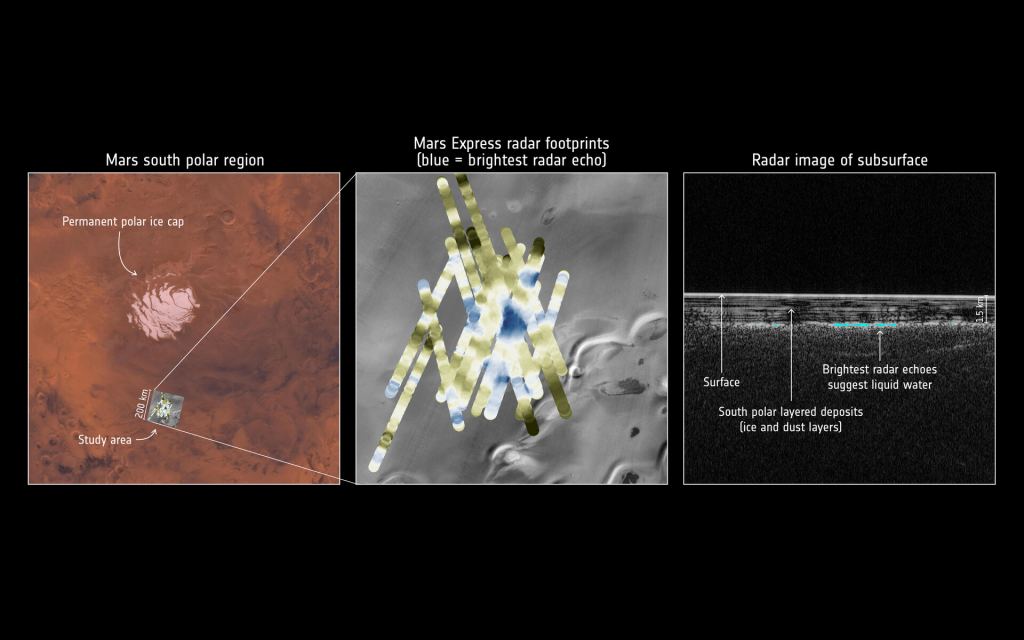
In 2018, radar data from the ESA’s Mars Express spacecraft hinted at an underground lake below the ice near Mars’ south pole. A team of Italian researchers reported the discovery in the journal Science. Data showed a 20 km (12.5 miles) long reflective subsurface zone, and the scientists concluded that it was water, or more accurately, brines.

Radar data collected by ESA’s Mars Express point to a pond of liquid water buried under layers of ice and dust in the south polar region of Mars. <Click to enlarge.> Credit: ESA

The purported lake is buried about 1.5 km below the surface, and it’s briny, which makes it resist freezing. It’s analogous to lakes found in northern Canada, and NASA previously found the necessary salts on Mars that could keep the lake from freezing. So there were reasons to believe the findings were plausible.

The discovery prompted some skepticism. Jeffrey Plaut, a planetary scientist at NASA’s Jet Propulsion Laboratory, said, “It’s not quite a slam dunk yet.” There were calls for more supporting evidence.

Then in 2020, another study confirmed the presence of the lake—and found additional lakes. Or what they interpreted to be lakes. They were more buried reflective surfaces. This study generated more excitement, not just because there were lakes, but because they, or something like them on Mars, might support simple life.

Then a 2021 study showed that the reflective surfaces could be clays. The scientific back and forth was in full swing. Where does the issue sit now?

Two new studies released only days apart come to separate conclusions. Will one of them bring this issue to a satisfactory end?

A new research letter published in the journal Earth and Planetary Science Letters says that the original 2018 discovery of liquid water under Mars’ south pole could still be correct. Its title is “Assessing the role of clay and salts on the origin of MARSIS basal bright reflections.” The first author is Elisabetta Mattei from the Department of Mathematics and Physics at Roma Tre University. Mattei and co-authors were also authors of the original 2018 paper showing the presence of liquid water under Mars’ southern polar region. This letter is a scientific response to other published findings against their initial discovery of a subsurface lake.

The issue boils down to the reflectivity detected by an instrument on the Mars Express orbiter. The device is MARSIS (Mars Advanced Radar for Subsurface and Ionosphere Sounding.) It measures the subsurface composition of Mars and searches for frozen water. In a nutshell, liquid water and frozen water return different signals; liquid water is more reflective than frozen water.

An artist's illustration of the Mars Express Orbiter above Mars. Image Credit: Spacecraft: ESA/ATG medialab; Mars: ESA/DLR/FU Berlin, CC BY-SA 3.0 IGO
An artist’s illustration of the Mars Express Orbiter above Mars. Image Credit: Spacecraft: ESA/ATG medialab; Mars: ESA/DLR/FU Berlin, CC BY-SA 3.0 IGO

MARSIS data is the basis of the 2018 paper announcing the presence of buried liquid water. It’s also the basis for the papers that arrive at different explanations for the measured reflectivity. The data isn’t in doubt, just the interpretations and other scientific inquiry around the data.

The research concluding that there is no liquid water says that other things cause the reflectivity.

Nathaniel Putzig is a senior scientist with the Planetary Science Institute. Putzig is one of the authors of a paper presenting other explanations for the reflectivity in MARSIS data. In a press release, Putzig said, “It is not necessary to invoke liquid water at the base of the polar cap to explain the results of the MARSIS observations. Alternatives include clays, some metallic minerals, and salty ice.”

But the new research letter doesn’t agree. The authors acknowledge the counter-explanations for the MARSIS signal, but they offer counter-counter-explanations. They discount clays, metallic minerals and salty ice as explanations. “Combining previous published data, simulations, and new laboratory measurements, we demonstrate that the dielectric properties of these materials do not generate strong basal reflections at MARSIS frequencies and Martian temperatures,” they write. “Only brines can generate such high dielectric contrast at low basal temperature,” they add.

The new research letter favouring water is partly based on lab experiments done by a scientist at the Southwest Research Institute (SwRI.) Geophysicist David Stillman, a co-author of the new research letter, conducted laboratory experiments on ice-brine mixtures at low temperatures.

“Lakes of liquid water actually exist beneath glaciers in Arctic and Antarctic regions, so we have Earth analogs for finding liquid water below the ice,” said Stillman, a specialist in detecting water in any format — liquid, ice or absorbed — on planetary bodies. “The exotic salts that we know exist on Mars have amazing ‘antifreeze’ properties allowing brines to remain liquid down to -103 degrees Fahrenheit. We studied these salts in our lab to understand how they would respond to radar.”

“The research showed that we don’t have to have lakes of perchlorate and chloride brines, but that these brines could exist between the grains of ice or sediments and are enough to exhibit a strong dielectric response. This is similar to how seawater saturates grains of sand at the shoreline or how flavouring permeates a slushie but at -103 degrees Fahrenheit below a mile of ice near the South Pole of Mars,” Stillman said.

Temperature is a critical factor in this issue. We don’t know what the temperature is one-and-a-half kilometres below the Martian surface. It’s too low for liquid water, but it can remain liquid at lower temperatures if the water is briny. The temperature also affects the permittivity of different materials and the data that MARSIS gathers.

This figure from the study shows the effect that temperature can have on the permittivity of different clays on Mars. Image Credit: Stillman et al. 2022.

The paper is a detailed examination of the different types of clays on Mars and how they appear different in MARSIS data at different temperatures. “Temperature has a dominating effect on the dielectric properties of clay and clay sediments,” the authors write. “The drastic effect of temperature on the dielectric behaviour of clays is confirmed by our set of measurements conducted on clay sediments at different water content, clay content, and different mineralogy. Very low temperatures, such as those commonly inferred at the base of the SPLD (~200 K), are totally inconsistent with the hypothesis that clay sediments can generate a dielectric contrast with the SPLD large enough to obtain bright basal echoes.”

“Our dielectric measurements on Mg(ClO4)2 and CaCl2 brines at Martian subglacial conditions rule out also salty ice as the cause for MARSIS bright reflections,” they write in their paper’s conclusion.

In some of the lab experiments, Dr. Stillman subjected clay samples to extremely low temperatures. “For example, the 100 mM Mg(ClO4)2 (magnesium perchlorate) sample was held at 193 K for 72 hours and never fully froze, until the temperature was reduced to 188 K,” the paper says.

Dr. Stillman talked about the temperature problem with Universe Today.

“The temperature behind the SPLD is critical. Our understanding of this temperature is poor,” Stillman said. “The <Sori and Bramson> paper we reference is a lower bound assumption assuming the SPLD is a single piece of nearly pure ice. It is likely not a single sheet of ice, but much more complex.”

Scientists also don’t know how conductive the SPLD is, which affects temperature uncertainty.

Dr. Stillman from SwRI studied the antifreeze properties of exotic salts that exist on Mars, which could allow brines to remain liquid down to -103 degrees Fahrenheit. The studies show how a mile below the Martian south polar cap, brines between the grains of ice or sediments could produce the strong reflections detected by the radar instrument aboard ESA’s Mars Express orbiter. Image Credit: NASA/JPL-Caltech/USGS/SwRI

So are there lakes below Mars’ south pole? We don’t know yet. If there is something there, it might be more slush than a lake, and it might not be anything like buried lakes on Earth.

This back-and-forth shows the power of the scientific method. Nobody’s saying the data’s wrong; they’re just engaging with the evidence and reaching different conclusions.

“This is how the scientific method works. It is frustrating to see papers that came out within a week of each other coming to vastly different conclusions,” Stillman said. (Dr. Stillman refers to a paper led by Cyril Grima, a planetary scientist at the University of Texas Institute for Geophysics. Universe Today will cover that paper in a separate article.)

COVID plays a role, too. In more normal times, scientists would discuss issues like this at conferences and share ideas and lines of inquiry. While face-to-face discussions at conferences don’t guarantee consensus, they are a part of the scientific process.

“I think some of this is because of the much lower interaction of scientific groups due to the lack of in-person conferences due to COVID,” Stillman said. “This is also occurring because different science groups make different assumptions,” Stillman said, referring to estimates of the underground temperature.

“Honestly, I do not know which assumptions are correct because we are studying a planet so far away with very limited data.”

This discussion will continue for a while, and we need better data before there is widespread agreement. It’s frustrating for researchers and the rest of us interested in Mars, water, habitability, and the host of issues that ride shotgun alongside Martian water.

But it’s also a fascinating look at the scientific method playing out as intended.

“I’d really like to know if brines do or do not exist below the SPLD, but uncertainty rules the day! I still think partially saturated brines are the most correct answer, but I cannot be positive,” Stillman said. “I look forward to debating this in the literature and at in-person conferences. I mean, this is what makes science fun!”

More:

The post The Scientific Debate Rages on: Is there Water Under Mars’ South Pole? appeared first on Universe Today.


We Already Have the Technology to Save Earth From a “Don’t Look Up” Comet or Asteroid

What if a 10 km (6.5 mile)-wide asteroid was on a bee-line towards Earth, with an impending, calamitous impact just six months away? This was the scenario in the recent Netflix film, “Don’t Look Up.” The movie has led many to wonder if we have the resources and technology ready and available today to avert such a disaster.

A new paper looking at the technical aspects of such an endeavor says yes. Yes, we do.

“We show that humanity has crossed a technological threshold to prevent us from ‘going the way of the dinosaurs’,” wrote Philip Lubin and Alex Cohen, researchers at the University of California Santa Barbara, in their paper posted this week on Arxiv. “We show that mitigation is conceivable using existing technology, even with the short time scale of 6 months warning.”

As a cautionary note, they added that the dinosaurs “never took a physics class and failed to fund planetary defense.”

Artist's impression of an asteroid impact on early Earth (credit: NASA)
Artist’s impression of an asteroid impact on early Earth (credit: NASA)

Similar to articles we’ve published previously on Universe Today, this new paper looks at several different ways that have been devised to divert an asteroid, but they focus mainly on various explosive penetrators for the “Pulverize It” (PI) method.

The duo concludes that the most effective method of pulverizing is using small nuclear explosive devices (NED) in the penetrators. This, combined with soon-to-be-realized heavy lift launch assets such as NASA’s Space Launch System (SLS) or SpaceX’s Starship (with in-orbit refueling) is sufficient to mitigate this existential threat.

This method would not completely obliterate an asteroid – which is virtually impossible for an asteroid that size. But it would vaporize part of the asteroid’s surface, generating an explosive thrust and a change in velocity in response. This would change the asteroid’s path, hopefully diverting it from hitting our planet.

That we have the technology available today is actually not a controversial opinion. We have discussed the topic with Apollo astronaut Rusty Schweickart – who helped found the asteroid research organization B612. Schweickart has emphasized that the technology needed to divert an asteroid exists today.

“That is, we do not have to go into a big technology development program in order to deflect most asteroids that would pose a threat of impact,” he said, but added that the technology had not been put together in a system design, or tested and demonstrated that it could actually deflect an asteroid.

But that is about to change. Late last year, NASA launched the Double Asteroid Redirection Test (DART), the first ever planetary defense test mission. It will demonstrate that a spacecraft can autonomously navigate to and perform a kinetic impact on a relatively small target asteroid. This will test if this is a viable technique to deflect a genuinely dangerous asteroid.

Artist’s impression of NASA’s Double Asteroid Redirection Test (DART) spacecraft speeding toward the smaller of the two bodies in the Didymos asteroid system. Credit: NASA/Johns Hopkins University Applied Physics Laboratory

While a “planet killer” event is quite rare, of order once per 100 million years, it is likely a matter of when, not if.

The paper by Lubin and Cohen notes that a threat of this magnitude hitting the Earth at a closing speed of 40 km/s would have an impact energy of roughly 300 Teratons TNT, or about 40 thousand times larger than the current combined nuclear arsenal of the entire world.

“This is similar in energy to the KT extinction event that killed the dinosaurs some 66 million years ago. Such an event, if not mitigated, would be an existential threat to humanity,” they said. “We show that mitigation is conceivable using existing technology, even with the short time scale of 6 months warning, but that the efficient coupling of the NED energy is critical.

In a thought experiment, they also looked at what would be needed to divert an asteroid the size of Texas, approximately 830 km diameter. This is about the size of the dwarf planet Ceres.

“What do you do now?” they asked. “You are going to need some die hard to get you out of this one. A couple of options: a) party, b) move to Mars or the Moon to party, c) do what they did in Chicken Run during take-off.”

Kidding aside, they said the purpose of their paper was to show that even in relatively extreme short-term warning cases we’d have the ability to respond, but only if we prepare – which Schweickart and B612 have repeatedly and vociferously advocated.

“Though the numbers may seem daunting, it is not outside the realm of possibility even at this point in human technological development,” Lubin and Cohen said. “This gives us hope that a robust planetary defense system is possible for even short notice existential threats such as we have outlined. Ideally, we would never be in this situation, but better ready than dead.”

Lead image caption: DON’T LOOK UP (L to R) LEONARDO DICAPRIO as DR. RANDALL MINDY, JENNIFER LAWRENCE as KATE DIBIASKY. Cr. NIKO TAVERNISE/NETFLIX © 2021

Further reading:
B612 Foundation
Paper: Don’t Forget to Look Up

The post We Already Have the Technology to Save Earth From a “Don’t Look Up” Comet or Asteroid appeared first on Universe Today.


NASA is Already Designing Hardware for a Mars Sample Return Mission

Testing is key to the success of any space mission, and the more complex the mission, the more testing is required to complete it successfully.  The Mars Sample Return (MSR) mission is one of the most ambitious missions ever undertaken.  It started with the Perseverance rover, which is currently exploring Jezero crater while occasionally stopping to fill sample bottles with interesting material.  But the more impressive engineering feat is what happens next. NASA plans to launch a combination lander, rover, and ascent rocket that will land on the Martian surface, pick up the sample containers Perseverance has left behind, sterilize them, launch them back into space, and then return them to Earth.  

That’s enough new achievements to make any engineer nervous, and when engineers get nervous, they tend to test things.  In the case of MSR, the testing has already started.  There are two main steps that the testing is currently focusing on: the landing and the beginning of the rocket ascent.

NASA video detailing the testing its engineers are doing on the MSR mission.
Credit – NASA-JPL YouTube Channel

Taking enough equipment and fuel to launch a rocket of another planet for the time requires a lot of weight, so MSR will be the heaviest object landed on Mars. Various techniques for that difficult landing have been used over the years, but MSR will use the tried-and-true method of retro rockets for its final landing descent.

Unfortunately, there are plenty of problems that can happen when touching down, including rocks in the way, soft sand, or a strange landing angle.  NASA engineers working on the lander have designed it with legs that can handle many of those hazards, but they need to be thoroughly tested before being deployed.  Testing is currently ongoing by dropping a 1/3 scale model of the lander at various angles onto various types of ground.

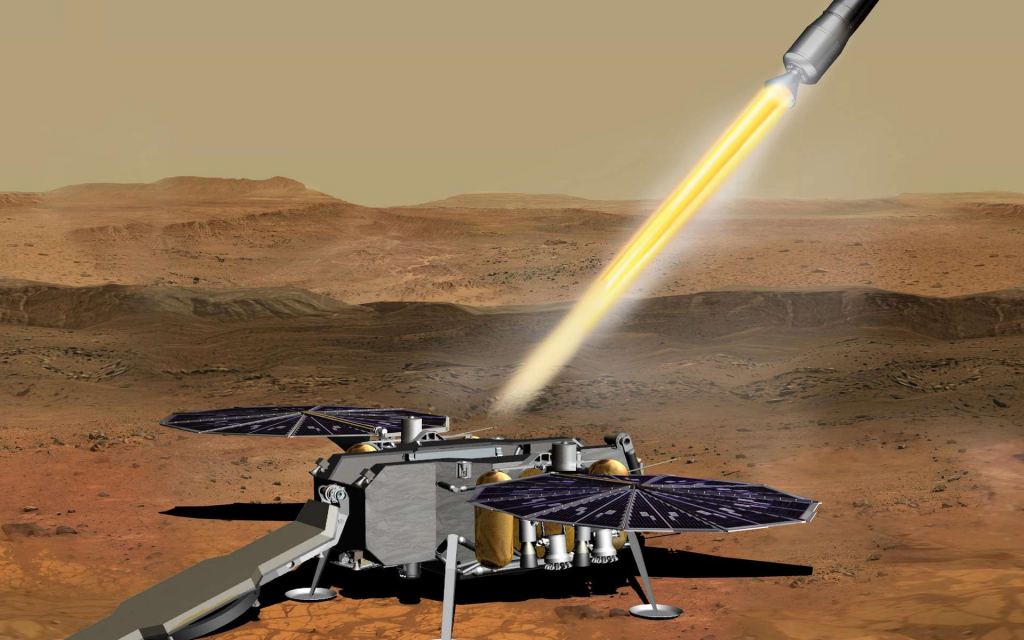
Artist's conception of the MSR mission rocket taking off from the surface of the red planet.
Artist’s conception of the MSR mission rocket taking off from the surface of the red planet.
Credit – NASA / JPL-Caltech

Utilizing high-speed cameras, they track how the lander the various drops it is subjected to and update computer models to reflect what happened in their testbed.  The more unique test scenarios they can capture in the lab, the more likely the lander will have experienced it before.  As testing progresses, it will eventually scale up to a full-size lander system to see how the real thing would respond.

The lander’s landing position is critical because it will have to launch a rocket up into the air.  Early in the mission design, the team decided that it would be better to throw the rocket up in the air. That rocket, known as the Mars Ascent Vehicle, will take the samples back to orbit, eventually transferring to Earth via another rocket system sitting in orbit around Mars.

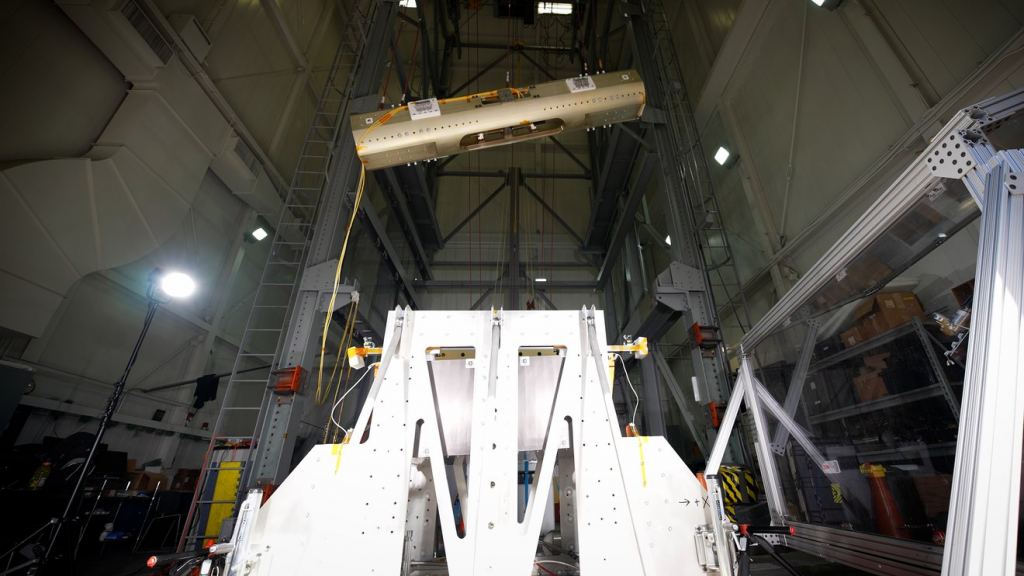
The MSR lander tosses a mock rocket into the air, which is then suspended by a crane. This toss will be critical to the success of MSR's mission, as it will allow the samples to be returned back to an orbiter, and thence to Earth.
The MSR lander tosses a mock rocket into the air, which is then suspended by a crane. This toss will be critical to the success of MSR’s mission, as it will allow the samples to be returned back to an orbiter, and thence to Earth.
Credit – NASA / JPL-Caltech

Testing for that ejection mechanism is also ongoing, with engineers at JPL throwing a 400 kg (881 lb) fake rocket 3.3 meters (11 ft) up in the air at an angle.  To do this, the lander utilizes a piston system, but on Earth, it also gets help from a crane designed to mimic Martian gravity by offloading more than half the rocket’s weight.  The crane is also conveniently placed to entirely suspend the rocket at the end of the test so that it doesn’t fall back down, crushing the test lander.

Even still, testing the Vertically Ejected Controlled Tip-off Release (VECTOR) system is dangerous, and everyone performing the testing does so from outside the building.  Data collected from the tests will help compensate for different potential landing orientations of the lander itself and the modeling of the stressors the lander itself must be designed to withstand during the rocket’s ascent.

Typically these tests are performed in stages, which is also the case for most of MSR’s tests.  In addition to eventually testing a fully sized lander, engineers will attempt to throw a larger rocket even further into the air later this year.  There’s still a long way to go before the most complex Martian mission ever untaken is completed, but the process has already started.

Learn More:
NASA – NASA Begins Testing Robotics to Bring First Samples Back From Mars
AZoRobotics – NASA has Begun Testing Robotics for Mars Sample Return Mission
Science Times – Mars Sample Return Mission: NASA Begun Testing Robots That Will Collect Martian Rocks in Search of Life in the Red Planet
UT – Plans for a Mars Sample Return Mission Have Moved to the Next Stage

Lead Image:
MSR’s lander undergoing drop testing at a NASA facility
Credit – NASA / JPL-Caltech

The post NASA is Already Designing Hardware for a Mars Sample Return Mission appeared first on Universe Today.


Thursday, January 27, 2022

Unistellar’s Plans for Science and Astronomy in 2022

Unistellar’s eVscope has proven its ability to do serious astronomy, with more to come in 2022.

There’s a revolution underway in how amateur astronomers contribute to modern astronomy. Smartscopes—telescopes controlled remotely via tablets or smartphones—are making there way into the modern amateur telescope market and out into the field. These have the ability to not only bring deep-sky astronomy to light-polluted urbanites, but to lower the bar for entry into deep-sky astrophotography. One of the leading manufacturers of smartscopes is Unistellar. First offered as a Kickstarter project in 2017, Unistellar’s line now includes the eVscope eQuinox, and the new eVscope2.

The anatomy of Unistellar’s eVScope. Credit: Unistellar

The Age of Smartscopes

But beyond just providing pretty pictures and a tour of the night sky, eVscope users are contributing to some serious science, in a big way. This is always the hallmark of any new breakthrough in technology: you never know what wild and wonderful directions that people will take it in, once it’s unleashed. We recently caught up with Unistellar’s Chief Scientific Officer Franck Marchis, (also Senior Planetary Astronomer at the SETI Institute), on where astronomy with these unique telescopes may be headed.

“As an astronomer, when you arrive in a control room, everything is ready: you just enter the coordinates, or just the name of the target,” says Marchis. “I always wondered why we don’t do that for amateur astronomers.”

We’ve recently reviewed the eVscope, eQuinox telescope, and the main competitor on the market, Vaonis’s Stellina. Unistellar’s eVscope and eQuinox are built around a simple 4.5-inch mirror reflector. The unit is ultra-portable and lightweight at 19.8 lbs (9kg). Setup is as simple as locking the unit on the tripod, bonding it to the app via WiFi, adjusting the focus, and letting the scope plate-solve its location and pointing direction in the sky.

But it’s the science efforts underway with Unistellar that really set it apart. The Unistellar application has a tab devoted just to science and astronomy campaigns.

One unique effort is looking at asteroid occultations of bright stars. These events feature a background star ‘winking out’ briefly as the foreground asteroid moves in front of it, casting a ‘shadow’ across the Earth. If enough observers can catch and time these cords, we can outline the profile shape of the asteroid. Tiny unseen moonlets of asteroids have also been observed as brief events near the main occultation. Already, Unistellar campaigns have looked at Patroclus, Orus and 11351 Leucus, in support of NASA’s Lucy Mission to the Trojan asteroids.

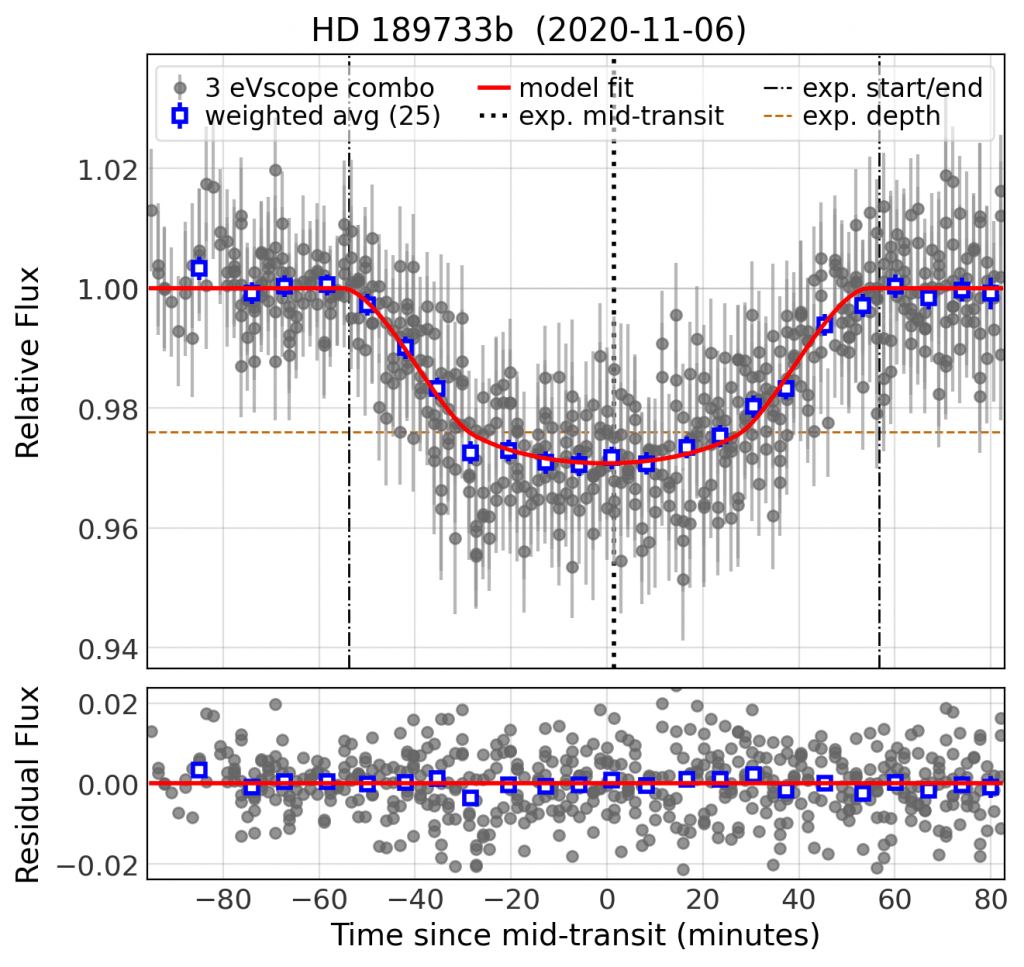
eVscope exoplanet transit data. Credit: Unistellar.

Next up, Unistellar campaigns have made followup observations of transiting exoplanets. That’s right. Amateurs can now detect the tiny fluctuation in brightness as an unseen world passes in front of its host star, from their own driveway. Already, Unistellar has demonstrated this ability during campaigns to monitor Kepler-167b and HD 80606 b, and sends out alerts for periodic upcoming events.

Unistellar citizen astronomer Kevin Voeller also recently collected data on exoplanet WASP-148b.

Which begs the question of the possibility for users to discover planets as well. Certainly, the ability is there for dedicated networks of Unistellar ‘scopes. The telescope could also be used to monitor variable stars and follow and discover galactic novae and extra-galactic supernovae as well.

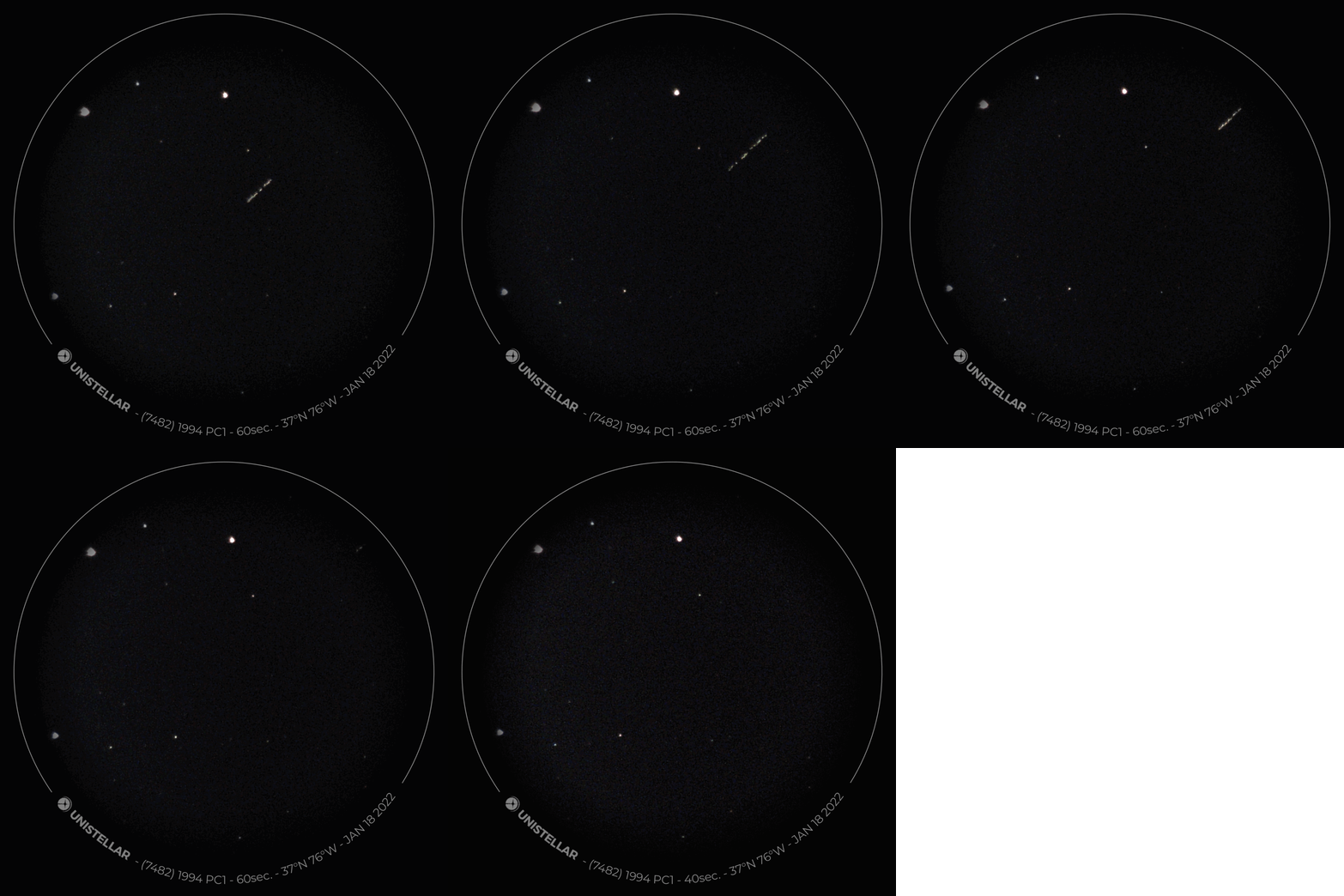
Teams have also followed near-Earth asteroids with the Unistellar telescope, characterizing their rotation rate as they fluctuate in brightness. One such recent campaign revolved around the close Earth flybys of asteroids 1994 PC1 and 4660 Nereus. This is all part of Unistellar’s ‘planetary defense’ effort; you can’t have too many telescopes out there worldwide looking for flying space rocks.

Asteroid 1994 PC1 on its closest approach to Earth. Credit Dave Dickinson.

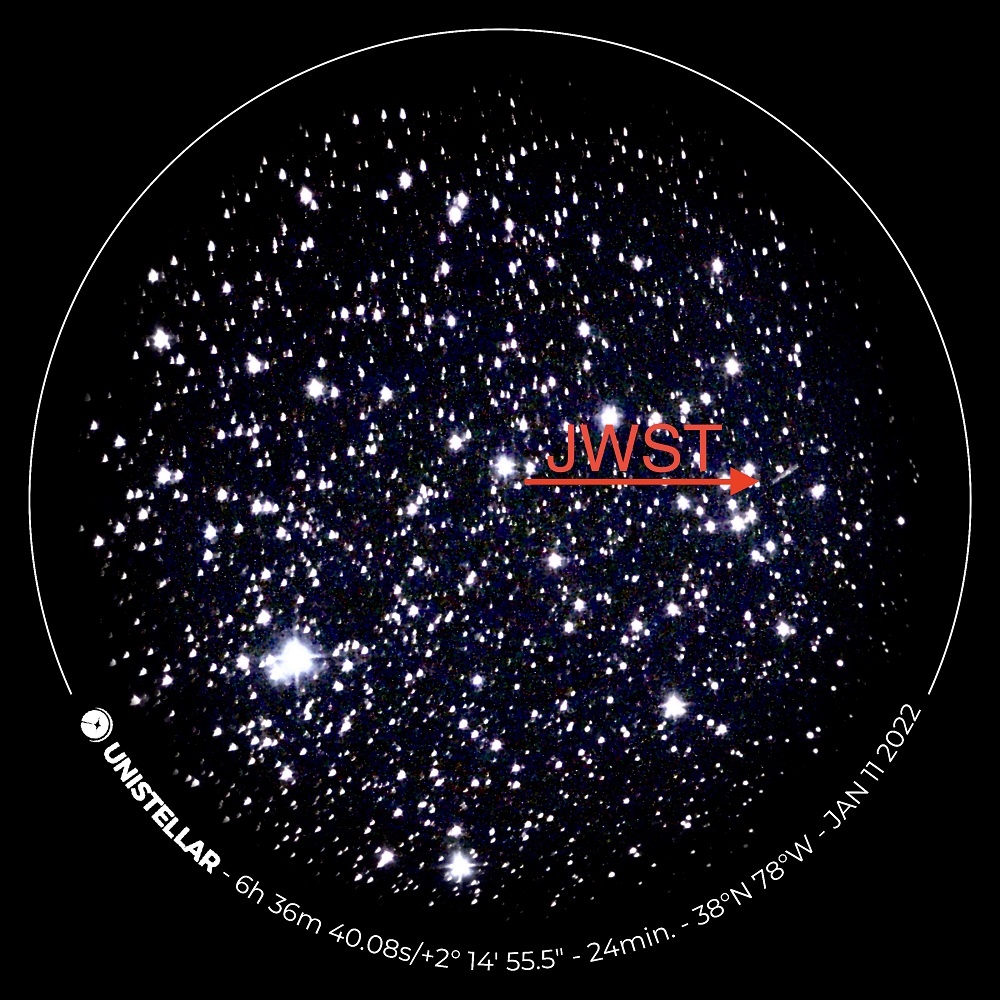
And speaking of distant objects, users have recently used Unistellar telescopes to track the James Webb Space Telescope en route to its new home at the Sun-Earth L2 Lagrange point. Nearly a million miles from the Earth, JWST moves like a distant satellite against the starry background. Unistellar has documented 110 JWST observations thus far, and noted the variability of the observatory after sunshield deployment as a 6 hour ‘flash’ or glint, seen mainly due to the rotational position of the observer on Earth.

JWST
JWST, imaged with an eVscope2. Image credit: Greg Redfern.

“Our community is excited that they see this, that they connect to JWST so it’s very good outreach, and good science,” says Marchis. “learning that the ‘glint’ off JWST happens and why it happens could be useful in the future.”

This also raises the possibility of using a Unistellar telescope to track satellites (perhaps even classified, unpublished satellites) in distant High Earth (HEO) or geostationary/geosynchronous (GEO) orbits.

Finally, the eVscope has the potential to track and find comets. Already, we’ve seen users follow the fine apparitions of comet F3 NEOWISE in 2020 and A1 Leonard at the end of 2021.

Comet A1 Leonard
Comet A1 Leonard, from late 2021. Credit: Dave Dickinson

What’s next for Unistellar? Later this year, the team plans to lead efforts to follow an occultation of asteroid Didymos near Abu Dhabi, leading up to the impact of NASA’s DART mission on the asteroid’s tiny moon Dimorphos on September 26th, 2022. The team also has plans for satellite tracking, to include characterizing the brightness of Starlink and OneWeb satellite constellations, improved access to data cloud storage and more.

“The important part is that we’re not just a company that which is building telescopes,” says Marchis. “We see ourselves as a company that is democratizing astronomy, so people can enjoy the dark sky.”

Just the recent Unistellar user statistics alone are impressive:

2021 summary statistics for exoplanet transits:

-413 observations by 100 different observers in 17 countries, with 92 detections.

2021 summary statistics for planetary defense:

-11 campaigns, by 95 users submitting 290 observations from 20 countries.

2021 summary statistics for asteroid occultations:

-214 occultation events attempted with 395 observations, 106 are positive (for a~27% positivity rate)

With the advent of the eVscope, we may be seeing as big a revolution in amateur astronomy as the introduction of Celestron’s orange-tube C8 telescope in the early 1970s. Having lived through the last half-century of amateur astronomy, it’s simply amazing how much has changed. Watch for more exciting astronomy to come!

The post Unistellar’s Plans for Science and Astronomy in 2022 appeared first on Universe Today.


Wednesday, January 26, 2022

Finally, an Explanation for the Cold Spot in the Cosmic Microwave Background

According to our current Cosmological models, the Universe began with a Big Bang roughly 13.8 billion years ago. During the earliest periods, the Universe was permeated by an opaque cloud of hot plasma, preventing atoms from forming. About 380,000 years later, the Universe cooled to a temperature of about -270 °C (-454 °F), which converted much of the energy generated by the Big Bang into light. This afterglow is now visible to astronomers as the Cosmic Microwave Background (CMB), first observed during the 1960s.

One peculiar characteristic about the CMB that attracted a lot of attention was the tiny fluctuations in temperature, which could provide information about the early Universe. In particular, there is a rather large spot in the CMB that is cooler than the surrounding afterglow, known as the CMB Cold Spot. After decades of studying the CMB’s temperature fluctuations, a team of scientists recently confirmed the existence of the largest cold spots in the CMB afterglow – the Eridanus Supervoid – might be the explanation for the CMB Cold Spot that astronomers have been looking for!

The research was conducted by the Dark Energy Survey (DES), an international team of researchers made up of 300 scientists from 25 institutions in seven countries. The research team was led by András Kovacs, an astrophysicist with the Instituto de Astrofísica de Canarias (IAC) and the University of Laguna in Tenerife, Spain. The results of their study, titled “The DES view of the Eridanus supervoid and the CMB cold spot,” appeared in the Monthly Notices of the Royal Astronomical Society on December 17th, 2021.

Why So Cold?

Since the discovery of the CMB, multiple missions have been mounted to study it in greater detail. This includes the Soviet RELIKT-1 mission aboard the Prognoz 9 satellite (launched in July 1983) and the NASA Cosmic Background Explorer (COBE) mission. The latter results were published in 1992 and revealed acoustical oscillations in the plasma (the first “acoustic peak”) that correspond to large-scale density variations in the early Universe created by gravitational instabilities.

A second acoustic peak was not detected with confidence until the Wilkinson Microwave Anisotropy Probe (WMAP) was deployed in 2001, followed by a third peak before the mission concluded in 2010. Since then, many more missions have monitored the CMB to place tighter constrictions on temperature differences and small-scale variations in density. The most notable of these is the ESA’s Planck spacecraft (2009-2013), which has provided the most detailed CMB temperature maps to date.

Unfortunately, these maps did not resolve the mystery of the CMB Cold Spot, a large region that is slightly colder (70 µK or 0.00007 Kelvin) than the cosmic background: approx. 2.7 K (-270 °C; -455 °F). Therefore, the enduring mystery of this anomaly has spawned all manner of explanations, ranging from an artifact in the data to the possible existence of a parallel Universe bumping into ours!

Eridanus Supervoid

Cosmic voids refer to the vast regions of space that lie between galaxies and galaxy clusters that (along with Dark Matter) make up the large-scale structure of the Universe. These voids are defined by their relative lack of “normal matter” like galaxies or dust and gas – the intergalactic medium (IGM) – and less dark matter than what’s observed in galaxy clusters. Whereas these structures are held together by the force of mutual attraction (gravity), they are also expanding because of a theorized but undetected force (Dark Energy).

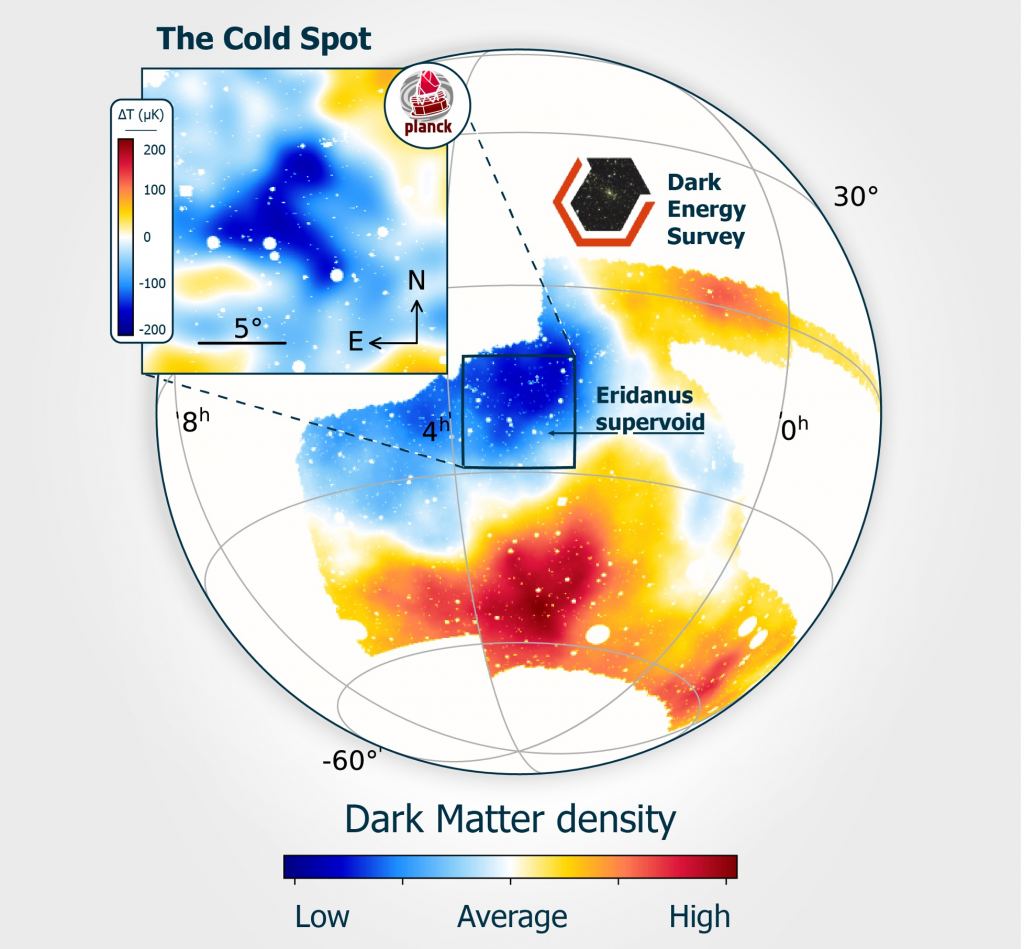
The Cold Spot resides in the constellation Eridanus in the southern galactic hemisphere. The inset shows the microwave temperature map of this patch of sky, as mapped by the ESA Planck satellite. The main figure depicts the map of the dark matter distribution created by the DES team. Credit: Gergö Kránicz & András Kovács

Located 1.8 billion light-years away in the constellation Eridanus, the Eridanus Supervoid was a theorized underdensity where matter concentrations were 30% less than the surrounding galactic region. The center of this void is located 2 billion light-years from Earth, making it the dominant underdensity in our galactic neighborhood. Using data collected by the Dark Energy Survey (DES), the team created a map of Dark Matter (DM) in the same direction as the CMB Cold Spot.

The team also used the mass of this DM as a gravitational lens, where the powerful gravity of a massive object amplifies and alters the path of light coming from behind it. Co-author Niall Jeffrey, an astrophysicist with the Université de Paris and the University College London, helped construct the DM map. “This map of dark matter is the largest ever such map that’s been created,” he said in a Fermilab press release. “We have been able to map out dark matter over a quarter of the Southern Hemisphere.”

Combined with previous observations of the underdensity of galaxies in the region, the new maps also confirmed an underdensity in terms of Dark Matter in the same area. This effectively confirms a Supervoid in the Eridanus constellation that corresponds to what was theorized. This void could be the reason for the CMB Cold Spot, a potential resolution for what these voids say about the evolution of the cosmos, and an indication of how they are still affecting cosmic evolution today.

Implications for Dark Energy

This latest research is also significant when it comes to another enduring mystery, which is the existence and nature of Dark Energy. As noted, this refers to the mysterious force that counteracts gravity and is responsible for driving cosmic expansion. Originally predicted by Einstein’s Theory of General Relativity, the expansion of the cosmos was first demonstrated by Edwin Hubble (namesake of the Hubble Space Telescope) during the 1920s.

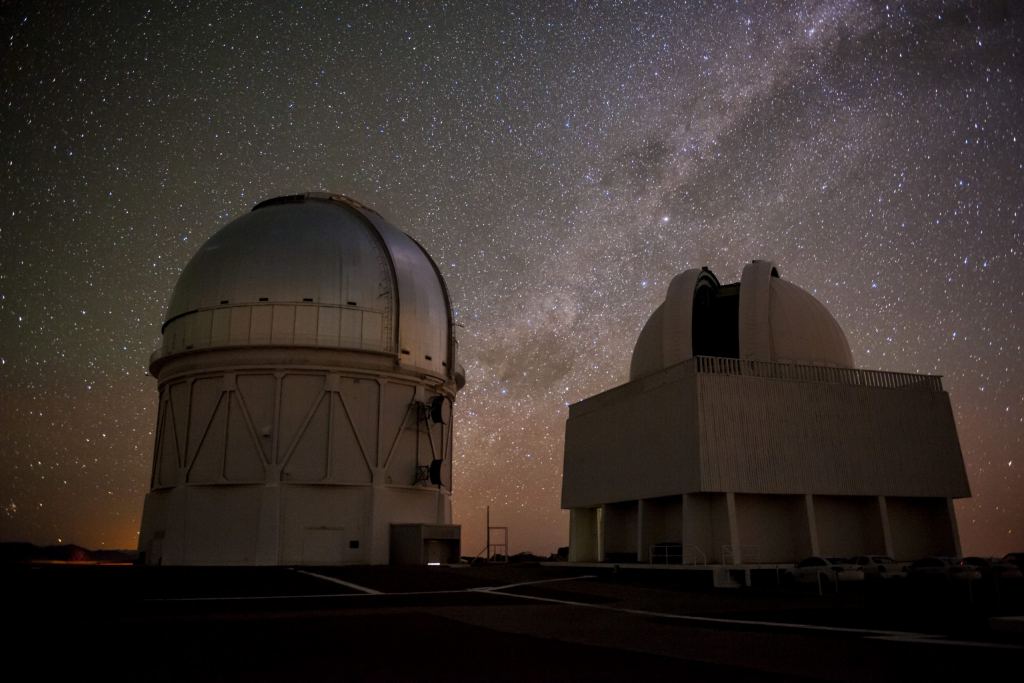
Observations for the Dark Energy Survey were carried out using the Blanco Telescope in the Andes mountains of Chile. Scientists used its data to create a map of dark matter in the region of the sky that contains the Eridanus supervoid and CMB Cold Spot. Credit: Reidar Hahn, Fermilab

By the 1990s, the mystery deepened as surveys like the Hubble Deep Fields revealed that cosmic expansion had been accelerating during the last 3 billion years. This gave rise to theories that something was driving this expansion, be it an undiscovered force or some modification of General Relativity. By conducting large-scale surveys of the Universe, scientific collaborations like DES hope to see the influence of Dark Energy directly and thereby measure its properties.

The presence of cosmic voids between galactic clusters indicates that this ongoing tug-of-war between gravitational forces and expanse causes some voids to become deeper. Said co-author Garcia-Bellido, a cosmologist from IFT-Madrid:

“Photons or particles of light enter into a void at a time before the void starts deepening and leave after the void has become deeper. This process means that there is a net energy loss in that journey; that’s called the Integrated Sachs-Wolfe effect. When photons fall into a potential well, they gain energy, and when they come out of a potential well, they lose energy. This is the gravitational redshift effect.”

Lambda-CMB

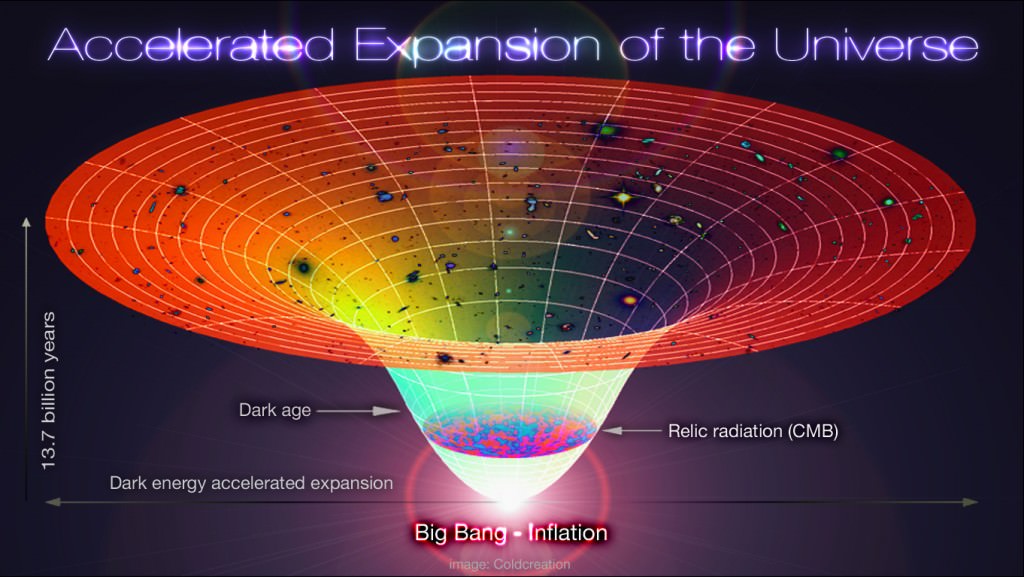
However, this study does not resolve the overall discrepancy between the standard cosmological model and the observed variations in temperature with the CMB Cold Spot. This model is known as the Lambda Cold Dark Matter (LCDM) model, which predicts that DM is composed of large, slow-moving particles (“cold”) that are driven apart by an expansionary force (DE), represented by the parameter L.

Diagram showing the Lambda-CBR Universe, from the Big Bang to the current era. Credit: Alex Mittelmann/Coldcreation

In short, the results confirm the existence of the Eridanus Supervoid but cannot conclusively attribute the Cold Spot to the supervoid’s effect on CMB photons. As Kovacs summarized:

“Having the coincidence of these two individually rare structures in the cosmic web and in the CMB is basically not enough to prove causality with the scientific standard. It is enough of a new element in the long history of the CMB Cold Spot problem that after this, people will at least be sure that there is a supervoid, which is a good thing because some people have debated that. The trouble is that typical alternative models cannot explain this discrepancy either, so if true, it might mean that we do not understand something very deep about dark energy.”

This may be the greatest asset of this latest research, which is that it may help to focus future research efforts. If the Lambda-CDM model is correct, then the CMB Cold Spot may be an extreme anomaly that coincidentally has a massive supervoid in front of it. If it’s incorrect, then the extent to which CMB photons are redshifted by intervening supervoids – aka. the Integrated Sachs-Wolfe effect (ISW) – is stronger than expected. For the latter scenario to be true, the energy density of the Universe has to be dominated by something other than “normal matter.”

This is one of the central pillars of LCDM and predominant theories about DM and DE, which state that DM accounts for 85% of matter in the Universe while DE accounts for 72% of the total mass-energy density. Alas, this mystery will require future studies and surveys before scientists can confidently say which scenario is true. Luckily for them, there are several observatories that will be conducting this research in the near future.

Some examples include NASA’s James Webb Space Telescope (which just reached L2), the Nancy Grace Roman Space Telescope (Hubble’s successor), and the ESA’s Euclid and Ariel observatories. With these and other sophisticated instruments peering deeper into space (and farther back in time), the mysteries of the “Dark Universe” won’t remain mysterious for long.

Further Reading: Fermilab

The post Finally, an Explanation for the Cold Spot in the Cosmic Microwave Background appeared first on Universe Today.