Friday, March 20, 2026

This Super-Puff Planet is Hiding its True Nature Behind Thick Haze

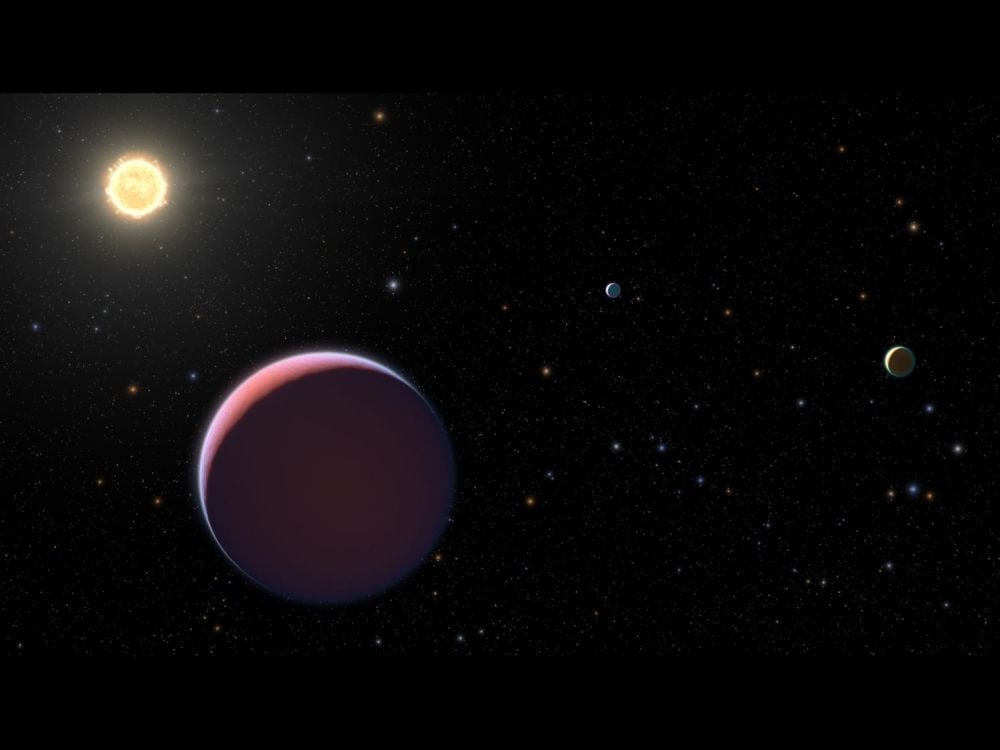
This artist's illustration shows Kepler-51d orbiting its Sun-like star about 2,600 light-years away. The exoplanet is a super-puff planet, an odd type of world with extremely low densities. It's unclear how these types of planets form, and new research uses JWST observations to try to understand them. Unfortunately, the exoplanet's thick haze poses a challenge. Image Credit: NASA, ESA, and L. Hustak, J. Olmsted, D. Player and F. Summers (STScI).

Super-puff planets have extremely low densities, and exoplanet scientists aren't sure why. They seem to defy our understanding of how planets form. Researchers used the JWST to observe the atmosphere of Kepler-51d, one of the puffiest of the super-puffs. Unfortunately, even the powerful space telescope found a featureless spectrum. What does it mean?


No comments:

Post a Comment