Tuesday, July 21, 2026

NASA's Psyche Spacecraft Captured a Time-Lapse Video of its Mars Flyby

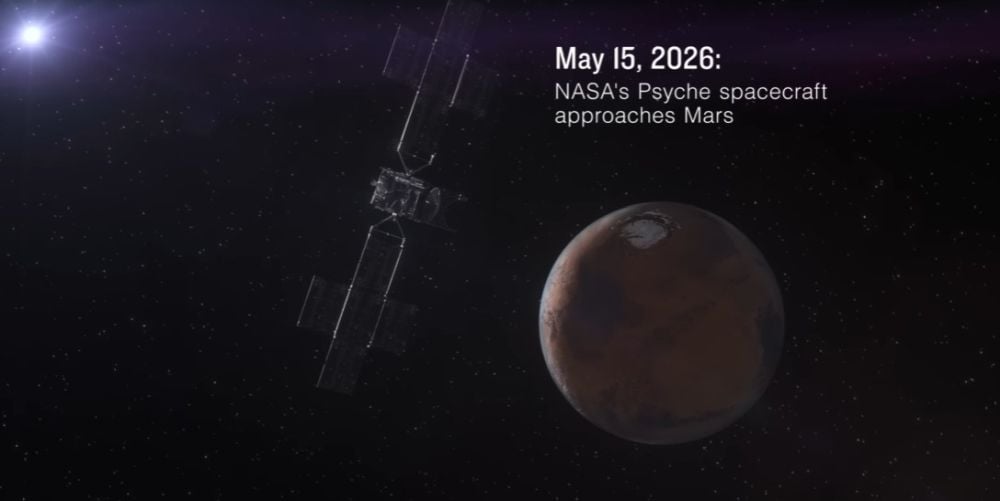
In May, NASA's Psyche spacecraft performed a gravity-assist maneuver that sent in on its way to its target, the metal-rich asteroid 16 Psyche. The flyby was also an opportunity to test the spacecraft's instruments, including its multispectral camera. NASA has released a time-lapse video of the encounter. Image Credit: NASA/JPL

NASA's Psyche mission used a gravity assist maneuver at Mars to gain velocity and adjust its trajectory to its eventual target. The asteroid 16 Psyche is a metal-rich asteroid that may be the remnant rocky core of a protoplanet. The flyby not only shepherded the spacecraft on to its target, it was also an opportunity to test Psyche's science instruments and cameras. NASA has released a timelapse of the flyby.

Astronomers Are Still Trying to Understand How a Galaxy's Spiral Arms Form

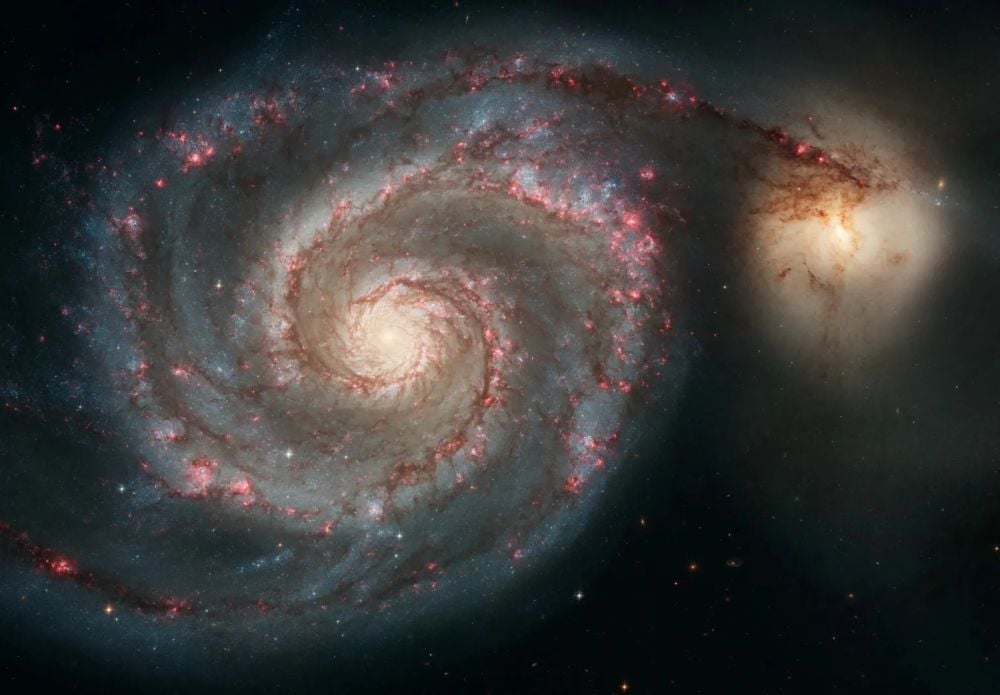
The Whirlpool Galaxy (M51) is the classic grand design spiral galaxy. It was the first object recognized as a spiral, though at the time astronomers thought they were nebulae. Astronomers have been pondering spiral galaxies for a long time, trying to understand how their spiral arms persist. New research has at least a partial answer. Image Credit: NASA, ESA, S. Beckwith (STScI) and the Hubble Heritage Team (STScI/AURA)

Spiral galaxies, including grand spirals like the Whirlpool galaxy, are plentiful. But it's still a mystery how their spiral arms form and persist for hundreds of millions of years, and why some galaxies have one, two, or three or more arms. New research based on Euclid data finds links between galaxy mass, star formation rate, and number of arms, and hints at their formation.


Astronomers Catch a "Dark Comet" Red-Handed

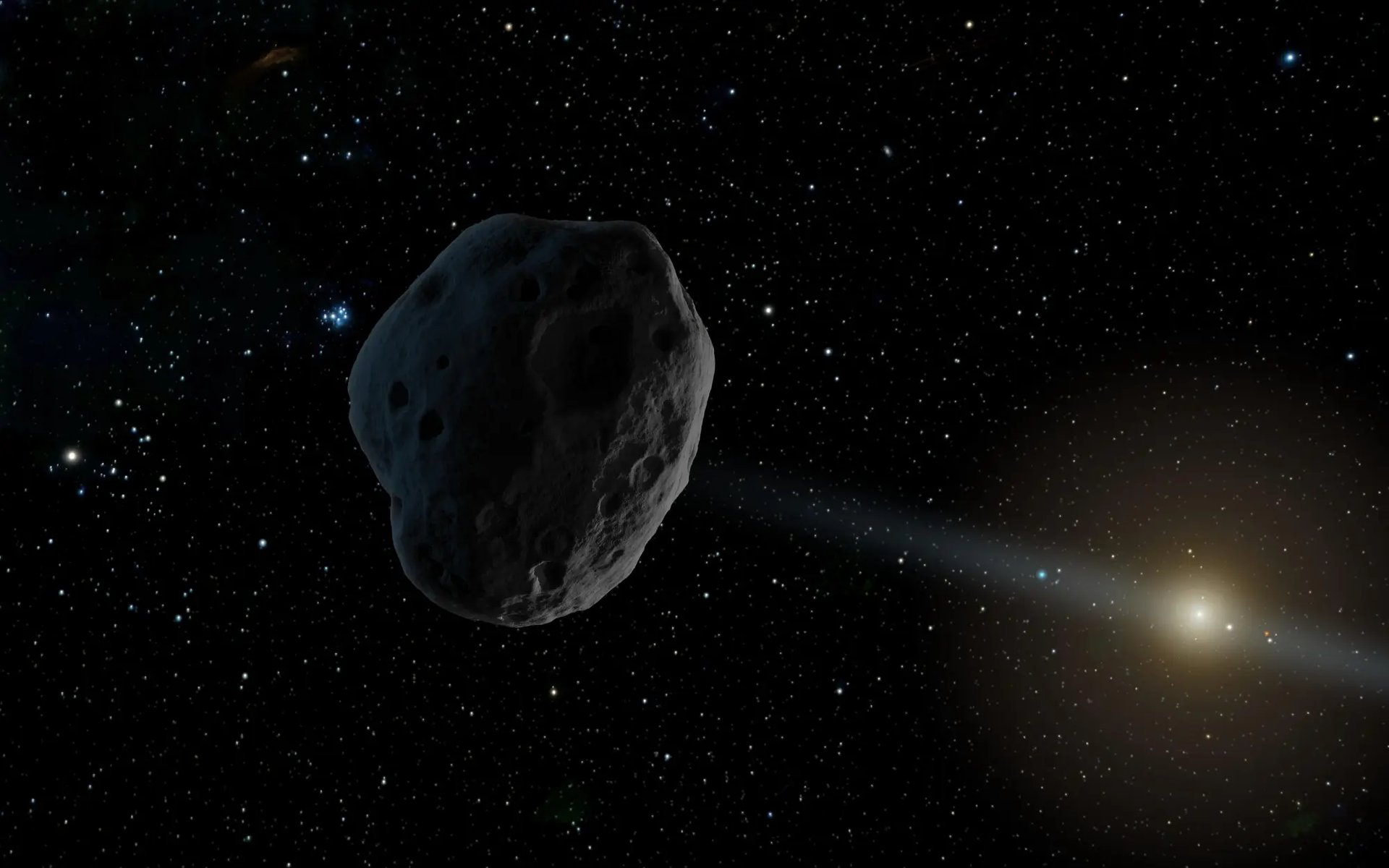
Artist's depiction of a near-Earth asteroid with an elongated orbit. Credit - NASA/JPL-Caltech

Our ability to track and visualize small rocks in space is still improving. And occasionally we’ll find a space rock that will remind us of that fact. One such rock is detailed in a new paper, led by Davide Farnocchia of NASA’s Jet Propulsion Laboratory, and recently published in Nature Astronomy, where the research team discovered what they thought was a normal, run of the mill asteroid, was actually a “dark comet”.


Monday, July 20, 2026

Astronomers Determine that Exoplanets Around Barnard's Star are Extremely Uninhabitable

Artist’s illustration of exoplanets orbiting Barnard’s Star. Credit: [International Gemini Observatory/NOIRLab/NSF/AURA/P. Marenfeld](https://www.gemini.edu/gallery/images/noirlab2510a/)

Scientists have painted the most detailed portrait yet of the planetary system orbiting Barnard’s Star. Unfortunately, the picture is not encouraging, as all four planets appear to be "extremely uninhabitable."


Meet Our Newest Stellar Neighbours That Hid in the Glare of Other Stars

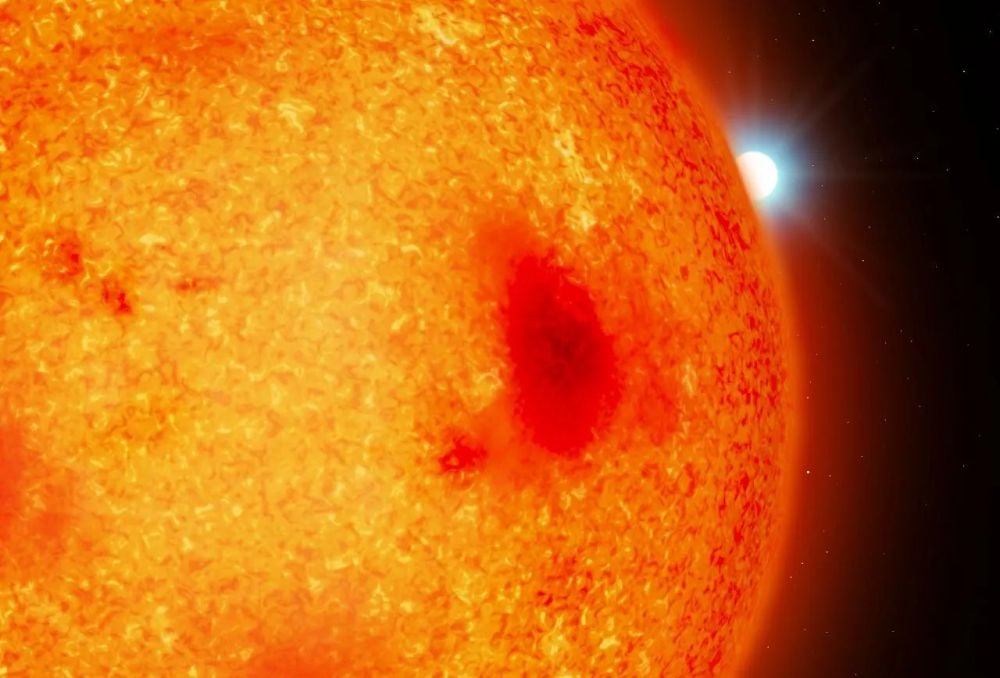
This artist's illustration shows a white dwarf and its much larger red dwarf binary companion. Astronomers have four more of these binary stars in the Sun's neighborhood. They're called post-common-envelope binaries, and they're hard to detect because the bright red dwarf hides the white dwarf from telescopes. Image Credit: Mark A. Garlick/University of Warwick

Astronomers have found four new white dwarfs within about 65 light years. Even though the sky has been studied thoroughly, these escaped detection. That's because they're tight binaries with red dwarf partners, and the much brighter red dwarfs hide the white dwarfs. The binaries used to share common envelopes.


A Star Orbiting Our Galaxy's Supermassive Black Hole Tests the Limits of Relativity

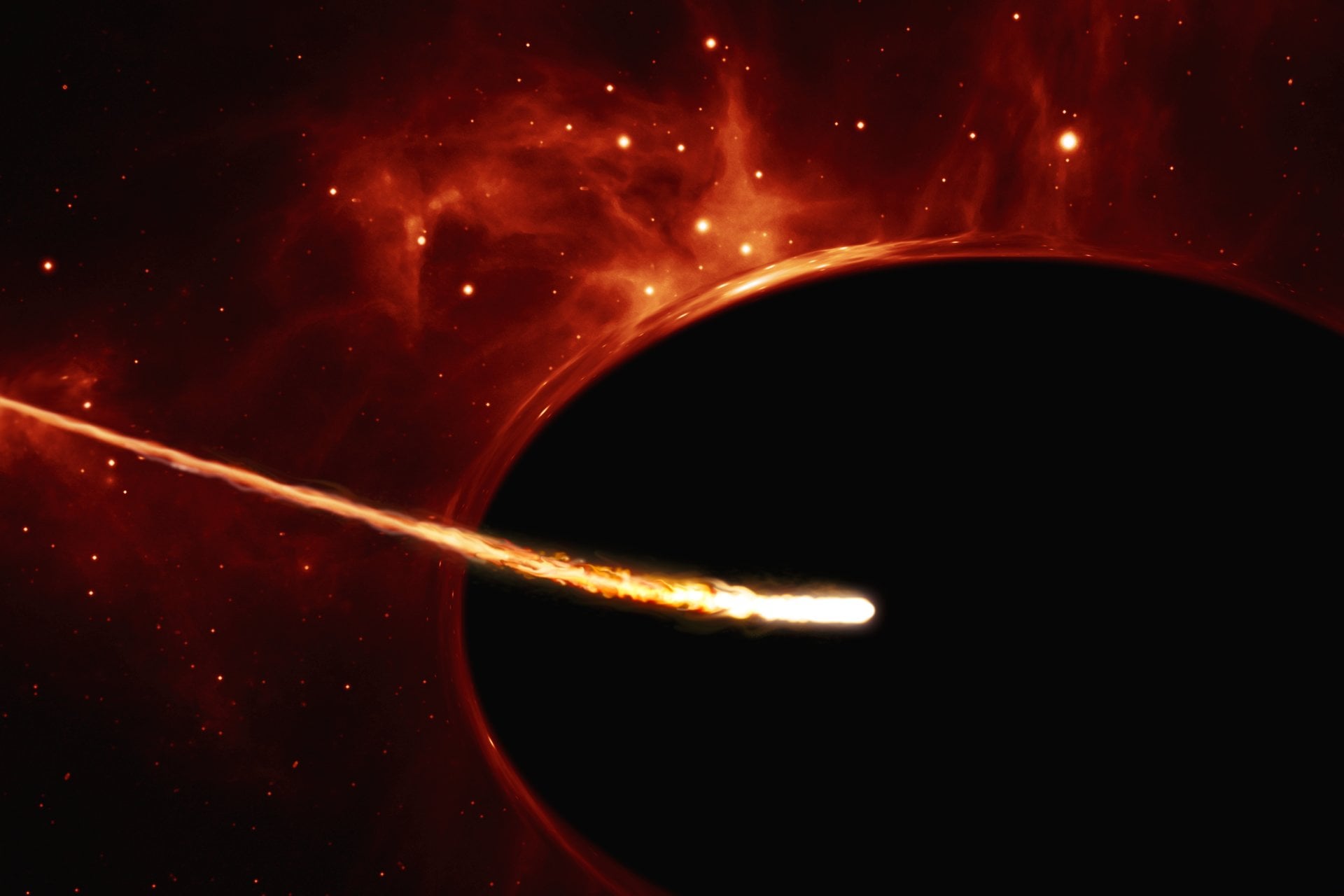
Illustration of a sunlike star passing very close to a supermassive black hole. Credit: ESO, ESA/Hubble, M. Kornmesser

A Sun-like star orbits the supermassive black hole in our Milky Way so closely that it comes within the distance of Neptune's orbit of the Sun. It has a top speed of more than 8% of light speed. With such extreme motion the star gives astronomers the opportunity to test the limits of general relativity.


Chandrasekhar and the Limits of Physics, Part 1: Triumph

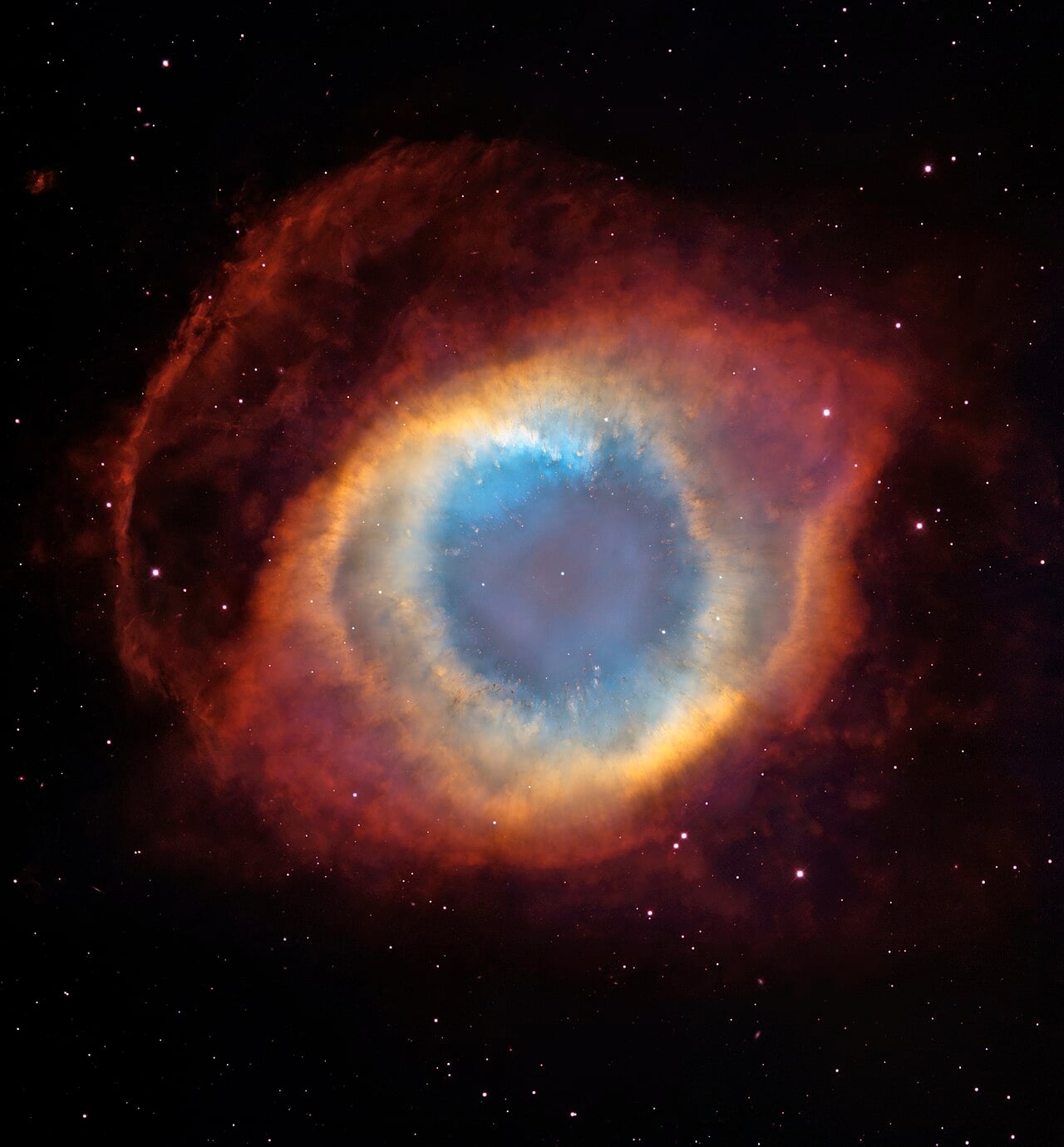
The Helix Nebula, the glowing shell thrown off by a dying star, with a hot white dwarf at its heart. White dwarfs, and the 1.4 solar mass limit that governs them, were Chandrasekhar's breakthrough. Credit: NASA/JPL-Caltech / Wikimedia Commons (public domain).

The story of Subrahmanyan Chandrasekhar, who as a teenager on an ocean voyage worked out that white dwarf stars have a maximum mass of 1.4 Suns. A tour of degeneracy pressure, the relativistic insight everyone else missed, and the number that would define his life.