In April of 2019, the international astronomical consortium known as the Event Horizon Telescope (EHT) made headlines worldwide when it announced the first-ever image of a black hole. Specifically, the image showed the glowing disk surrounding the supermassive black hole (SMBH) at the center of the M87 galaxy. In 2021, they followed up on this by acquiring an image of the core region of the Centaurus A galaxy and the radio jet emanating from it.
But in what is sure to be the most exciting announcement yet, the European Southern Observatory (ESO) and researchers from the EHT will announce the results of their survey that examined the SMBH at the center of our very own Milky Way Galaxy – Sagittarius A*! The results will be shared as part of a press conference on Thursday, May 12th, starting at 03:00 PM CEST (08:00 EDT; 05:00 PDT). The event will take place at the ESO Headquarters in Munich, Germany, and live-streamed via an ESO webcast.
The press conference will include the ESO Director General Xavier Barcons opening things up, followed by EHT Project Director Huib Jan van Langevelde and EHT Collaboration Board Founding Chair Anton Zensus delivering remarks. A panel of researchers with the Event Horizon Telescope Consortium (EHTC) working group will then explain the results and answer questions from media outlets (on-location and online). This panel will consist of:
An ESO press release about the results and extensive supporting audiovisual material will be issued at 03:07 PM CEST (08:07 AM EDT; 05:07 AM PDT) shortly after the start of the press conference (translation services will be available). There will also be simultaneous press conferences worldwide, including in Washington D.C., Santiago de Chile, Mexico City, Tokyo, and Taipei (which you can learn more about here).
An online event for the public will follow the press conference at 04:30 PM CEST (10:30 AM EDT; 07:30 AM PDT), which will last for approximately one hour and be live-streamed on the ESO’s Youtube channel. This will consist of a Q&A session, where members of the public will have the opportunity to address another panel of EHT experts that will be composed of:
The images released by the James Webb Space Telescope team last week aren’t officially ‘first light’ images from the new telescope, but in a way, it feels like they are. These stunning views provide the initial indications of just how powerful JWST will be, and just how much infrared astronomy is about to improve.
The images were released following the completion of the long process to fully focus the telescope’s mirror segments. Engineers are saying JWST’s optical performance is “better than the most optimistic predictions,” and astronomers are beside themselves with excitement.
“It hasn’t broken the laws of physics, but does lie at the very best end of possibilities thanks to the extraordinary efforts of many over decades,” said Mark McCaughrean, the European Space Agency’s Senior Advisor for Science & Exploration and part of JWST’s Science Working Group, on Twitter.
In their excitement, astronomers began posting comparison images — from previous telescopes to JWST in the same field of view — showing the evolution of improvement in resolution.
Astronomer Andras Gaspar, who works with JWST’s mid-infrared instrument, MIRI, compiled images from the WISE (Wide Infrared Survey Explorer) telescope to JWST’s image of the same field of view, the Large Magellanic Cloud, a small satellite galaxy of the Milky Way.
How awesome is JWST/MIRI? Well, let's compare the latest press release image to that of the WISE all-sky survey at 4.6 microns. This is the closest wavelength image I could find. Spitzer IRAC would have been better (slightly higher resolution and similar wavelength). pic.twitter.com/EXqP57sULt
Then he realized Spitzer also has taken an image of the LMC, and then created the comparison of the three telescopes, seen in our lead image.
“To be fair, WISE with its 40 cm diameter telescope was only half the size of Spitzer’s [85cm primary] but both of them are tiny compared to JWST [6.5 meter primary]” Gaspar said on Twitter. “This is what you get with a large aperture! Resolution and sensitivity. And MIRI gives mid-IR! HST [Hubble Space Telescope}] can’t get this wavelength.”
And there’s more:
Not quite enough distant background galaxies for my taste, but #JWST is looking ever more awesome! pic.twitter.com/pyJ8VH4fUo
Since #JWST's MIRI is getting lots of before-and-after love, I thought I'd do the same for the Fine Guidance Sensor: here's one of its two fields in the Large Magellanic Cloud as previously imaged in the near-IR by @eso's VISTA survey telescope.
The astronomers and engineers actually seem astounded how good JWST’s resolution is turning out to be. You may find that surprising. I mean, don’t they do tests on the ground to know the capabilities of telescopes before they launch? Yes, but ground tests don’t always tell the whole story, as Marshall Perrin, deputy project scientist for Webb at the Space Telescope Science Institute explained on Twitter.
“Yes, we had tested the whole optical train in cryo in Houston – but that didn’t actually tell us the ultimate performance,” he wrote. “Not fully. In many ways, the ground test environment was challenging and different from space.”
Perrin explains how gravity plays a role, in that JWST’s mirrors are designed to have a certain shape in Zero-g, but in all ground tests they were inevitably deformed by gravity, requiring numerical models to compensate.
Then, there’s no way to test on the ground how the telescope might work in Zero-g, as far as stability or if there will be any vibrations from the spacecraft. And while the ground test at Johnson Space Center’s thermal vacuum chamber could match the temperatures JWST would experience in space, Perrin said certain effects in the test chamber induced optical instabilities.
“A performance prediction must be not just a handwave or a wish, it has to be based in quantitative numerical models and budgets including assessing risks and uncertainties,” he wrote.
So, while predictions are useful, there are always uncertainties. For now, let’s savor the joy and wonder JWST is already providing.
The official first light images are predicted to come in July.
Lead image caption: The evolution of infrared astronomy, from Spitzer to WISE to JWST. Image credit: Andras Gaspar.
If there are so many galaxies, stars, and planets, where are all the aliens, and why haven’t we heard from them? Those are the simple questions at the heart of the Fermi Paradox. In a new paper, a pair of researchers ask the next obvious question: how long will we have to survive to hear from another alien civilization?
Their answer? 400,000 years.
400,000 years is a long time for a species that’s only been around for a couple hundred thousand years and only discovered farming about 12,000 years ago. But 400,000 years is how long we’ll need to keep this human experiment going if we want to hear from any alien civilizations. That’s according to some new research into Communicating Extraterrestrial Intelligent Civilizations (CETIs.)
“As the only advanced intelligent civilization on the Earth, one of the most puzzling questions for humans is whether our existence is unique,” the authors state. “There have been many studies on extraterrestrial civilization in the past few decades.” There certainly have been, even though it’s difficult to study something we’re not even sure exists. But that doesn’t stop us.
Studying other civilizations in any way is confounding because we only have one data point: humans on Earth. Still, many researchers have tackled the question as a kind of thought experiment, using rigorous scientific guidelines. One study from 2020, for example, concluded that there are likely 36 CETIs in the Milky Way.
How many CETIs might exist is tied up with how long we might have to wait to hear from one. “We have always wanted to know the answers to the following questions. First, how many CETIs exist in the Milky Way? This is a challenging question. We can only learn from a single known data point (ourselves) …” the authors write.
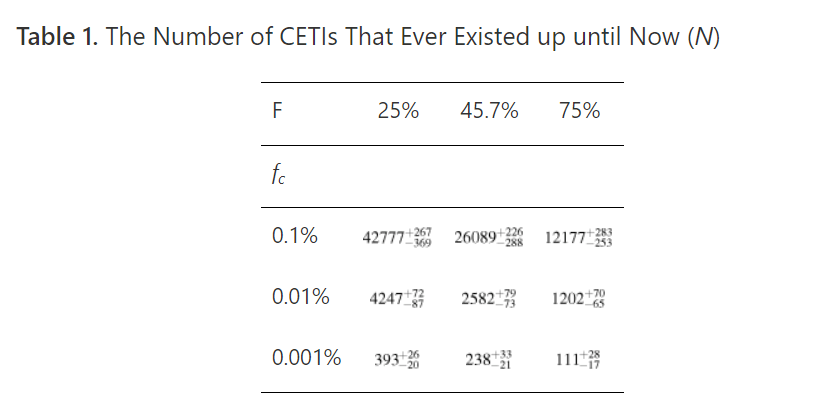
This figure from the study shows the results of some of the simulations. The percentage F across the top is the stage of the host star’s evolution required for a CETI to develop. The fc percentage is the percentage of terrestrial planets that can host a CETI. The number of CETIs that exist or did exist in the Milky Way ranges from an optimistic 42,000 + to a pessimistic 111. image Credit: Song and Gao 2022.
This is where the Drake Equation comes in. Based on our growing knowledge of the Milky Way, the Drake Equation tries to estimate how many CETIs there may be in our galaxy. The Drake Equation has its flaws, as many critics have explained. For example, some of its variables are little more than conjecture, so the number of civilizations it calculates isn’t reliable. But the Drake Equation is more of a thought experiment than an actual calculation. We have to start somewhere, and it gets us started.
It got the authors of this new study started, too.
“Most studies on this problem are based on the Drake equation,” the researchers write. “The obvious difficulty of this method is that it is uncertain and unpredictable to quantify the probability that life may appear on a suitable planet and eventually develop into an advanced communicating civilization.”
If you’re skeptical about any of this, you’re not alone. We can’t know scientifically how many other civilizations there are, or even if any exist. We’re not knowledgeable enough. Studies like this are part of an ongoing conversation we have with ourselves about our predicament. Each one helps us think about the context of our civilization.
Are we alone? Is Earth extraordinarily rare? Is our civilization? Credit: NASA/JPL-Caltech/SwRI/MSSS/Kevin M. Gill.
So how did they come up with 400,000 years if we don’t even know how many CETIs there might be?
The pair of researchers aren’t the first to tackle this question. Their paper outlines some of the previous scientific efforts to understand the incidence of other civilizations in the Milky Way. For example, they reference a 2020 study estimating that there are 36 CETIs in the Milky Way. That number came from calculations involving galactic star formation histories, metallicity distributions, and the likelihood of stars hosting Earth-like planets in their habitable zones. That paper clarifies that “… the subject of extraterrestrial intelligent and communicative civilizations will remain entirely in the domain of hypothesis until any positive detection is made…” But they also point out that scientists can still produce valuable models based on logical assumptions “… that may at least produce plausible estimates of the occurrence rate of such civilizations.”
This study carries some of that same thinking forward. It deals with two parameters, both of which are poorly understood. The first concerns how many terrestrial planets are habitable and how often life on these planets evolves into a CETI. The second is at which stage of a host star’s evolution would a CETI be born.
The researchers gave each of these parameters a variable in their calculations. The probability of life appearing and evolving into a CETI is (fc), and the stage of the host star’s evolution required is (F). Song and Gao ran a series of Monte Carlo simulations using different values for these variables. They arrived at two scenarios: an optimistic outlook and a pessimistic outlook.
The optimistic scenario used the values F = 25% and fc = 0.1%. So a star has to be at least 25% into its lifetime before a CETI can emerge. And for each terrestrial planet, there’s only a 0.1% chance of a CETI appearing. These optimistic variables create over 42,000 CETIs, which sounds like a lot, but isn’t when spread throughout the galaxy at different times. Further, we’d need to survive for another 2000 years to achieve two-way communication with us. That almost sounds within reach.
But that’s the optimistic scenario that makes the Universe seem friendly and inhabited by other welcoming civilizations. Maybe some of them are already talking to one another, and we just need to join in.
Now for the pessimistic scenario.
In the pessimistic scenario, F = 75% and fc= 0.001%. So a star can’t host a CETI until it’s much older, and the probability of any single terrestrial planet hosting a CETI drops to a minuscule percentage. Where does this leave us?
This pessimistic calculation produces only about 111 CETIs in the Milky Way. Even worse, we’d need to survive another whopping 400,000 years to have two-way communication with them. (For perspective, Star Trek gets started in the mid-22nd century.)
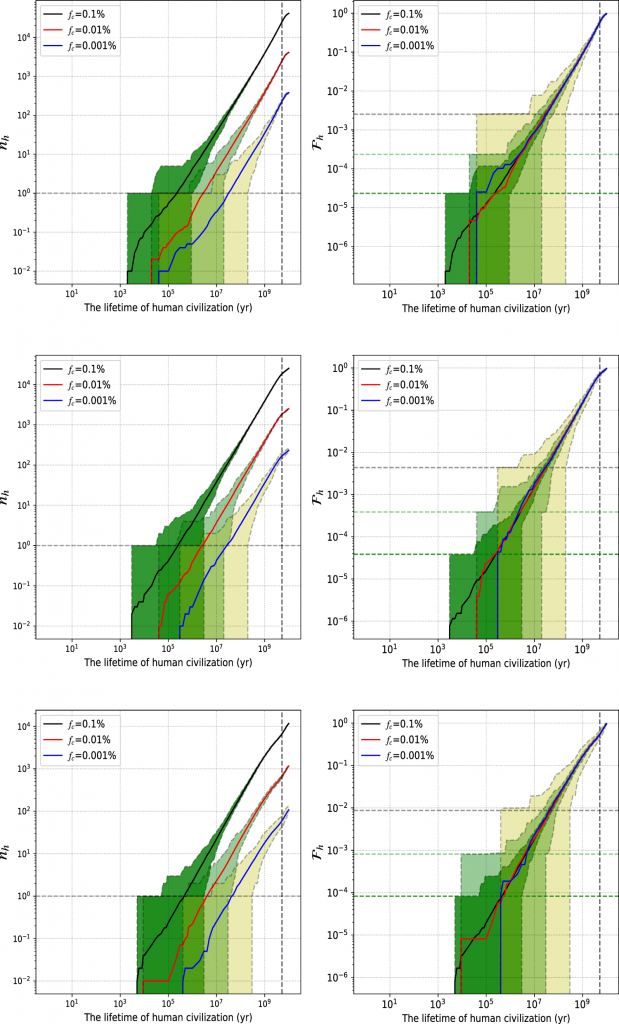
This figure from the study shows an optimistic scenario, a middling scenario, and a pessimistic scenario. It’s possible that some of our remotely distant descendants will hear from another civilization. It’s also possible that there are none. Image Credit: Song and Gao 2022.
Here’s where the Great Filter comes in. The Great Filter is whatever hinders matter from becoming life and then progressing to becoming an advanced civilization.
The authors broach that topic when they write, “However, it has been proposed that the lifetime of civilizations is very likely self-limiting, due to many potential disruptions, such as population issues, nuclear annihilation, sudden climate change, rogue comets, ecological changes, etc. If the Doomsday argument is correct, for some pessimistic situations, humans may not receive any signals from other CETIs before extinction.”
In their paper, the scientists write that “… the values of fcand F are full of many unknowns.” That’s the case in all of this type of work. This paper, and others that tackle the same question, are more helpfully seen as thought experiments than as solid results. We can’t know any of this stuff with any certainty, but we can’t help but be compelled to explore it. It’s part of human nature. “It is quite uncertain what proportion of terrestrial planets can give birth to life, and the process of life evolving into a CETI and being able to send detectable signals to space is highly unpredictable,” they write.
Will humanity ever encounter another civilization? It’s one of our most compelling questions, and it’s almost certain that nobody alive today will ever have an answer. First, there have to be other CETIs, and then we have to exist simultaneously with them and communicate somehow. It’s possible that another CETI had already detected life on Earth before they were wiped out by the Great Filter or possibly by a natural calamity like a supernova explosion. We’ll never know.
Maybe humanity will survive a long time. Perhaps Earth will be rendered uninhabitable, and humankind will flee to Mars or somewhere else. But would a Muskian outpost on a long-dead planet, populated by the bedraggled descendants of a ruined Earth, qualify as a CETI? We like to imagine other civilizations having successfully conquered problems that we still struggle with. Will that be true? Or will the first CETI we discover be little more than the descendants of a once-proud civilization that beamed with confidence until the Great Filter struck?
Who knows? If humanity ever does meet another technological species, it could be so far in the future that our descendants are nearly unrecognizable from modern humans.
Or, possibly, we’ll never have an answer, and the Great Filter will stop us from finding one.
But if humanity needs a goal, something to cling to that can keep hope alive, then the dream of communicating with another CETI might do it.
This is reminiscent of going down slide on the playground – and then immediately getting back in line to go down again. Except in space.
Here’s what it looks like on board the International Space Station when thrusters fire for an orbital reboost. While it seems like the astronauts are moving inside the station, in in reality it is the Space Station that is moving around them. And in actuality, the acceleration doesn’t happen this fast – the video is sped up eight times. But it still looks like fun!
The data for the acceleration rate/change for this particular burn was not available, but for a previous burn with a duration of 12 minutes, 17 seconds had a Delta-V of 1.34 meters/second.
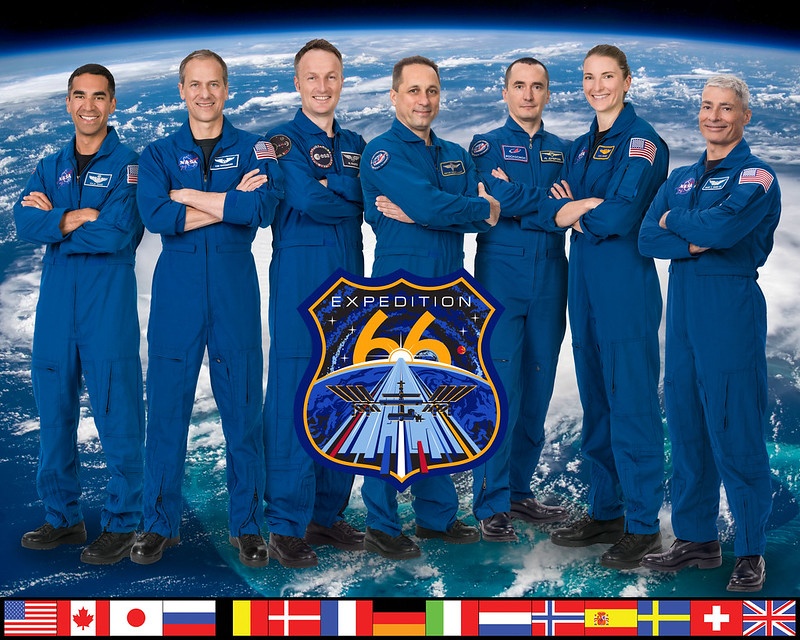
The crew seen here is Expedition 66, which includes NASA astronauts Raja Chari, Thomas Marshburn Kayla Barron and Mark Vande Hei ; ESA (European Space Agency) astronaut Matthias Maurer; Roscosmos cosmonauts Anton Shkaplerov and Pyotr Dubrov.
The official portrait of the seven-member Expedition 66 crew. From left are, NASA astronauts Raja Chari and Thomas Marshburn; ESA (European Space Agency) astronaut Matthias Maurer; Roscosmos cosmonauts Anton Shkaplerov and Pyotr Dubrov; and NASA astronauts Kayla Barron and Mark Vande Hei. Credit: NASA/ESA.
The astronauts are obviously enjoying the experience. It must feel somewhat similar to when a car or airplane accelerates – it feels like you are being pushed back into the seat, when in reality, the seat is being pushed into you by the acceleration of the vehicle.
The ISS usually orbits about 400 km (250 miles) above the Earth. But the effects of atmospheric drag can cause the station to lose as much as 100 meters a day in altitude. Therefore, regular reboosts are required, usually about once a month. There’s no real schedule of when a reboost is done, as the density of Earth’s atmosphere at those altitudes constantly changes, depending on how much energy is being fed into it by the Sun. Therefore, the orbital decay rate is not a constant. But the ISS orbits decays faster than other satellites at a similar altitude due to its massive size and surface area.
The International Space Station is pictured from the SpaceX Crew Dragon Endeavour during a flyaround of the orbiting lab that took place following its undocking from the Harmony module’s space-facing port on Nov. 8, 2021. Credit: NASA/ESA
Reboosts are also done to optimize the ISS’s orbital position for future visiting vehicles arriving at the station. This particular reboost was performed in March 2022 using Russia’s ISS Progress 79 cargo craft. By firing its engines for several minutes, the station was put at the proper altitude for an arriving Soyuz for the new crew members that arrived in March. crew ship orbit rendezvous and landing operations.
NASA says that all ISS propulsion is provided by the Russian Segment and Russian cargo spacecraft. Propulsion is used for station reboost, attitude control, debris avoidance maneuvers (as well as eventual deorbit operations) are handled by the Russian Segment and Progress cargo craft. The U.S. gyroscopes provide day-to-day attitude control or controlling the orientation of the station. Russian thrusters are used for attitude control during dynamic events like spacecraft dockings and provide attitude control recovery when the gyroscopes reach their control limits.
Northrop Grumman’s Cygnus is the only U.S. commercial spacecraft currently available to provide reboosts, although it is still currently in testing mode. The first Cygnus capable to performing reboosts arrived at the ISS in February 2022.
In the coming decade, NASA and China plan to send the first crewed missions to Mars. This will consist of both agencies sending spacecraft in 2033, 2035, 2037, and every 26 months after that to coincide with Mars being in “Opposition” (i.e., when Earth and Mars are closest in their orbits). The long-term aim of these programs is to establish a base on Mars that will serve as a hub that accommodates future missions, though the Chinese have stated that they intend for their base to be a permanent one.
The prospect of sending astronauts on the six-to-nine-month journey to Mars presents several challenges, to say nothing of the hazards they’ll face while conducting scientific operations on the surface. In a recent study, an international team of scientists conducted a survey of the Martian environment – from the peaks of Mount Olympus to its underground recesses – to find where radiation is the lowest. Their findings could inform future missions to Mars and the creation of Martian habitats.
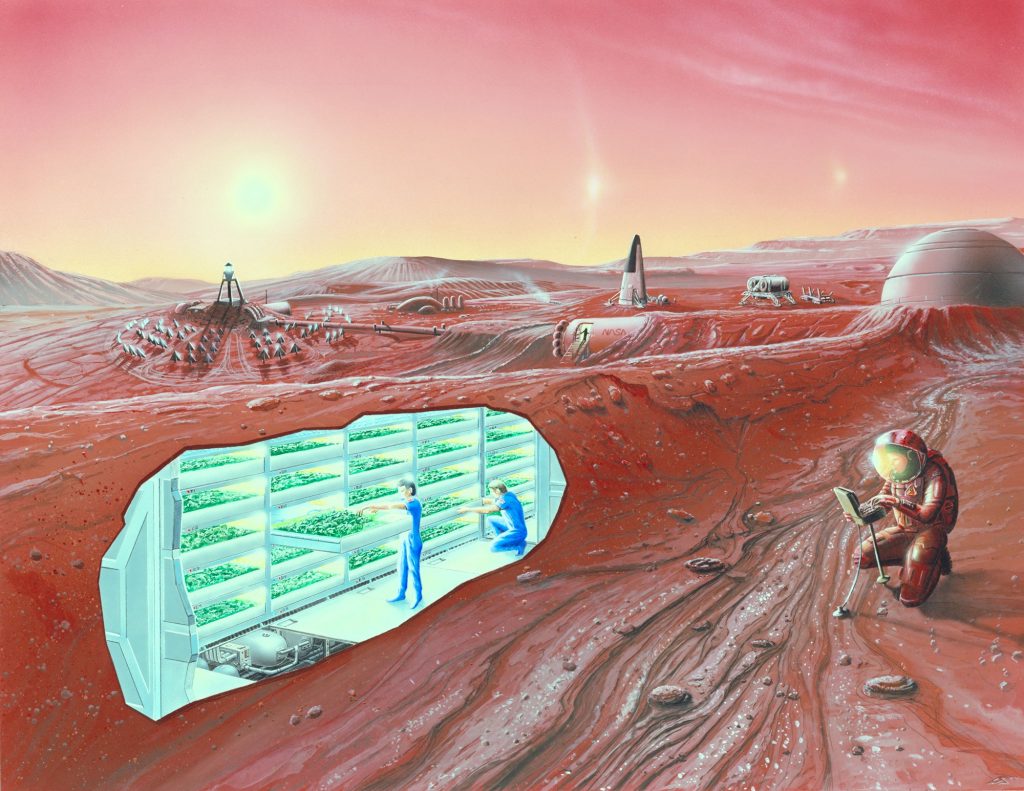
Artist impression of a Mars settlement with cutaway view. Credit: NASA Ames Research Center
When it comes to missions to Mars and other locations beyond Low Earth Orbit (LEO), radiation is always a going concern. Compared to Earth, Mars has a very tenuous atmosphere (less than 1% of the air pressure), and there is no protective magnetosphere to shield the surface from solar and cosmic radiation. As a result, scientists theorize that harmful particles, particularly galactic cosmic rays (GCRs), could propagate and interact directly with the atmosphere and even reach the subsurface of Mars.
However, the level of radiation exposure depends on just how thick the atmosphere is, which changes due to altitude. Within low-lying areas like Mars’ famous canyon system (Valles Marineris) and its largest crater (Hellas Planitia), atmospheric pressure is estimated at over 1.2 and 1.24 kPa, respectively. This is about twice the average of 0.636 kPa and up to ten times the atmospheric pressure at high-elevation locations like Olympus Mons (the largest mountain in the Solar System).
Dr. Jingnan Guo, an esteemed professor with the IEAP at Christian-Albrechts-University and a member of the Chinese Academy of Sciences (CAS), was Prof. Jian Zhang’s Ph.D. supervisor and a co-author on the paper. As she explained to Universe Today via email:
“Different elevation means different atmospheric thickness. High-altitude places generally have a thinner atmosphere on top. High energetic particle radiation needs to traverse through the atmosphere to reach the surface of Mars. If the atmospheric thickness changes, the surface radiation may also change. Thus elevation could influence the surface radiation of Mars.”
To this end, the team considered the influence of atmospheric depths on Martian radiation levels. This included the absorbed dose measured in rads; the dose equivalent, measured in rems and sieverts (Sv); and the body effective dose rates induced by GCRs. This consisted of modeling the radiation environment using a state-of-the-art simulator based on the GEometry And Tracking (GEANT4) software developed by CERN.
Known as Atmospheric Radiation Interaction Simulator (AtRIS), this software employs Monte Carlo probability algorithms to simulate particle interactions with the Martian atmosphere and terrain. As Dr. Guo illustrated:
“We use a Monte Carlo approach called ‘GEANT4’ to model the transport and interaction of energetic particles with the Martian atmosphere and regolith. The Mars environment is set up considering the Mars atmospheric composition & structure and regolith properties.
“The input particle spectra on top of the Mars’s atmosphere are obtained also from data-calibrated models which describe the omnipresent particle radiation environment in the interplanetary space that includes charged particles of different species which are mainly protons(~87%), helium ions(12%) and also small traces of heavier ions such as carbon, oxygen and irons.”
They found that higher surface pressures can effectively reduce the amount of heavy-ion radiation (GCRs) but that additional shielding is still needed. Unfortunately, the presence of this shielding can lead to “cosmic ray showers,” where the impact of GCRs against shielding creates secondary particles that can flood a habitat’s interior with varying levels of neutron radiation (aka. neutron flux). These can contribute significantly to the effective dose of radiation astronauts will absorb.
Showers of high energy particles occur when energetic cosmic rays strike the top of the Earth’s atmosphere. Credit: Simon Swordy (U. Chicago)/ NASA
They determined that both the neutron flux and effective dose peak at around 30 cm (1 foot) below the surface. Luckily, these findings offer solutions as far as using Martian regolith for shielding is concerned. Said Dr. Guo:
“For a given threshold of the annual biologically-weighted radiation effective dose, e.g., 100 mSv (a quantity often considered as the threshold below which radiation-induced cancer risk is negligible), the required regolith depth ranges between about 1 m and 1.6 m. Within this range, at a deep crater where the surface pressure is higher, the needed extra regolith shielding is slightly smaller. While on top of Mount Olympus, the needed extra regolith shielding is higher.”
Based on their findings, the best sites for future habitats on Mars would be located in low-lying areas and at depths of 1 m and 1.6 m (3.28 to 5.25 ft) beneath the surface. Therefore, the Northern Lowlands, which make up most of the northern hemisphere (aka. Vastitas Borealis), and Valles Marineris would be very suitable locations. In addition to having thicker atmospheric pressure, these regions also have abundant water ice just beneath the surface.
If all goes according to plan, astronauts will be setting foot on the Martian surface in just over a decade. This will consist of transits lasting six to nine months (barring the development of more advanced propulsion technology) and surface operations of up to 18 months. In short, astronauts will have to contend with the threat of elevated radiation for up to three years. As such, detailed mitigation strategies need to be developed well in advance.
The elevation map of Mars based on data obtained by the Mars Global Surveyor’s MOLA instrument. Credit: NASA/GSFC
NASA and other space agencies have invested considerable time, energy, and resources to develop habitat designs that leverage 3-D printing, In-Situ Resource Utilization (ISRU), and even electromagnetic shielding to ensure astronaut health and safety. However, there are still unanswered questions about how effective these strategies will be in practice, especially when considering the amount of time crews will be spending on the Martian surface.
“Our study may serve for mitigating radiation risks when designing future Martian habitats using natural surface material as shielding protection,” said Dr. Guo. “Research like this will therefore be of considerable value when mission planners begin considering designs for future Martian habitats that rely on natural surface material to provide radiation protection.”
All kinds of challenges will face the first humans to travel to Mars. One that has been much discussed, with no potential solution yet, is the potential for a significant amount of bone density loss on the three-year mission. Astronauts lose about 1% of their bone density per month in the microgravity of the ISS. That’s not too big of a deal if they are only on the station for six months, but the two 10-month space trips of a mission to the red planet could be a concern. Now a team of researchers think they have a solution – have the astronauts eat more salad.
Lettuce, which is commonly used as a basis for salads, isn’t particularly beneficial to bone density in its usual form. However, a peptide fragment called human parathyroid hormone (PTH) is. It can stimulate bone growth that could fight osteopenia, the bone density loss associated with low gravity environments. Typically, PTH is taken by injection, but that is likely not feasible on space missions – the serum and syringes required to provide the necessary amount of the medication would be prohibitively expensive to launch.
Luckily, injections aren’t the only way to receive pharmaceuticals. In some cases, they can simply be eaten. So far, no one has bothered to do that for PTH, but now Kevin Yates, a graduate student at UC Davis, and his colleagues have developed a transgenic form of lettuce that can express PTH. They presented their research at the annual meeting of the American Chemical Society in March.
Media Release for the ACS briefing.
Credit – American Chemical Society
To create this transgenic lettuce, the team turned to a standard technique to give a plant a specific gene – they infected it with a bacteria known as Agrobacterium tumefaciens. In preliminary studies, the bacteria seemed to do its job well, causing the lettuce to produce between 10-12 milligrams of PTH per kilogram. At the current level, each astronaut would have to eat about 8 cups of lettuce per day to get enough PTH to stave off bone loss, which Yates admitted was a “pretty big salad.”
But there’s room for improvement. An underlying assumption is that only 10% of the PTH that the plant produces will actually make its way into the human system, but that hasn’t been proven yet. So far, the researchers haven’t infested their modified crop themselves, as they are waiting on the outcome of animal studies to prove its safety. If other genetically modified crops are any indication, the lettuce should be safe to eat and taste similar to the traditional kind.
An advantage genetically modified crops have is that scientists can select strains with the highest rate of the characteristic they are searching for and continue to attempt to improve that best strain. Yates and his colleagues hope to do that with the lettuce they created, potentially boosting its output significantly.
Lettuce won’t be the only leafy green up in space.
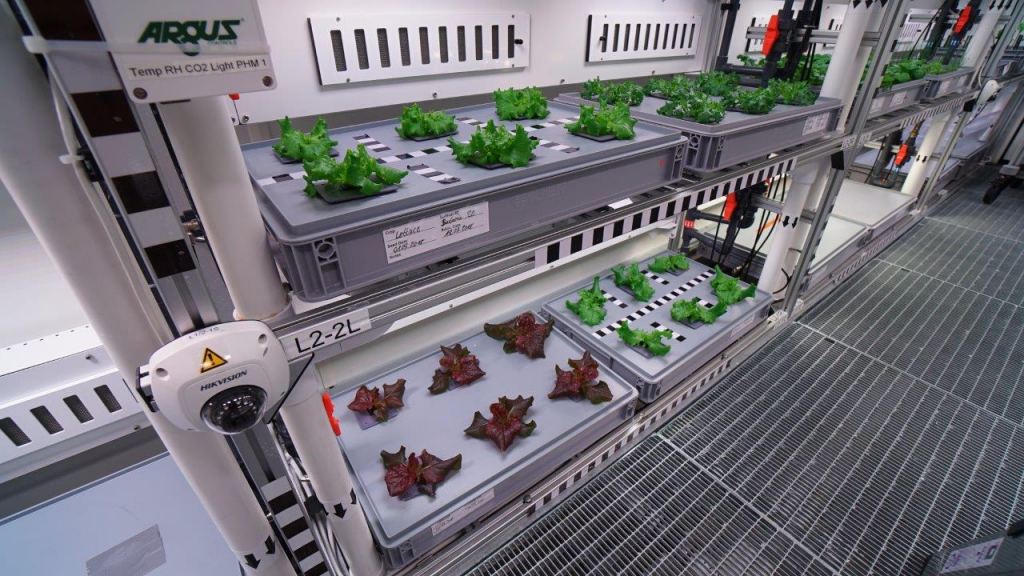
Credit – TPU
Once they find a strain they are happy with, they will want to test it on the space station. This wouldn’t be the first time astronauts have grown lettuce on the ISS, but it is worth checking whether this modified strain suffers from any debilitating side effects in microgravity. Assuming that it doesn’t, it would be relatively simple and inexpensive to launch the tiny seeds, which could eventually grow into full-blown lettuce to produce the PTH.
But space isn’t the only place this form of lettuce might be helpful – there are areas on Earth that suffer from a lack of traditional medicine, and a lack of PTH could cause degenerative bone disease in those populations. Rather than attempting a massive and continual medication effort in these parts of the world, this new lettuce strain could reduce bone density loss in their populations.
Whether or not any of this will come to pass is still up in the air. NASA isn’t planning its first Mars mission until the 2030s, so there’s still plenty of time to work on perfecting the crop. And maybe the astronauts on that mission will get to enjoy a tasty, non-freeze dried leafy meal once a day. If it helps them stave off a debilitating bone condition, so much the better.
There’s an old joke that the dinosaurs are only extinct because they didn’t develop a space agency. The implication, of course, is that unlike our reptilian ancestors, we humans might be able to save ourselves from an impending asteroid strike on Earth, given our six-and-a-half decades of spaceflight experience. But the fact is that while we have achieved amazing things since Sputnik kicked off the space age in 1957, very little effort thus far has gone into developing asteroid deflection technologies. We are woefully inexperienced in this arena, and aside from our Hollywood dramatizations of it, we’ve never yet put our capabilities to the test. But that’s about to change.
Wu Yanhua, deputy head of the China National Space Administration (CNSA), announced last week that they plan to carry out an asteroid deflection test as early as 2025 – part of a larger asteroid monitoring and defense system that the CNSA is in the early stages of developing. The monitoring system will consist of both ground-based and space-based instruments, used to catalog near-Earth objects that may pose a threat.
Monitoring systems are especially important because the earlier you catch an incoming asteroid, the easier it is to deflect. A distant asteroid might need only a minor tap to redirect it enough to miss Earth – the later an asteroid is seen, the more difficult it would be to change its course.
You can sleep well knowing that space agencies around the world have already built robust asteroid monitoring systems, and have cataloged many thousands of solar system objects. None of them pose a realistic threat in our lifetimes (currently, the highest risk object, known as 2010 RF12, has a 4.8% chance of an Earth impact in 2095. This 7-meter asteroid would cause a fireball similar to the Chelyabinsk meteor in 2013). Still, there may be more out there we haven’t seen yet, so the CNSA’s new monitoring project is a welcome addition.
When it comes to asteroid hunting, the smallest objects are the hardest to see, but, like the shooting stars that streak harmlessly through the sky every night of the year, these are unlikely to cause damage. On the other end of the spectrum, the largest asteroids out there are capable of causing an extinction-level event, but are easy to spot and keep track of. It is actually the middle-sized asteroids that are the most dangerous – big enough to do localized damage, but small enough that we may not find them in time.
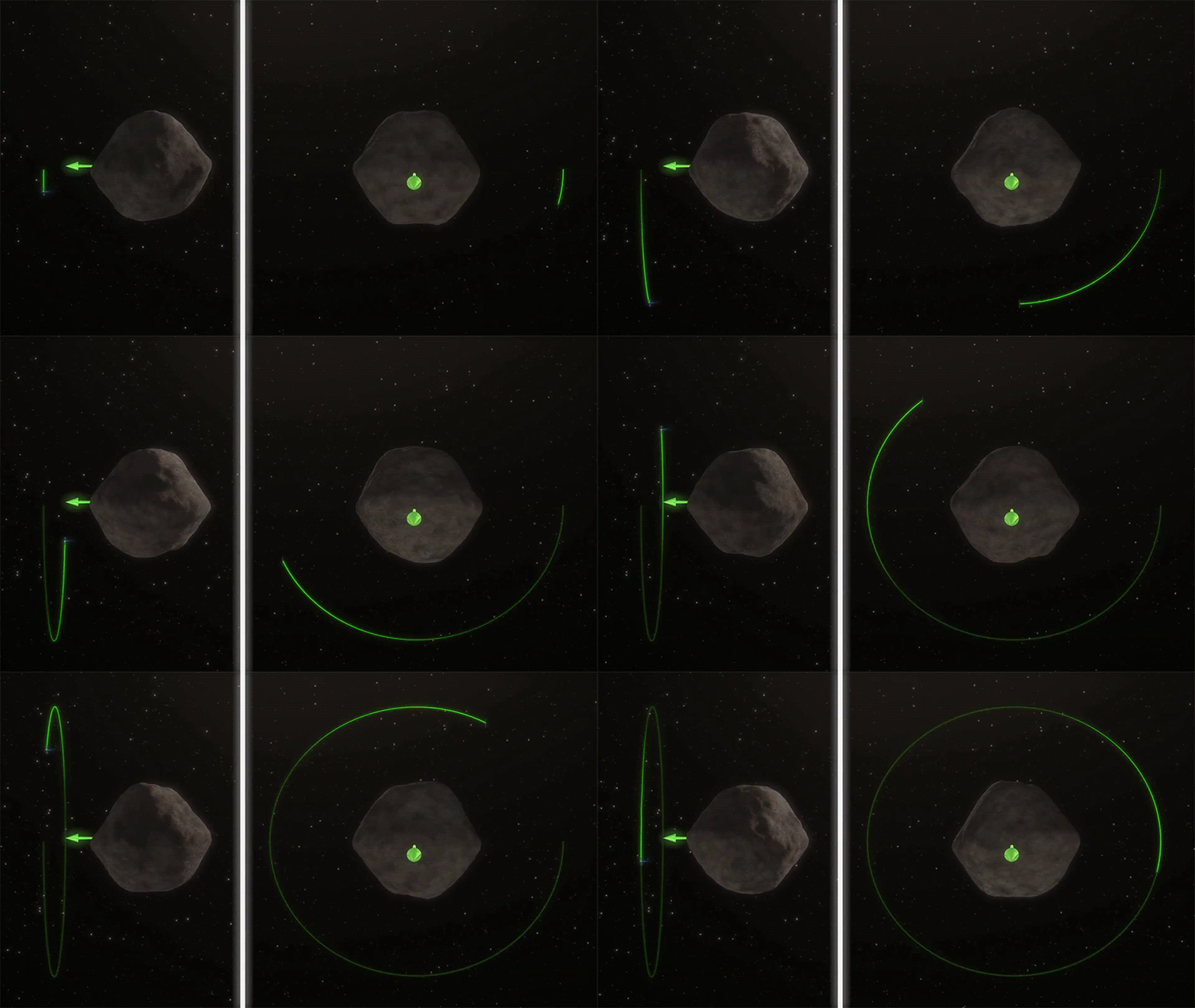
Observing asteroids up close also helps us understand how best to deflect them. NASA’s OSIRIS-Rex mission, which recently visited near-Earth asteroid Bennu, discovered Bennu to be a loose, gravel pit of an asteroid. Such a target would require a different technique to deflect it than a homogenous, solid chunk of rock. With enough time and warning, potential options include a gravity tractor (gently tugging at the asteroid with the mass of a spacecraft orbiting it) or painting the exterior of the asteroid white (changing the way the asteroid is heated and cooled by the Sun, slowly affecting its orbit via the Yarkovsky effect).
A “gravity tractor” planetary defense technique that leverages the mass of a spacecraft to impart a gravitational force on an asteroid, slowly altering the asteroid’s trajectory. Credit: NASA.
The simplest solution, of course, is to just hit an asteroid really hard.
The CNSA’s new monitoring program will be paired with an engineering effort to design and build a high thrust rocket that can carry a kinetic impactor: a payload designed to punch an asteroid with enough force to change its orbit. The target asteroid they plan to test the impactor on is, as yet, unannounced.
NASA and ESA are also taking their first steps toward developing kinetic asteroid defense capabilities. NASA’s DART mission, launched last November, will attempt to change the orbit of Dimorphos, a tiny moon circling asteroid Didymos, by slamming into the moon at high speed. This is the first test of its kind, and the resulting change in trajectory is likely to be very small. This is, in large part, the reason DART is targeting a moon rather than a lone asteroid: it will be easier to measure the tiny changes in Dimorphos’ orbit with nearby asteroid Didymos available to provide a frame of reference.
The DART mission will impact Dimorphos in September of this year, and will be followed up in 2027 with Hera, an ESA mission that will observe the aftermath of the impact up close.
The existential threat of an asteroid impact is small in the short term, but is almost certain in the (very) long term. As such, asteroid monitoring systems and deflection tests like DART and the CNSA’s new impactor project are important first steps to keeping Earth safe, and making sure we don’t go the way of the dinosaurs. Now, if only we could get climate change under control…
Featured image: Artist’s impression of NASA’s DART mission. Credit: NASA/JHUAPL/Steve Gribben.