Monday, April 20, 2026

Exoplanets Without Lots of Water Can't Maintain Their Carbon Cycles

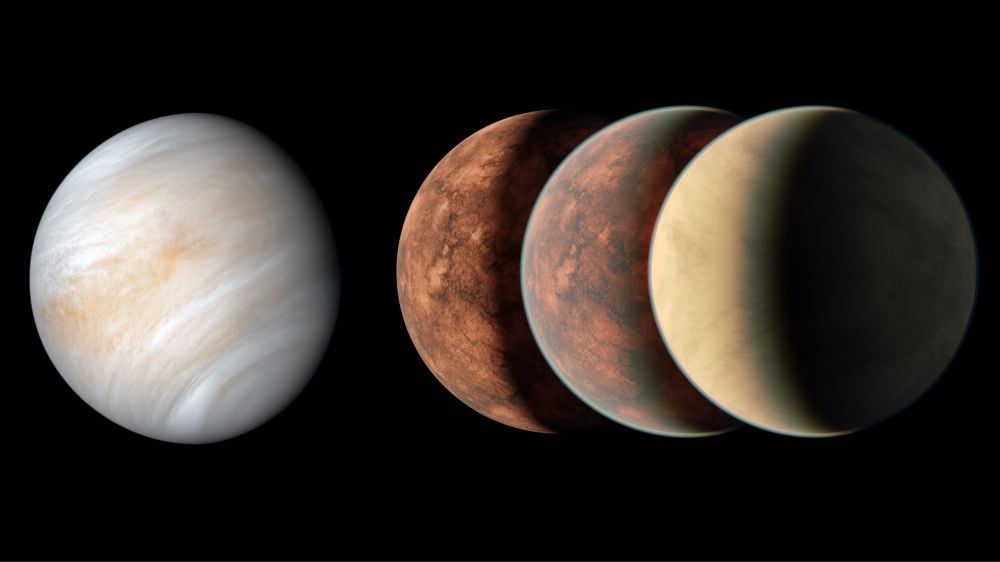
This image shows Venus on the left and three possible atmospheres on a recently discovered exoplanet, Gliese 12b. Arid planets like Gliese 12b, even ones in habitable zones, may not have enough liquid water for habitability. Water plays an important role in Earth's carbonate-silicate cycle, which is responsible for moderating the planet's temperature. But rainfall is a critical part of the cycle, and arid planets with low water abundances may not be able to resist a greenhouse climate state. This may have been what happened with Venus. Image Credit: NASA/JPL-Caltech/R. Hurt (Caltech-IPAC)

Water is critical to life because cells need liquid to function. That's why scientists focus on finding and studying exoplanets in habitable zones. But even if they're in habitable zones, exoplanets need lots of water to support their carbon cycles. So without water, exoplanets become inhospitable greenhouse planets, regardless if they're in habitable zones or not.


No comments:

Post a Comment