Monday, September 8, 2025

Exoplanet In A Ring Gap Shows How Protoplanets Can Shape Their Environment

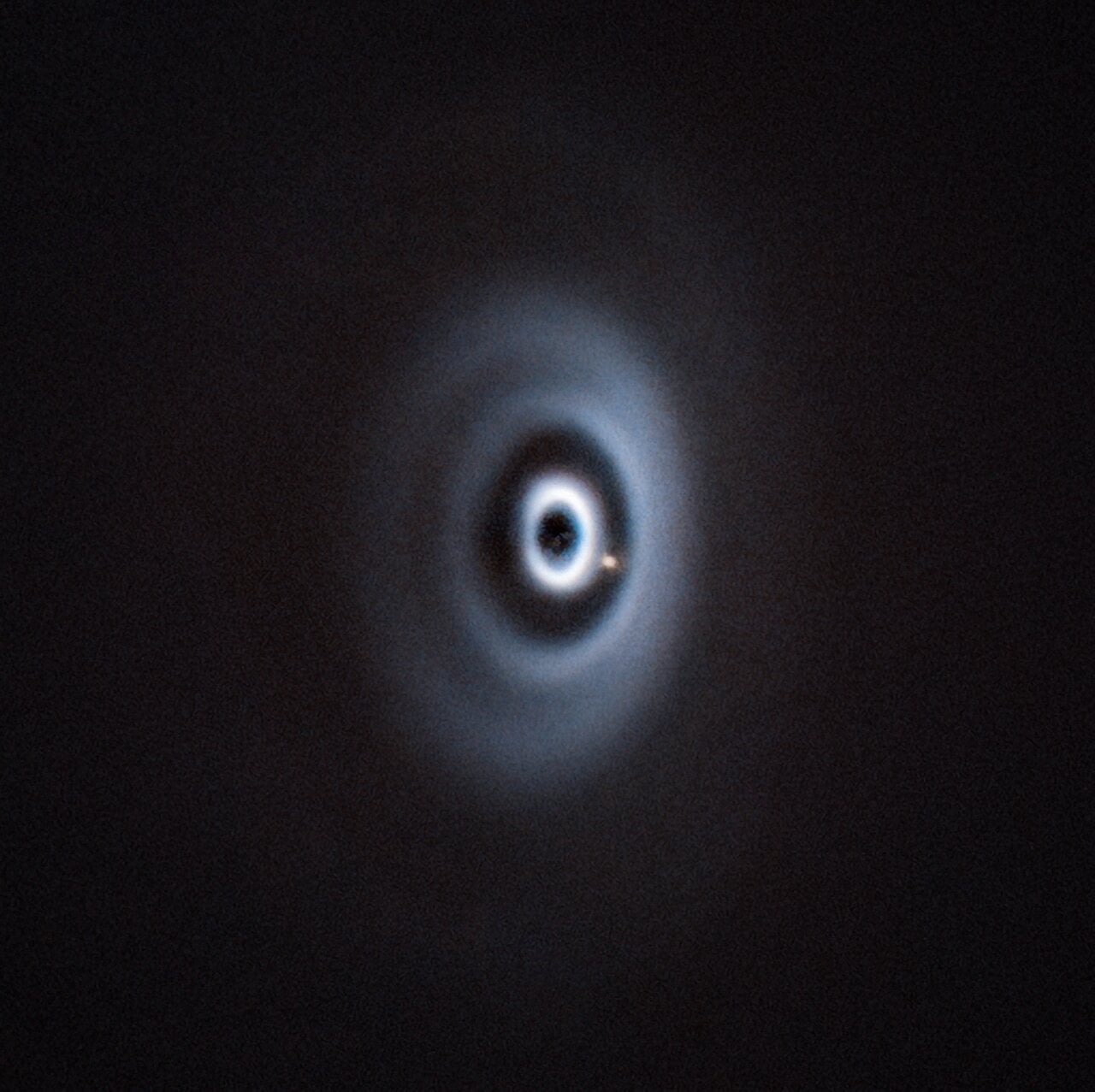
Image of the WISPIT2 system, including the bright dot of the exoplanet WISPIT2b in the gap between the rings. Credit - ESO/R. F. van Capelleveen et al.

Circumstellar discs are believed to be key components in planetary formation. However, we have very little actual evidence of planets growing in the “rings” that surround young stars. So planet formation theorists were ecstatic to learn that two new papers in Astrophysical Journal Letters describe a planet that is actively forming in the gap it most likely created in the ring system of a young, Sun-like star.

Sunday, September 7, 2025

Life on Earth Probably Got Some Help From Space

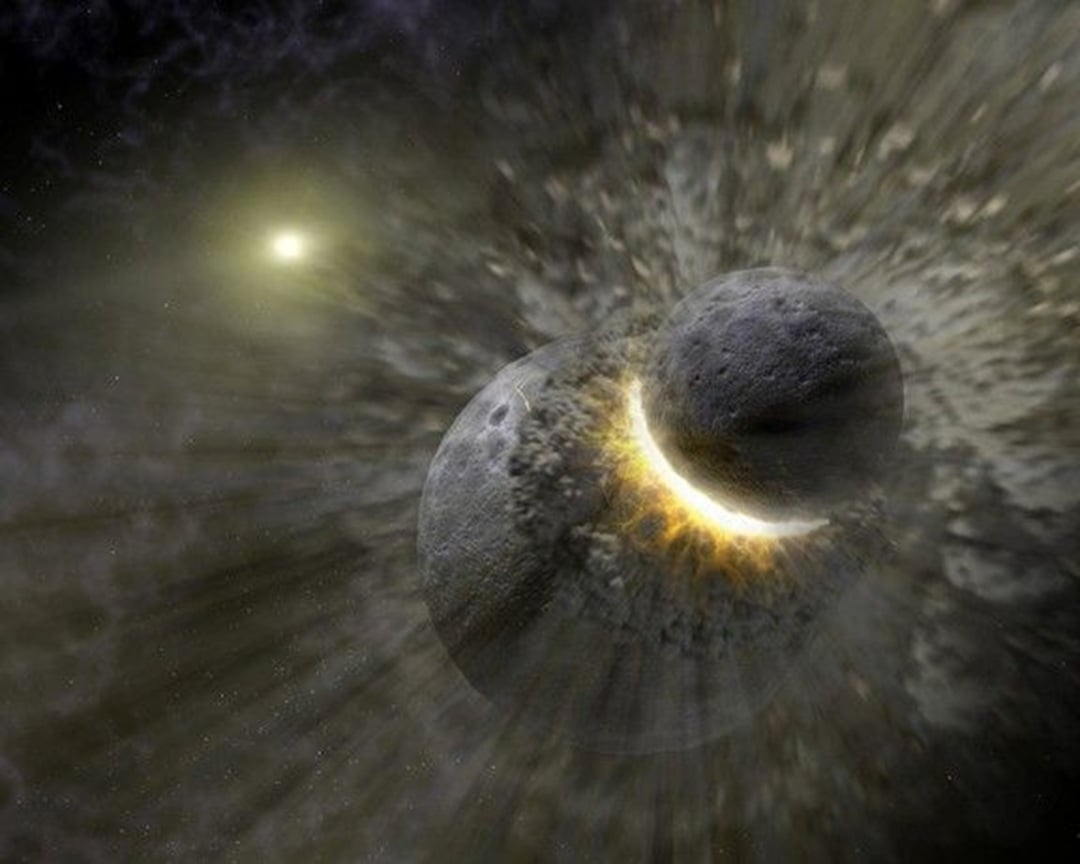
According to the Giant Impact Hypothesis, the Earth-Moon system formed 4.5 billion years ago after a Mars-sized object (Theia) collided with Earth. Credit: NASA

After the formation of the Solar System, it took a maximum of three million years for primordial Earth's chemical composition to settle. At the time, there was hardly any water, carbon compounds, or other ingredients necessary for life to emerge. Only a planetary collision that came later would have brought water to Earth, according to a new study by researchers from the Institute of Geological Sciences at the University of Bern.


Saturday, September 6, 2025

Researchers at SwRI Produced a Mission Concept for Exploring Interstellar Objects Like 3I/ATLAS

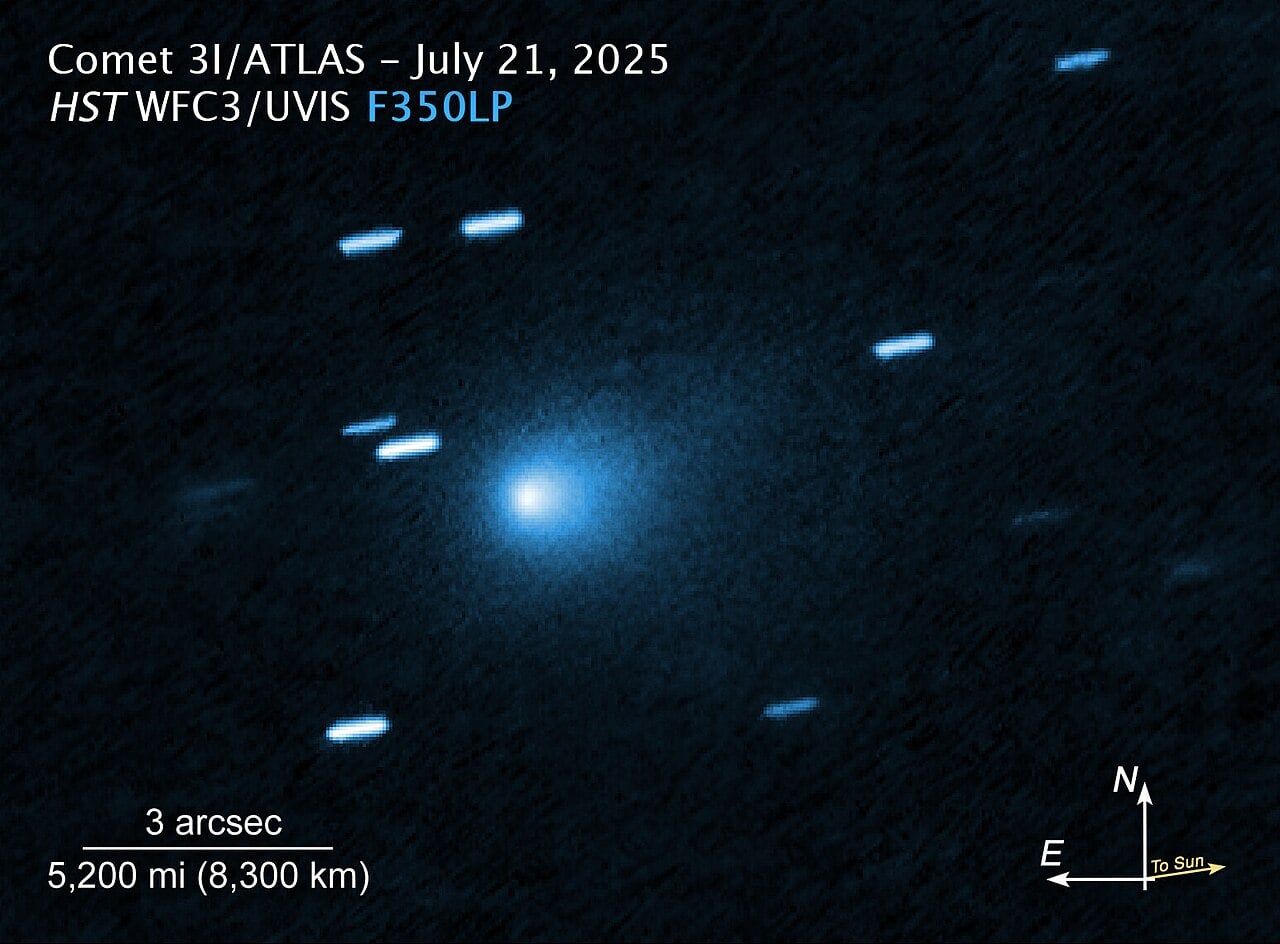
This image of interstellar comet 3I/ATLAS was captured by the Hubble Space Telescope’s Wide Field Camera on 21 July 2025. Credit: ESA/Hubble

A new development study from the Southwestern Research Institute outlines a possible mission that could rendezvous with and explore the interstellar comet 3I/ATLAS.


Thursday, September 4, 2025

Juno Detects Callisto's "Footprints" in Jupiter's Aurorae

Juno capturing the marks on Jupiter of all four Galilean moons. Credit: NASA/JPL-Caltech/SwRI/UVS team/MSSS/Gill/Jónsson/Perry/Hue/Rabia

Jupiter hosts the brightest and most spectacular auroras in the Solar System, and its largest moons (the Galileans) create their own auroral signatures known as “satellite footprints” in the planet’s atmosphere. Until now, astronomers had detected the auroral signatures of three Galileans (Io, Europa, and Ganymede), but not Callisto. Thanks to an international team, close-up images of Callisto's footprints have been seen at last.


The JWST's New Contribution To Understanding The Cosmic Dawn: MINERVA

This JWST image shows a variety of shapes and colours of galaxies. The MINERVA (Medium-band Imaging with NIRCam to Explore ReVolutionary Astrophysics) program is using the JWST to find rare and unusual galaxies in the early Universe. Image Credit: Courtesy of Danilo Marchesini/MINERVA

The JWST is performing a new multi-wavelength survey called MINERVA (Medium-band Imaging with NIRCam to Explore ReVolutionary Astrophysics). It'll study four extragalactic fields in greater detail and depth, and will help us understand the Cosmic Dawn.


Clues In A Dusty Disk Point The Way To A Potential Exoplanet

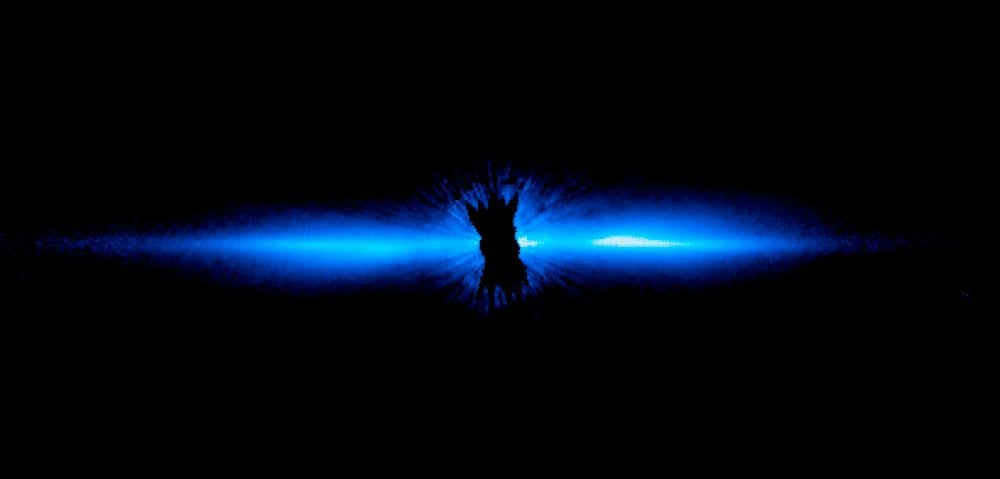
Hubble Space Telescope observations of the Beta Pictoris debris disk. When astronomers examined this disk in detail, they found clues to where a small planet could be hiding. They eventually found the exoplanet and directly imaged it, and the same thing is happening around another star. Image Credit: NASA, ESA, and D. Apai and G. Schneider (University of Arizona)

Astronomers struggle to detect small exoplanets directly. One tool they use is to search for the effects these planets have on debris disks around stars. Clues in these disks tell astronomers where they can find sub-Jupiter mass exoplanets.


Catch the Final Total Lunar Eclipse of 2025 Sunday Night

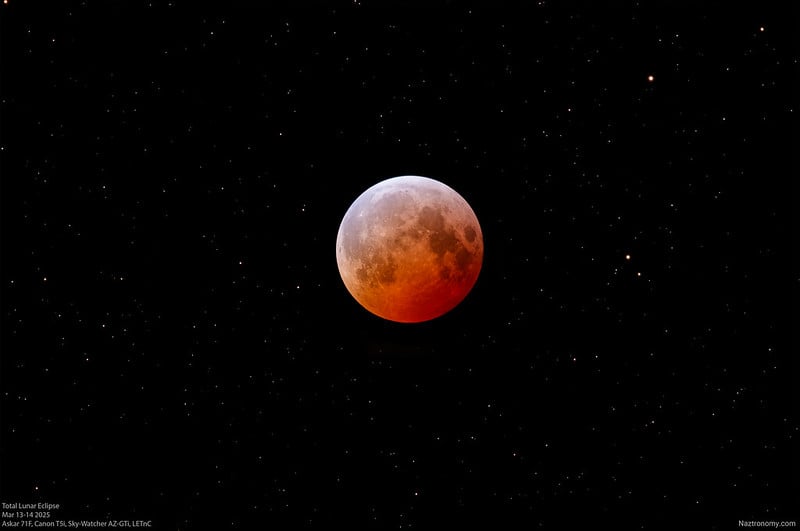
The March 2025 total lunar eclipse as seen from a dark sky site in Vermont. Credit: Nazmus Nasir.

Live in the eastern hemisphere? If skies are clear, you have a chance to see a remarkable sight this Sunday night into Monday morning: the ‘Blood Moon’ of a total lunar eclipse. The eclipse favors the Indian Ocean region in its entirety. Europe sees the eclipse already underway at Moonrise, while Australia catches it in progress at Moonset. Only the Americas sit this one out in person... though you can still catch it live online.