Wednesday, June 11, 2025

The Galactic Center Struggles to Form Massive Stars

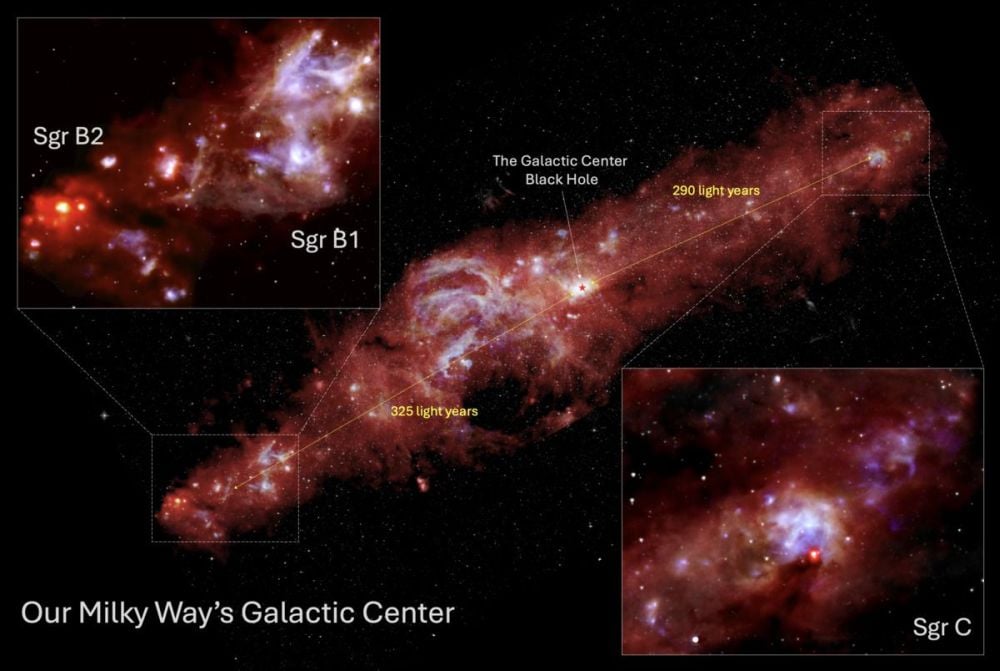
A detailed infrared view of the Galactic Center region of our Milky Way Galaxy. Sgr B1 and B2, and Sgr C are the three star-forming regions studied in the research. For some reason, they struggle to form massive stars. Image Credit: J. De Buizer (SETI) / SOFIA / Spitzer / Herschel.

Gas clouds in the Milky Way's Galactic Center contain copious amounts of star-forming gas. But for some reason, few massive stars form there, even though similar gas clouds elsewhere in the galaxy easily form massive stars. The clouds also form fewer stars overall. Are they a new type of molecular cloud?

Tuesday, June 10, 2025

The Sun's Identity Crisis Solved

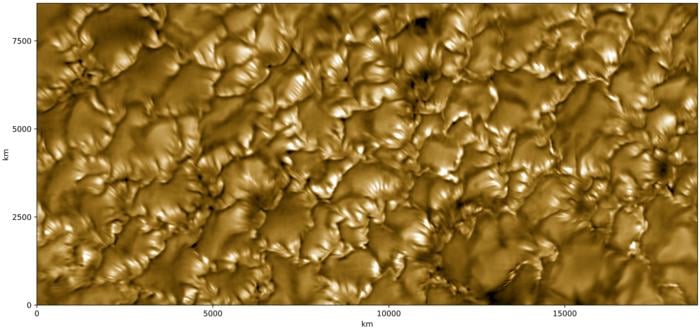
Sharpets ever view of the Sun's surface, using the NSF Inouye Solar Telescope, reveals ultra-fine magnetic 'stripes' known as striations, just 20 kilometres wide.

The Sun's surface has unveiled a new secret: ultra fine magnetic "curtains" that create striking patterns of bright and dark stripes across the solar photosphere. Thanks to groundbreaking observations from the NSF Daniel K. Inouye Solar Telescope in Hawaii, scientists have captured the sharpest ever images of these previously unseen structures, revealing magnetic field variations at scales as small as 20 kilometres.


Colliding Galaxies Tearing at Each Other with Gravity and Radiation

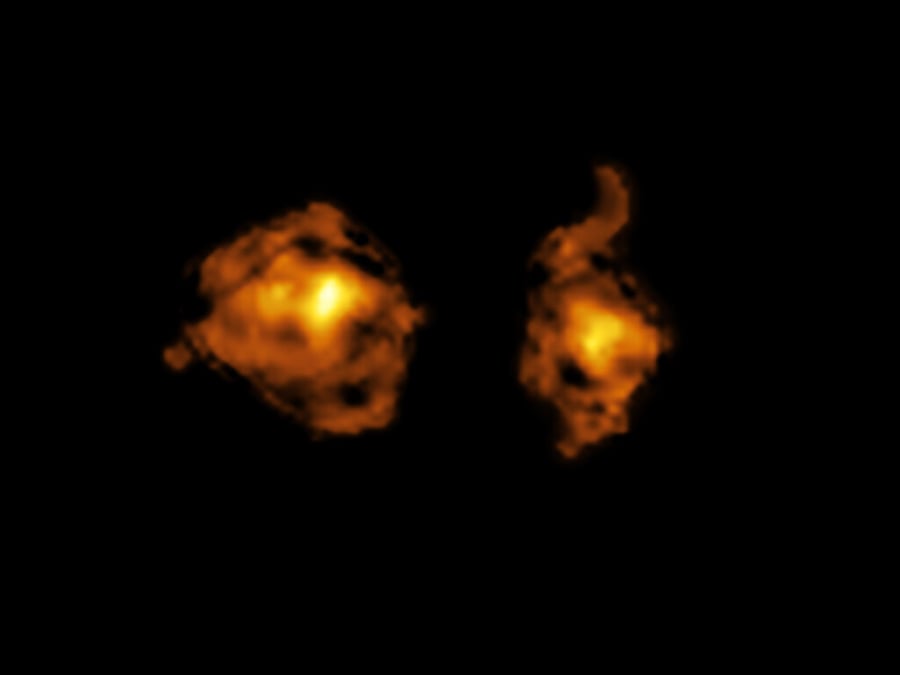
This image, taken with the Atacama Large Millimeter/submillimeter Array (ALMA), shows the molecular gas content of two galaxies involved in a cosmic collision. The one on the right hosts a quasar – a supermassive black hole that is accreting material from its surroundings and releasing intense radiation directly into the other galaxy. The X-shooter spectrograph in Chile studied the quasar's light as it passed through a gas halo around one of the galaxies. Credit: ALMA (ESO/NAOJ/NRAO)/S. Balashev and P. Noterdaeme et al.

Astronomers recently used a pair of powerful telescopes to zero in on a cosmic battle going on some 11 billion light-years away from us. The combatants are a pair of galaxies charging at each other over and over again, at velocities upwards of 500 kilometers per second. According to one of the scientists studying the scene, one galaxy is cutting into the heart of the other with a blast of radiation.


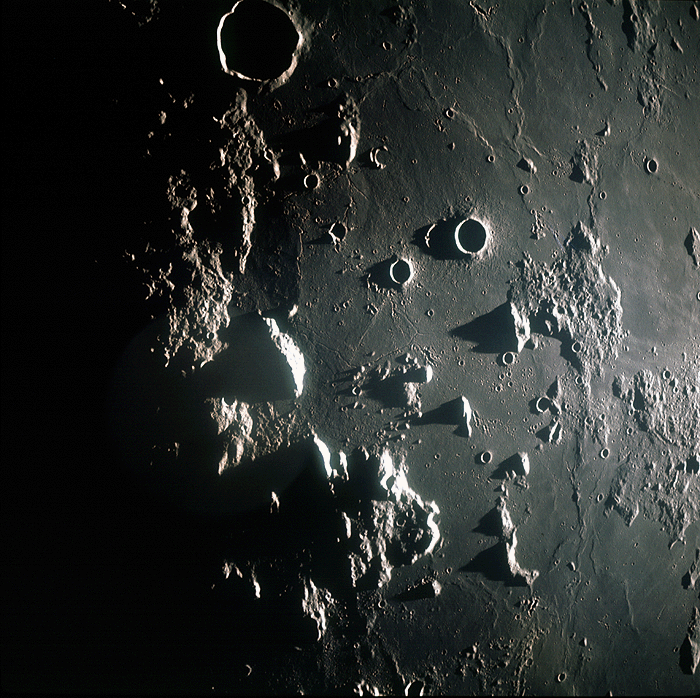
NASA's Top 5 Technical Challenges Countdown: #1: Survive the Lunar Night

Now I know this sounds like a low-budget knockoff of Five Nights at Freddy's, but it's the real deal


Monday, June 9, 2025

The Nuclear Option: Europe's Plan for Faster Space Travel.

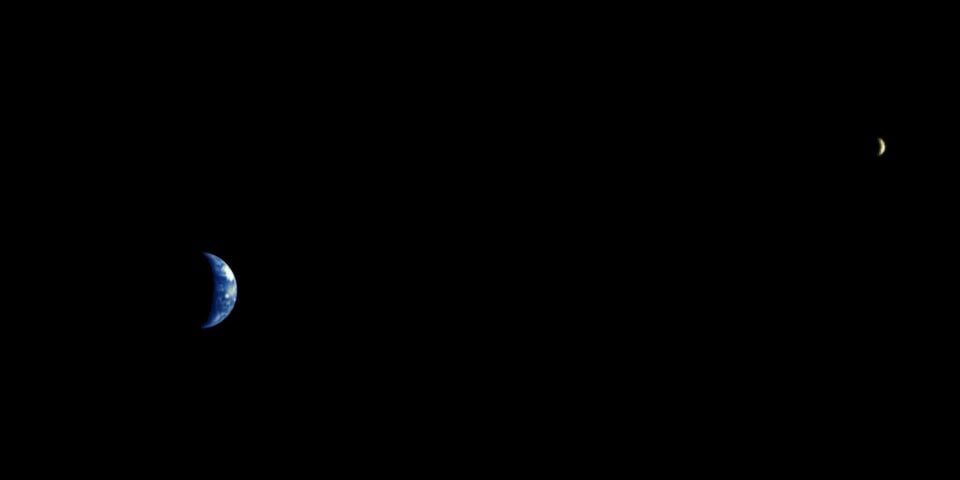
View of Earth and our Moon seen from 8 million km on the way to Mars

Whilst NASA funding has been slashed by the Trump administration with no allocation for Nuclear Thermal Propulsion or and Nuclear Electric Propulsion, scientists at the European Space Agency (ESA) have been studying nuclear propulsion.


This Map of the Cosmic Web Reaches Back in Time

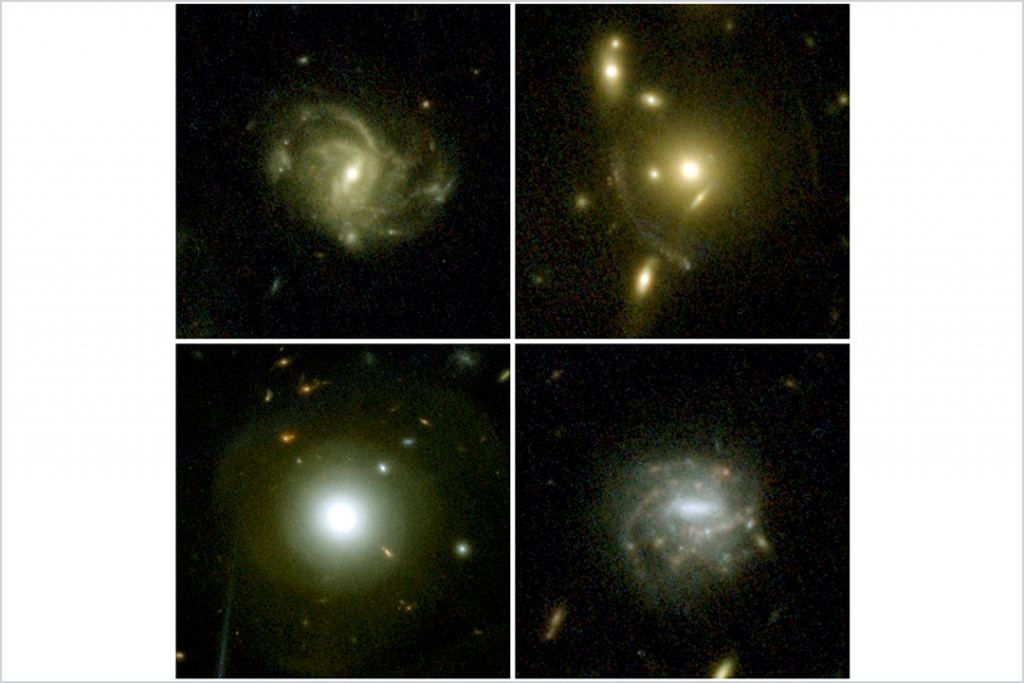
These are six galaxy images from COSMOS-Web, each from a different time. From upper left to lower right: the present-day universe, and 3, 4, 8, 9 and 10 billion years ago. Image Credit: M. Franco / C. Casey / COSMOS-Web collaboration

The COSMOS scientific collaboration has released the largest map of the Universe ever created. It contains almost 800,000 galaxies, some from the Universe's earliest times. The map challenges some of our ideas about the early Universe.


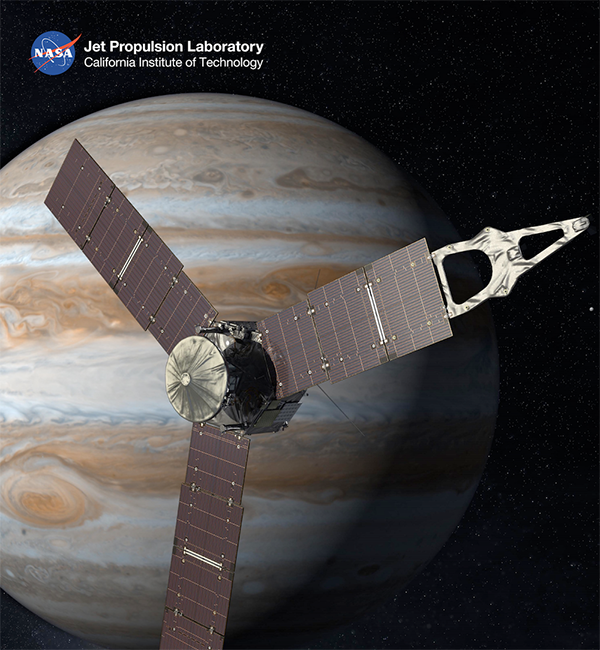
NASA's Top 5 Technical Challenges Countdown: #2: More Power

What we have now just…isn't going to cut it. Right now if you want power in space you essentially have two options: solar panels, and a kind of nuclear power called radioisotope thermoelectric generators.