Saturday, October 4, 2025

Rogue Planet Found Having Massive "Growth Spurt"

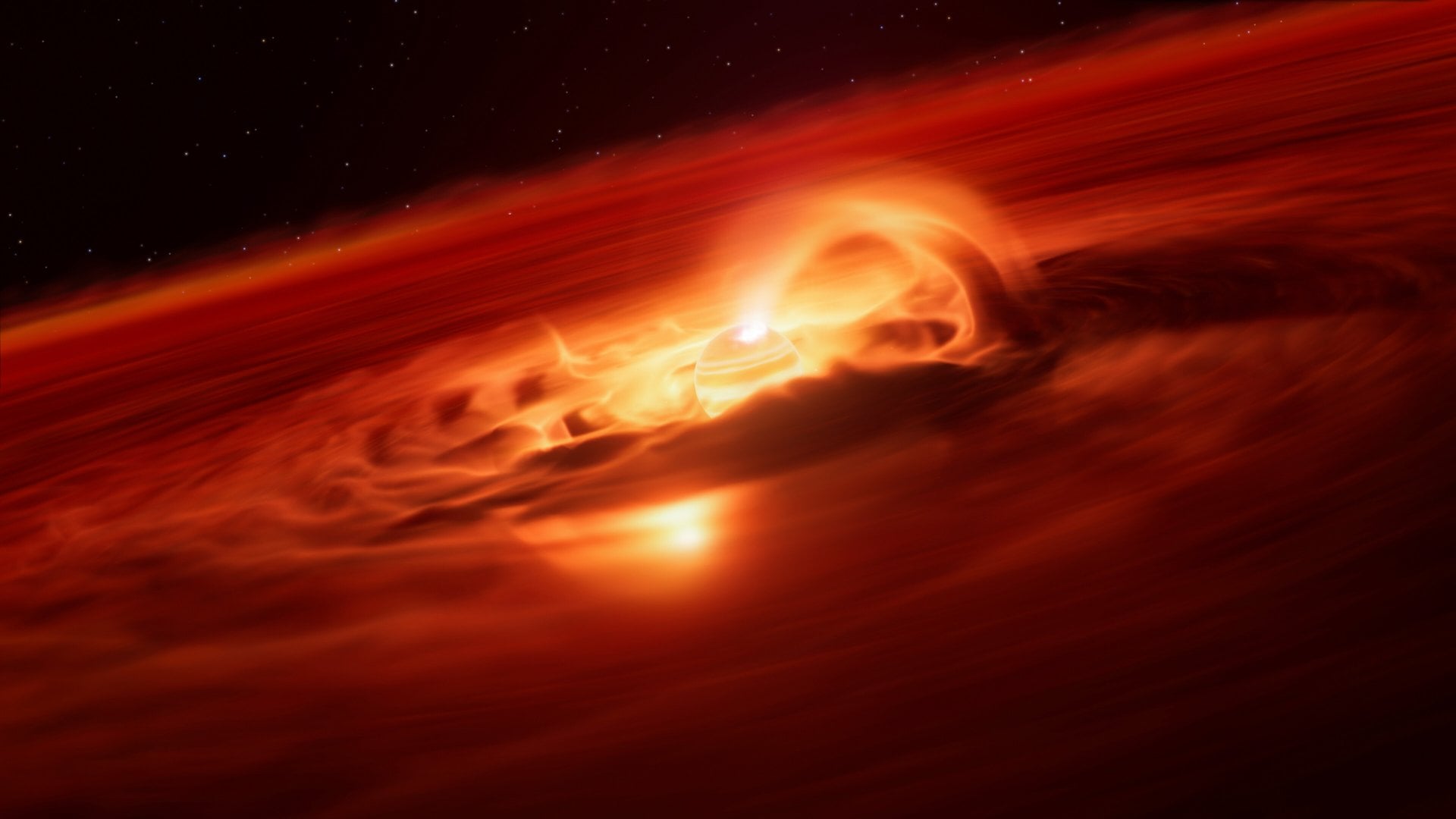
This artist’s impression shows Cha 1107-7626, a rogue planet located about 620 light-years away. Credit: ESO/L. Calçada/M. Kornmesser

New observations made with the European Southern Observatory’s Very Large Telescope (ESO’s VLT) identified an enormous a rogue planet with the strongest growth rate ever recorded. These observations reveal that this free-floating planet is eating up gas and dust from its surroundings at a rate of six billion tonnes a second.

We Can Do More Exoplanet Science By Understanding the Dark Edge of It's Star

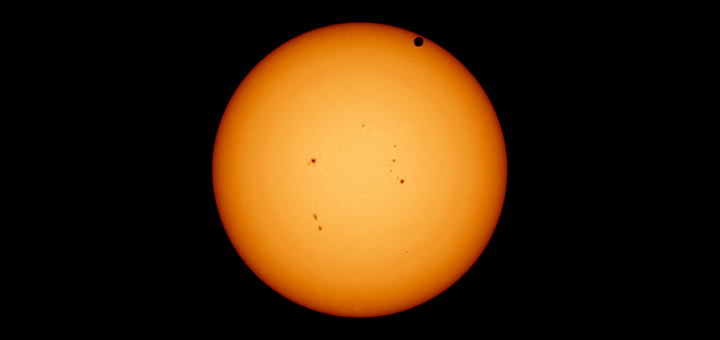
Image of the Sun during a transit of Venus. Sunspots can be seen as well as the shadow of Venus can be seen at the upper right. The edge of the Sun is slightly darker, which is an effect known as limb darkening.

By modeling the limb darkening of a star, astronomers can get a better measure of the transit depth of an exoplanet. This will allow us to get better measurements of the size of exoplanets.


Friday, October 3, 2025

Take a Flight Over the Martian Surface with the ESA's Mars Express

ESA’s Mars Express takes us on another mesmerizing flight over the highlands of Xanthe Terra to the smoother lowlands of Chryse Planitia. Billions of years ago, water surged through this region, creating many of the features we see today.


Catching the October Action With Jupiter’s Moons

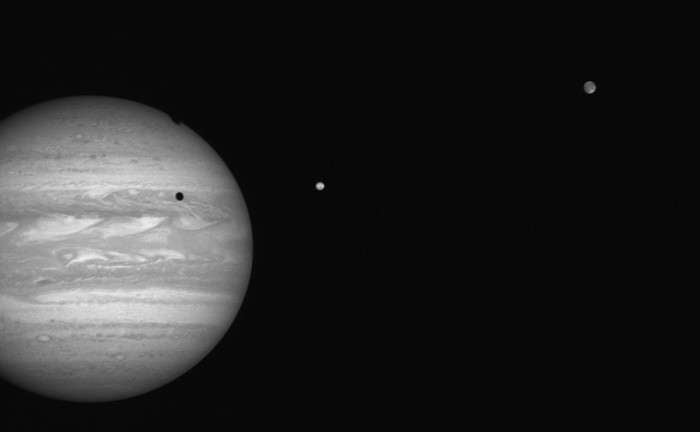
NASA's New Horizons mission captures a double-shadow transit during its 2007 flyby past Jupiter. Credit: NASA/JPL/New Horizons.

Jupiter and its moons are busy in October. If skies are clear, be sure to set your alarm and follow the largest planet in our solar system this month. While massive Jupiter always warrants a view through even a small telescope, its four major Galilean moons warrant special interest, as we’re in the midst of a season of rare double shadow transits.


Thursday, October 2, 2025

New Organic Molecules Found In Old Cassini Data

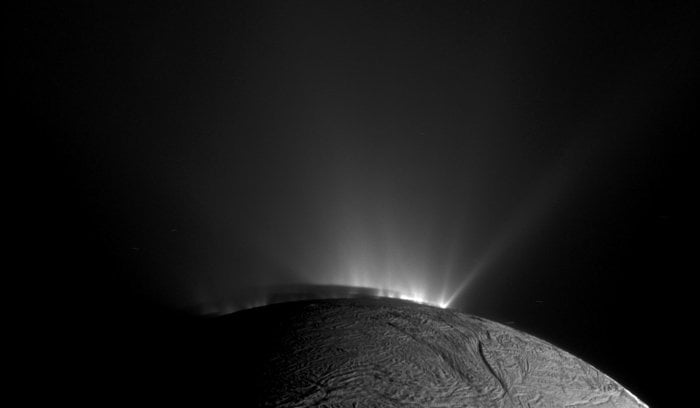
Enceladus with a glow from the Sun highlighting its jets. Credit - NASA / JPL-Caltech / SSI

Enceladus’ ice continues to get more and more intriguing as researchers continue to unlock more secrets taken from a probe over ten years ago. When Cassini crashed into Saturn in 2017, it ended a 13 year sojourn that is still producing new research papers today. A recent one in Nature Astronomy from the researchers at the Freie Universität Berlin and the University of Stuttgart found hints of organic molecules discovered for the first time on the icy moon, some of which could serve as precursors to even more advanced biomolecules.


Enceladus Isn't Throwing As Much Ice Into Orbit As We Thought

Artist's conception of Cassini sampling the geysers on Enceladus. Credit - NASA/JPL-Caltech

Modeling something like geysers on a far-away moon seems like it should be easy. How much complexity could there possibly be when a geyser is simply a hole in some ice shooting superheated water through it? The answer is pretty complex, to be honest - enough that accurate models require a supercomputer to run on. Luckily, the supercomputing cluster at the University of Texas, known as the Texas Advanced Computing Center, gave some time to researcher modeling Enceladus’ ice plumes, and their recent paper in JGR Planets discusses the results, which show there might not be as much water and ice getting blown into orbit as originally thought.


Ariel Had A 170km Deep Sub-Surface Water Ocean

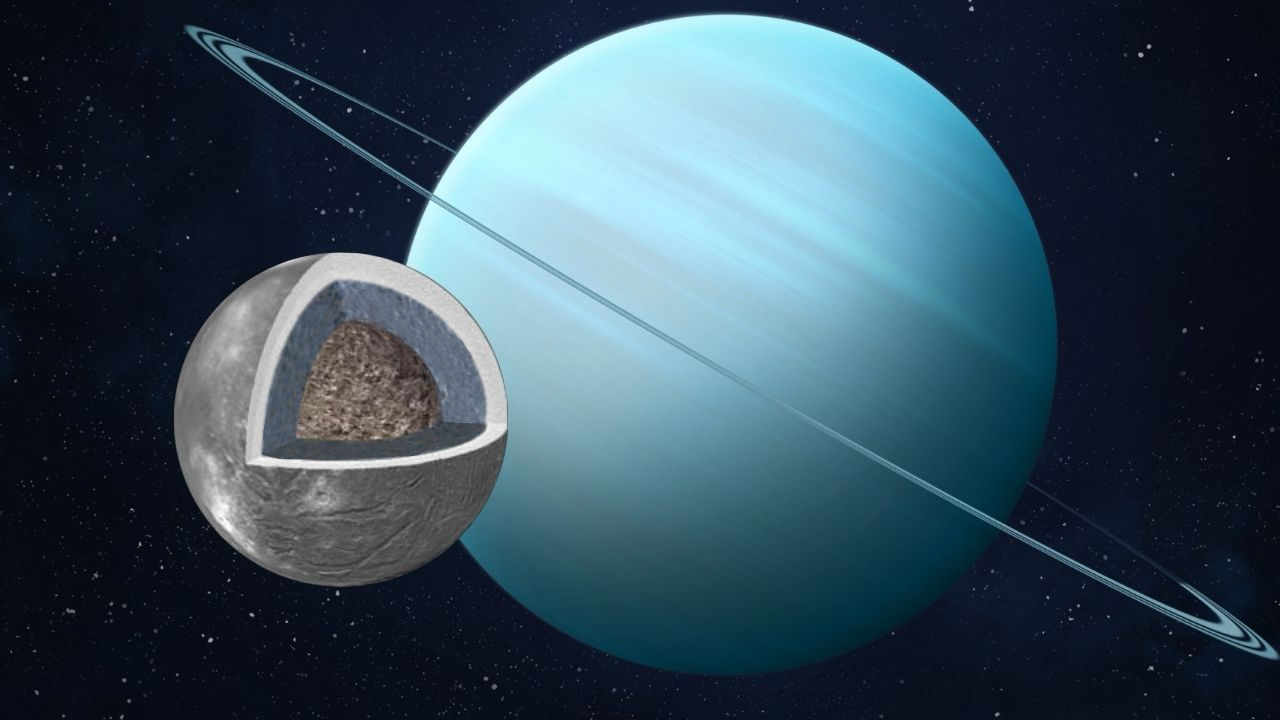
Cross section of Ariel around Uranus. Credit - NASA/JPL-Caltech/PSI/Mikayla Kelley/Peter Buhler

Interest in icy moons has been growing steadily as they become more and more interesting to astrobiologists. Some take the majority of the attention, like Enceladus with its spectacular geysers. But there are interesting ones that might be hiding amongst even thicker ice shells in the Uranian system. A new paper published in Icarus from researchers at the Planetary Science Institute, Johns Hopkins University, and the University of North Dakota, looks at what Ariel, the fourth biggest moon in the Uranian system, might look like under its icy surface.