Wednesday, January 14, 2026

Two New Exoplanets And The Need For New Habitable Zone Definitions

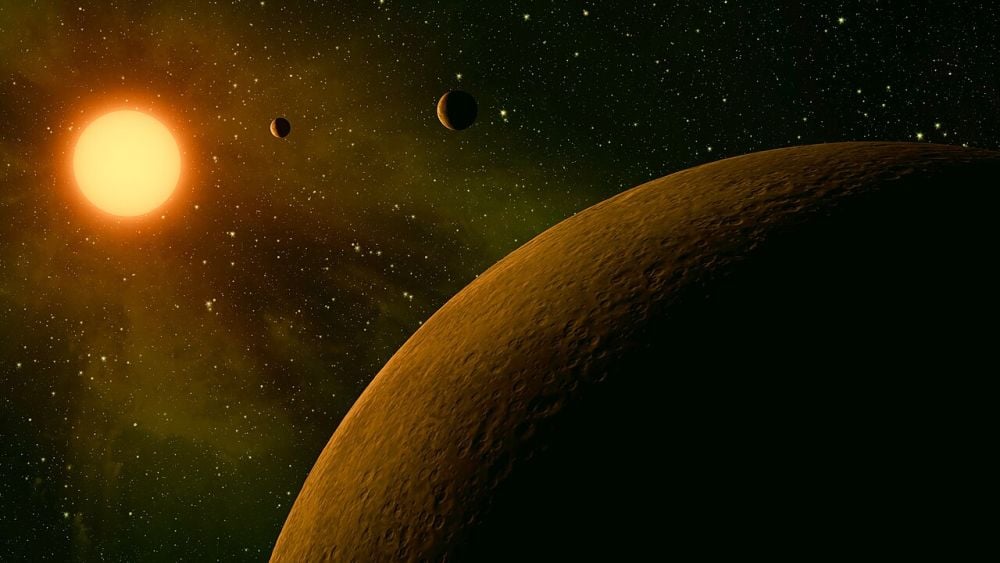
This artist's illustration shows the exoplanets that orbit the small red dwarf Kepler-42. Second from the star is Kepler-42b, a rocky exoplanet about the size of Mars. Researchers are refining their search for habitable planets by developing the idea of temperate zone exoplanets. They're planets like Kepler-42b, that are both easily detected with the transit method, and are at the right distance for potential habitability as well as atmospheric characterization by the JWST. Image Credit: By NASA/JPL-Caltech - http://www.nasa.gov/mission_pages/kepler/multimedia/images/mini-planetary-system.html, Public Domain, https://commons.wikimedia.org/w/index.php?curid=18013575

How solid is our understanding of exoplanet habitability? Are the ideas of an Optimistic Habitable Zone and a Conservative Habitable Zone sufficient to advance our understanding? New research introduces an expanded exoplanet 'temperate zone,' highlighting planets that are amenable to atmospheric study by the JWST.


No comments:

Post a Comment