Friday, January 30, 2026

Boron Could Be Astrobiology’s Unsung Hero

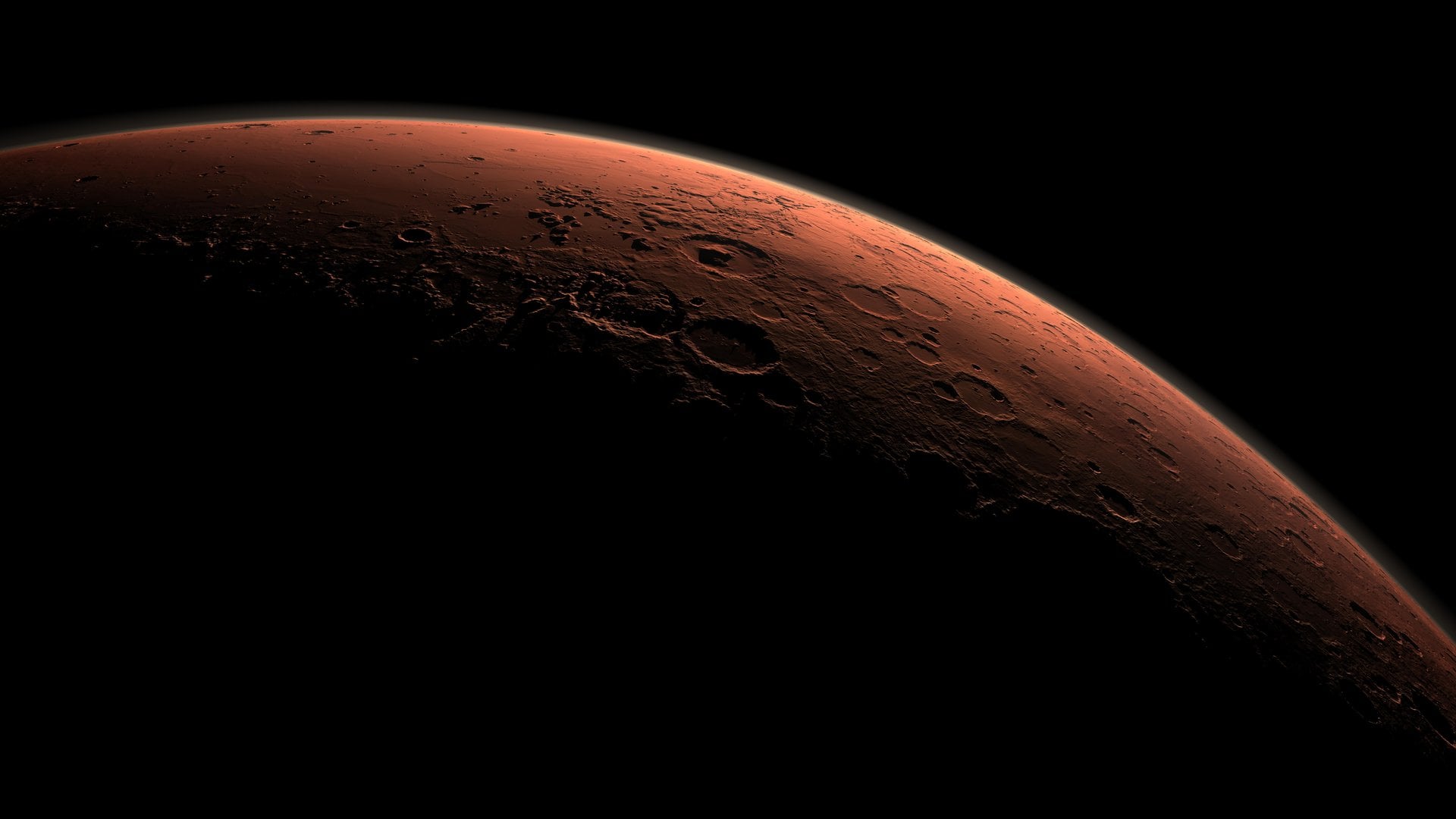
Daybreak at Mars'Gale Crater Credits: NASA/JPL-Caltech

The light, rare element boron, better known as the primary component of borax, a longtime household cleaner, was almost mined to exhaustion in parts of the old American West. But boron could arguably be an unsung hero in cosmic astrobiology, although it's still not listed as one of the key elements needed for the onset of life.


"Red Geyser" Galaxies Have Plenty of Star-Forming Gas But Don't Form Stars

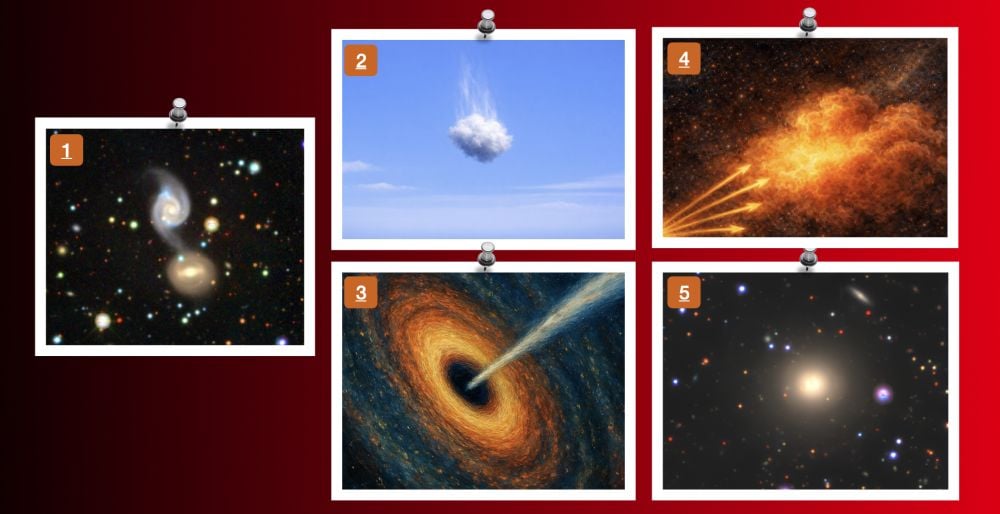
These illustrations show what happens to prevent Red Geyser galaxies from forming new stars. Mergers can send clouds of cool gas toward a galaxy's center. The gas can feed the galaxy's black hole so that the black hole's feedback heats up the gas. Hot gas is the enemy of star formation, so despite having plenty of gas, Red Geysers are quenched. Image Credit: UC Santa Cruz

Red Geysers are an unusual class of galaxy that contain only old stars. Despite having plenty of star-forming gas, Red Geysers are quenched. Astronomers have mapped the flow of gas in these galaxies and figure out why they're dormant.


Thursday, January 29, 2026

New Research Reveals the Ingredients for Life Form on Their Own in Space

A new study led by researchers from Aarhus University showed that amino acids spontaneously bond in space, producing peptides that are essential to life as we know it. Their findings suggest that the building blocks of life are far more common throughout space than previously thought, with implications for astrobiology and SETI.


NASA Fires Up Nuclear Future for Deep Space Travel

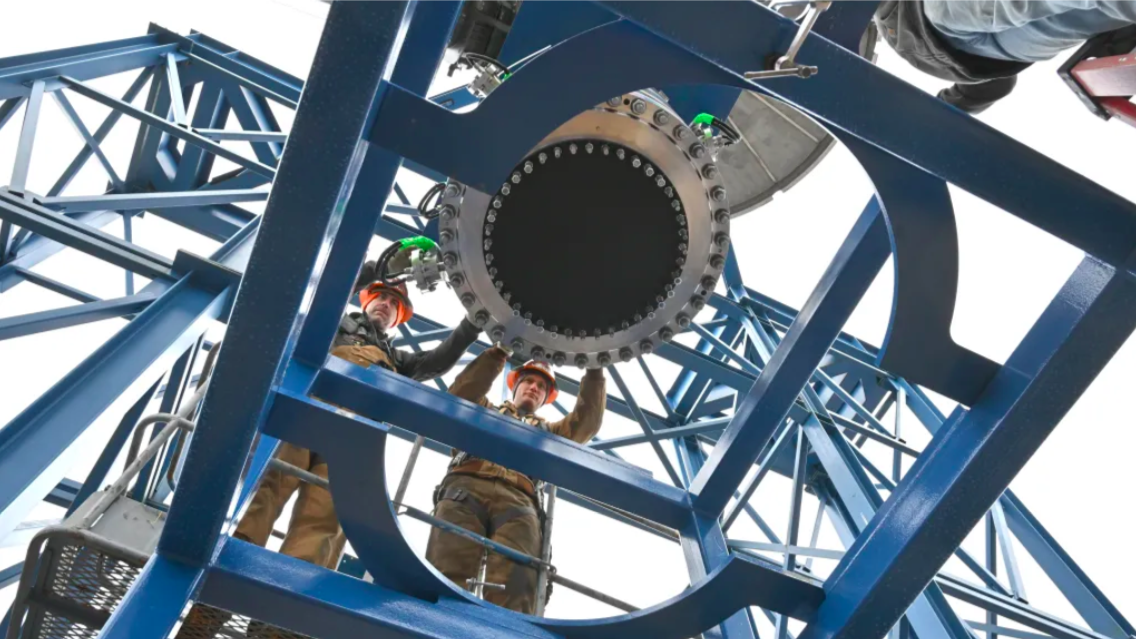
Engineers install a flight reactor engineering development unit into Test Stand 400 in preparation for cold flow testing (Credit : NASA/Adam Butt)

NASA has completed its first major testing of nuclear reactor hardware for spacecraft propulsion in over 50 years, marking a crucial step toward faster, more capable deep space missions. Engineers at Marshall Space Flight Center conducted more than 100 ‘cold flow’ tests on a full scale reactor engineering development unit throughout 2025, gathering vital data on how propellant flows through the system under various conditions.


Finding A Frozen Earth In Old Data

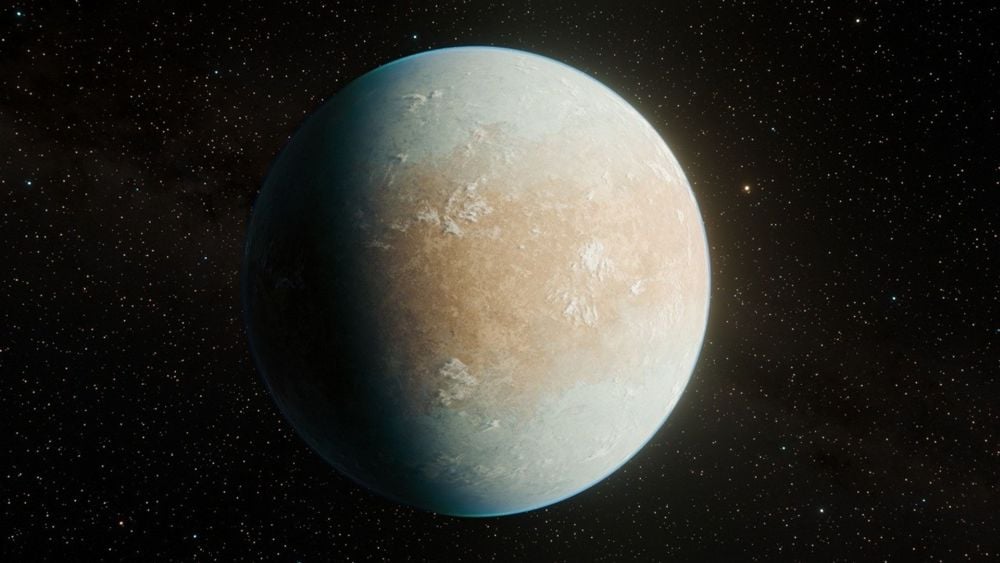
This artist's illustration shows HD 137010 b, a so-called Cold Earth detected around a Sun-like star about 146 light-years away. It's only slightly larger than Earth, and has nearly the same length orbit. It's on the outskirts of the star's habitable zone, and is even colder than Mars. It's a good target for meaningful follow-up observations. Image Credit: NASA/JPL-Caltech/Keith Miller (Caltech/IPAC)

Finding Earth-like planets is the primary driver of exoplanet searches because as far as we know, they're the ones most likely to be habitable. Astronomers sifting through data from NASA's Kepler Space Telescope have found a remarkably Earth-like planet, but with one critical difference: it's as cold as Mars.


Wednesday, January 28, 2026

Solving the Century Old Puzzle of Our Galaxy's Neighborhood

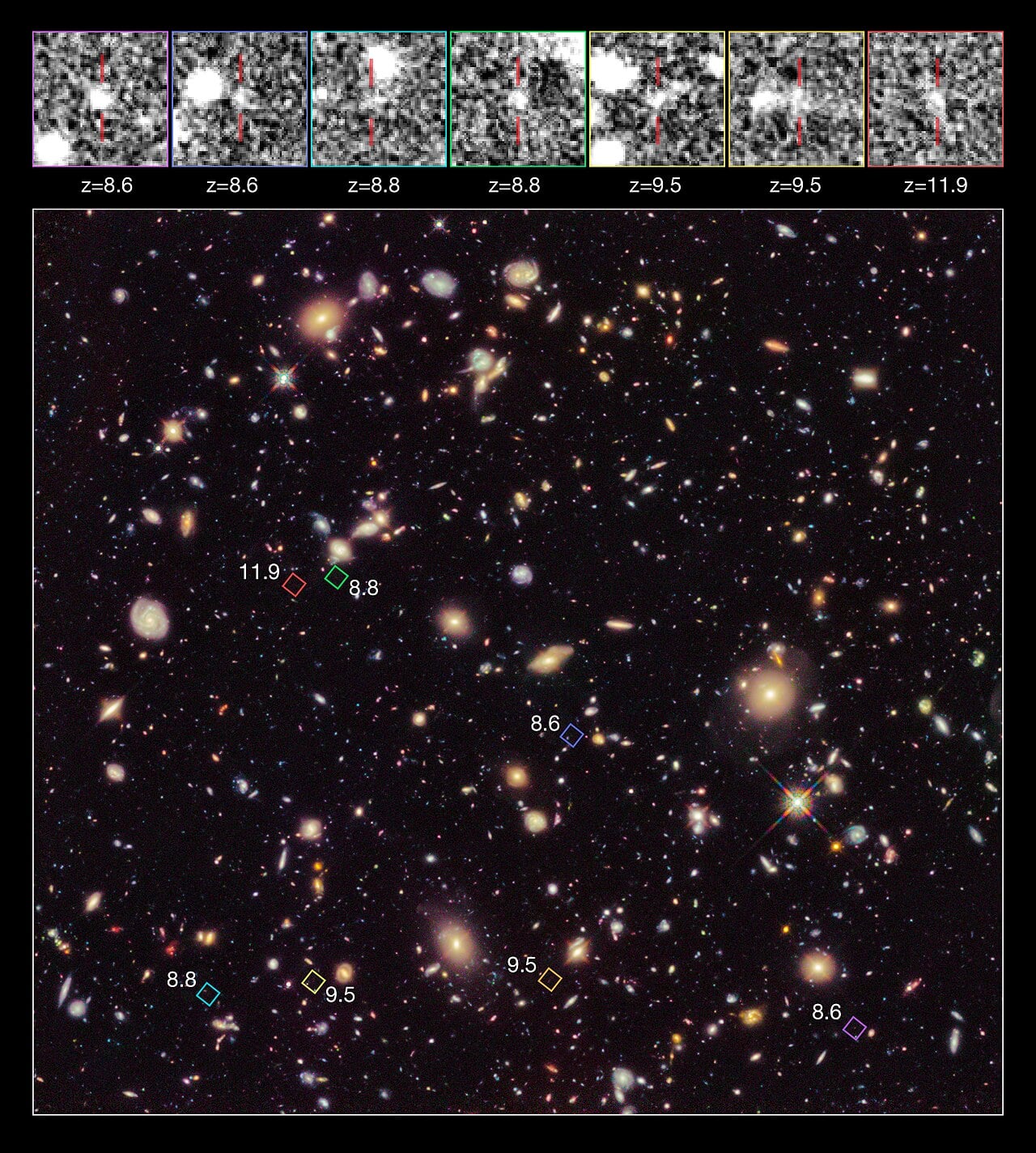
High redshift galaxy candidates in the Hubble Ultra Deep Field, 2012 reveal the large scale expansion of the universe (Credit : NASA, ESA, R. Ellis-Caltech)

Nearly a century after Edwin Hubble discovered the universe's expansion, astronomers have finally explained the nagging mystery of why most nearby galaxies rush away from us as if the Milky Way's gravity doesn't exist? The answer lies in a vast, flat sheet of dark matter stretching tens of millions of light years around us, with empty voids above and below that make the expansion appear smoother than it should.


Mercury May Not Be "Dead" After All

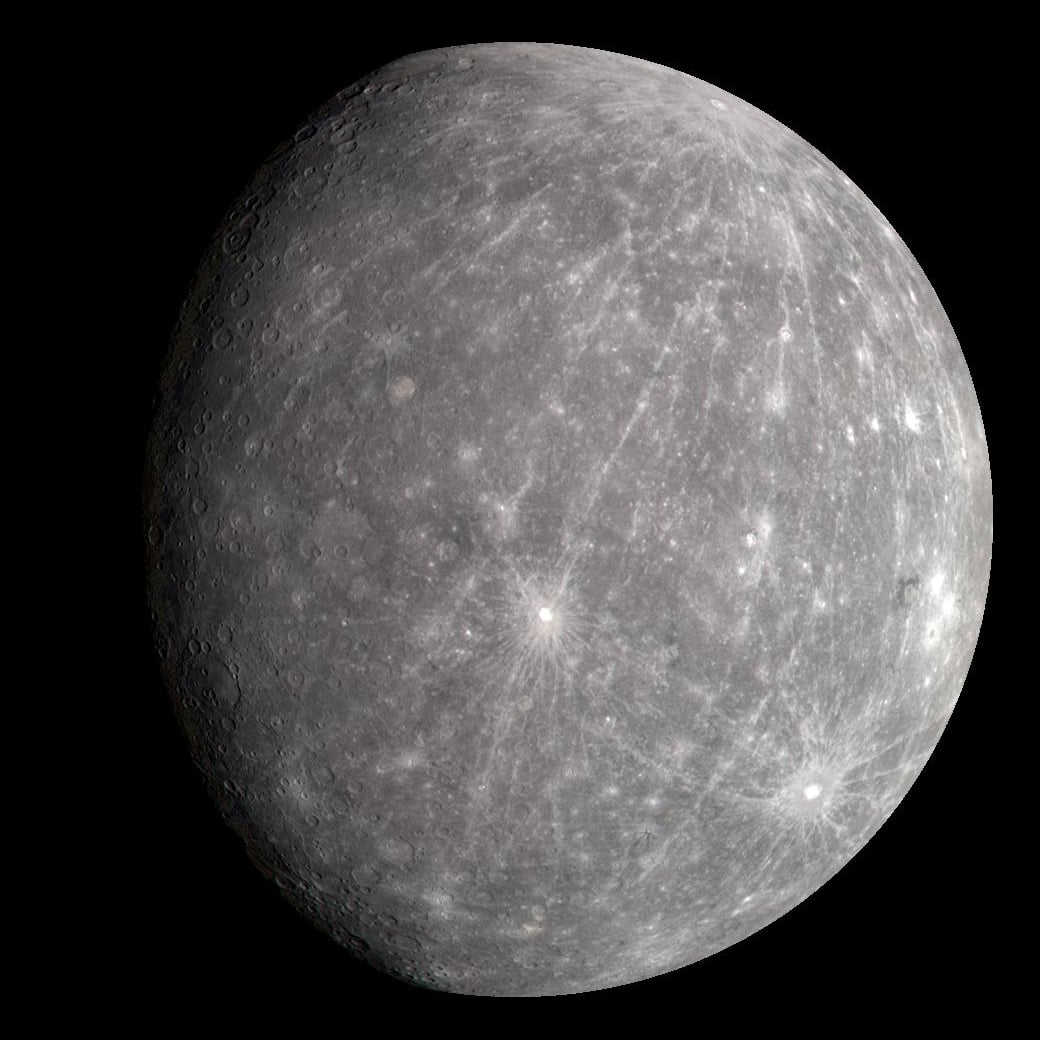
Mercury in true colour captured by Messenger in 2008 (Credit : NASA/John Hopkins University)

Researchers using machine learning have discovered hundreds of mysterious bright streaks on Mercury's surface that appear to be caused by gases escaping from the planet's interior. The finding suggests the Solar System's smallest planet isn't the static, geologically dead world we thought it was, Mercury might still be active today, continuously releasing material into space even billions of years after its formation.


Do Dwarf Galaxies Merge In The Milky Way's Halo?

This VISTA image shows the Large Magellanic Cloud, which is probably the most well-known dwarf galaxy. It's one of at least 50 dwarf galaxies that are satellites of the Milky Way. Scientists think that dwarf galaxies in galactic haloes merge with one another, but clear evidence is hard to find. New research may have found the best evidence yet. Image Credit: ESO/VMC Survey[link text](https://example.com)

Our current understanding of the Cosmos shows that structures emerge hierarchically. First there are dark matter densities, then dwarf galaxies. Those dwarfs then merge to form more massive galaxies, which merge together into even larger galaxies. Evidence of dwarf galaxy mergers is difficult to obtain, but new research found some in the Milky Way's halo.


Tuesday, January 27, 2026

Mapping the Invisible

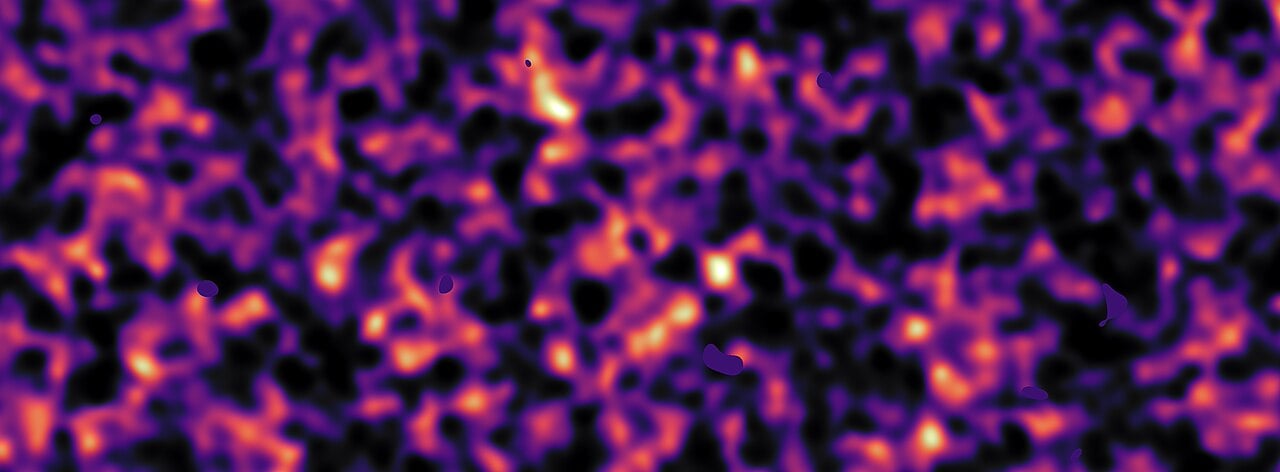
Dark matter map for a patch of sky based on gravitational lensing analysis of a Kilo-Degree Survey (Credit : Kilo-Degree Survey Collaboration/H. Hildebrandt & B. Giblin/ESO)

Dark matter remains invisible to our telescopes, yet its gravitational fingerprints pervade the universe. Using NASA's James Webb Space Telescope, scientists have produced one of the most detailed dark maps ever created, revealing with unprecedented clarity how dark matter and ordinary matter have grown up together. The map shows that wherever galaxies cluster in their thousands, equally massive concentrations of dark matter occupy the same space, a close alignment that confirms dark matter's gravity has been shepherding regular matter into stars, galaxies, and ultimately the complex planets capable of supporting life.


Researchers Use AI To Find Astronomical Anomalies Buried In Archives

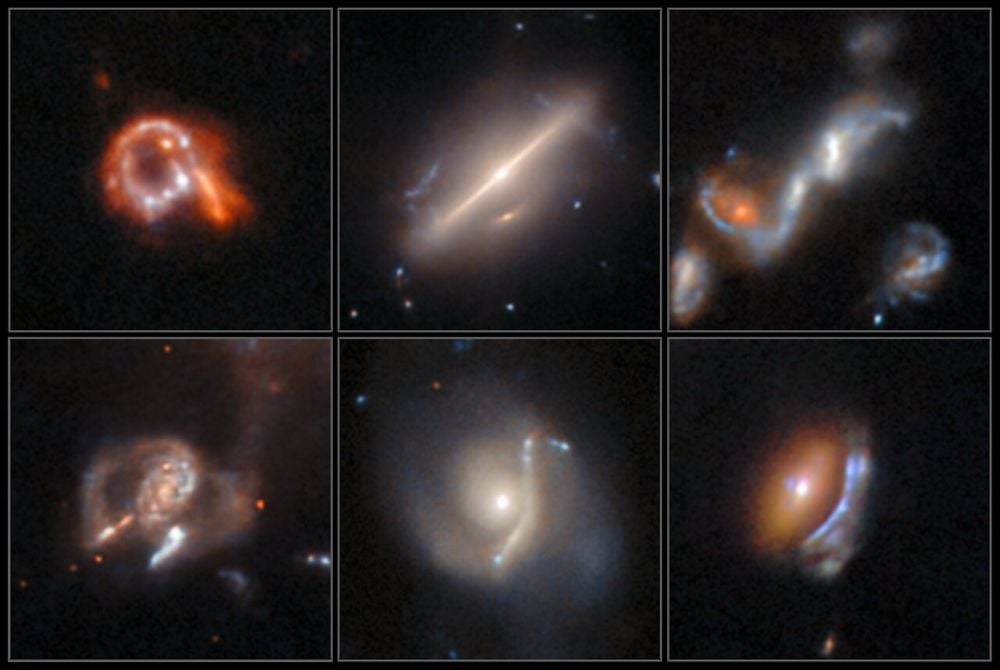
These six galaxies were among the almost 1,400 anomalous objects buried in the Hubble Legacy Archive. Researchers used AI tools to comb through the vast archive and detect anomalous objects. The discovered objects include a ring-shaped galaxy, a bipolar galaxy, a group of merging galaxies, and three galaxies with warped arcs created by gravitational lensing. Image Credit: ESA/Hubble & NASA, D. O’Ryan, P. Gómez (European Space Agency), M. Zamani (ESA/Hubble)

AI faces strong skepticism due to its potential for misuse, its drain on resources, and even its potential dumbing down of students. But new results illustrate its uses. A team of astronomers have used a new AI-assisted method to search for rare astronomical objects in the Hubble Legacy Archive. The team sifted through nearly 100 million image cutouts in just two and a half days, uncovering nearly 1400 anomalous objects, more than 800 of which had never been documented before.


This Rapidly Growing Black Hole Is Challenging Super-Eddington Accretion

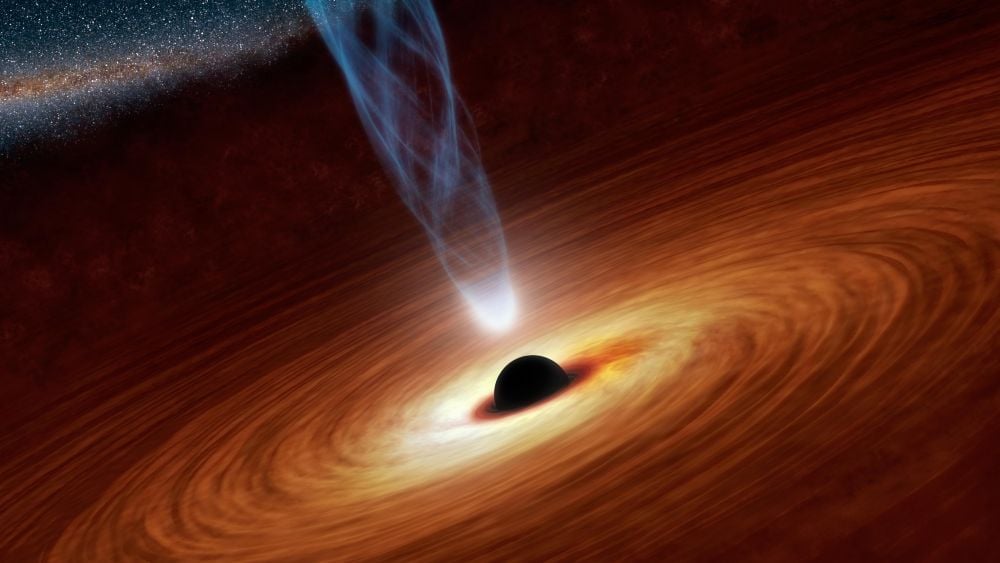
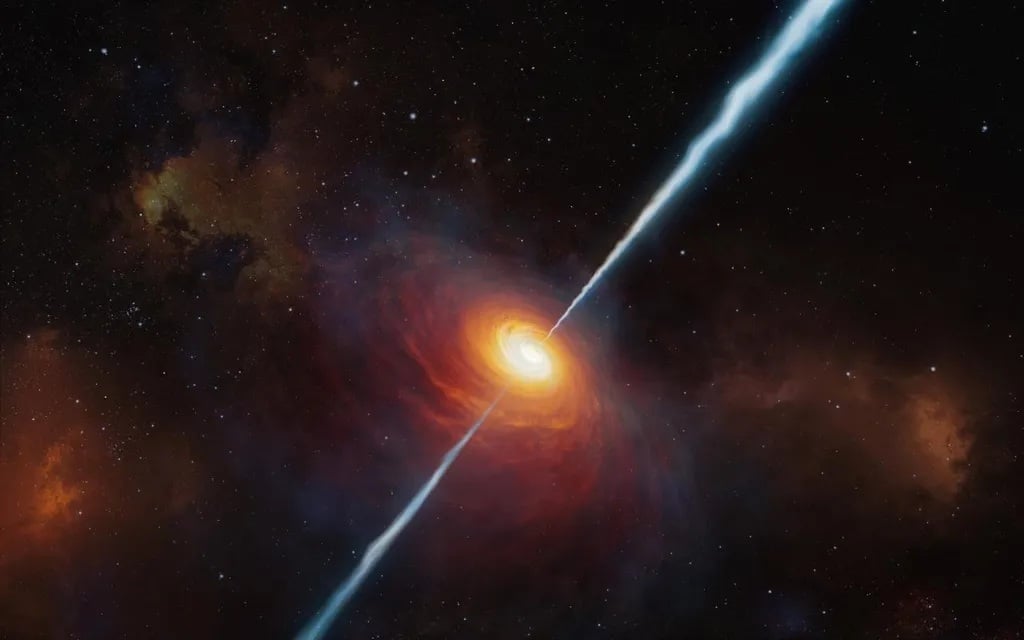
This artist’s impression of a supermassive black hole system shows some of the detail in these puzzling objects. Infalling gas forms an accretion disk around the hole, with a bright corona of plasma nearest the black hole. The SMBH is also launching relativistic jets from its poles. Image Credit: NASA/JPL-Caltech

Why are SMBH in the early Universe so massive? According to astrophysical models, these extraordinarily large SMBH haven't had time to become so massive. Super-Eddington accretion might explain it, but can it explain a very unusual early SMBH recently discovered?


The HWO Must Be Picometer Perfect To Observe Earth 2.0

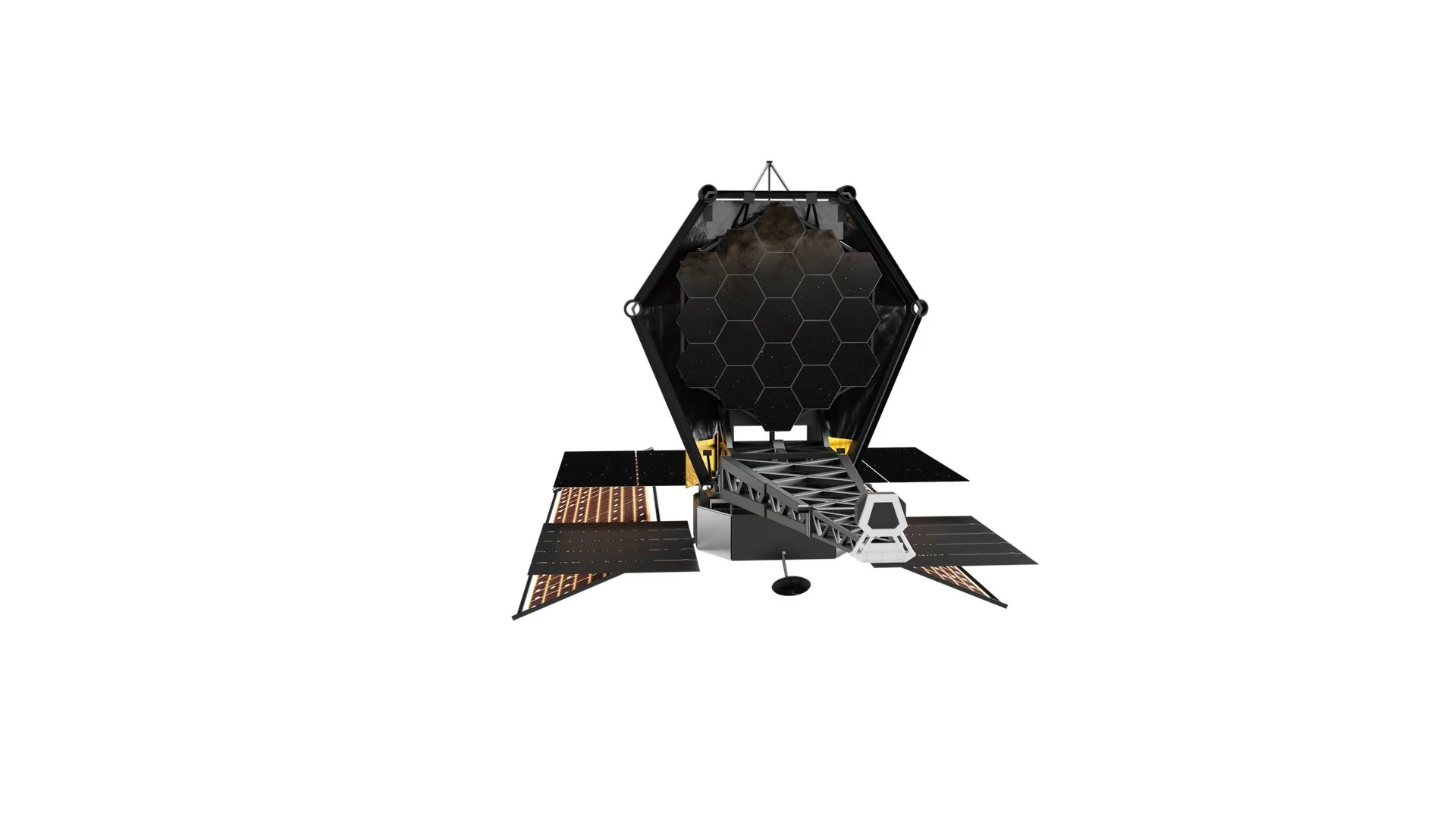
Artist's concept of the Habitable Worlds Observatory. Credit - NASA / Jonathan North / Walt Feimer / Aaron E. Lepsch

Lately we’ve been reporting about a series of studies on the Habitable Worlds Observatory (HWO), NASA’s flagship telescope mission for the 2040s. These studies have looked at the type of data they need to collect, and what the types of worlds they would expect to find would look like. Another one has been released in pre-print form on arXiv from the newly formed HWO Technology Maturation Project Office, which details the technology maturation needed for this powerful observatory and the “trade space” it will need to explore to be able to complete its stated mission.


Asteroid 2024 YR4 Has a 4% Chance of Hitting the Moon. Here’s Why That’s a Scientific Goldmine.

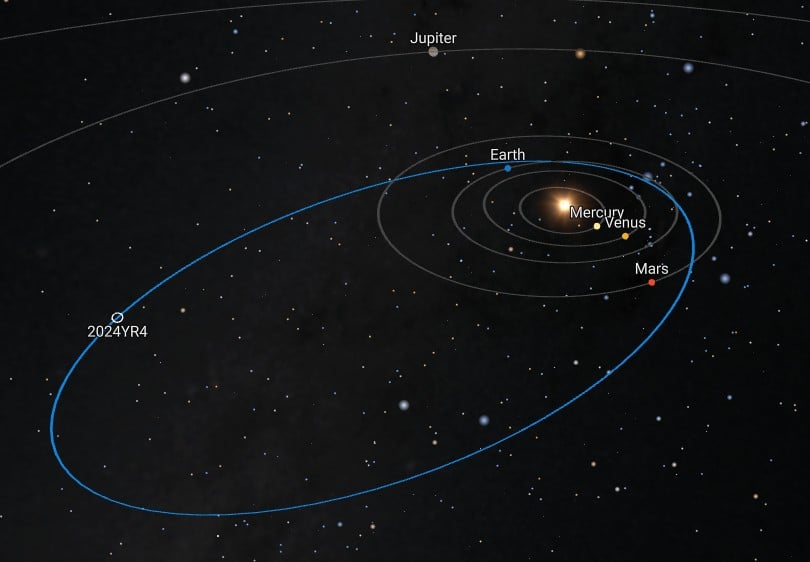
Oribtal path of Asteroid 2024 YR4. Credit - ESA Orbit Visualization Tool

There’s a bright side to every situation. In 2032, the Moon itself might have a particularly bright side if it is blasted by a 60-meter-wide asteroid. The chances of such an event are still relatively small (only around 4%), but non-negligible. And scientists are starting to prepare both for the bad (massive risks to satellites and huge meteors raining down on a large portion of the planet) and the good (a once in a lifetime chance to study the geology, seismology, and chemical makeup of our nearest neighbor). A new paper from Yifan He of Tsinghua University and co-authors, released in pre-print form on arXiv, looks at the bright side of all of the potential interesting science we can do if a collision does, indeed, happen.

Monday, January 26, 2026

Galilean Moons’ Water Differences Set During Formation

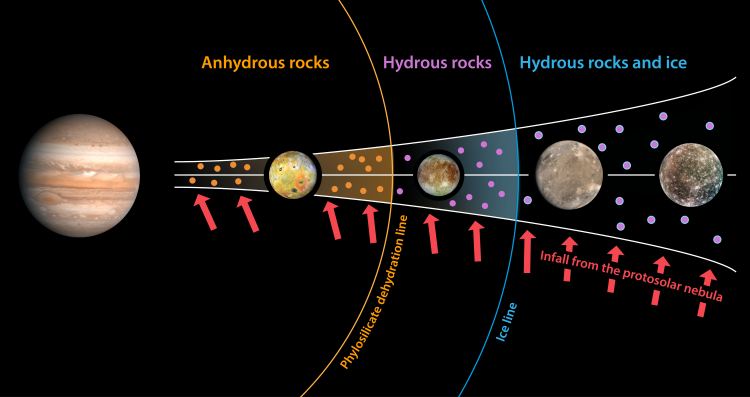
Diagram depicting the formation materials for the Galilean moons, with Io receiving anhydrous (non-water) rocks, Europa receiving hydrous (water-rich) rocks, while Ganymede and Callisto primarily received ices. (Credit: Southwest Research Institute)
How long did it take to establish the water content within Jupiter’s Galilean moons, Io and Europa? This is what a recent study published in The Astrophysical Journal hopes to address as a team of scientists from the United States and France investigated the intricate processes responsible for the formation and evolution of Io and Europa. This study has the potential to help scientists better understand the formation and evolution of two of the most unique moons in the solar system, as Io and Europa are known as the most volcanically active body in the solar system and an ocean world estimated to contain twice the volume of Earth’s oceans, respectively.


Icy Comets Get A Contribution From Stellar Furnaces

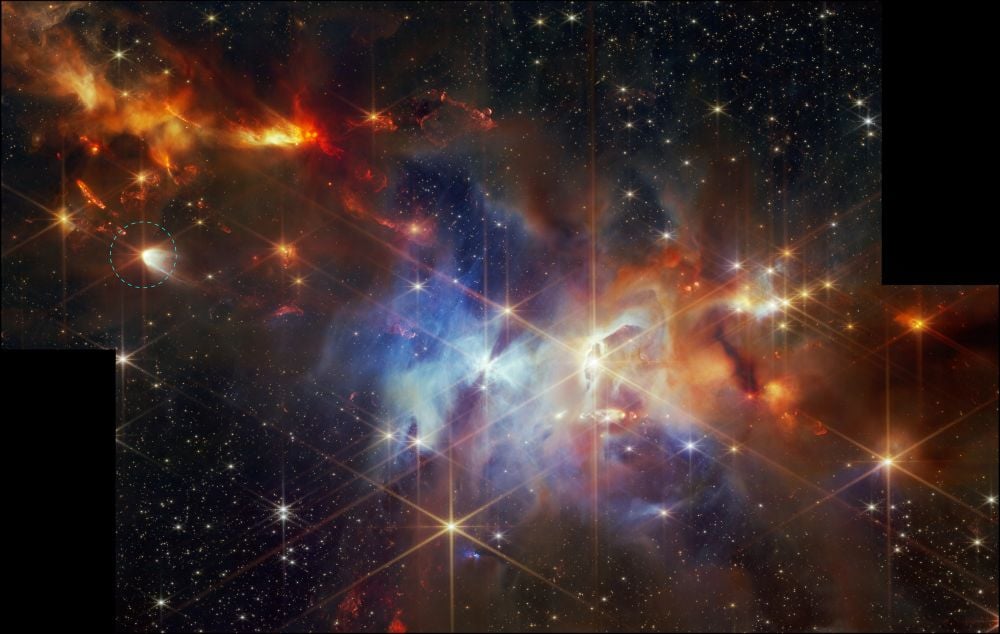
The JWST captured this image with its NIRCam instrument. It shows the actively forming protostar EC 53 (circled) in the Serpens Nebula. It doesn't show up in this image, but EC 53 has a protoplanetary disk where planets form. Researchers also used the JWST's MIRI to examine the protostar and its disk. They found crystal silicates throughout the disk, which helps explain why we find them in comets in our own Solar System. Image Credit: NASA, ESA, CSA, STScI, Klaus Pontoppidan (NASA-JPL), Joel Green (STScI); Image Processing: Alyssa Pagan (STScI)

Icy comets contain common crystals that can only be formed in extreme heat. But comets reside in the frigid outer reaches of the Solar System. How did these materials form, and how did they find their way into the Solar System's cold fringes?


The Unexpected Evolution Aboard the ISS

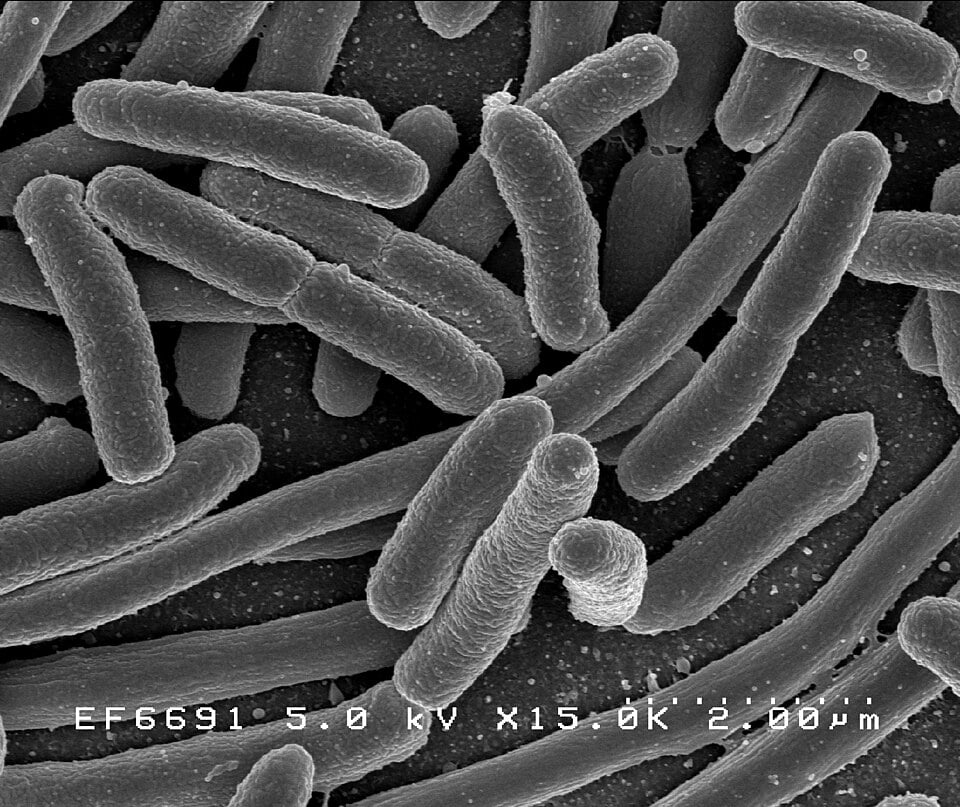
Scanning electron micrograph of E Coli, grown in culture and adhered to a cover slip. Such bacteria was used in a recent study on board the ISS (Credit: NIAID)

New research from the International Space Station reveals that in near weightless conditions, both bacteriophages and their *E. coli* hosts mutate in ways not seen on Earth. This unexpected finding not only deepens our understanding of how microbial life adapts to extreme environments but has already yielded practical benefits. Some of the mutations discovered in space dwelling viruses led researchers to create superior viruses that specifically infect and kill bacteria, capable of fighting drug resistant bacterial infections back on Earth.


Sunday, January 25, 2026

NASA's Webb Telescope Peers Into the Heart of the Circinus Galaxy

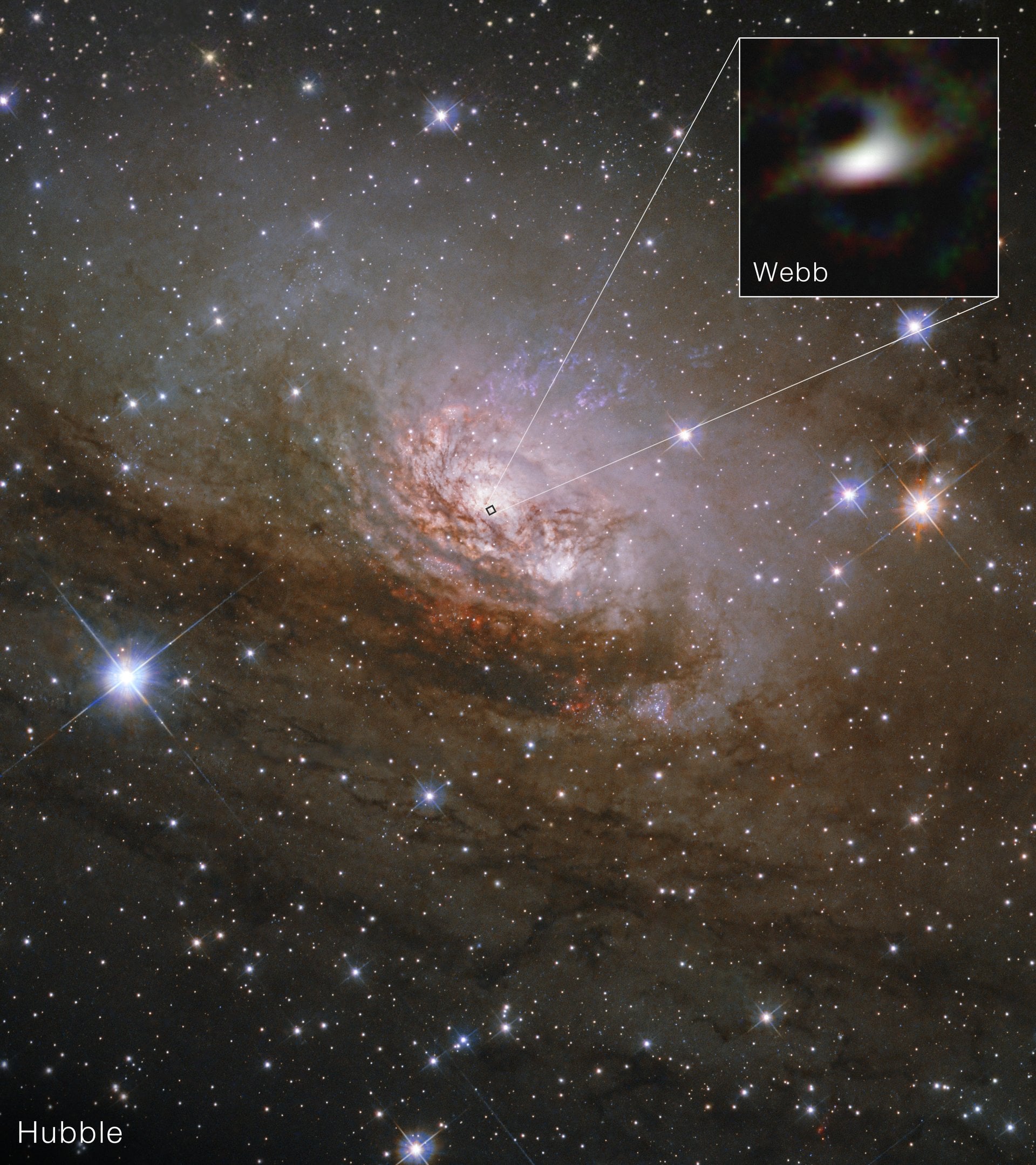
This image from NASA’s Hubble Space Telescope shows a full view of the Circinus galaxy, a nearby spiral galaxy about 13 million light-years away. Credit: NASA/ESA/CSA/STScI/NSF's NOIRLab/CTIO

The Circinus Galaxy, a galaxy about 13 million light-years away, contains an active supermassive black hole that continues to influence its evolution. The largest source of infrared light from the region closest to the black hole itself was thought to be outflows, or streams of superheated matter that fire outward.


Friday, January 23, 2026

The Sun's Red Dwarf Neighbors Provide Clues to Origins of Carbon and Oxygen

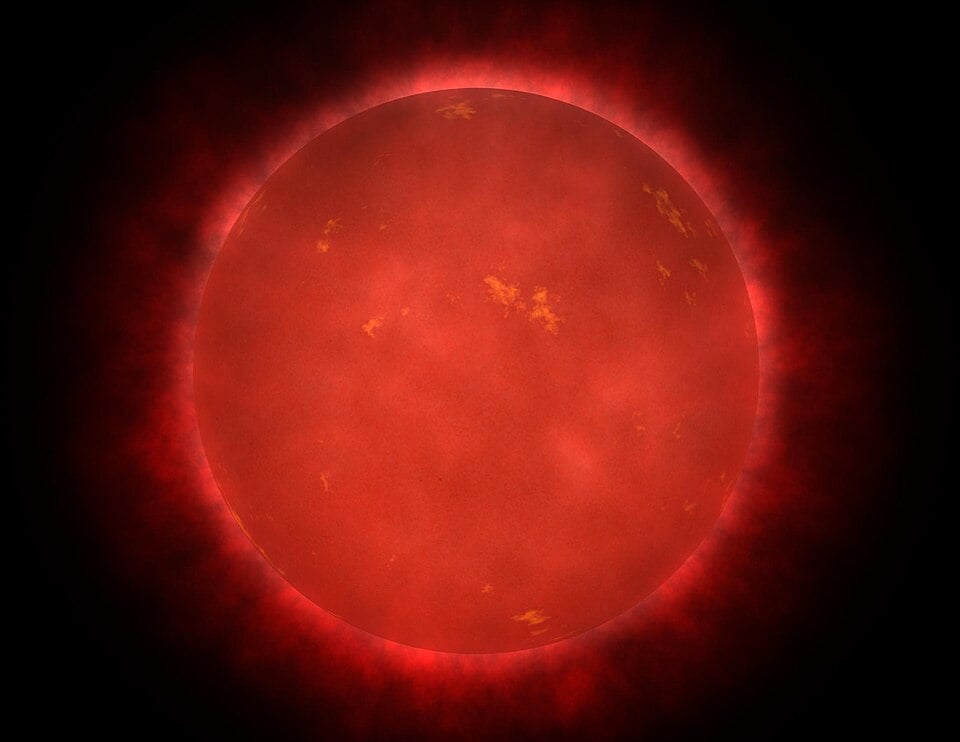
An artist's concept of a red dwarf that lies about 8 light-years away from the Sun. Courtesy NASA/Walt Feimer

We live near a fusion reactor in space that provides all our heat and light. That reactor is also responsible for the creation of various elements heavier than hydrogen, and that's true of all stars. So, how do we know that stars are element generators?


The Many Faces of Monster Galaxies

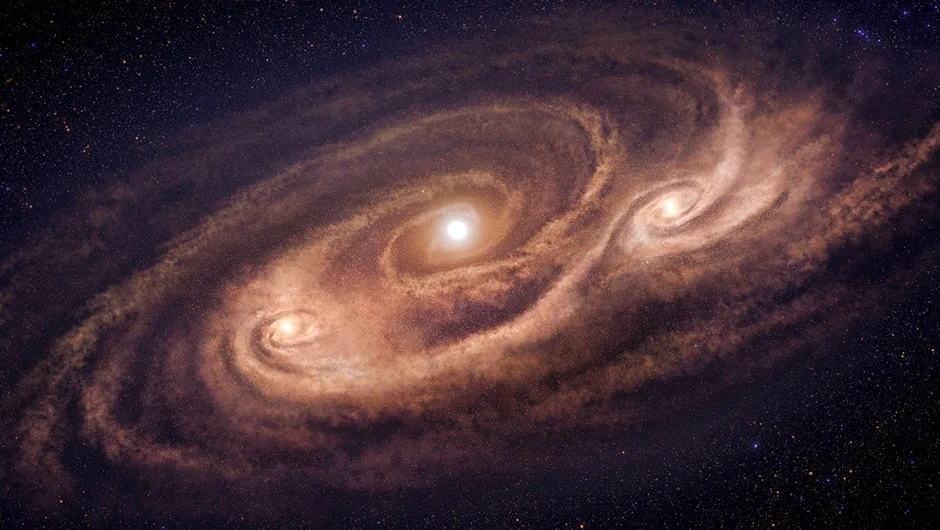
Artist's rendering of COSMOS-AzTEC-1 (Credit : National Astronomical Observatory of Japan)

The earliest galaxies in the universe earned the nickname "monster galaxies" for good reason, they formed stars at rates hundreds of times faster than the Milky Way, growing rapidly after the dawn of time. Astronomers using ALMA and the James Webb Space Telescope have now revealed that three such monsters each achieved their extraordinary growth through completely different mechanisms. By comparing where stars are forming today with where they formed in the past, researchers discovered that galaxy collisions, internal instability, and minor mergers can all trigger these growth spurts, fundamentally changing our understanding of how the universe's most massive galaxies came to be.


An Almost-Famous Galaxy Cluster Is The JWST's Picture Of The Month

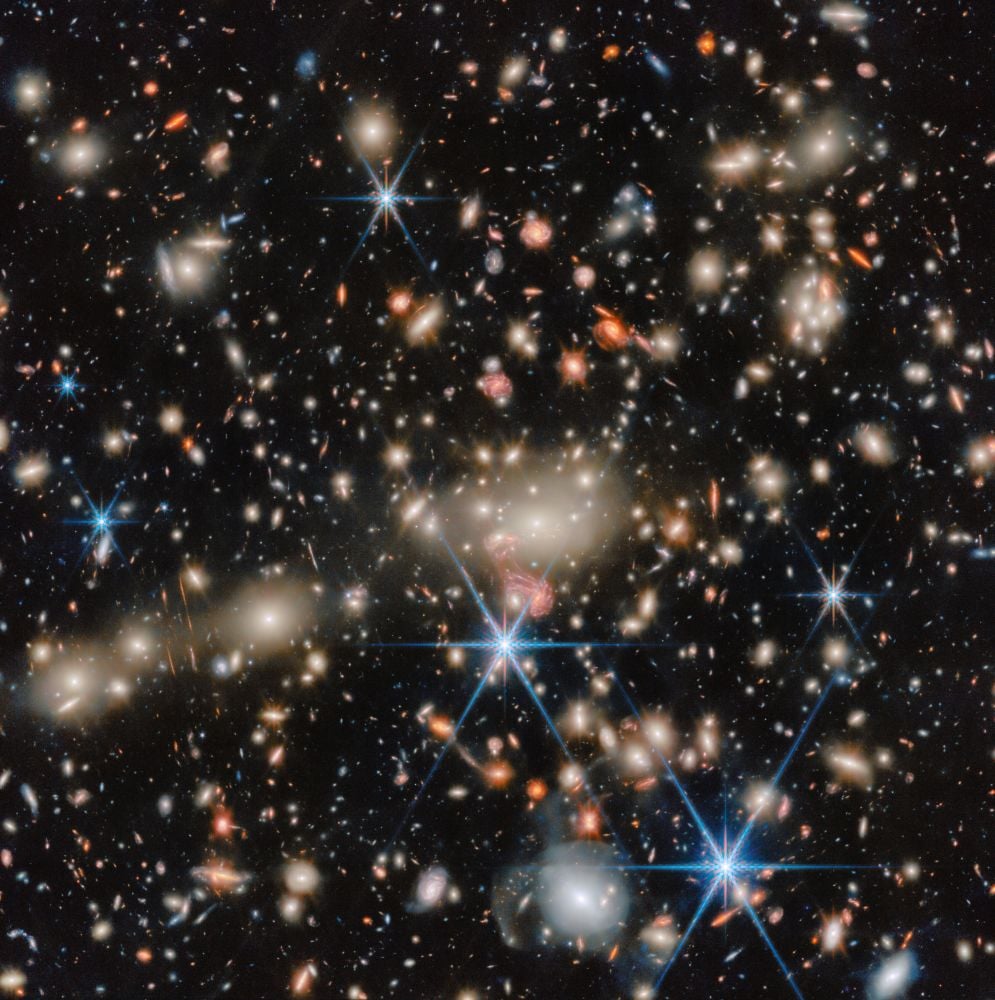
This is MACS J1149, a massive galaxy cluster used as a gravitational lens. It's about 5 billion light-years away and contains at least 300 galaxies, and likely many hundreds more. It's been selected as the NASA/ESA/CSA James Webb Space Telescope Picture of the Month. Image Credit: ESA/Webb, NASA & CSA, C. Willott (National Research Council Canada), R. Tripodi (INAF - Astronomical Observatory of Rome). LICENCE: CC BY 4.0 INT or ESA Standard Licence

Gravitational lensing is a powerful tool that brings impossibly distant galaxies into reach. The JWST uses galaxy clusters and their overpowering to magnify background galaxies that are otherwise beyond our observational capabilities. One cluster, named MACS J1149.5+2223, is 5 billion light-years away and holds at least 300 galaxies, probably many more. It's been chosen as the JWST's Picture Of The Month.


Electric Shocks Could Enforce a Lunar Speed Limit

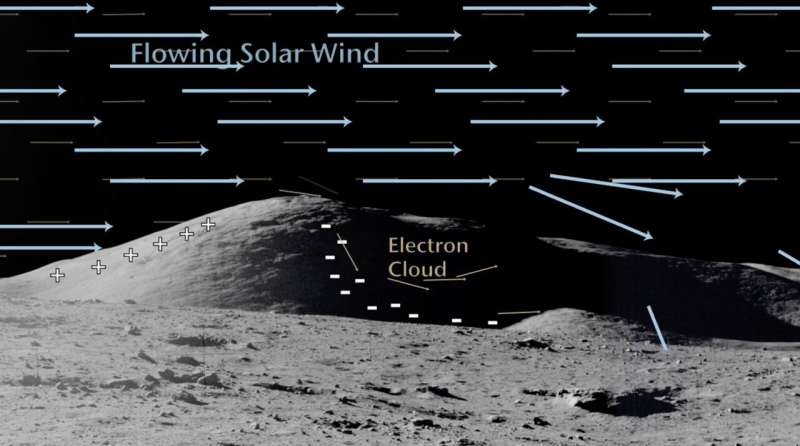
Showing how a PSR is affected by the electron flow that can remove charge. Credit - NASA

As they roll across shadowed regions of the moon's surface, future lunar rovers could develop hazardous buildups of electric charge on their wheels. Through new analysis published in Advances in Space Research, Bill Farrell at the Space Science Institute in Colorado, together with Mike Zimmerman at Johns Hopkins University, outline realistic precautions for mitigating this risk—offering valuable guidance for engineers designing future lunar missions.


Thursday, January 22, 2026

Mysterious No More: Astronomers Used The Hubble To Solve The Blue Straggler Problem

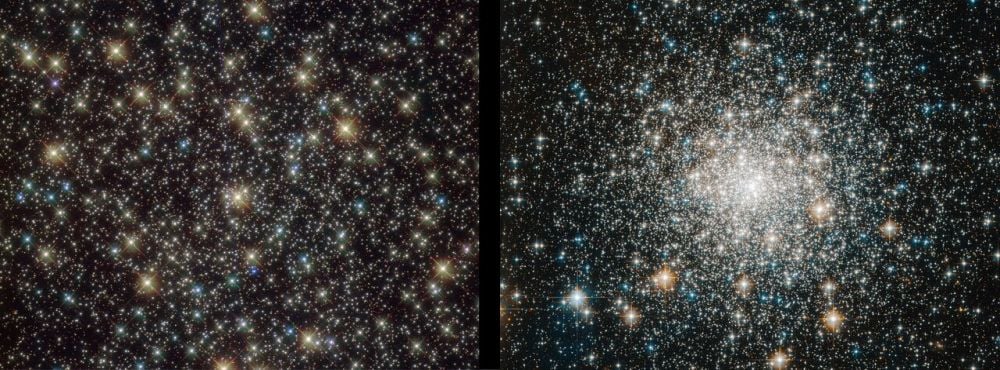
Astronomers have puzzled over a type of star called Blue Stragglers for decades. They're more luminous and bluer than they should be. This makes them look young for their ages. Astronomers find them in globular clusters, and now they think they know why. This image features NGC 3201 (left), one of the looser clusters in new data, and Messier 70, which is the the densest cluster in the new research. Image Credit: ESA/Hubble & NASA

How do blue stragglers defy the aging that turns their mates red? Blue stragglers are found in ancient star clusters, where they outshine stars the same age, looking far bluer and younger than their true age. Astrophysicists have tried to understand blue stragglers for decades. New research using the NASA/ESA Hubble Space Telescope is finally revealing how these ageless stars come to be and why they thrive in quieter cosmic neighbourhoods.


Gazing Into The Eye Of Sauron With The JWST

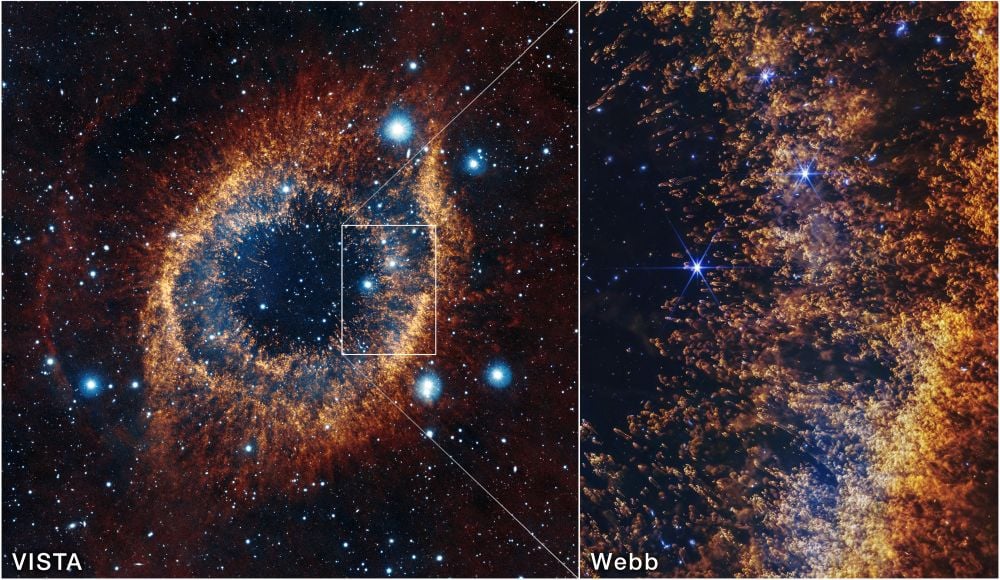
The image of the Helix Nebula on the left is from the ESO's VISTA telescope in Chile, a visual and infrared telescope with a 4.1 meter primary mirror. On the right is a JWST image of the nebula taken with its NIRCam instrument. Image Credit: ESO, VISTA, NASA, ESA, CSA, STScI, J. Emerson (ESO); Acknowledgment: CASU

The Helix Nebula is one of the closest and brightest planetary nebula. It's what's left of a dying star and has nothing to do with planets. Our Sun will end up as one of these sumptuous displays, and a new JWST image reveals even more detail in the stunning nebula.


Probing the Mysteries of the Solar Corona with ESA’s Proba-3

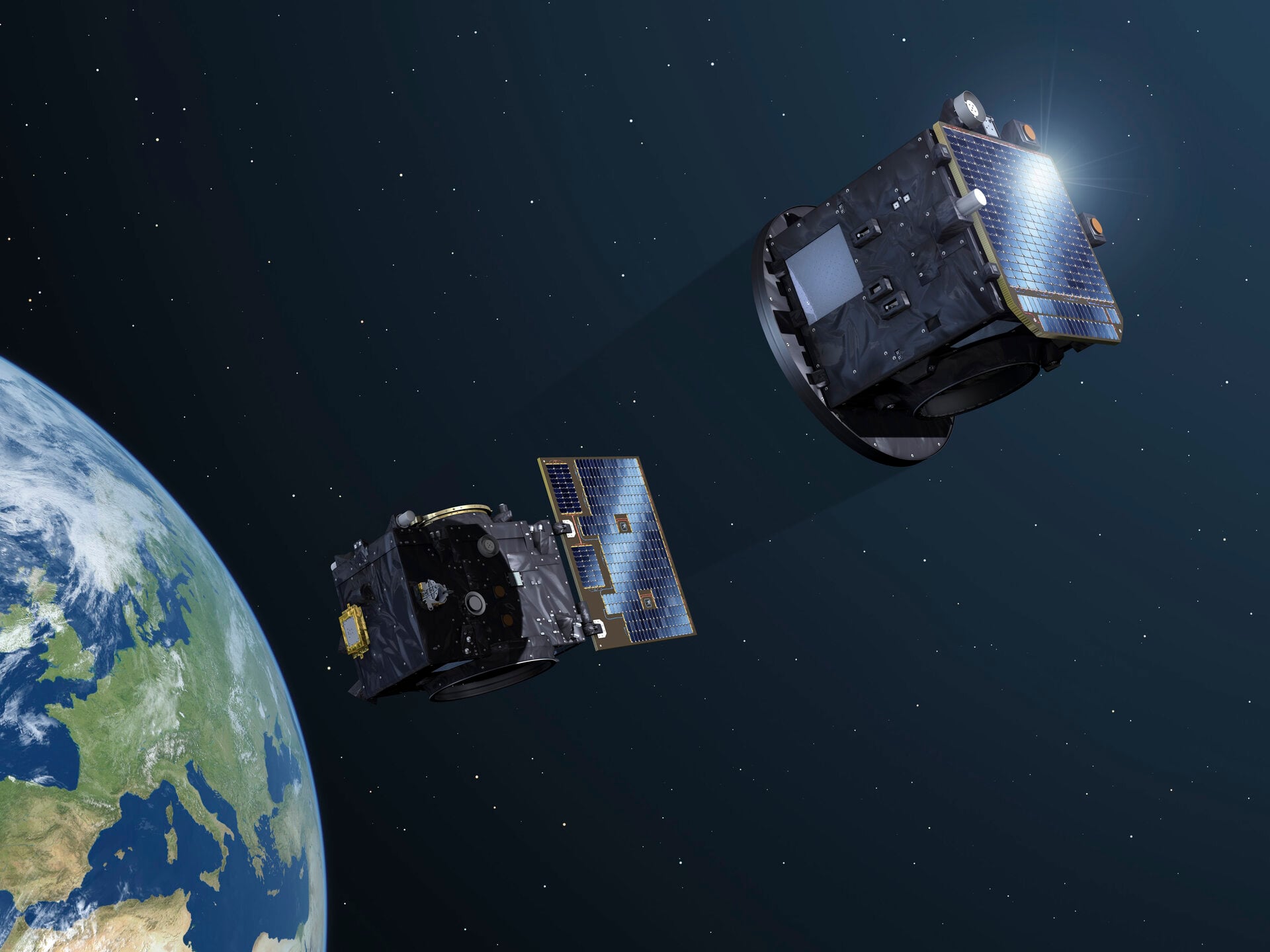
An artist's conception of the Proba-3 mission in orbit. Credit: ESA.

Some really unique science can be done during a total solar eclipse. Totality is the one time we can see the elusive corona of the Sun, the pearly white segment of our host star’s lower atmosphere where space weather activity originates. The trouble is, totality is fleeting. What researchers really need are eclipses on demand. ESA’s innovative Proba-3 mission does just that, by making use of a free-flying occulting disk. Launched in late 2024, we’re now seeing some unique science and images from the space observatory.


Mutations from Space Might Solve an Antibiotic Crisis

Illustration of a phage attaching itself to a host cell. Credit - University of Wisconsin - Madison

If humans are ever going to expand into space itself, it will have to be for a reason. Optimists think that reason is simply due to our love of exploration itself. But in history, it is more often a profit motive that has led humans to seek out new lands. So, it stands to reason that, in order for us to truly begin space colonization, we will have to have a business-related reason to do so. A new paper from the lab of Srivatsan Raman at the University of Wisconsin-Madison and recently published in PLOS Biology, describes one potential such business case - genetically modifying bacteriophages to attack antibiotic resistant bacteria.


Wednesday, January 21, 2026

Hunting For T-Tauri Stars In A Dark Cloud

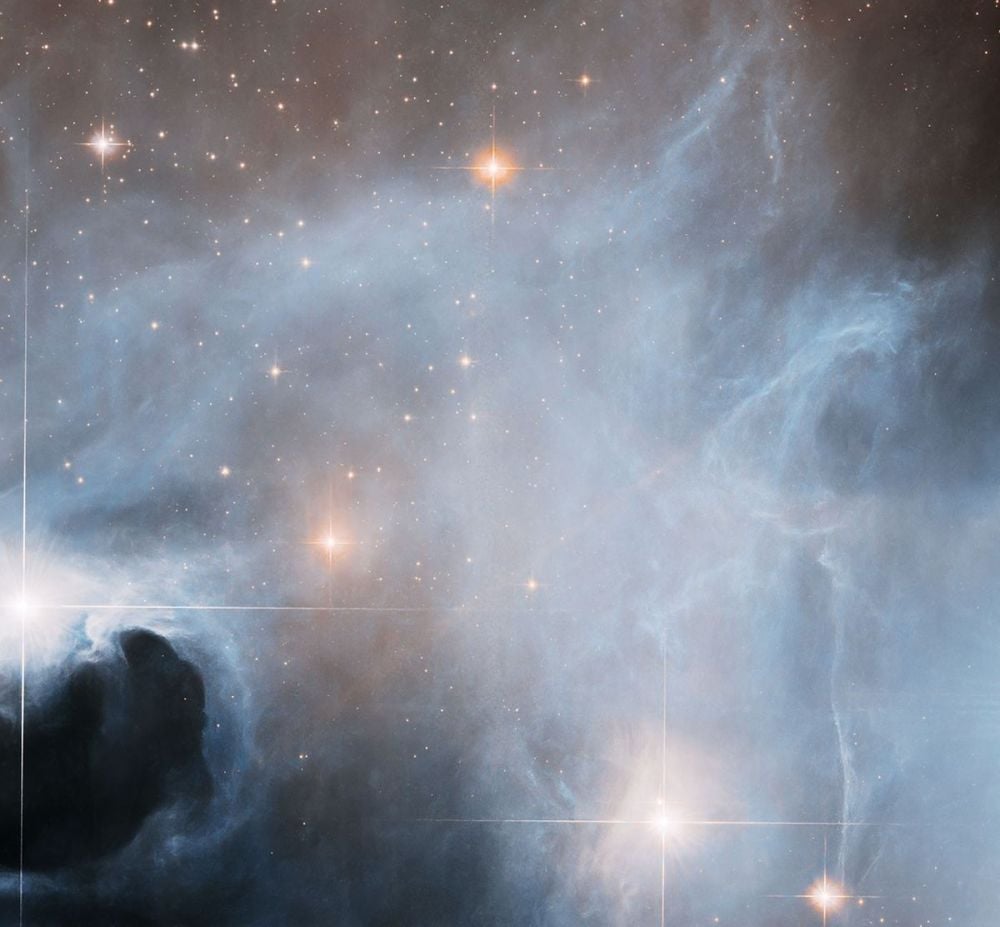
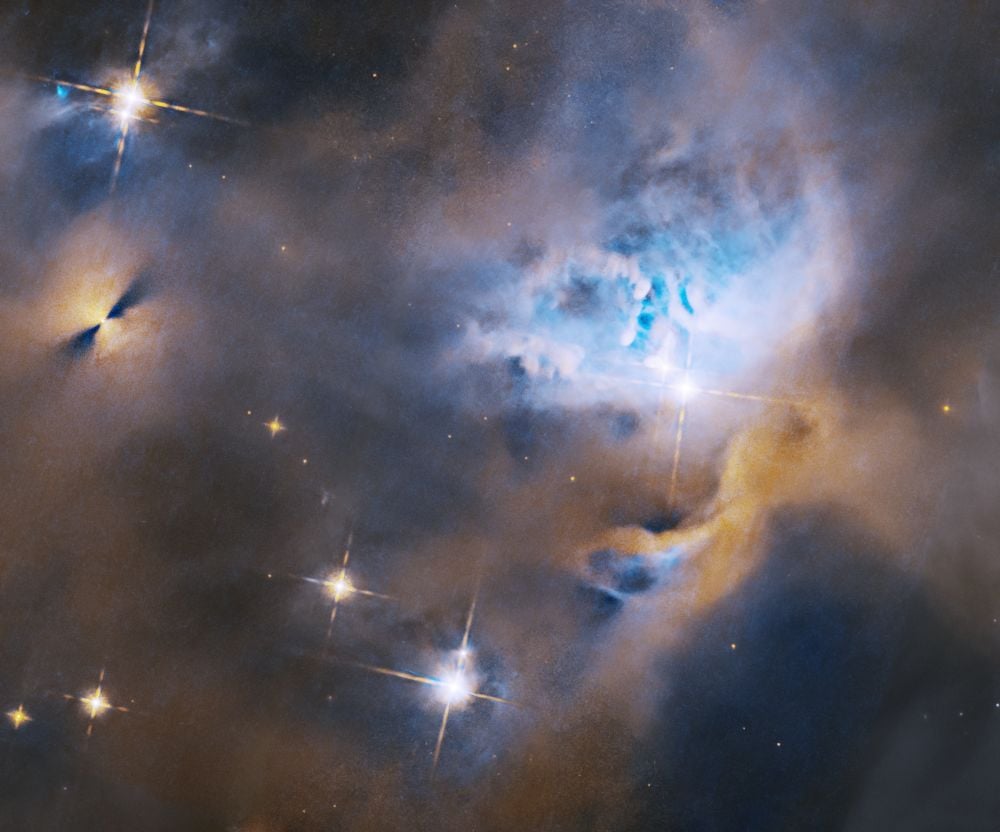
Wispy tendrils of gas float through the Lupus 3 star-forming region in this Hubble Space Telescope image. Lupus 3 features many bright young stars that are clearly visible, having dispersed the gas that surrounded them as they formed. Many others are still hidden inside their gaseous cocoons. Image Credit: NASA, ESA, and K. Stapelfeldt (Jet Propulsion Laboratory); Processing: Gladys Kober (NASA/Catholic University of America)

The Hubble Mission Team has released another image of the space telescope's study of star formation. This image shows the dark cloud Lupus 3, a star-forming region about 500 light-years away. Lupus 3 contains bright young T-Tauri stars, and 2 hot young stars that are creating a beautiful nebula.


ALMA Observes The Missing Link In Exoplanet Formation

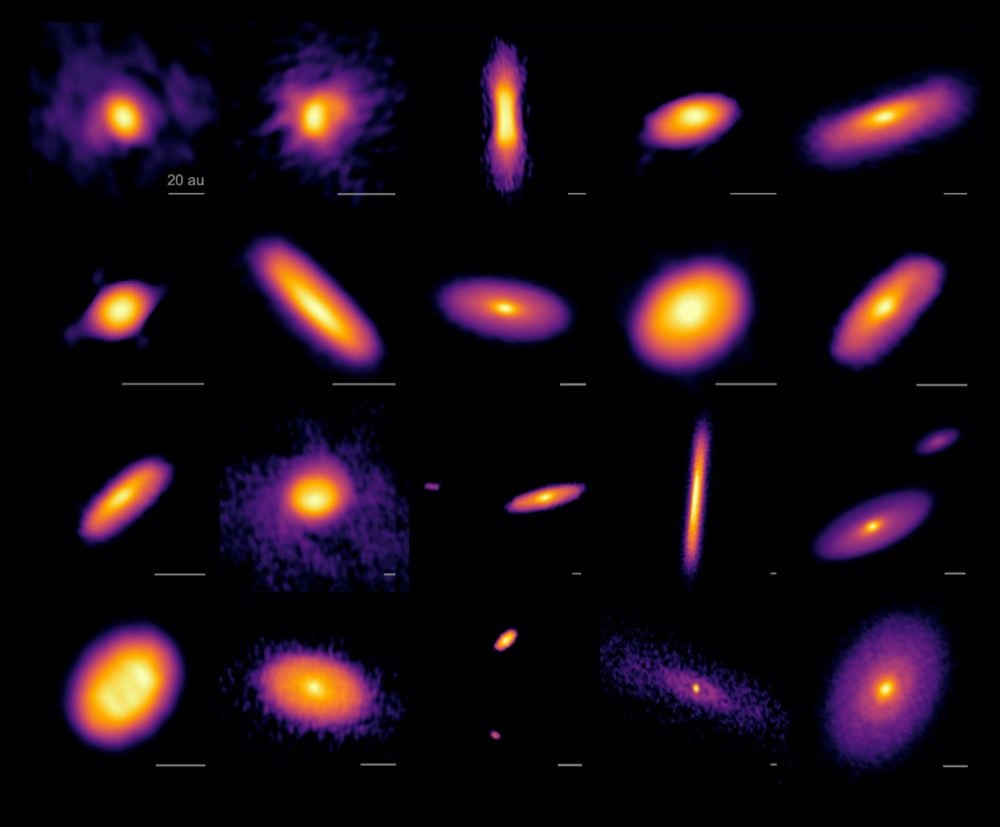
This figure shows 20 of the debris disks in the ARKS survey from youngest (upper left) to oldest (lower right). A scale bar measures 20 astronomical units in each image. The two oldest disks show faint ring-gap structures. Image Credit: ALMA (ESO/NAOJ/NRAO), N. Ohashi et al.

Back in 2014, the Atacama Large Millimeter/submillimeter Array (ALMA) captured an image of a young protoplanetary disk around a young star named HL Tauri. The image showed gaps and rings in the disk, substructures indicating that young planets forming there. This meant that planet formation began around young stars a lot sooner than thought. ALMA is continuing its investigation of protoplanetary disks in its ARKS survey (ALMA survey to Resolve exoKuiper belt Substructures).


The New Composite That Heals Itself 1,000 Times

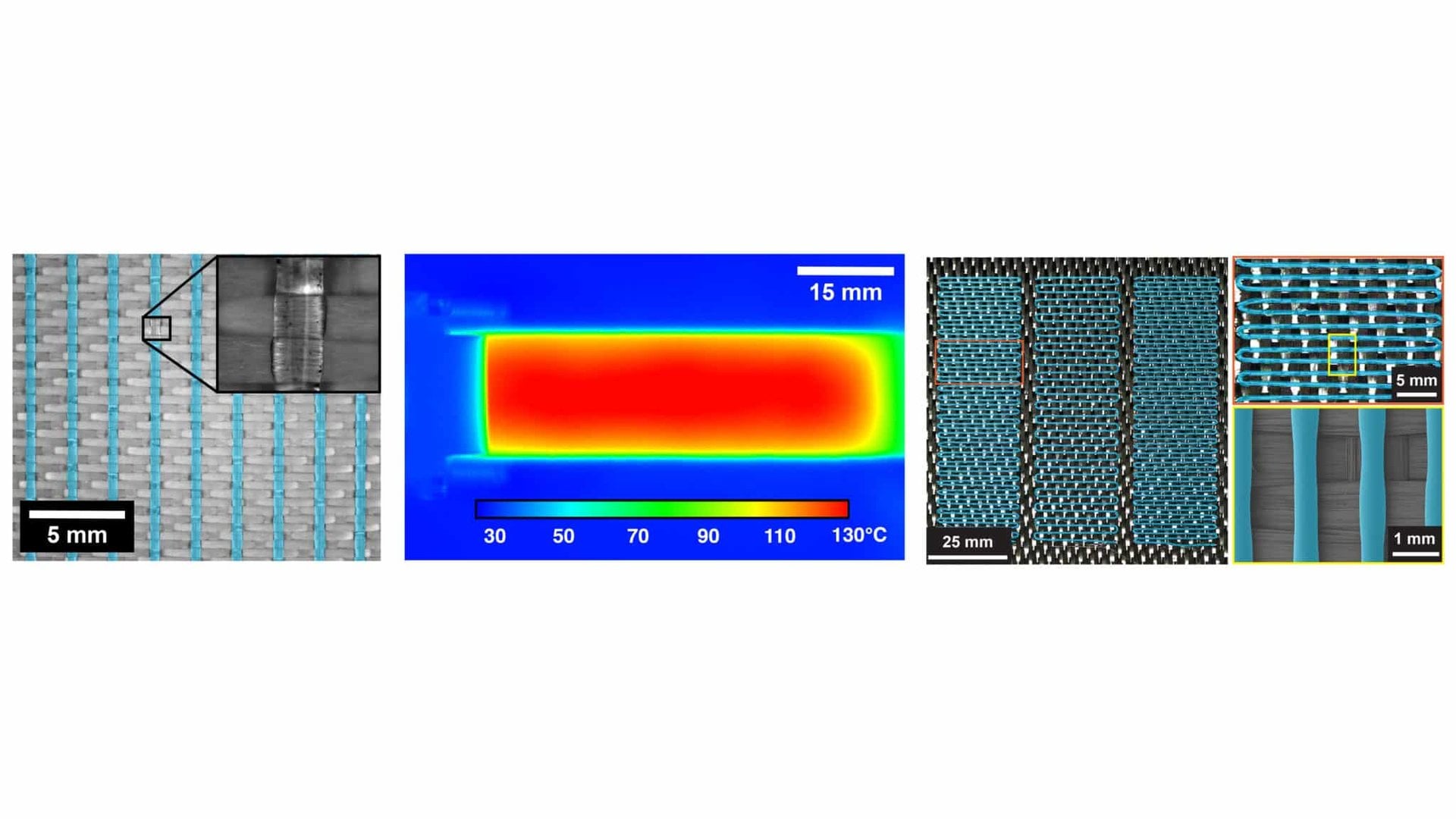
Microscopic images of the material at work. Credit - Jason Patrick, NC State University

Material science plays an absolutely critical role in space exploration. So when a new type of self-healing composite is announced, it’s worth a look–especially when the press release specifically calls out its ability to repair microtears associated with micrometeoroid impacts on satellites. It sounds like just such a composite material was recently invented at North Carolina State University - and it’s even already been spun out into a start-up company.


Tuesday, January 20, 2026

Enceladus Plumes May Hold a Clear Clue to Ocean Habitability

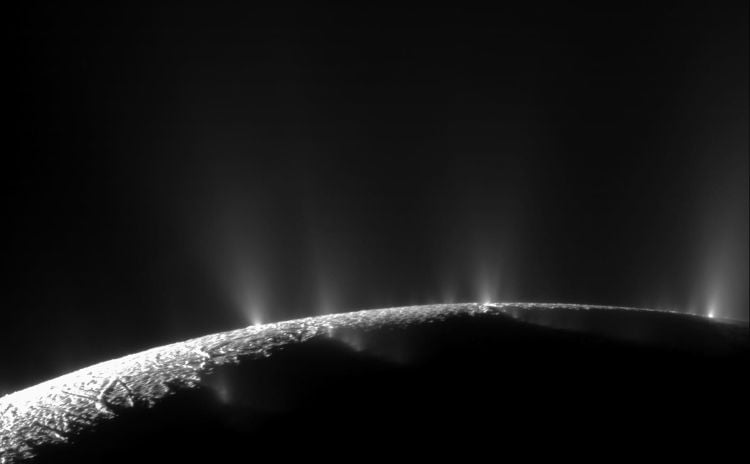
Image of plumes on Saturn’s icy moon Enceladus obtained by NASA’s Cassini spacecraft. (Credit: NASA/JPL/Space Science Institute)

How can scientists estimate the pH level of Enceladus’ subsurface ocean without landing on its surface? This is what a recently submitted study hopes to address as a team of scientists from Japan investigated new methods for sampling the plumes of Enceladus and provide more accurate measurements of its pH levels. This study has the potential to help scientists better understand the subsurface ocean conditions on Enceladus and whether it’s suitable for life as we know it.


Studying Massive And Mysterious Young Protostars With The Hubble

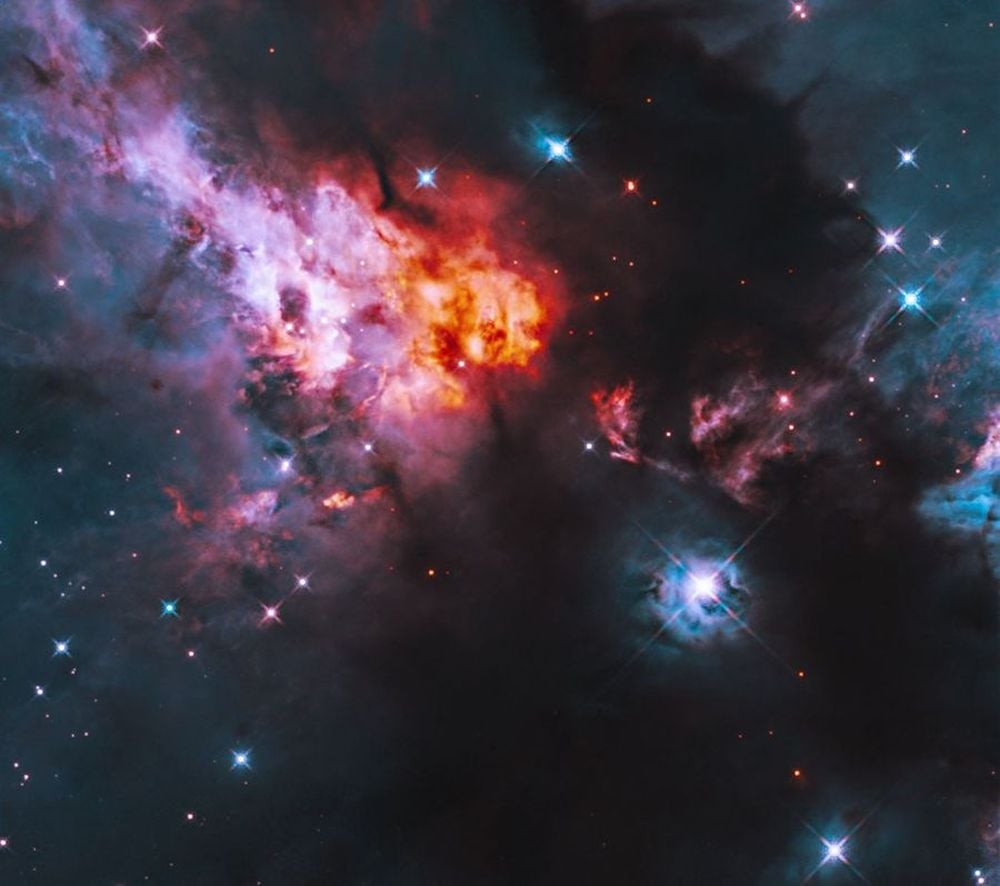
The star formation region Cepheus A is lit up by a massive protostar named HW2 in this Hubble Space Telescope image. The images of massive protostars are part of an effor to understand how massive stars with more than 8 solar masses form. Image Credit: NASA, ESA, and R. Fedriani (Instituto de Astrofisica de Andalucia); Processing: Gladys Kober (NASA/Catholic University of America)

Newly developing stars shrouded in thick dust get their first baby pictures in these images from NASA’s Hubble Space Telescope. Hubble took these infant star snapshots in an effort to learn how massive stars form. Protostars are shrouded in thick dust that blocks light, but Hubble can detect the near-infrared emission that shines through holes carved in the gas by the young stars themselves.


What Created This Strange Iron Bar In The Ring Nebula?

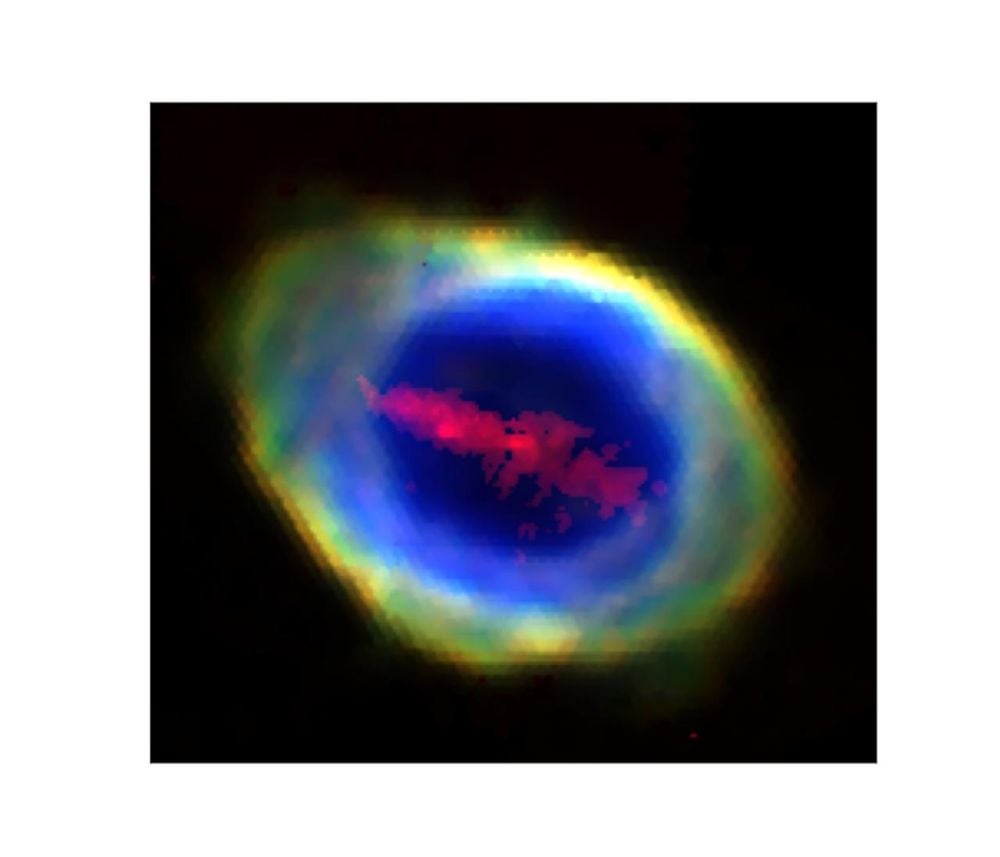
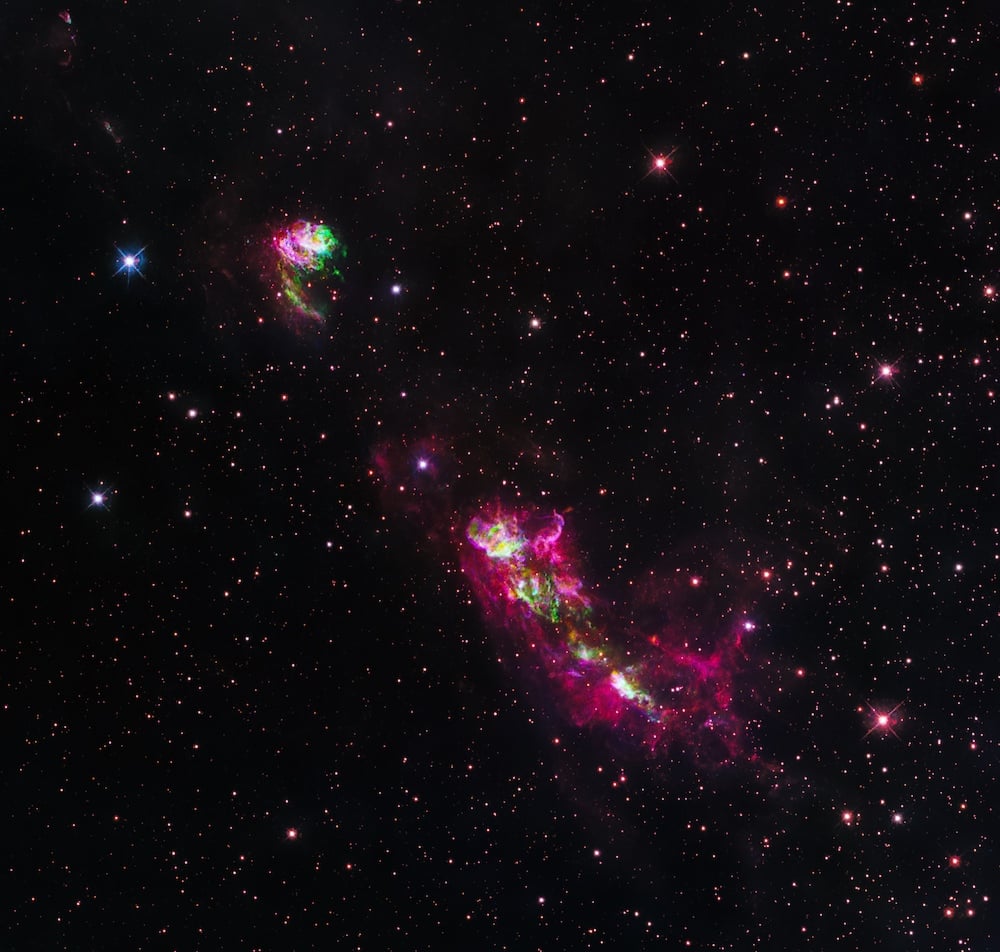
A massive bar-shaped cloud of iron is highlighted in red in this image of the Ring Nebula. A new multi-object spectrograph on the William Herschel Telescope was able to discern the presence of the cloud of iron, as well as the presence of other elements. Now begins the hard work of figuring out what created it. Image Credit: IAC/William Herschel Telescope/Wesson et al. 2026 MNRAS

The Ring Nebula is a well-studied planetary nebula about 2,570 light-years away. Nnew observations of the nebula with a new instrument have revealed a previously unseen component. The William Herschel Telescope used its WEAVE instrument to detect a massive 'iron bar' inside the nebula's inner layer.


Monday, January 19, 2026

Astronomers Find that Black Holes "Seesaw" Between Ejecting Material as Winds or Jets

Artist’s impression of a distant quasar and relativistic jets emanating from its poles. Credit: ESO/M. Kornmesser

Astronomers at the University of Warwick have discovered that black holes don’t just consume matter—they manage it, choosing whether to blast it into space as high-speed jets or sweep it away in vast winds.


Toxic Hydrogen Cyanide And Its Role In The Origins Of Life

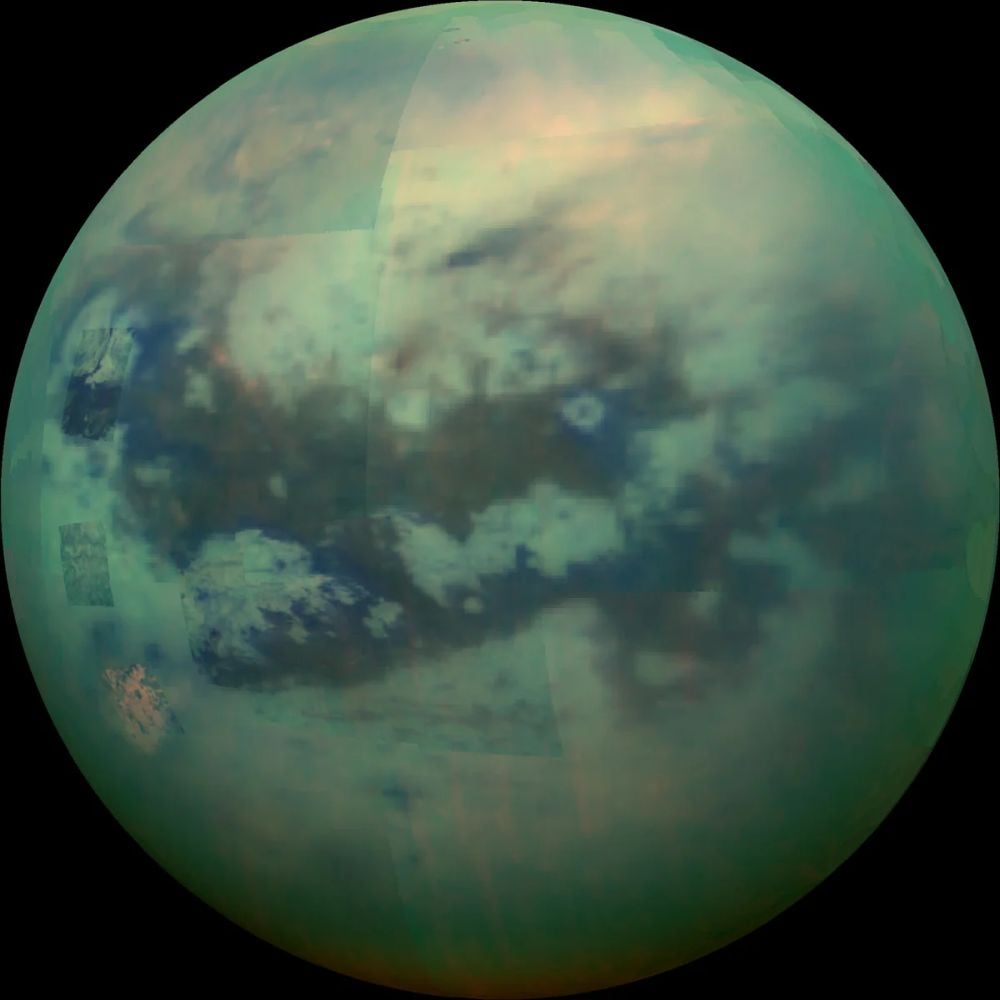
Saturn's moon Titan is a frigid world with a thick atmosphere. Its thick clouds contain significant amounts of hydrogen cyanide (HCN). Research shows that in cold environments, the surface of HCN crystals assist the formation of organic molecules, which are also present on Titan. What does this mean for our understanding of the origins of life? Image Credit: Cassini Orbiter/NASA, JPL-Caltech and University of Arizona

Hydrogen Cyanide, which is toxic, may have played an important role in the emergence of life. Its unique properties, especially in frigid environments in space, may have helped generate the complex molecules necessary for life to appear.


Deep Magma Oceans Could Help Make Super-Earths Habitable

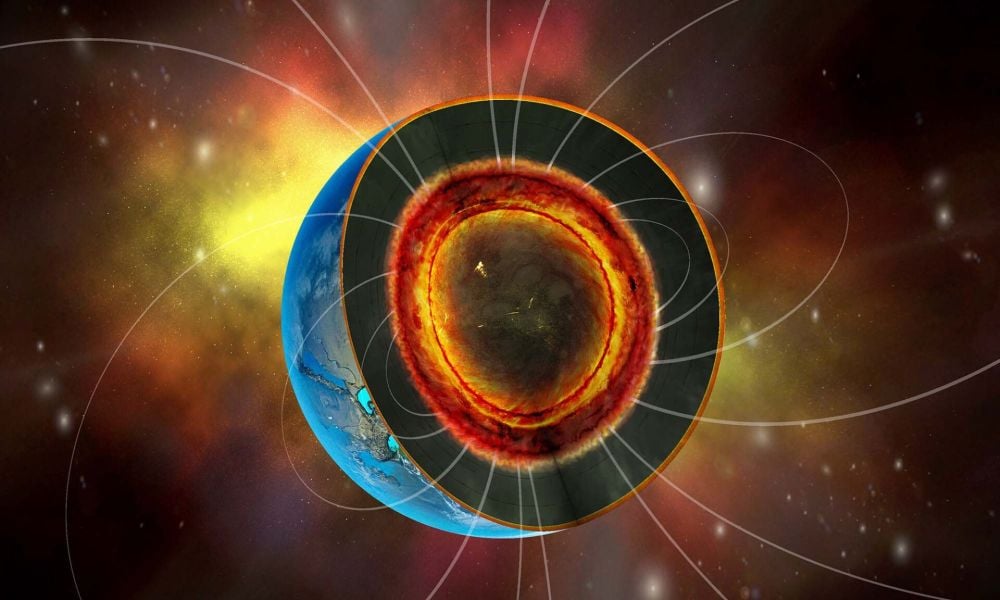
This artist's illustration shows a super-Earth with deep layers of molten rock. New research shows that basal magma oceans on super-Earths could create the same kind of protective magnetic shield that Earth's core creates. Earth's shield is critical to its habitability, and these magma oceans on super-Earth's could also aid habitability. Image Credit: ESA/Hubble, M. Kornmesser

Deep beneath the surface of distant exoplanets known as super-Earths, oceans of molten rock may be doing something extraordinary: powering magnetic fields strong enough to shield entire planets from dangerous cosmic radiation and other harmful high-energy particles.


Could Bees Be a Model for SETI Searches?

A team of researchers have taught bees mathematics, yielding a possible framework for future SETI surveys. Credit: Bestuiving Image

Humans have always been fascinated with space. We frequently question whether we are alone in the universe. If not, what does intelligent life look like? And how would aliens communicate?


Searching for 'Green Oceans' and 'Purple Earths'

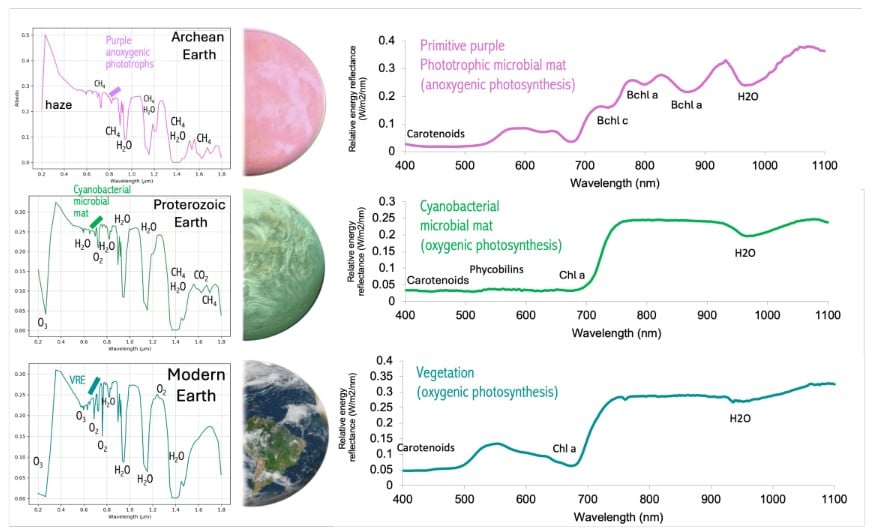
Spectroscopic signatures of the various stages of life on Earth, according to the paper. Credit - N. Parenteau et al.

The early stage of giant telescope development involves a lot of horse-trading to try to appease all the different stakeholders that are hoping to get what they want out of the project, but also to try to appease the financial managers that want to minimize its cost. Typically this horse-trading takes the form of a series of white papers that describe what would be needed to meet the stated objectives of the mission and suggest the type of instrumentation and systems that would be needed to achieve them. One such white paper was recently released by the Living Worlds Working Group, which is tasked with speccing out the Habitable Worlds Observatory (HWO), one of the world’s premiere exoplanet hunting telescopes that is currently in the early development stage. Their argument in the paper, which is available in pre-print on arXiv, shows that, in order to meet the objectives laid out in the recent Decadal survey that called for the telescope, it must have extremely high signal-to-noise ratio, but also be able to capture a very wide spectrum of light.


The Universe's Most Common Water is a Hot Mess

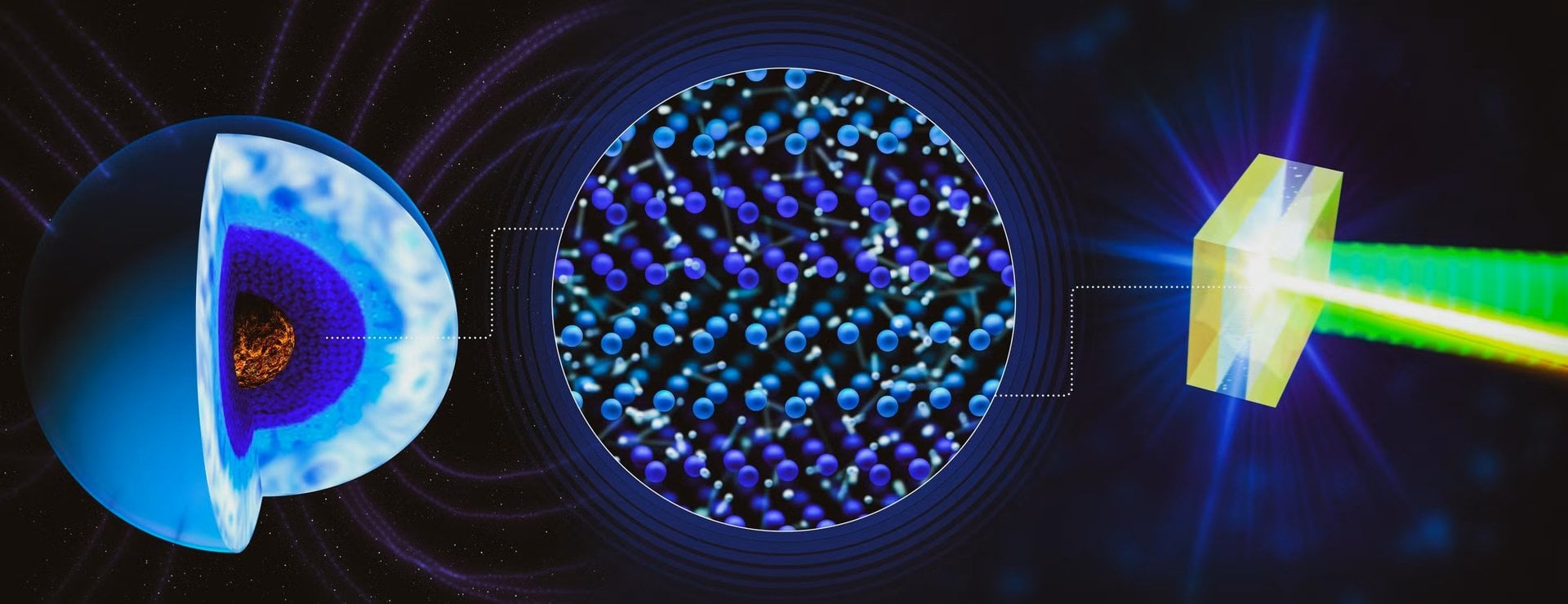
Visualization showing the crystal structure of superionic water and how it fits inside Ice Giant planets. Credit - SLAC

Inside the cores of ice giant planets, the pressure and temperature are so extreme that the water residing there transitions into a phase completely unfamiliar under the normal conditions of Earth. Known as “superionic water”, this form of water is a type of ice. However, unlike regular ice it’s actually hot, and also black. For decades, scientists thought that the superionic water in the core of Neptune and Uranus is responsible for the wild, unaligned magnetic fields that the Voyager 2 spacecraft saw when passing them. A series of experiments described in a paper published in Nature Communications by Leon Andriambariarijaona and his co-authors at the SLAC National Accelerator Laboratory and the Sorbonne provides experimental evidence of why exactly the ice causes these weird magnetic fields - because it is far messier than anyone expected.


Saturday, January 17, 2026

A New Census of Dwarf Galaxies Shows More Massive Black Holes than Previously Thought

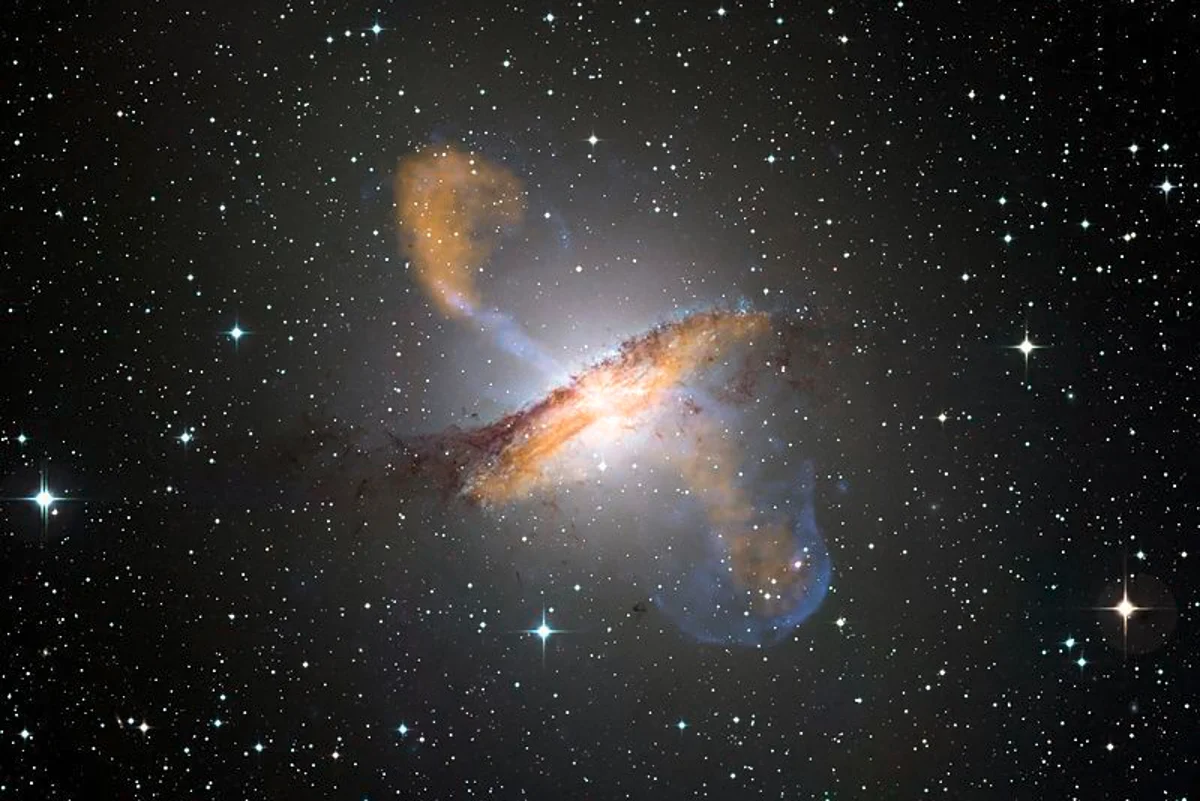
Combined observations of the dwarf galaxy Centaurus A. Credit:ESO/WFI/MPIfR/ESO/APEX/A.Weiss et al./NASA/CXC/CfA/R.Kraft et al.

A new census of more than 8,000 galaxies finds active black holes rising in frequency with galaxy mass, jumping sharply in galaxies similar in mass to the Milky Way.


Friday, January 16, 2026

Exploring Where Planets Form With The Hubble Space Telescope

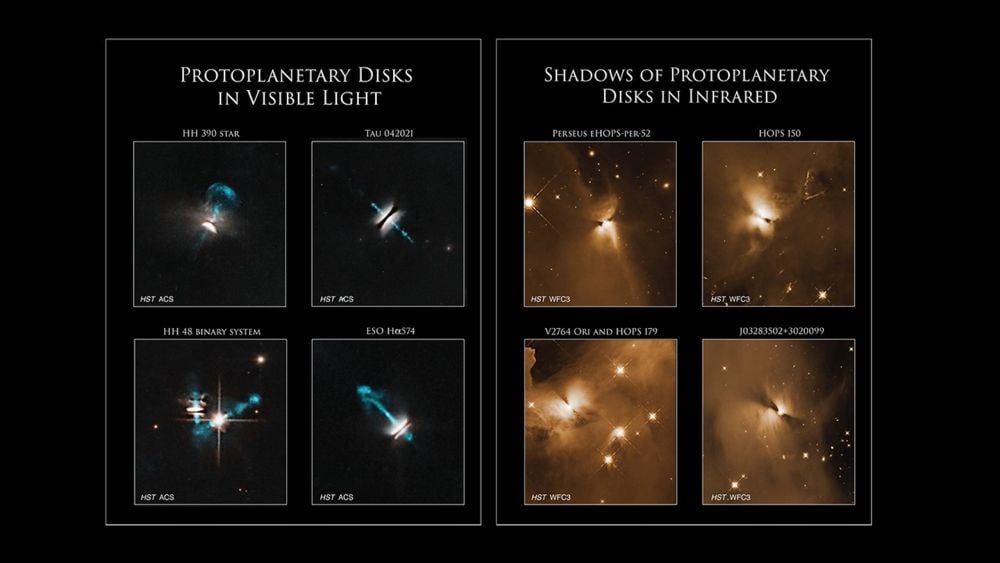
Hubble's new gallery of protoplanetary disks contains images in both visible light and infrared. The dusty disks in each image is where new planets form. Image Credit: Left: NASA, ESA, and K. Stapelfeldt (Jet Propulsion Laboratory); Processing: Gladys Kober (NASA/Catholic University of America) Right: NASA, ESA, and T. Megeath (University of Toledo); Processing: Gladys Kober (NASA/Catholic University of America)

This collection of new images taken by NASA’s Hubble Space Telescope showcases protoplanetary disks, the swirling masses of gas and dust that surround forming stars, in both visible and infrared wavelengths. Through observations of young stellar objects like these, Hubble helps scientists better understand how stars form. These visible-light images depict dark, planet-forming dust disks […]


Protostars Carve Out Homes In The Orion Molecular Cloud

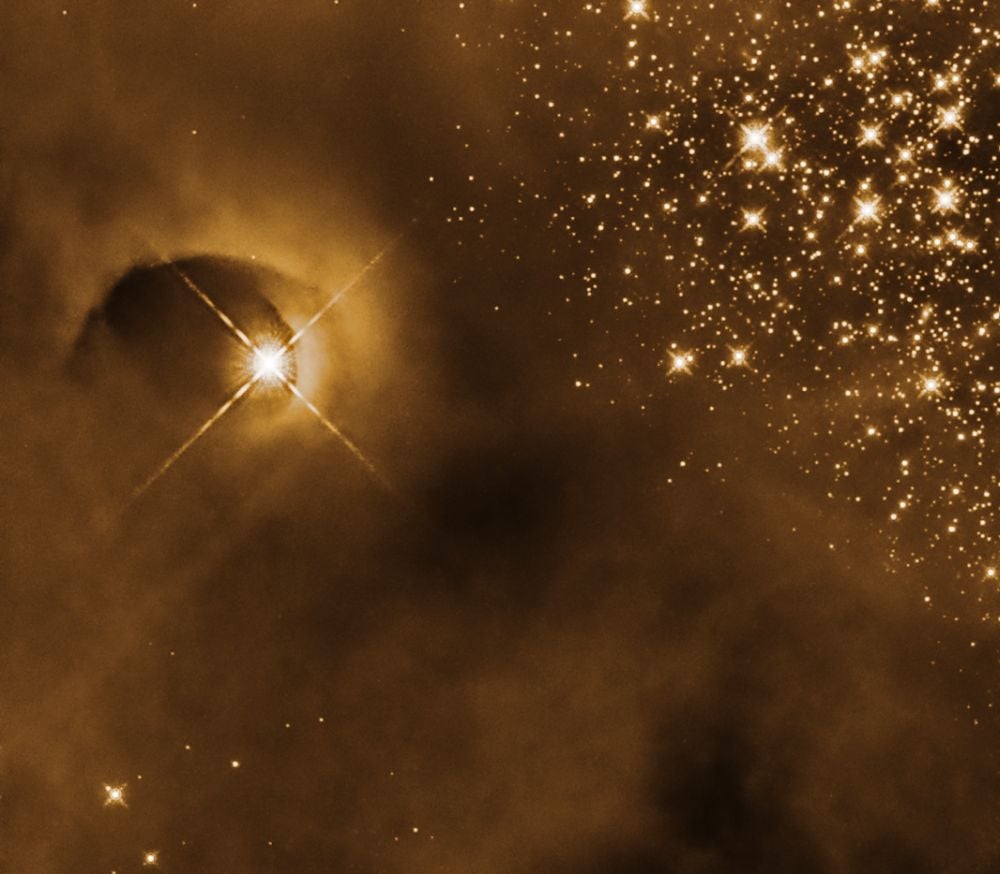
This Hubble Space Telescope image shows a protostar and the cavernous shape it's carved out of the surrounding gas in the Orion Molecular Cloud Complex. Background stars speckle the sky to the right. Image Credit: NASA, ESA, and T. Megeath (University of Toledo); Processing: Gladys Kober (NASA/Catholic University of America)

Young protostars populate the cloudy regions in the Orion Molecular Cloud complex in these images from the Hubble Space Telescope. Three of the telescope's new images are part of a scientific effort to understand the gaseous, dusty envelopes around protostars. Scientists know that these young stars have powerful stellar winds and jets that carve caverns and bubbles out of the surrounding gas, but they have unanswered questions about that process.


How Astronauts Will Fix Their Gear Using Thin Air

Samples of the 3D printed metal using the three different shield gases. Credit - Z. Mebruer & W. Shou

Additive Manufacturing, more commonly known as 3D printing, will be an absolutely critical technology for any long-term settlement on another world. Its ability to take a generic input, such as plastic strips or metal powder, and turn it into any shape of tool an astronaut will need is an absolute game changer. But the chemistry behind these technologies is complicated, and their applications are extremely varied, ranging from creating bricks for settlements to plastics for everything from cups to toothbrush holders. A new paper available in pre-print on arXiv from Zane Mebruer and Wan Shou of the University of Arkansas, explores one specific aspect of a particularly important type of 3D printing, and realized that they could save millions of dollars on Mars missions by simply using the planet’s atmosphere to help print metal parts.


Thursday, January 15, 2026

NASA Enters Final Preparations for Artemis II Mission

As NASA moves closer to launch of the Artemis II test flight, the agency soon will roll its SLS (Space Launch System) rocket and Orion spacecraft to the launch pad for the first time at the agency’s Kennedy Space Center in Florida to begin final integration, testing, and launch rehearsals. NASA is targeting no earlier.


Red Dwarfs Are Too Dim To Generate Complex Life

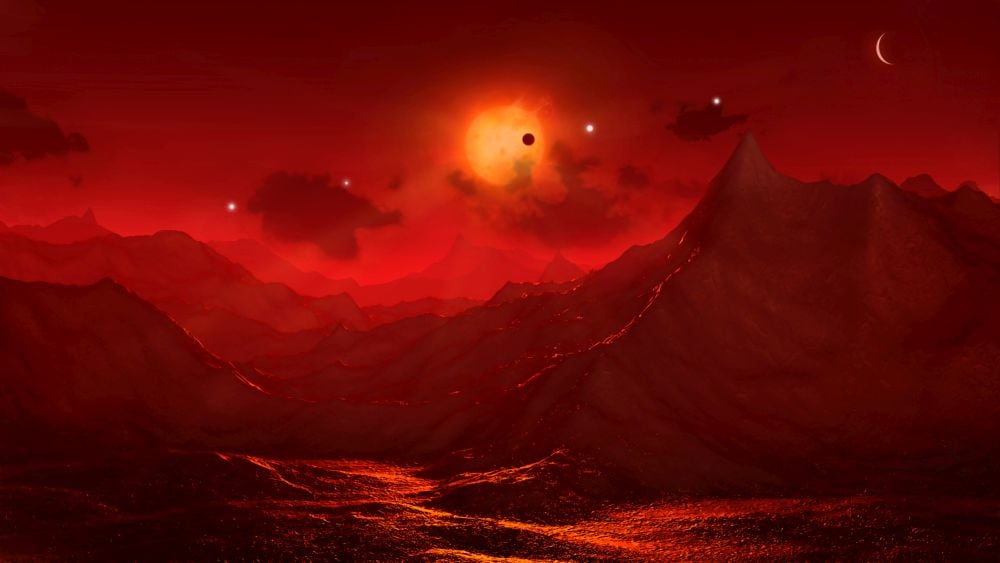
This artist's illustration shows what the view might be from the surface of TRAPPIST-1f. It orbits a dim red dwarf star, and new research examines the idea that photosynthesis could occur in such dim, weak light. Without it, complex life is extremely unlikely. Image Credit: Mark Garlick

New research shows that complex life is unlikely to ever exist around cool, dim red dwarfs. About 33% of the Milky Way's stars are late M dwarfs, which are the smallest, coolest stars, and are the easiest stars to detect Earth-like planets around. The stars aren't bright enough for photosynthetic organisms to create a Great Oxygenation Event, which led to complex animal life here on Earth.


A New Atlas of the Milky Way’s Ghost Particles

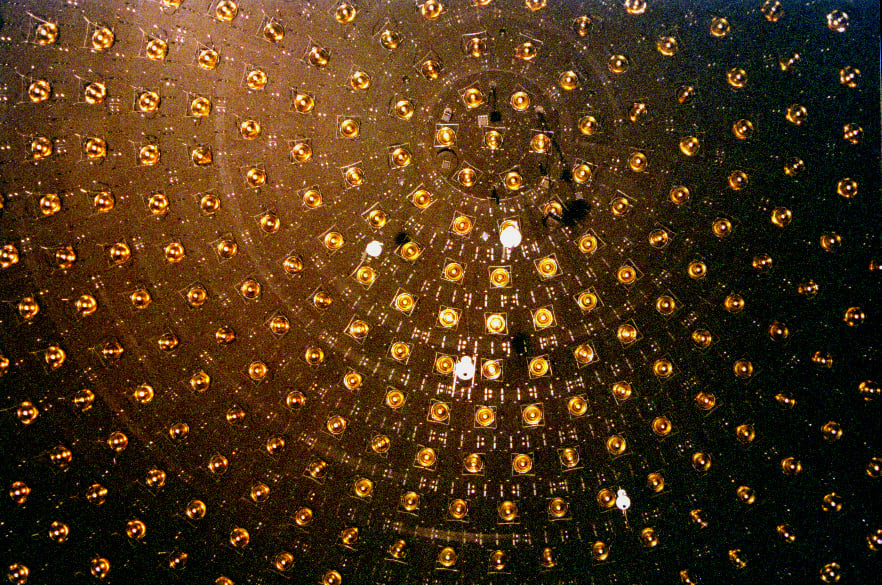
The inside of the MiniBooNE neutrino detector (Credit : Fred Ulrich)

Every second, a trillion ghost particles stream through your body unnoticed, invisible messengers carrying secrets from the hearts of distant stars. Astrophysicists at the University of Copenhagen have now mapped exactly where these neutrinos originate across our Milky Way Galaxy and how many reach Earth, creating the most comprehensive picture yet of these elusive particles.


Wednesday, January 14, 2026

Two New Exoplanets And The Need For New Habitable Zone Definitions

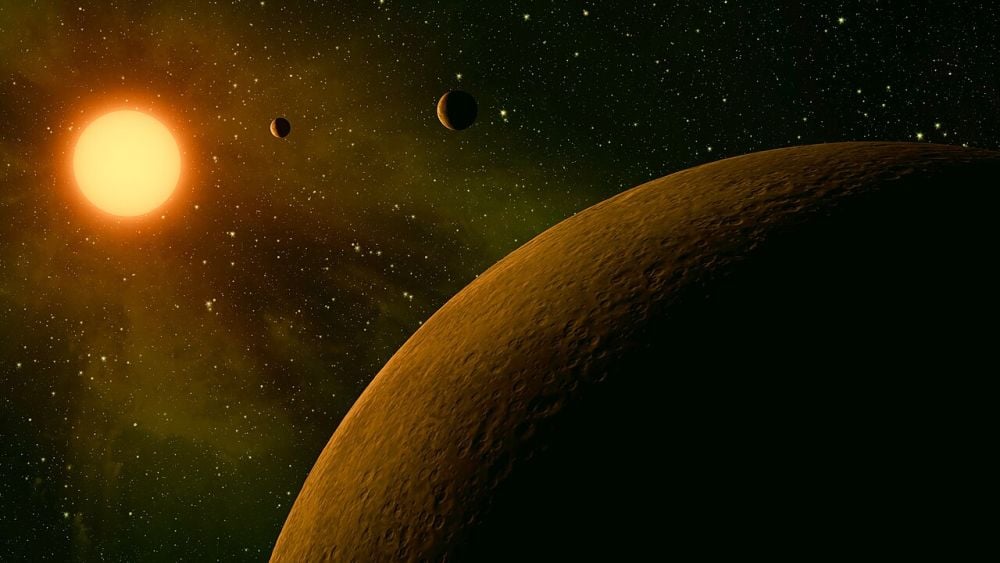
This artist's illustration shows the exoplanets that orbit the small red dwarf Kepler-42. Second from the star is Kepler-42b, a rocky exoplanet about the size of Mars. Researchers are refining their search for habitable planets by developing the idea of temperate zone exoplanets. They're planets like Kepler-42b, that are both easily detected with the transit method, and are at the right distance for potential habitability as well as atmospheric characterization by the JWST. Image Credit: By NASA/JPL-Caltech - http://www.nasa.gov/mission_pages/kepler/multimedia/images/mini-planetary-system.html, Public Domain, https://commons.wikimedia.org/w/index.php?curid=18013575

How solid is our understanding of exoplanet habitability? Are the ideas of an Optimistic Habitable Zone and a Conservative Habitable Zone sufficient to advance our understanding? New research introduces an expanded exoplanet 'temperate zone,' highlighting planets that are amenable to atmospheric study by the JWST.


Solving the Mystery of Blue Flashes

Artist illustration of a Luminous Fast Blue Optical Transient (Credit : Bill Saxton, NRAO/AUI/NSF)

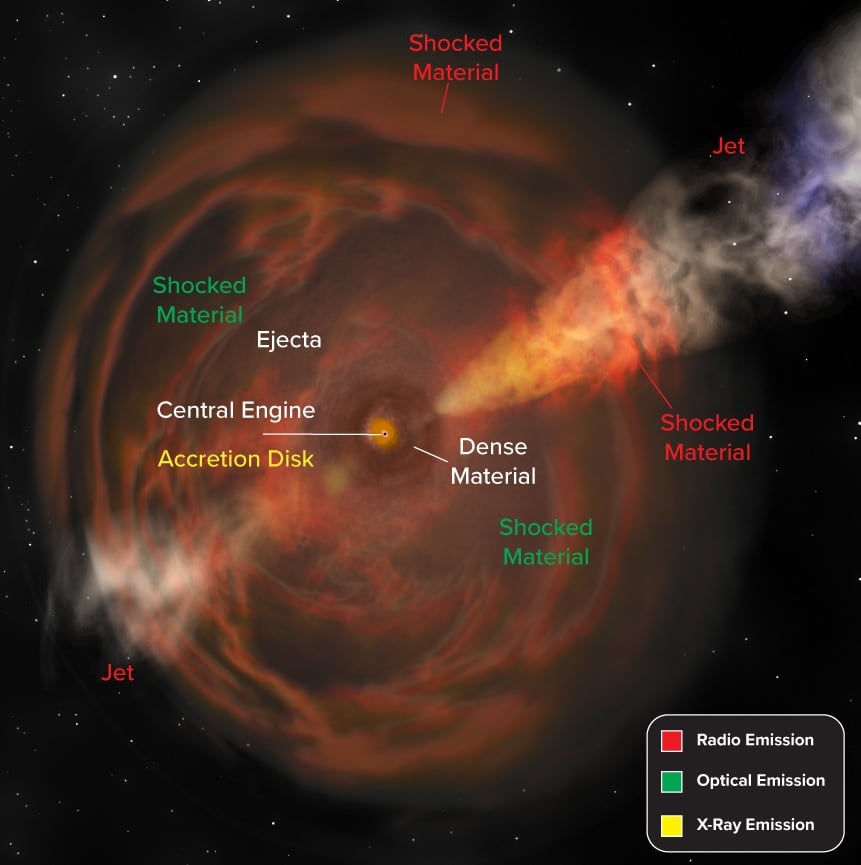
Brief, brilliant flashes of blue light occasionally appear across the universe, burning hundreds of times brighter than ordinary supernovae before fading within days. Astronomers have puzzled over these luminous fast blue optical transients for years, unable to determine whether they were unusual stellar explosions or something else entirely. Observations of AT 2024wpp, the brightest example ever detected, have finally solved the mystery.


Tuesday, January 13, 2026

When Baby Stars Throw Tantrums

HH80/81, Jets of ionised gas streak from a newly forming star (Credit : NASA, ESA, and B. Reipurth)

NASA’s Hubble Space Telescope has captured stunning new image of HH 80/81, a pair of objects created when supersonic jets from a newborn star slam into previously expelled gas clouds, heating them to extreme levels. These jets, powered by a protostar 20 times more massive than our Sun, stretch over 32 light years through space and travel at speeds exceeding 1,000 kilometres per second, making them the fastest outflows ever recorded from a young star.


Young Stellar Objects Are Prominent In A New Hubble Image

This Hubble image of NGC 1333, a reflection nebula about 1,000 light-years away, features multiple young stellar objects, including a young protostar with an edge-on view of its protoplanetary disk. Image Credit: NASA, ESA, K. Stapelfeldt (Jet Propulsion Laboratory) and D. Watson (University of Rochester); Processing: Gladys Kober (NASA/Catholic University of America)

A disparate collection of young stellar objects bejewels a cosmic panorama in the star-forming region NGC 1333 in this new image from NASA’s Hubble Space Telescope. To the left, an actively forming star called a protostar casts its glow on the surrounding gas and dust, creating a reflection nebula. Two dark stripes on opposite sides […]


Siwarha's Wake Gives it Away at Betelgeuse

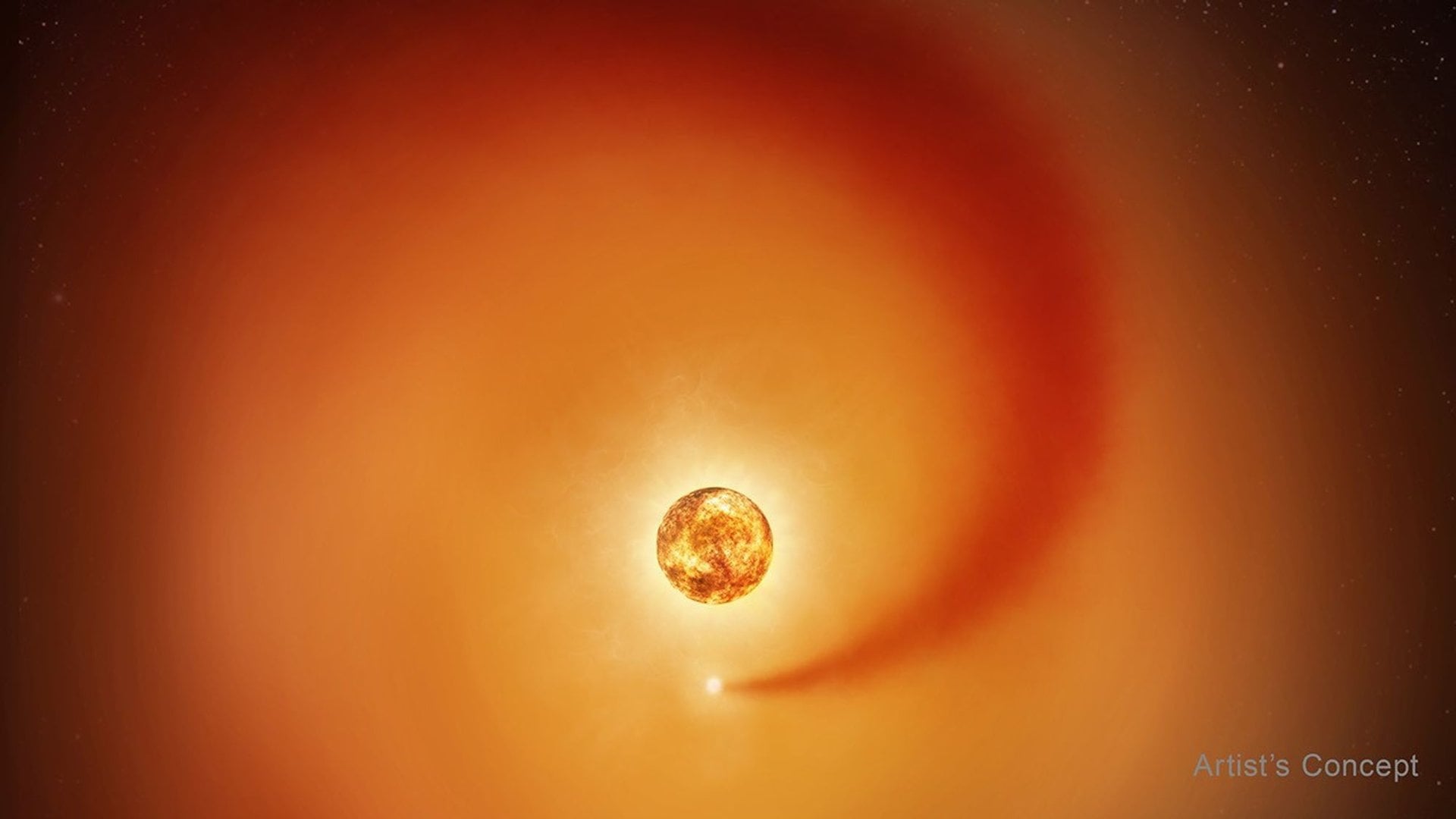
This artist’s concept shows the red supergiant star Betelgeuse and its orbiting companion star. The companion orbits clockwise from this point of view. As it moves through the dense atmosphere, it generates a dense wake of gas that expands outward. The companion’s distance from Betelgeuse is to scale relative to the diameter of Betelgeuse. Artwork: NASA, ESA, Elizabeth Wheatley (STScI); Science: Andrea Dupree (CfA)

Betelgeuse is the star that everybody can't wait to see blow up, preferably sooner than later. That's because it's a red supergiant on the verge of becoming a supernova and there hasn't been one explode this close in recorded human history. It's been changing its brightness and showing strange surface behavior, which is why astronomers track its activity closely. Are these changes due to its aging process? Do they mean it's about to blow up? Probably not.


New Evidence That An Ancient Martian Ocean Covered Half The Planet

These images highlight three scarp-fronted deposits in a segment of Valles Marineris on Mars. These features are nearly identical to river deltas on Earth, and add to the growing body of evidence showing that ancient Mars was wet and warm, with liquid water flowing on its surface. Image Credit: Argadestya et al. 2026, NPJ Space Exploration/MOLA

Mars Was Half Covered by an Ocean susannakohler33808 Mon, 01/12/2026 - 12:00 Mars Was Half Covered by an Ocean https://ift.tt/EW2pXgI


Monday, January 12, 2026

The Global Ocean Temperature Keeps Rising But Don't Worry It's Probably Nothing

Our oceans are still heating up. Year after year, they absorb a record amount of heat, and 2025 was no exception. This is a warning sign that humanity can't ignore, but many of us are anyway. Image Credit: NASA.

The oceans' check engine light is on and is starting to flash violently. For the eighth year in a row, the world’s oceans absorbed a record-breaking amount of heat in 2025. That means more powerful storms for us, and changing ocean chemistry that could spell the end for some living things.


Stellar Evolution Depends on Where Supernovae Occur

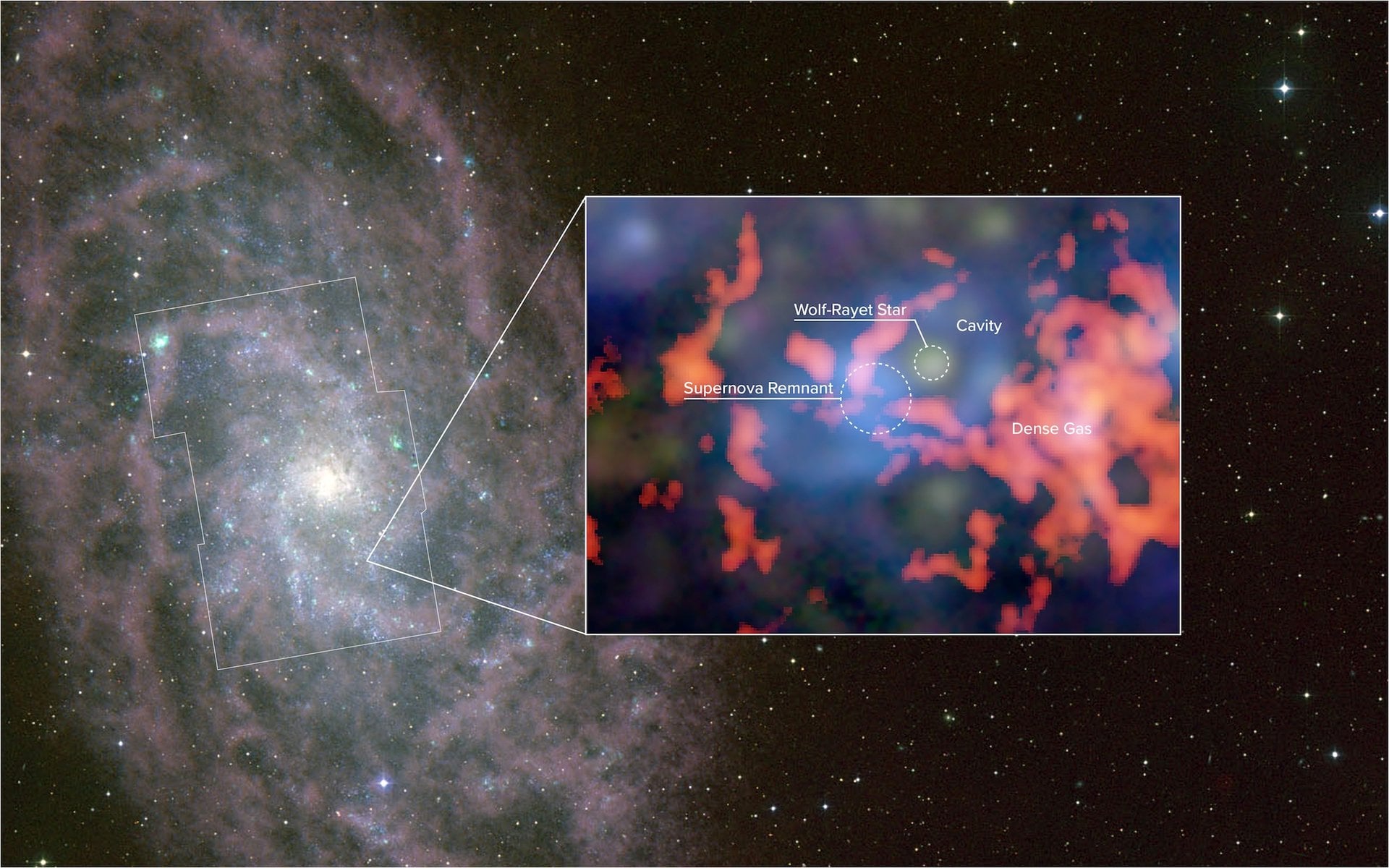
New research suggests that the highlighted Wolf-Rayet star may explode as a supernova within a million years. Credit: NSF/AUI/NSF NRAO/B. Saxton

Supernovae play a crucial role in the formation and evolution of new stars. But where they occur is nearly as important as when. A new study looks at where supernovae will occur in the Andromeda Galaxy, which will help astronomers understand the role of supernovae in more detail.