Wednesday, January 21, 2026

Hunting For T-Tauri Stars In A Dark Cloud

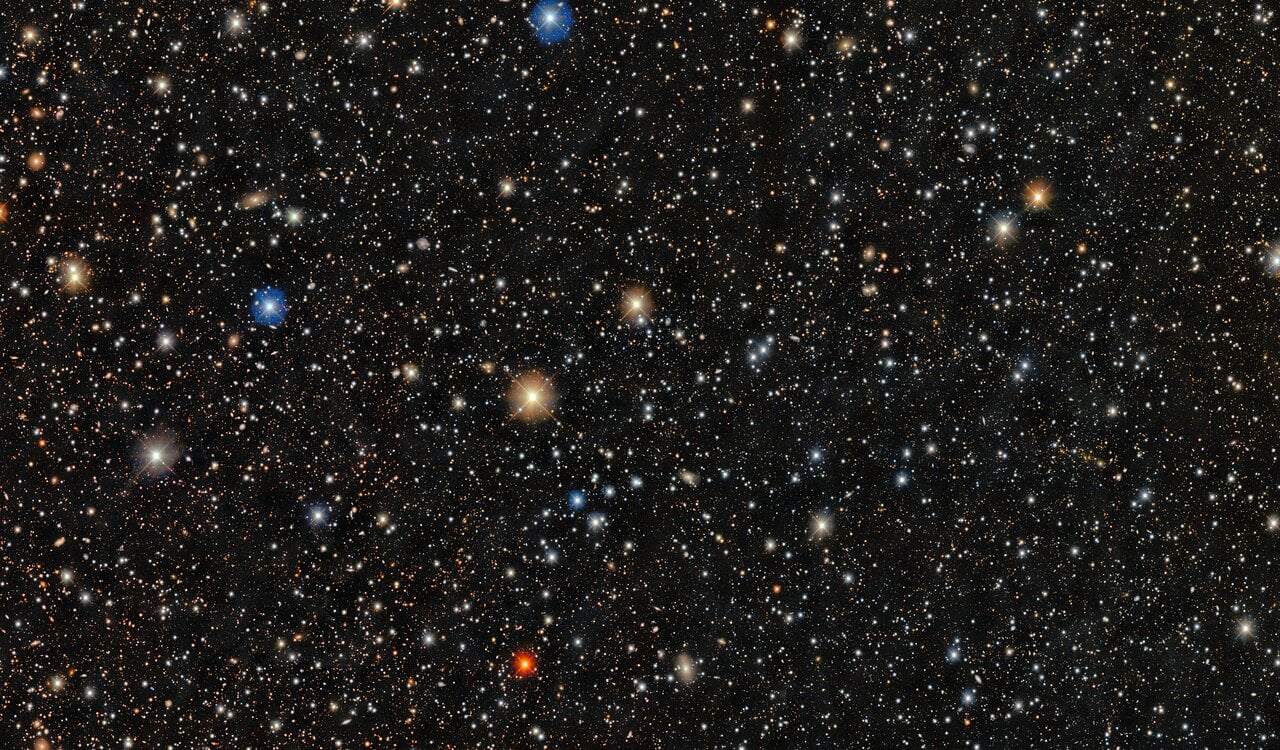
Wispy tendrils of gas float through the Lupus 3 star-forming region in this Hubble Space Telescope image. Lupus 3 features many bright young stars that are clearly visible, having dispersed the gas that surrounded them as they formed. Many others are still hidden inside their gaseous cocoons. Image Credit: NASA, ESA, and K. Stapelfeldt (Jet Propulsion Laboratory); Processing: Gladys Kober (NASA/Catholic University of America)

The Hubble Mission Team has released another image of the space telescope's study of star formation. This image shows the dark cloud Lupus 3, a star-forming region about 500 light-years away. Lupus 3 contains bright young T-Tauri stars, and 2 hot young stars that are creating a beautiful nebula.


ALMA Observes The Missing Link In Exoplanet Formation

This figure shows 20 of the debris disks in the ARKS survey from youngest (upper left) to oldest (lower right). A scale bar measures 20 astronomical units in each image. The two oldest disks show faint ring-gap structures. Image Credit: ALMA (ESO/NAOJ/NRAO), N. Ohashi et al.

Back in 2014, the Atacama Large Millimeter/submillimeter Array (ALMA) captured an image of a young protoplanetary disk around a young star named HL Tauri. The image showed gaps and rings in the disk, substructures indicating that young planets forming there. This meant that planet formation began around young stars a lot sooner than thought. ALMA is continuing its investigation of protoplanetary disks in its ARKS survey (ALMA survey to Resolve exoKuiper belt Substructures).


The New Composite That Heals Itself 1,000 Times

Microscopic images of the material at work. Credit - Jason Patrick, NC State University

Material science plays an absolutely critical role in space exploration. So when a new type of self-healing composite is announced, it’s worth a look–especially when the press release specifically calls out its ability to repair microtears associated with micrometeoroid impacts on satellites. It sounds like just such a composite material was recently invented at North Carolina State University - and it’s even already been spun out into a start-up company.


Tuesday, January 20, 2026

Enceladus Plumes May Hold a Clear Clue to Ocean Habitability

Image of plumes on Saturn’s icy moon Enceladus obtained by NASA’s Cassini spacecraft. (Credit: NASA/JPL/Space Science Institute)

How can scientists estimate the pH level of Enceladus’ subsurface ocean without landing on its surface? This is what a recently submitted study hopes to address as a team of scientists from Japan investigated new methods for sampling the plumes of Enceladus and provide more accurate measurements of its pH levels. This study has the potential to help scientists better understand the subsurface ocean conditions on Enceladus and whether it’s suitable for life as we know it.


Studying Massive And Mysterious Young Protostars With The Hubble

The star formation region Cepheus A is lit up by a massive protostar named HW2 in this Hubble Space Telescope image. The images of massive protostars are part of an effor to understand how massive stars with more than 8 solar masses form. Image Credit: NASA, ESA, and R. Fedriani (Instituto de Astrofisica de Andalucia); Processing: Gladys Kober (NASA/Catholic University of America)

Newly developing stars shrouded in thick dust get their first baby pictures in these images from NASA’s Hubble Space Telescope. Hubble took these infant star snapshots in an effort to learn how massive stars form. Protostars are shrouded in thick dust that blocks light, but Hubble can detect the near-infrared emission that shines through holes carved in the gas by the young stars themselves.


What Created This Strange Iron Bar In The Ring Nebula?

A massive bar-shaped cloud of iron is highlighted in red in this image of the Ring Nebula. A new multi-object spectrograph on the William Herschel Telescope was able to discern the presence of the cloud of iron, as well as the presence of other elements. Now begins the hard work of figuring out what created it. Image Credit: IAC/William Herschel Telescope/Wesson et al. 2026 MNRAS

The Ring Nebula is a well-studied planetary nebula about 2,570 light-years away. Nnew observations of the nebula with a new instrument have revealed a previously unseen component. The William Herschel Telescope used its WEAVE instrument to detect a massive 'iron bar' inside the nebula's inner layer.


Monday, January 19, 2026

Astronomers Find that Black Holes "Seesaw" Between Ejecting Material as Winds or Jets

Artist’s impression of a distant quasar and relativistic jets emanating from its poles. Credit: ESO/M. Kornmesser

Astronomers at the University of Warwick have discovered that black holes don’t just consume matter—they manage it, choosing whether to blast it into space as high-speed jets or sweep it away in vast winds.


Toxic Hydrogen Cyanide And Its Role In The Origins Of Life

Saturn's moon Titan is a frigid world with a thick atmosphere. Its thick clouds contain significant amounts of hydrogen cyanide (HCN). Research shows that in cold environments, the surface of HCN crystals assist the formation of organic molecules, which are also present on Titan. What does this mean for our understanding of the origins of life? Image Credit: Cassini Orbiter/NASA, JPL-Caltech and University of Arizona

Hydrogen Cyanide, which is toxic, may have played an important role in the emergence of life. Its unique properties, especially in frigid environments in space, may have helped generate the complex molecules necessary for life to appear.


Deep Magma Oceans Could Help Make Super-Earths Habitable

This artist's illustration shows a super-Earth with deep layers of molten rock. New research shows that basal magma oceans on super-Earths could create the same kind of protective magnetic shield that Earth's core creates. Earth's shield is critical to its habitability, and these magma oceans on super-Earth's could also aid habitability. Image Credit: ESA/Hubble, M. Kornmesser
Deep beneath the surface of distant exoplanets known as super-Earths, oceans of molten rock may be doing something extraordinary: powering magnetic fields strong enough to shield entire planets from dangerous cosmic radiation and other harmful high-energy particles.


Could Bees Be a Model for SETI Searches?

A team of researchers have taught bees mathematics, yielding a possible framework for future SETI surveys. Credit: Bestuiving Image

Humans have always been fascinated with space. We frequently question whether we are alone in the universe. If not, what does intelligent life look like? And how would aliens communicate?


Searching for 'Green Oceans' and 'Purple Earths'

Spectroscopic signatures of the various stages of life on Earth, according to the paper. Credit - N. Parenteau et al.

The early stage of giant telescope development involves a lot of horse-trading to try to appease all the different stakeholders that are hoping to get what they want out of the project, but also to try to appease the financial managers that want to minimize its cost. Typically this horse-trading takes the form of a series of white papers that describe what would be needed to meet the stated objectives of the mission and suggest the type of instrumentation and systems that would be needed to achieve them. One such white paper was recently released by the Living Worlds Working Group, which is tasked with speccing out the Habitable Worlds Observatory (HWO), one of the world’s premiere exoplanet hunting telescopes that is currently in the early development stage. Their argument in the paper, which is available in pre-print on arXiv, shows that, in order to meet the objectives laid out in the recent Decadal survey that called for the telescope, it must have extremely high signal-to-noise ratio, but also be able to capture a very wide spectrum of light.


The Universe's Most Common Water is a Hot Mess

Visualization showing the crystal structure of superionic water and how it fits inside Ice Giant planets. Credit - SLAC

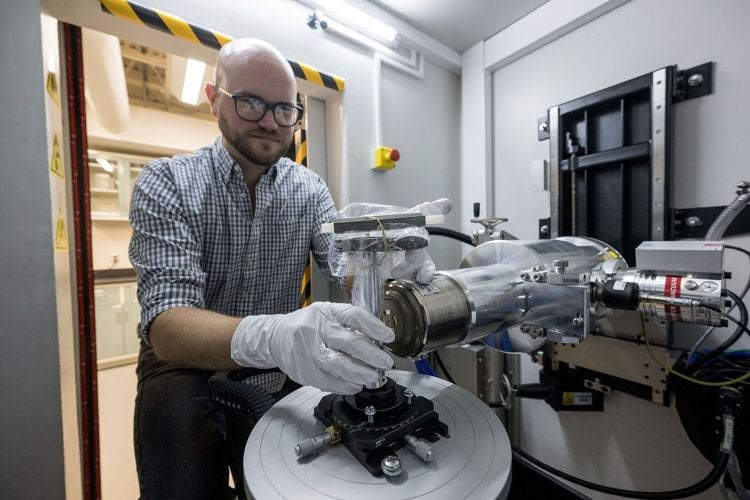
Inside the cores of ice giant planets, the pressure and temperature are so extreme that the water residing there transitions into a phase completely unfamiliar under the normal conditions of Earth. Known as “superionic water”, this form of water is a type of ice. However, unlike regular ice it’s actually hot, and also black. For decades, scientists thought that the superionic water in the core of Neptune and Uranus is responsible for the wild, unaligned magnetic fields that the Voyager 2 spacecraft saw when passing them. A series of experiments described in a paper published in Nature Communications by Leon Andriambariarijaona and his co-authors at the SLAC National Accelerator Laboratory and the Sorbonne provides experimental evidence of why exactly the ice causes these weird magnetic fields - because it is far messier than anyone expected.


Saturday, January 17, 2026

A New Census of Dwarf Galaxies Shows More Massive Black Holes than Previously Thought

Combined observations of the dwarf galaxy Centaurus A. Credit:ESO/WFI/MPIfR/ESO/APEX/A.Weiss et al./NASA/CXC/CfA/R.Kraft et al.

A new census of more than 8,000 galaxies finds active black holes rising in frequency with galaxy mass, jumping sharply in galaxies similar in mass to the Milky Way.


Friday, January 16, 2026

Exploring Where Planets Form With The Hubble Space Telescope

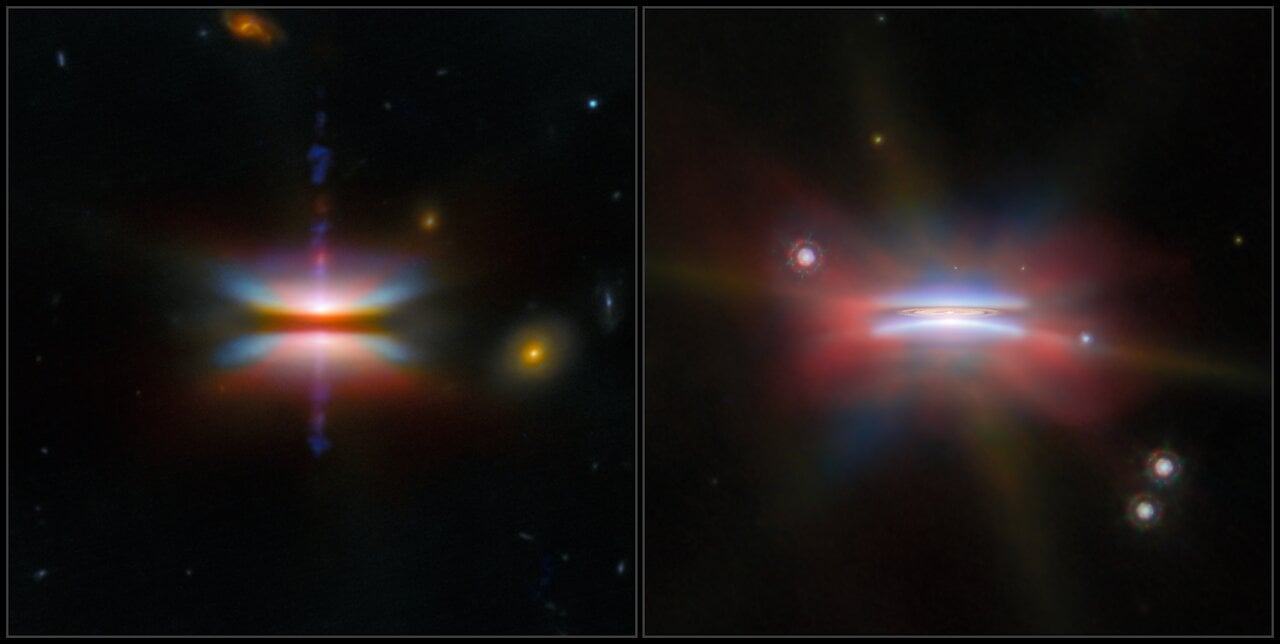
Hubble's new gallery of protoplanetary disks contains images in both visible light and infrared. The dusty disks in each image is where new planets form. Image Credit: Left: NASA, ESA, and K. Stapelfeldt (Jet Propulsion Laboratory); Processing: Gladys Kober (NASA/Catholic University of America) Right: NASA, ESA, and T. Megeath (University of Toledo); Processing: Gladys Kober (NASA/Catholic University of America)

This collection of new images taken by NASA’s Hubble Space Telescope showcases protoplanetary disks, the swirling masses of gas and dust that surround forming stars, in both visible and infrared wavelengths. Through observations of young stellar objects like these, Hubble helps scientists better understand how stars form. These visible-light images depict dark, planet-forming dust disks […]


Protostars Carve Out Homes In The Orion Molecular Cloud

This Hubble Space Telescope image shows a protostar and the cavernous shape it's carved out of the surrounding gas in the Orion Molecular Cloud Complex. Background stars speckle the sky to the right. Image Credit: NASA, ESA, and T. Megeath (University of Toledo); Processing: Gladys Kober (NASA/Catholic University of America)

Young protostars populate the cloudy regions in the Orion Molecular Cloud complex in these images from the Hubble Space Telescope. Three of the telescope's new images are part of a scientific effort to understand the gaseous, dusty envelopes around protostars. Scientists know that these young stars have powerful stellar winds and jets that carve caverns and bubbles out of the surrounding gas, but they have unanswered questions about that process.


How Astronauts Will Fix Their Gear Using Thin Air

Samples of the 3D printed metal using the three different shield gases. Credit - Z. Mebruer & W. Shou

Additive Manufacturing, more commonly known as 3D printing, will be an absolutely critical technology for any long-term settlement on another world. Its ability to take a generic input, such as plastic strips or metal powder, and turn it into any shape of tool an astronaut will need is an absolute game changer. But the chemistry behind these technologies is complicated, and their applications are extremely varied, ranging from creating bricks for settlements to plastics for everything from cups to toothbrush holders. A new paper available in pre-print on arXiv from Zane Mebruer and Wan Shou of the University of Arkansas, explores one specific aspect of a particularly important type of 3D printing, and realized that they could save millions of dollars on Mars missions by simply using the planet’s atmosphere to help print metal parts.


Thursday, January 15, 2026

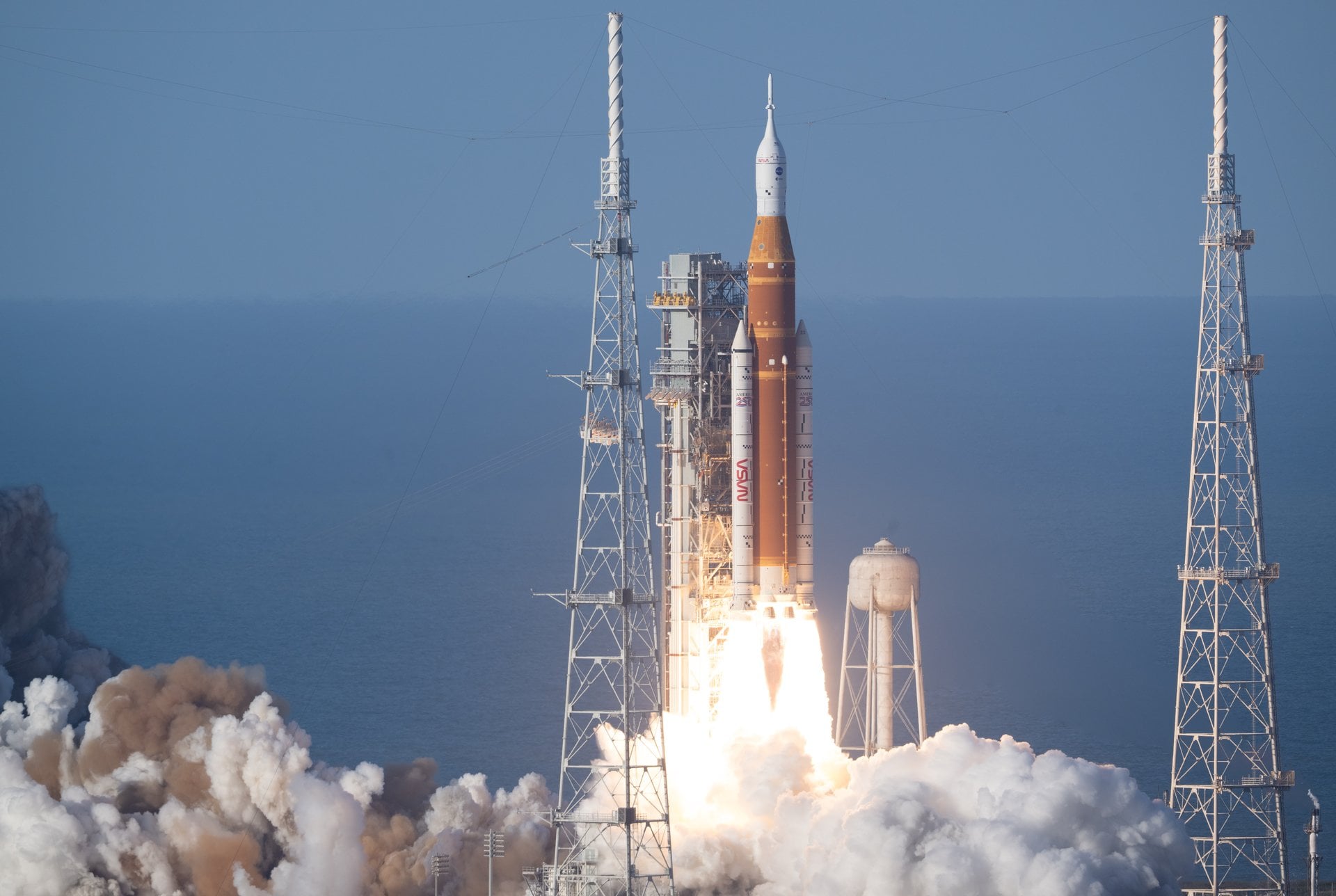
NASA Enters Final Preparations for Artemis II Mission

As NASA moves closer to launch of the Artemis II test flight, the agency soon will roll its SLS (Space Launch System) rocket and Orion spacecraft to the launch pad for the first time at the agency’s Kennedy Space Center in Florida to begin final integration, testing, and launch rehearsals. NASA is targeting no earlier.


Red Dwarfs Are Too Dim To Generate Complex Life

This artist's illustration shows what the view might be from the surface of TRAPPIST-1f. It orbits a dim red dwarf star, and new research examines the idea that photosynthesis could occur in such dim, weak light. Without it, complex life is extremely unlikely. Image Credit: Mark Garlick

New research shows that complex life is unlikely to ever exist around cool, dim red dwarfs. About 33% of the Milky Way's stars are late M dwarfs, which are the smallest, coolest stars, and are the easiest stars to detect Earth-like planets around. The stars aren't bright enough for photosynthetic organisms to create a Great Oxygenation Event, which led to complex animal life here on Earth.


A New Atlas of the Milky Way’s Ghost Particles

The inside of the MiniBooNE neutrino detector (Credit : Fred Ulrich)

Every second, a trillion ghost particles stream through your body unnoticed, invisible messengers carrying secrets from the hearts of distant stars. Astrophysicists at the University of Copenhagen have now mapped exactly where these neutrinos originate across our Milky Way Galaxy and how many reach Earth, creating the most comprehensive picture yet of these elusive particles.


Wednesday, January 14, 2026

Two New Exoplanets And The Need For New Habitable Zone Definitions

This artist's illustration shows the exoplanets that orbit the small red dwarf Kepler-42. Second from the star is Kepler-42b, a rocky exoplanet about the size of Mars. Researchers are refining their search for habitable planets by developing the idea of temperate zone exoplanets. They're planets like Kepler-42b, that are both easily detected with the transit method, and are at the right distance for potential habitability as well as atmospheric characterization by the JWST. Image Credit: By NASA/JPL-Caltech - http://www.nasa.gov/mission_pages/kepler/multimedia/images/mini-planetary-system.html, Public Domain, https://commons.wikimedia.org/w/index.php?curid=18013575

How solid is our understanding of exoplanet habitability? Are the ideas of an Optimistic Habitable Zone and a Conservative Habitable Zone sufficient to advance our understanding? New research introduces an expanded exoplanet 'temperate zone,' highlighting planets that are amenable to atmospheric study by the JWST.


Solving the Mystery of Blue Flashes

Artist illustration of a Luminous Fast Blue Optical Transient (Credit : Bill Saxton, NRAO/AUI/NSF)

Brief, brilliant flashes of blue light occasionally appear across the universe, burning hundreds of times brighter than ordinary supernovae before fading within days. Astronomers have puzzled over these luminous fast blue optical transients for years, unable to determine whether they were unusual stellar explosions or something else entirely. Observations of AT 2024wpp, the brightest example ever detected, have finally solved the mystery.


Tuesday, January 13, 2026

When Baby Stars Throw Tantrums

HH80/81, Jets of ionised gas streak from a newly forming star (Credit : NASA, ESA, and B. Reipurth)

NASA’s Hubble Space Telescope has captured stunning new image of HH 80/81, a pair of objects created when supersonic jets from a newborn star slam into previously expelled gas clouds, heating them to extreme levels. These jets, powered by a protostar 20 times more massive than our Sun, stretch over 32 light years through space and travel at speeds exceeding 1,000 kilometres per second, making them the fastest outflows ever recorded from a young star.


Young Stellar Objects Are Prominent In A New Hubble Image

This Hubble image of NGC 1333, a reflection nebula about 1,000 light-years away, features multiple young stellar objects, including a young protostar with an edge-on view of its protoplanetary disk. Image Credit: NASA, ESA, K. Stapelfeldt (Jet Propulsion Laboratory) and D. Watson (University of Rochester); Processing: Gladys Kober (NASA/Catholic University of America)

A disparate collection of young stellar objects bejewels a cosmic panorama in the star-forming region NGC 1333 in this new image from NASA’s Hubble Space Telescope. To the left, an actively forming star called a protostar casts its glow on the surrounding gas and dust, creating a reflection nebula. Two dark stripes on opposite sides […]


Siwarha's Wake Gives it Away at Betelgeuse

This artist’s concept shows the red supergiant star Betelgeuse and its orbiting companion star. The companion orbits clockwise from this point of view. As it moves through the dense atmosphere, it generates a dense wake of gas that expands outward. The companion’s distance from Betelgeuse is to scale relative to the diameter of Betelgeuse. Artwork: NASA, ESA, Elizabeth Wheatley (STScI); Science: Andrea Dupree (CfA)

Betelgeuse is the star that everybody can't wait to see blow up, preferably sooner than later. That's because it's a red supergiant on the verge of becoming a supernova and there hasn't been one explode this close in recorded human history. It's been changing its brightness and showing strange surface behavior, which is why astronomers track its activity closely. Are these changes due to its aging process? Do they mean it's about to blow up? Probably not.


New Evidence That An Ancient Martian Ocean Covered Half The Planet

These images highlight three scarp-fronted deposits in a segment of Valles Marineris on Mars. These features are nearly identical to river deltas on Earth, and add to the growing body of evidence showing that ancient Mars was wet and warm, with liquid water flowing on its surface. Image Credit: Argadestya et al. 2026, NPJ Space Exploration/MOLA

Mars Was Half Covered by an Ocean susannakohler33808 Mon, 01/12/2026 - 12:00 Mars Was Half Covered by an Ocean https://ift.tt/EW2pXgI


Monday, January 12, 2026

The Global Ocean Temperature Keeps Rising But Don't Worry It's Probably Nothing

Our oceans are still heating up. Year after year, they absorb a record amount of heat, and 2025 was no exception. This is a warning sign that humanity can't ignore, but many of us are anyway. Image Credit: NASA.

The oceans' check engine light is on and is starting to flash violently. For the eighth year in a row, the world’s oceans absorbed a record-breaking amount of heat in 2025. That means more powerful storms for us, and changing ocean chemistry that could spell the end for some living things.


Stellar Evolution Depends on Where Supernovae Occur

New research suggests that the highlighted Wolf-Rayet star may explode as a supernova within a million years. Credit: NSF/AUI/NSF NRAO/B. Saxton

Supernovae play a crucial role in the formation and evolution of new stars. But where they occur is nearly as important as when. A new study looks at where supernovae will occur in the Andromeda Galaxy, which will help astronomers understand the role of supernovae in more detail.


A Zombie Star Blows A Magnetic Wind

This image from the MUSE instrument on the ESO's Very Large Telescope shows the unexpected bow shock around a white dwarf star. Bow shocks are created by stellar winds colliding with the interstellar medium or by a star moving through the ISM. But finding one near a dead white dwarf stars is surprising. Is the white dwarf's magnetic field responsible? Image Credit: ESO/K. Iłkiewicz and S. Scaringi et al. Background: PanSTARRS. CC 4.0

Gas and dust flowing from stars can, under the right conditions, clash with a star's surroundings and create a shock wave. Now, astronomers using the European Southern Observatory's Very Large Telescope (ESO's VLT) have imaged a beautiful shock wave around a dead star—a discovery that has left them puzzled. According to all known mechanisms, the small, dead star RXJ0528+2838 should not have such a structure around it. This discovery, as enigmatic as it's stunning, challenges our understanding of how dead stars interact with their surroundings.


Unveiling the Turbulent 'Teenage Years' of the Universe

Artist's impression of a very young, distant galaxy. Credit - ESO/M. Kornmesser

Combining data from different telescopes is one of the best ways to get a fuller picture of far-off objects. Because telescopes such as Hubble (visible light), the James Webb Space Telescope (infrared), and the Atacama Large Millimeter Array (radio) each collect data in different wavelengths, they are able to capture distinct features of objects like galaxies that other telescopes cannot observe. A new paper by a large group of authors, headed by Andreas Faisst of Caltech, presented at the American Astronomical Society Meeting last week and published in The Astrophysical Journal Supplement tracks eighteen early galaxies in as broad of a spectrum as those instruments can collect, and most significantly found that they seem to “grow up” faster than expected.


Sunday, January 11, 2026

Is the Universe Made of Math? Part 3: The Frog and the Bird

None

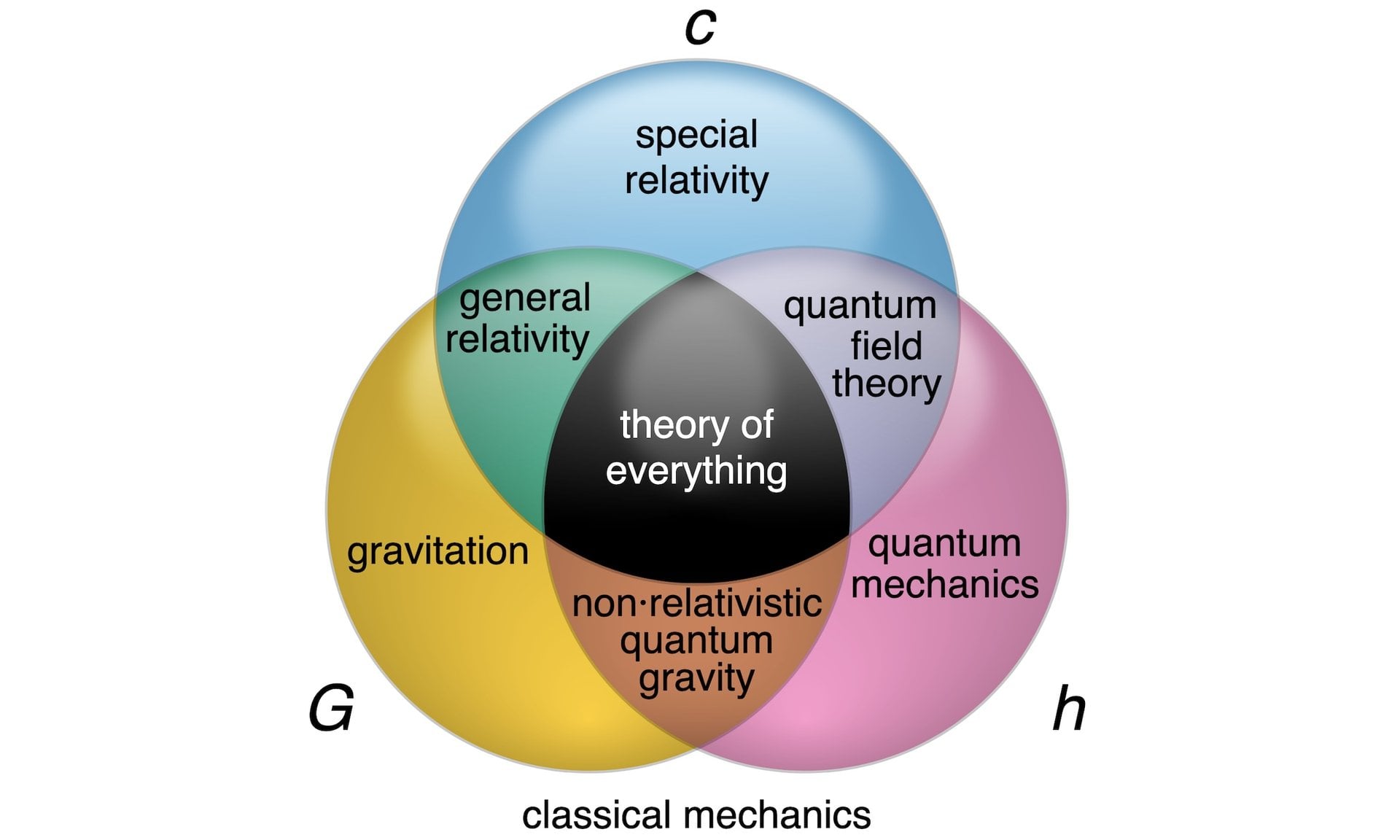
Beginning in the 1980’s, another physicist, Roger Penrose, came up with what he called the Triangle of Reality, which sounds like the nerdiest cult in history (and when later I get to talk about the Pythagoreans you’ll see that I’m right).


NASA to Return SpaceX Crew Ahead of Schedule

Long-exposure photograph from the International Space Station with a SpaceX Dragon cargo spacecraft visible in the lower foreground. Credit: NASA

NASA has announced that it and SpaceX will return the Crew-11 mission team to Earth from the ISS (due to medical concerns with a crew member) no earlier than 5 p.m. EST (2 p.m. PST) on Wednesday, Jan. 14th.


Astronomers Spot a Barred Spiral Galaxy That Existed Just 2 Billion Years After the Big Bang

Hubble image of the Barred Spiral Galaxy NGC 1300. Credit: NASA/ESA/The Hubble Heritage Team (STScI/AURA)/P. Knezek (WIYN)

Astronomers have uncovered a barred spiral galaxy that existed over 2 billion years after the Big Bang, potentially making it the earliest barred spiral galaxy ever observed.


Saturday, January 10, 2026

Is the Universe Made of Math? Part 2: The Minimalist Universe

None

Like, it shouldn’t be this easy. Yeah I know physics is kind of hard, and it has taken us centuries to reach our present level of knowledge, and we know we’re still a long way from complete knowledge of time and space.


A New Study Finds a Subtle Dance Between Dark Matter and Neutrinos

Illustration the evolution of the Universe from the Big Bang to today. Credit: NASA/GSFC

Scientists are a step closer to solving one of the universe's biggest mysteries as new research finds evidence that dark matter and neutrinos may be interacting, offering a rare window into the darkest recesses of the cosmos.


This System Reveals How Super-Earths Are Born

Artist's concept of the four planets of the V1298 star system. Credit - NAOJ's Astrobiology Center

One of the best things about being able to see thousands of exoplanetary systems is that we’re able to track them in different stages of development. Scientists still have so many questions about how planets form, and comparing notes between systems of different ages is one way to answer them. A new paper recently published in Nature by John Livingston of the National Astronomical Observatory of Japan and his co-authors details one particularly interesting system, known as V1298, which is only around 30 million years old, and hosts an array of four “cotton candy” planets, which represent some of the earliest stages of planet formation yet seen.


Friday, January 9, 2026

Is the Universe Made of Math? Part 1: The Unreasonable Tool

None

Imagine you walk into a parking lot full of cars. You have in your pocket one single key. It’s the key to your car. The same key you’ve always used, the same key you’ve always trusted, the same key that you always manage to realize that you’ve lost right when you’re rushing out the door.


The Milky Way’s Black Hole Is Quiet Now, But Its Recent Past Was Far More Active

This image shows the region around the Milky Way's galactic center, with the SMBH Sagittarius A star and several gas clouds labelled. Astronomers observed the gas cloud G0.11-0.11 in greater detail than ever, and its x-ray emissions show that Sagittarius A star was very active in the recent past. Image Credit: Mori et al. 2015

The supermassive black hole in the Milky Way's galactic center, Sagittarius A-star, is known for being quiet and dim. But that wasn't always the case. The powerful XRISM x-ray telescope shows that it flared brightly at least once in the very recent past.


Does Free Will Exist? Part 4: An Emergent Universe

None

But we’re not going for one thing or another, are we? We’re here to explore ideas – that’s most of the fun anyway. And there’s one more aspect of physics that takes part in the free will discussion, and that’s the concept of emergence.


Thursday, January 8, 2026

To Keep Water Liquid, the Red Planet Needed to Freeze

Artist's depiction of an ancient extant lake in Gale Crater. Credit - NASA/JPL-Caltech/MSSS

Mars has a curious past. Rovers have shown unequivocal evidence that liquid water existed on its surface, for probably at least 100 years. But climate models haven’t come up with how exactly that happened with what we currently understand about what the Martian climate was like back then. A new paper, published in the journal AGU Advances by Eleanor Moreland, a graduate student at Rice University, and her co-authors, has a potential explanation for what might have happened - liquid lakes on the Red Planet would have hid under small, seasonal ice sheets similar to the way they do in Antarctica on Earth.


Wednesday, January 7, 2026

Does Free Will Exist? Part 2: The Chaotic Universe

None

All of physics rests on causal determinism. It’s like…how we do physics. It IS physics.


Europa May Be Lifeless and Unihabitable After All

NASA's Juno spacecraft captured this image of Europa, the smallest of Jupiter's Galilean moons. Though its an important moon in the search for habitability, new research says it's not likely to have the necessary conditions for life. Image Credit: By NASA/JPL-Caltech/SwRI/MSSS/Kevin M. Gill - File:Europa - Perijove 45 (53255790801).png, from https://www.flickr.com/photos/kevinmgill/53255790801, CC BY 2.0, https://commons.wikimedia.org/w/index.php?curid=154053125

New research shows that Jupiter's moon Europa, one of the prime targets in the search for life, may not have the conditions required after all. The research shows that the moon lacks the type of active seafloor faulting needed to create habitability. Deep sea vents created by the faulting introduce nutrients into the water that organisms use to harness energy, and without those nutrients, the moon's subsurface ocean is likely dead.


X-Ray Spectra Could Help Reveal Dark Matter in Galaxy Clusters

The X-ray Imaging and Spectroscopy Mission (XRISM) studies the hot, energetic universe by capturing X-rays to reveal details about galaxy clusters, black holes, supernova remnants and the formation of cosmic structures. Credit: NASA

A study published in the Astrophysical Journal Letters demonstrates that decaying dark matter (DDM) can potentially be detected in unidentified X-ray emission lines in the spectra of galaxy clusters.


Stellar Habitability In Our Neighbourhood

K-type stars, or orange dwarfs, are the Sun's slightly lower-mass cousins. Their long, stable lives mean they provide the conditions necessary for life to develop on exoplanets that orbit them. A new survey found thousands of them in our stellar neighbourhood and captured detailed spectra from them. These spectra tell astronomers a lot about their characteristics and the specific environments they create for their planets. Image Credit: Merikanto, CC 4.0

A new survey of K-type stars in the Sun's neighbourhood reveals important information about their ability to sustain their habitable zones. These stars are less massive, cooler, and dimmer than the Sun, but stay on the main sequence for many tens of billions of years. Their long lives can create the stable conditions necessary for life to develop on exoplanets.


Tuesday, January 6, 2026

As Puzzling As A Platypus: The JWST Finds Some Hard To Categorize Objects

This image shows four of the nine oddball galaxies that astronomers are calling 'Astronomy's Platypus.' The JWST found them in its Cosmic Evolution Early Release Science Survey (CEERS). They're distinct from other galaxies because of their point-like appearances, though they lack the usual features that make galaxies appear point-like. Image Credit: NASA, ESA, CSA, Steve Finkelstein (UT Austin); Image Processing: Alyssa Pagan (STScI)

Astronomers found a handful of unusual objects in JWST survey data. These 9 point sources are being called 'Astronomy's Platypus' because, like the animal, they seem to defy categorization. They're not like active galactic nuclei, and they're not like star-forming galaxies. What are they?


The Galaxy That Never Was

Astronomers have found a strong piece of evidence in support of the Lambda-CDM model. It's a dark matter halo without any stars, and is a relic of the early Universe. Image Credit: NASA, ESA. G. Anand (STScI), and A. Benitez-Llambay (Univ. of Milan-Bicocca); Image processing: J. DePasquale (STScI)

A team using the NASA/ESA Hubble Space Telescope has uncovered a new type of astronomical object —a starless, gas-rich, dark-matter cloud that is considered a “relic” or remnant of early galaxy formation. Nicknamed “Cloud-9,” this is the first confirmed detection of such an object in the Universe. The finding furthers the understanding of galaxy formation, the early Universe, and the nature of dark matter itself.


Inside the Massive Radio Search of Our Newest Interstellar Guest

The Allen Telescope Array. Credit - Allen Telescope Array / Wikimedia User brewbooks

It feels like every week now we’re writing a new article about how 3I/ATLAS is not an alien technology. But it’s worth re-iterating, and perhaps taking a look at the methodology we used to prove that statement. A new paper, available in pre-print form on arXiv from Sofia Sheikh of the SETI Institute and her co-authors, details how one specific instrument - the Allen Telescope Array (ATA) - contributed to that effort.


Monday, January 5, 2026

Stars And Planets Are Linked Together, And Dust Is The Key To Understanding How

This illustration shows a star forming, surrounded by its protoplanetary disk, where nascent exoplanets are also forming. The lives of stars and planets are linked, but many of the details are still mysterious. Image Credit: NASA/JPL-Caltech/T. Pyle (SSC)

Stars and planets are linked together in their formation, evolution, and even in their demises. But many of the details behind this are yet to be revealed. New research outlines an observing strategy that could uncover more critical details.


To Understand Exoplanet Habitability, We Need A Better Understanding Of Stellar Flaring

In this illustration, powerful flaring from a red dwarf star strips away the atmosphere from an orbiting exoplanet. Astronomers are working to understand if this type of flaring prevents exoplanets around red dwarfs from being habitable. A survey of exoplanets around red dwarfs by the upcoming Extremely Large Telescope may uncover an answer, but the telescope is a few years away from observations. Image Credit: NASA, ESA and D. Player (STScI)

Without a better grasp of stellar flaring, our understanding of exoplanet habitability is at an impasse. Red dwarfs are the most numerous type of star in the galaxy, and they host many rocky exoplanets in their habitable zones. The problem is, they're known to flare so violently that it may negate their habitable zones. A group of researchers propose a new telescope designed solely to study stellar flaring.


Ultramassive Black Holes and Their Galaxies: A Matter of Scale

Artist's impression of an active supermassive black hole in the early universe. Credit: NOIRLab/NSF/AURA/J. da Silva

There is a strong relation between the size of a galaxy's black hole and the motion of stars in the galaxy's core, known as the M-sigma relation. It turns out this relation doesn't work well for galaxies with ultramassive black holes.


The Ambitious Plan to Spot Habitable Moons Around Giant Planets

Artist's concept of an exomoon around exoplanet Kepler-1625b. Since debunked, this was originally thought to be one of the first exomoon discoveries. Credit - ESA / Hubble

arXiv:2512.15858v1 Announce Type: new Abstract: Despite numerous search campaigns based on a diverse set of observational techniques, exomoons - prospective satellites of extrasolar planets - remain an elusive and hard-to-pin-down class of objects. Yet, the case for intensifying this search is compelling: as in the Solar System, moons can act as proxies for studying planet formation and evolution, provide direct clues as to the migration history of the planetary hosts and, in favourable cases...


Sunday, January 4, 2026

XRISM Provides the Sharpest Image to Date of a Rapidly Spinning Black Hole

Artist's rendering of the innermost regions around the SMBH at the center of MCG-6-30-15 and the spectra obtained by XRISM/Resolve (inset). Credit: CfA/Melissa Weiss

The first results on the iconic active galactic nucleus MCG–6-30-15 captured with the XRISM mission show the most precise signatures yet of its supermassive black hole’s extreme gravity and the outflows that shape its galaxy.